
Yttria stabilized zirconia is a highly engineered ceramic material whose exceptional phase stability and low thermal conductivity prevent structural failure under extreme operating temperatures in advanced engineering systems. When you deploy technical ceramics in intense thermal environments, severe microstructural degradation and cracking often disrupt your operations, leading to costly downtime. The stress of thermal cycling agitates these micro-cracks, causing protective barriers to peel and structural components to shatter without warning. By utilizing premium yttria stabilized zirconia from a vertically integrated manufacturer, you can completely eliminate these phase-transformation failures and secure long-term system durability.
Why Is Yttria Stabilized Zirconia Impervious to Heat?
Yttria stabilized zirconia remains impervious to heat because the addition of yttrium oxide locks the crystal structure into a stable cubic or tetragonal phase, preventing catastrophic lattice changes during cooling. If you work with pure zirconia, cooling below 1170°C triggers a destructive transition to a monoclinic phase. By using yttria stabilized zirconia, you avoid this volumetric expansion entirely. Your components maintain their dimensions even at continuous service temperatures exceeding 1200°C.
This chemical stabilization is highly repeatable when you control the purity of your raw materials. Standardizing your processing parameters prevents localized phase separation. Consequently, your systems run reliably under heavy thermal loads. You no longer have to worry about sudden structural collapse.
How Do Phase Transitions Cause Structural Failure?
When pure zirconia cools down, the atomic lattice spontaneously shifts from a tetragonal configuration to a monoclinic shape. Think about it: this sudden transformation causes a massive 4% to 5% volume expansion that tears the ceramic apart from within. You will observe immediate micro-cracking and eventual structural failure in your industrial parts. This is why unstabilized ceramics are completely unusable for high-temperature operations.
- Volume expansion of up to 5%
- Sudden lattice shearing during cooling
- Spontaneous micro-crack propagation
To overcome this limitation, you must select materials with locked phases. Stabilized structures distribute internal stresses evenly. This ensures your components handle rapid thermal cycles without cracking. Your production yield increases as structural failures disappear.
How Does Yttria Create Oxygen Vacancies?
Substituting trivalent yttrium ions into the tetravalent zirconium lattice sites generates charge-compensating oxygen vacancies. The best part? These atomic vacancies lower the total free energy of the high-temperature tetragonal and cubic phases, making them completely stable at room temperature. You get a highly durable lattice that resists phase shifts. This atomic-level engineering keeps your systems running.
When you utilize these advanced compositions, your equipment survives extreme conditions. The locked lattice prevents the movement of atoms that would otherwise cause structural failures. You achieve unmatched stability across your entire production line. It is a game-changer for high-temperature engineering.
Key Takeaway: Chemical doping with yttrium oxide modifies the zirconia host lattice, replacing zirconium ions to produce oxygen vacancies that physically inhibit catastrophic volume changes during temperature shifts.
| Ceramic Phase | Temperature Range | Volumetric Change | Structural Risk |
|---|---|---|---|
| Monoclinic | Room Temp to 1000°C | None (Baseline) | High if transitioned |
| Tetragonal | 1170°C to 2370°C | 4% to 5% contraction | Severe cracking during cooling |
| Stabilized Cubic | Stable at all temps | None | Zero phase-transition risk |
Careful monitoring of phase boundaries ensures your structural parts survive repeated heating cycles without dimensional distortion.
How Does the ZrO2-Y2O3 Phase Diagram Map Stability?
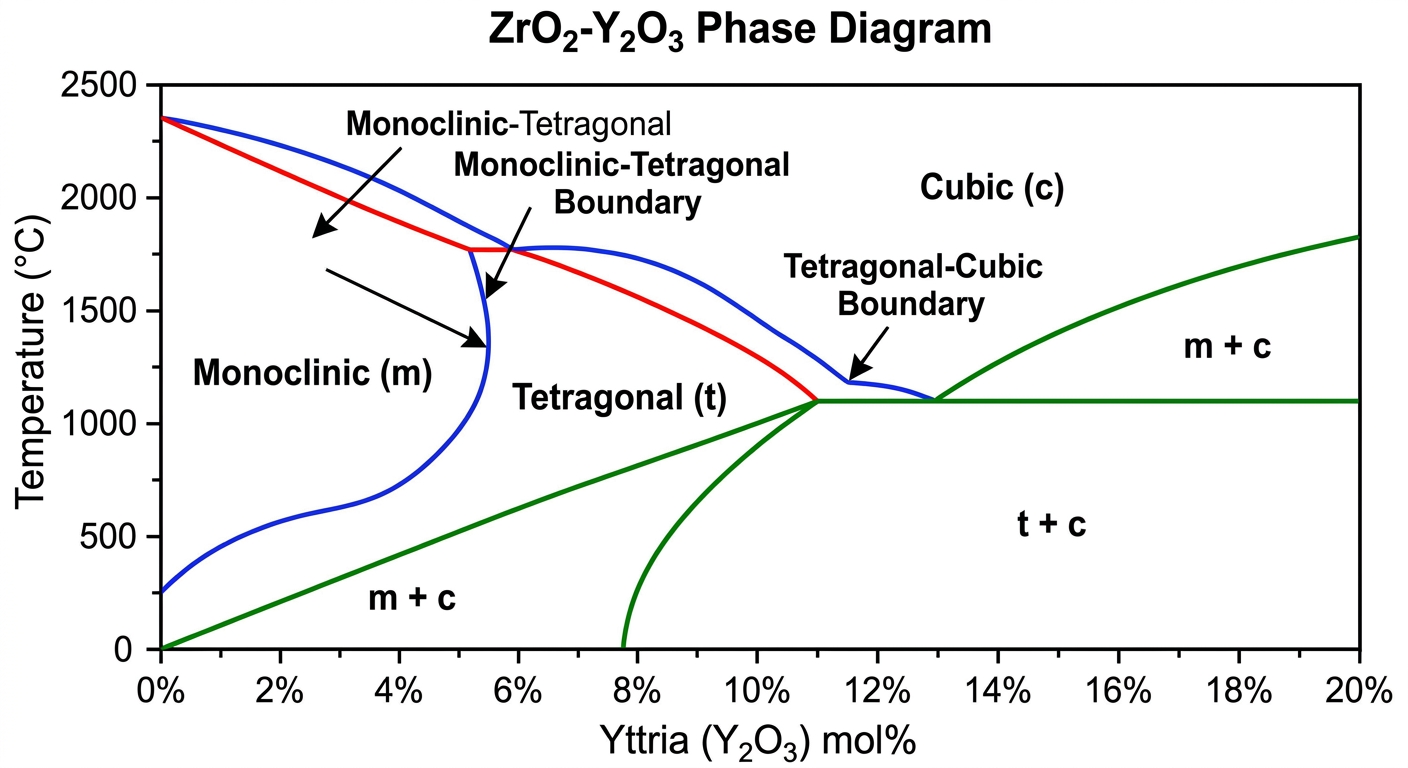
The ZrO2-Y2O3 phase diagram maps stability by detailing the exact boundaries between monoclinic, tetragonal, and cubic phases across varying temperatures and stabilizer concentrations. When you analyze this diagram, you can identify the exact amount of yttria needed to produce yttria stabilized zirconia with target properties. For instance, adding 3 mol% yttria yields a highly tough, metastable tetragonal structure. In contrast, 8 mol% yttria completely stabilizes the cubic phase.
Understanding these chemical thresholds is essential when you design custom ceramic formulations. A slight deviation in yttria concentration will shift your material into an unwanted phase region. This shift directly alters both mechanical toughness and electrical conductivity. You must respect these thermodynamic limits to achieve consistent performance.
Why Is 3 mol% Yttria Ideal for Toughness?
Selecting a 3 mol% yttria concentration creates a metastable tetragonal phase that provides incredible fracture toughness. Here is the catch: this phase is primed for transformation toughening, where localized crack stresses trigger a beneficial transition to the monoclinic phase. This transition creates a compressive stress zone that pinches the crack shut before it can grow. You receive an ultra-tough ceramic that behaves like steel.
- Metastable phase retention at room temperature
- Stress-induced compressive shielding at crack tips
- High resistance to mechanical impact and wear
When you deploy these tough components, they absorb mechanical shocks that would instantly shatter standard ceramics. This makes them ideal for demanding structural parts. You can rely on their high flexural strength for heavy-duty applications. Your machinery enjoys longer service life and reduced maintenance.
What Happens in the Cubic Phase Region?
When you increase the yttria concentration to 8 mol% or higher, the material enters the fully stabilized cubic phase field. Think about it: while you lose the beneficial transformation toughening mechanism, you maximize phase stability and oxygen-ion conductivity. This makes the cubic structure ideal for high-temperature electrochemical systems. You achieve stable operation without phase changes up to 1500°C.
This phase boundary control is vital when you build sensors or fuel cell components. The cubic structure allows ions to flow freely while maintaining its shape under thermal stress. You get a highly specialized material that excels in functional applications. It is the key to efficient energy conversion.
Key Takeaway: Navigating the ZrO2-Y2O3 phase diagram allows you to choose the exact yttria concentration needed to balance mechanical toughness against thermal stability.
| Yttria Mol% | Phase Type | Primary Property | Best Use Case |
|---|---|---|---|
| 3 mol% (3YSZ) | Tetragonal | High fracture toughness | Wear parts, dental restorations |
| 4–6 mol% (Partial) | Mixed (T + C) | Thermal shock resistance | Gas turbine coatings |
| 8 mol% (8YSZ) | Fully Stabilized Cubic | High ionic conductivity | Oxygen sensors, fuel cells |
Choosing the correct phase region based on thermodynamic data is the foundation of predictable ceramic performance.
Why Does Grain Size Control Hydrothermal Degradation?
Grain size controls hydrothermal degradation by modifying the surface energy at crystal boundaries, which prevents water molecules from triggering unwanted phase transitions. When you refine the grain structure of yttria stabilized zirconia, you block water from initiating surface-level micro-cracks. Keeping your grain sizes below 175 nm significantly increases the energy barrier needed for spontaneous monoclinic transformation. This microstructural refinement ensures your components survive long-term exposure to hot, humid environments.
If your ceramics have large, coarse grains, moisture will easily attack the boundaries and cause rapid degradation. This low-temperature degradation eventually leads to surface peeling and structural failure. By controlling grain growth during sintering, you protect your investment from premature environmental wear. It is the most effective way to ensure long-term durability.
How Does Water Initiate Lattice Collapse?
In hot and humid settings, water molecules react with oxygen vacancies near the ceramic surface. But that is not all: this chemical reaction depletes the stabilizer concentration at the grain boundaries, leaving them vulnerable to lattice collapse. You will observe a slow, spontaneous transformation from the tetragonal to the monoclinic phase. This surface-initiated degradation gradually spreads deep into the bulk material, destroying its strength.
- Water molecules fill critical oxygen vacancies
- Stabilizer depletion at grain boundaries
- Spontaneous monoclinic transformation and micro-cracking
To prevent this chemical attack, you must maintain a highly dense, fine-grained structure. Smaller grains restrict water penetration and keep the lattice locked. Your components remain strong even when exposed to high-pressure steam. This is crucial for medical devices and chemical processing valves.
How Do Nanocrystalline Structures Prevent Aging?
Nanocrystalline ceramic structures prevent aging because their high concentration of grain boundaries limits the propagation of micro-cracks. The best part? The high surface energy of these nano-sized grains physically prevents the tetragonal lattice from expanding into a monoclinic shape. You get a material that is virtually immune to hydrothermal aging. This makes nanostructured ceramics the ideal choice for demanding mechanical applications.
When you transition to nanocrystalline powders, your manufacturing yield and product lifespan improve dramatically. The stable grain boundaries prevent moisture from weakening the ceramic matrix. You achieve consistent, reliable performance over decades of service. It is a critical upgrade for high-durability systems.
Key Takeaway: Controlling your ceramic’s grain size below critical sub-micron thresholds successfully blocks humidity-induced aging, ensuring long-term mechanical reliability.
| Average Grain Size | Degradation Risk | 10-Year Volumetric Change | Application Fit |
|---|---|---|---|
| >1.5 μm (Coarse) | High | Significant surface cracking | Low-humidity only |
| 0.5–1.0 μm (Medium) | Moderate | Minor boundary wear | Standard dry environments |
| <175 nm (Nano) | Near-Zero | None | High-humidity medical implants |
Refining grain boundaries through advanced sintering protocols is essential to prevent moisture from degrading high-strength ceramics.
How Do Thermal Barrier Coatings Resist Extreme Heat?
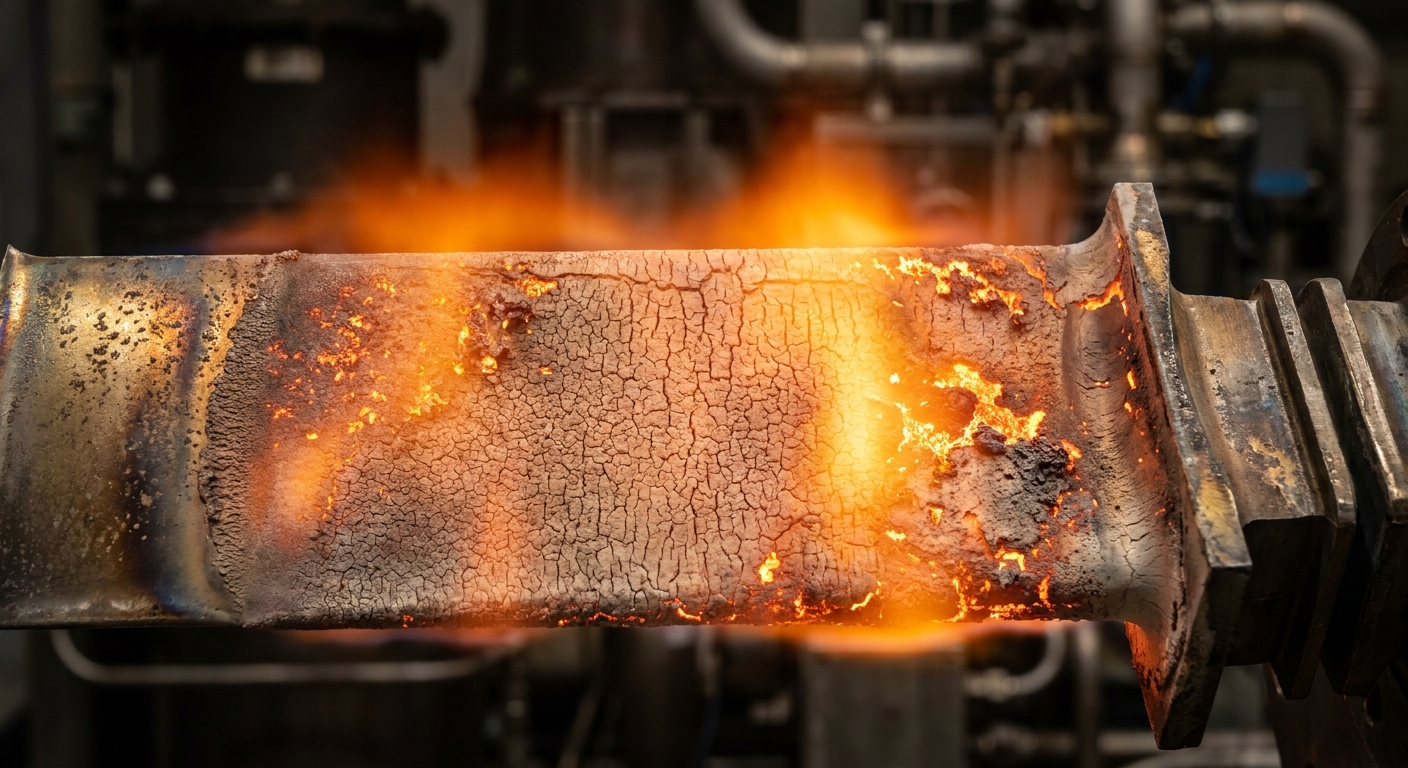
Thermal barrier coatings resist extreme heat by combining low thermal conductivity with a high thermal expansion coefficient that matches the underlying metal alloy. When you apply yttria stabilized zirconia to turbine blades, you create an insulating layer that reduces heat transfer to the metal. This allows you to run your engines at temperatures far above the melting point of the alloy. The result is higher engine efficiency and reduced fuel consumption.
However, these coatings must survive extreme thermal cycling and high-velocity gas erosion. If your coating material has uneven chemical distribution, it will peel and fail under these harsh conditions. Choosing a high-purity, uniform powder ensures your thermal barriers remain intact. This prevents costly damage to your turbine components.
Why Does the Thermal Expansion Match Matter?
When you heat a turbine blade, the metal substrate expands rapidly. Here is the catch: if your ceramic coating does not expand at a similar rate, the resulting thermal stress will tear the interface apart. Since this ceramic has a high thermal expansion coefficient of 11 × 10^-6 K^-1, it matches nickel-based superalloys perfectly. You avoid catastrophic delamination during rapid engine start-ups and shutdowns.
- High thermal expansion coefficient matches metal alloys
- Low thermal mismatch stress during rapid cycling
- Excellent resistance to spallation and peeling
This close expansion match is the reason why stabilized ceramics are preferred for aerospace applications. Your coatings can handle extreme temperature shifts without cracking. This ensures your turbine blades remain protected during flight. It is a critical factor for aviation safety.
How Does Porosity Improve Insulation?
Deliberately engineering 10% to 20% porosity into your thermal coatings drastically reduces their thermal conductivity. Think about it: these microscopic pores scatter phonons, which are the primary carriers of heat in dense ceramics. This drops the thermal conductivity of your coating down to 0.8–1.2 W/m·K. You get an incredibly effective thermal barrier that protects your machinery.
This porous structure also helps absorb thermal strains, preventing cracks from spreading through the coating. By optimizing your spray parameters, you can customize this porosity to match your exact application. You achieve the perfect balance of thermal insulation and mechanical strength. It is the key to running hotter, more efficient systems.
Key Takeaway: Matching thermal expansion coefficients and engineering controlled porosity are critical for protecting metal alloys from extreme heat and thermal shock.
| Coating Structure | Thermal Conductivity | Strain Tolerance | Erosion Resistance |
|---|---|---|---|
| Dense Ceramic (<2% pores) | 2.5–3.0 W/m·K | Low | High |
| Porous Splats (15% pores) | 0.8–1.2 W/m·K | High | Moderate |
| Columnar Grains (EB-PVD) | 1.5–1.8 W/m·K | Exceptionally High | High |
Optimizing the microstructural porosity of your coatings allows you to maximize thermal insulation while retaining high strain tolerance.
Why Do Fuel Cells Rely on Stabilized Zirconia?
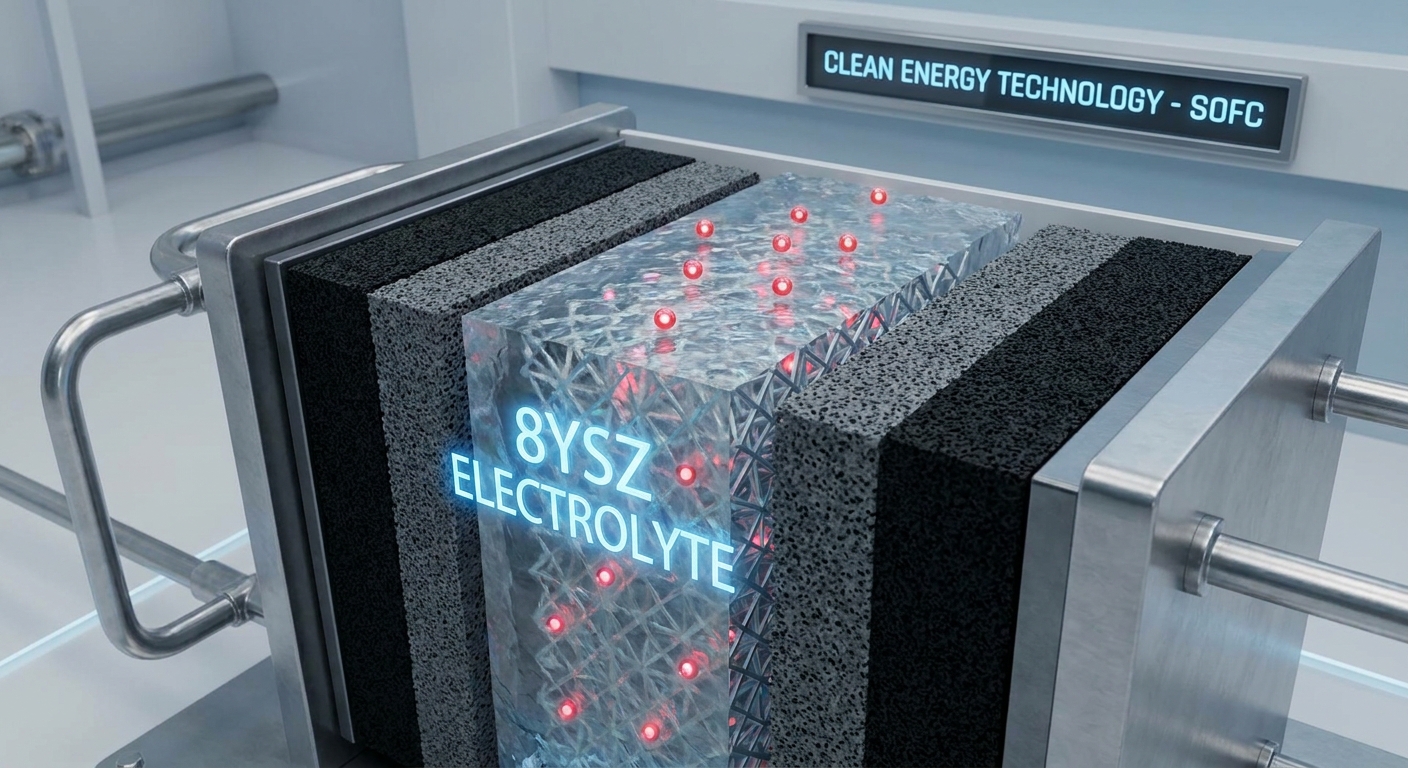
Fuel cells rely on stabilized zirconia because its high concentration of oxygen vacancies allows oxygen ions to flow freely while completely blocking electrical currents. When you build solid oxide fuel cells (SOFCs) with yttria stabilized zirconia, you get a gas-tight electrolyte membrane that operates reliably at 800–1000°C. This membrane permits oxygen ions to migrate from the cathode to the anode, completing the electrochemical circuit. Its high chemical stability ensures your fuel cells operate for thousands of hours without degradation.
If your electrolyte layer has even minor gas leaks or electrical conductivity, your fuel cell’s efficiency will plummet. Using a high-density, fully stabilized ceramic ensures a perfect gas barrier and high ionic current. This optimization allows you to maximize clean energy generation. It is the standard for high-performance fuel cell designs.
How Do Oxygen Vacancies Carry Ionic Current?
In a fully stabilized cubic crystal structure, the substitution of yttrium ions creates a high density of oxygen vacancies. The best part? At high operating temperatures, oxygen ions can easily hop from one vacant site to the next through the lattice. This high ionic conductivity reaches 0.1 S/cm at 1000°C, which is ideal for fuel cell electrolytes. You achieve efficient energy conversion with minimal resistance.
- High density of oxygen vacancies in the cubic phase
- Low activation energy for oxygen ion hopping
- Negligible electronic conductivity prevents short circuits
This selective conductivity is what makes stabilized ceramics indispensable for clean energy technology. Your fuel cells can convert chemical energy directly into electricity with high efficiency. You reduce emissions while maintaining a stable, long-term power supply. It is a vital component of the green transition.
How Do We Control Sintering Shrinkage?
When you manufacture thin electrolyte membranes, controlling shrinkage during sintering is a major challenge. Here is the catch: if your powder has inconsistent particle size, the membrane will warp or crack during co-firing. By optimizing your powder processing and calcination parameters, you can reduce this shrinkage variation to less than ±0.3%. You achieve precise dimensional control across all your production runs.
This precision allows you to build multi-layer fuel cell stacks with high yields and zero defects. The flat, defect-free membranes ensure a perfect seal between the anode and cathode. You eliminate gas bypass and maximize overall cell voltage. It is the key to scalable fuel cell manufacturing.
Key Takeaway: Fully stabilized cubic zirconia provides the high oxygen-ion conductivity and structural density needed to build efficient, gas-tight fuel cell electrolytes.
| Component Role | Preferred Composition | Sintering Temperature | Key Technical Requirement |
|---|---|---|---|
| Electrolyte Sheet | 8 mol% YSZ (8YSZ) | 1400°C–1450°C | Gas-tight density, high ionic conductivity |
| Anode Support Layer | Ni-YSZ Cermet | 1350°C–1400°C | Balanced porosity, high electrical conductivity |
| Cathode Active Layer | LSM-YSZ Composite | 1100°C–1200°C | High oxygen reduction activity, thermal match |
Standardizing your sintering curves and powder specifications is crucial to prevent warping and ensure reliable ionic transport.
How Do Structural Parts Prevent Mechanical Wear?
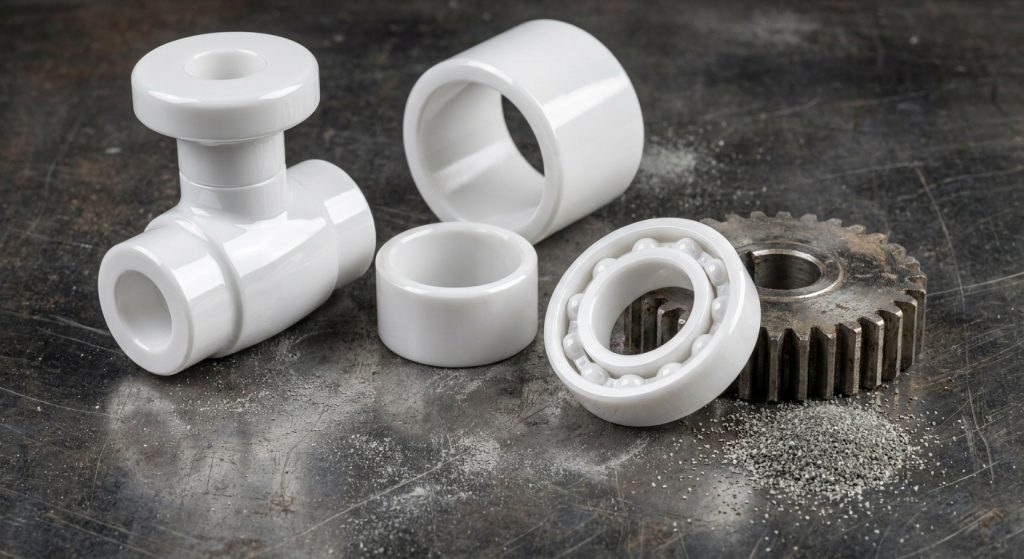
Structural parts prevent mechanical wear by utilizing stress-induced phase transformation to stop crack propagation and resist surface scratching. When you use yttria stabilized zirconia for heavy-duty industrial valves and bearings, you get a material with exceptional hardness and fracture toughness. This combination allows your components to handle abrasive slurries and high mechanical loads without wear. Your machinery runs smoothly, even in the most demanding environments.
Standard metals and softer ceramics often wear down quickly under these conditions, leading to frequent replacement cycles. By upgrading to stabilized structural parts, you extend the service life of your equipment and lower maintenance costs. This is why high-strength ceramics are preferred for demanding chemical and manufacturing processes. They provide the reliable durability your business needs.
What is Stress-Induced Toughening?
When a crack starts to form in a partially stabilized tetragonal structure, the intense stress at the crack tip triggers a phase transition to the monoclinic phase. Think about it: this transition causes a localized 4% volume expansion that pinches the crack shut. You physically stop the crack from spreading through the material, preventing sudden failure. This unique mechanical self-defense is what makes the material so tough.
- Stress-induced tetragonal-to-monoclinic transition
- 4% localized volume expansion creates compressive stress
- Effectively shields crack tips and prevents propagation
This high fracture toughness allows your components to handle sudden impacts that would instantly shatter other technical ceramics. Your valves and pump impellers remain intact under high-pressure flow. You avoid catastrophic system shutdowns and protect your production lines. It is the ultimate insurance for high-stress machinery.
How Do We Achieve Dense Packing?
To maximize the wear resistance of your structural components, you must achieve high bulk density during processing. The best part? By carefully controlling the particle size distribution of your raw powders, you ensure dense packing of the green ceramic body. This dense packing reduces porosity and allows the material to sinter to near-theoretical density. You get an incredibly hard, wear-resistant surface that resists scratching.
When your components have near-zero porosity, abrasive particles cannot find a foothold to initiate wear. Your bearings and nozzles maintain their precise dimensions over years of continuous service. You achieve consistent flow rates and high operational accuracy. It is a critical factor for precision manufacturing.
Key Takeaway: Leveraging stress-induced transformation toughening and maximizing bulk density are the keys to building industrial components that resist severe mechanical wear.
| Ceramic Material | Flexural Strength | Fracture Toughness | Wear Resistance |
|---|---|---|---|
| 3YSZ (Structural) | 1000–1200 MPa | High (8–10 MPa·m^(1/2)) | Outstanding |
| Alumina (Al₂O₃) | 300–400 MPa | Low (3–4 MPa·m^(1/2)) | Good |
| Silicon Carbide (SiC) | 400–500 MPa | Moderate (4–5 MPa·m^(1/2)) | Very High |
Choosing high-density stabilized ceramics for your wear components dramatically reduces mechanical downtime and extends equipment lifespans.
Why Is Dental Zirconia Preferred for Restorations?
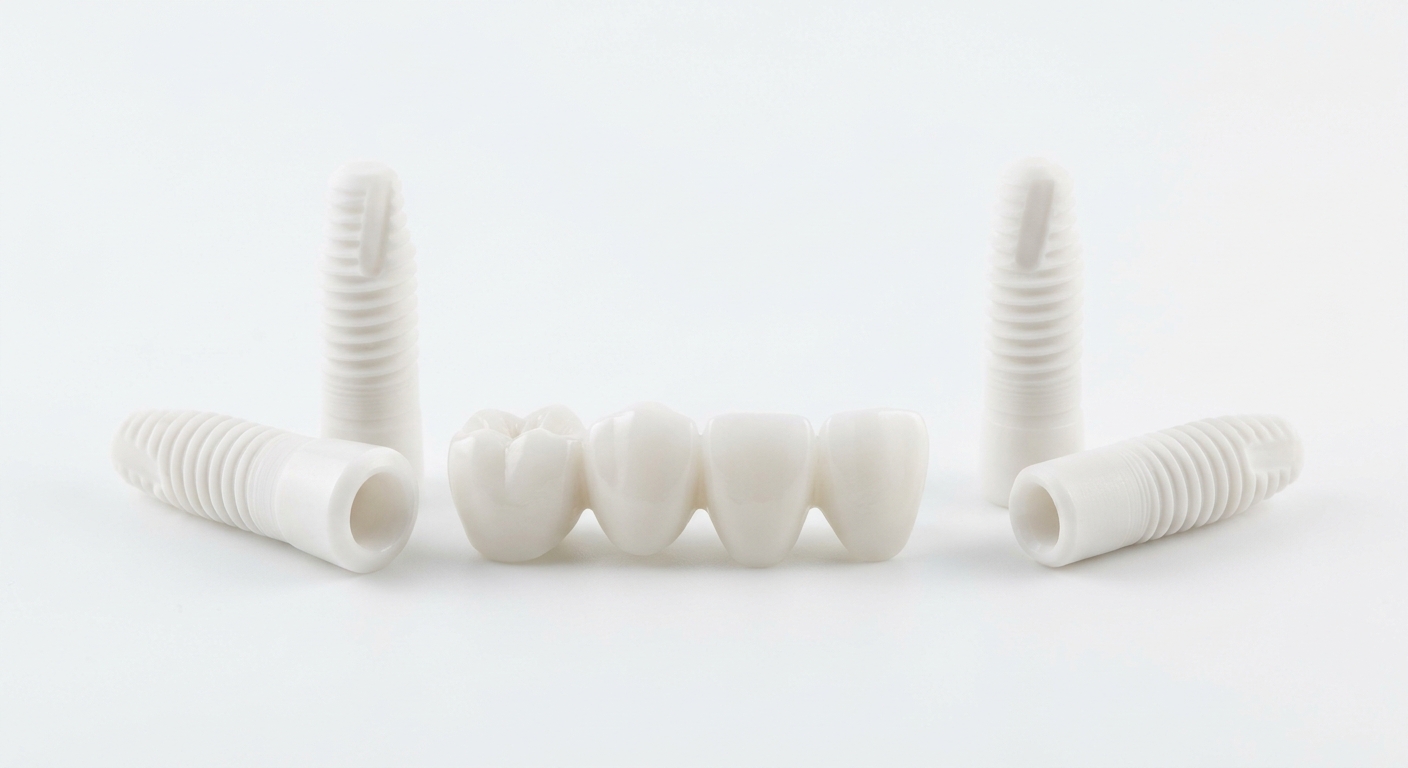
Dental zirconia is preferred for restorations because it combines metal-like flexural strength with a lifelike translucency that mimics natural teeth. When you use yttria stabilized zirconia for crowns and bridges, you get a biocompatible material that easily withstands chewing forces. This prevents the restoration from chipping or cracking under high mechanical stress. The material’s natural appearance ensures patients receive highly aesthetic and durable results.
Traditional dental ceramics were often brittle or opaque, making them unsuitable for high-stress molars or highly visible front teeth. Modern stabilized compositions solve this problem by allowing you to customize the yttria content for each patient’s needs. You achieve the perfect balance of aesthetic beauty and mechanical strength. It is the modern standard for restorative dentistry.
How Does Yttria Adjust Translucency?
By increasing the yttria concentration to 4-5 mol%, you stabilize more of the cubic phase in the ceramic structure. Here is the catch: because cubic crystals are isotropic, they do not scatter light at grain boundaries like tetragonal crystals do. This allows light to pass through the material, achieving a natural translucency of 52% to 65%. You get a beautiful crown that matches the surrounding teeth perfectly.
- Higher yttria content increases cubic phase ratio
- Isotropic cubic crystals minimize light scattering
- Achieves lifelike translucency for highly visible teeth
This aesthetic improvement allows you to place metal-free crowns in the aesthetic zone. Your patients enjoy a natural-looking smile without the dark margins associated with metal-ceramic restorations. You deliver high patient satisfaction while maintaining excellent durability. It is a major advancement in cosmetic dentistry.
Why Is Biocompatibility So Essential?
In dental implants and crowns, the material must remain chemically inert to avoid triggering allergic reactions in the patient’s mouth. Think about it: this ceramic is completely biocompatible and does not release any toxic ions or corrode in saliva. You avoid tissue inflammation and ensure perfect integration with the surrounding bone and gum tissue. This makes it a highly safe and reliable material for long-term use.
When you use biocompatible materials, your implants and restorations have much higher success rates. The smooth surface resists bacterial adhesion, reducing the risk of periodontal infections. You provide your patients with a healthy, long-lasting restoration that requires zero compromise. It is the gold standard for implant dentistry.
Key Takeaway: Balancing yttria content allows you to deliver dental restorations that combine lifelike translucency with the high strength required to survive chewing forces.
| Dental Material | Flexural Strength | Translucency Level | Clinical Indication |
|---|---|---|---|
| 3YSZ (Standard) | 1200 MPa | Low (35%) | Posterior crowns, implant abutments |
| 4YSZ (Aesthetic) | 900 MPa | Moderate (45%) | Multi-unit anterior bridges |
| 5YSZ (Ultra-Translucent) | 600 MPa | High (55%–65%) | Anterior crowns, thin veneers |
Selecting the correct yttria grade based on the clinical location of the restoration ensures the optimal balance of strength and aesthetics.
How Does Sintering Temperature Affect Bulk Density?
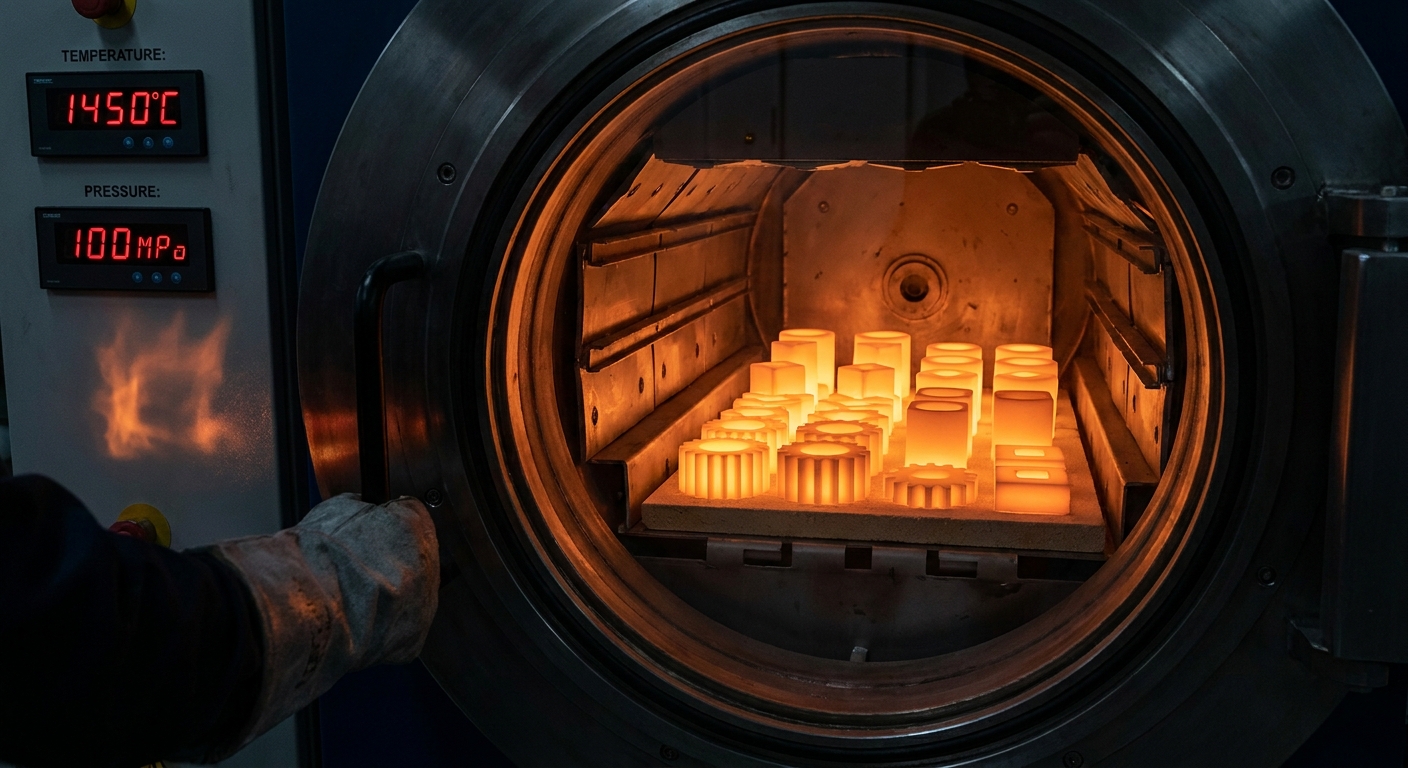
Sintering temperature affects bulk density by driving atomic diffusion across grain boundaries to eliminate pores and shrink the green ceramic body to its final dimensions. When you fire yttria stabilized zirconia, you must carefully control the heating profile to prevent uncontrolled grain growth while maximizing density. Sintering at the optimal temperature of 1350–1450°C ensures you eliminate residual porosity and achieve near-theoretical density. This thermal control is vital to securing maximum mechanical strength.
If your sintering temperature is too low, the ceramic will remain porous and fragile, leading to premature mechanical failure. Conversely, if the temperature is too high, excessive grain growth will make the material vulnerable to hydrothermal degradation. By optimizing your sintering curves, you achieve a uniform microstructure that balances strength and durability. It is the key to repeatable manufacturing success.
How Do Grain Boundaries Pin Growth?
During high-temperature sintering, yttrium ions segregate to the grain boundaries and act as a stabilizing barrier. The best part? This boundary segregation pins the grains in place, preventing uncontrolled grain growth during the final densification stages. You maintain a fine, sub-micron grain structure that preserves high fracture toughness and wear resistance. This atomic-level pinning is what makes controlled sintering possible.
- Yttrium segregation restricts boundary movement
- Pins grain growth during high-temperature densification
- Preserves a uniform, sub-micron microcrystalline structure
This microstructural control ensures your finished components have highly predictable mechanical properties. Your wear parts and cutting tools maintain their sharp edges and resist chipping under heavy loads. You reduce waste and improve the reliability of your finished products. It is a critical advantage for high-volume manufacturing.
How Do We Control Shrinkage Variance?
Controlling the shrinkage variance of your ceramics during sintering is essential for maintaining tight dimensional tolerances. Here is the catch: if your powder density varies from batch to batch, the final parts will warp or exhibit inconsistent dimensions. By using spray-dried granules with highly consistent particle sizes, you ensure uniform green density before firing. You minimize dimensional variation to less than ±0.3%.
This precision allows you to manufacture complex, near-net-shape components without the need for expensive post-sintering machining. Your production costs drop significantly while your part yields increase. You can deliver highly precise parts that fit perfectly into your customers’ assemblies. It is the key to cost-effective engineering.
Key Takeaway: Precise control of sintering temperatures and grain boundary pinning is essential for achieving near-theoretical density and tight dimensional tolerances in technical ceramics.
| Sintering Temp | Bulk Density (% Theoretical) | Average Grain Size | Resulting Strength |
|---|---|---|---|
| <1300°C (Under-fired) | 85%–90% | <100 nm | Poor (High porosity) |
| 1350°C–1450°C (Optimal) | >99.5% | 150–300 nm | Maximum flexural strength |
| >1500°C (Over-fired) | 99.8% | >1.5 μm | Poor (Brittle, aging risk) |
Standardizing your kiln profiles ensures every batch achieves the ideal microstructural balance between density and grain size.
Why Do Oxygen Vacancies Boost Ionic Conductivity?
Oxygen vacancies boost ionic conductivity by creating open atomic sites in the crystal lattice that allow oxygen ions to flow freely when exposed to high temperatures. When you utilize yttria stabilized zirconia for oxygen sensors or gas membranes, you rely on this defect chemistry to facilitate rapid ion transport. Substituting yttrium into the host lattice creates one oxygen vacancy for every two yttrium atoms. This high vacancy concentration is what drives the material’s exceptional electrical performance.
Without these vacancies, the oxygen ions would remain locked in their lattice positions, rendering the material electronically inert. By optimizing the stabilizer concentration, you can maximize this ionic current while maintaining high chemical durability. This allows you to build highly sensitive gas sensors and efficient energy systems. It is the foundation of advanced solid-state electrochemistry.
How Do Ions Hop Through the Lattice?
When you heat the ceramic above 700°C, the thermal energy allows oxygen ions to break free from their local bonds. Think about it: they can easily hop into adjacent vacant oxygen sites, creating a continuous flow of ionic charge through the crystal lattice. This vacancy-assisted diffusion process is highly efficient and operates with very low resistance in the cubic phase. You achieve a highly responsive electrical system that operates without liquid electrolytes.
- Thermal energy activates oxygen ion movement
- Ions hop into adjacent vacant oxygen sites
- Enables rapid solid-state ionic current at high temperatures
This solid-state conductivity is what makes stabilized ceramics so valuable for harsh chemical environments. Your sensors and cells can operate continuously at extreme temperatures without any risk of electrolyte leakage or corrosion. You achieve stable, maintenance-free operation in demanding industrial systems. It is a major benefit for process automation.
How Do We Optimize Vacancy Density?
Optimizing the density of your oxygen vacancies is a delicate balancing act when designing advanced ceramics. But that is not all: if you add too much yttria, the vacancies will begin to cluster together and block the flow of ions. This vacancy association effect actually reduces the material’s ionic conductivity at higher stabilizer concentrations. You must carefully control the dopant ratio to find the sweet spot for your application.
This sweet spot is typically found around 8 mol% yttria, which provides the maximum ionic conductivity for fuel cells and gas sensors. By keeping your stabilizer content within this optimal range, you ensure peak electrical performance. Your devices operate with maximum sensitivity and efficiency. It is the key to competitive product design.
Key Takeaway: Controlling the vacancy concentration and preventing defect clustering are essential for maximizing the ionic conductivity of solid-state ceramic electrolytes.
| Yttria Mol% | Vacancy Concentration | Ionic Conductivity (800°C) | Structural Phase |
|---|---|---|---|
| 3 mol% (3YSZ) | Low | 0.01 S/cm | Tetragonal (Tough) |
| 8 mol% (8YSZ) | Optimal (Peak) | 0.05 S/cm | Cubic (Conductive) |
| 10 mol% (10YSZ) | High (Clustered) | 0.03 S/cm | Cubic (Blocked) |
Precise chemical control of dopant levels is crucial to prevent vacancy clustering and ensure peak ionic transport.
How Do Advanced Ceramics Survive High Impact Loads?
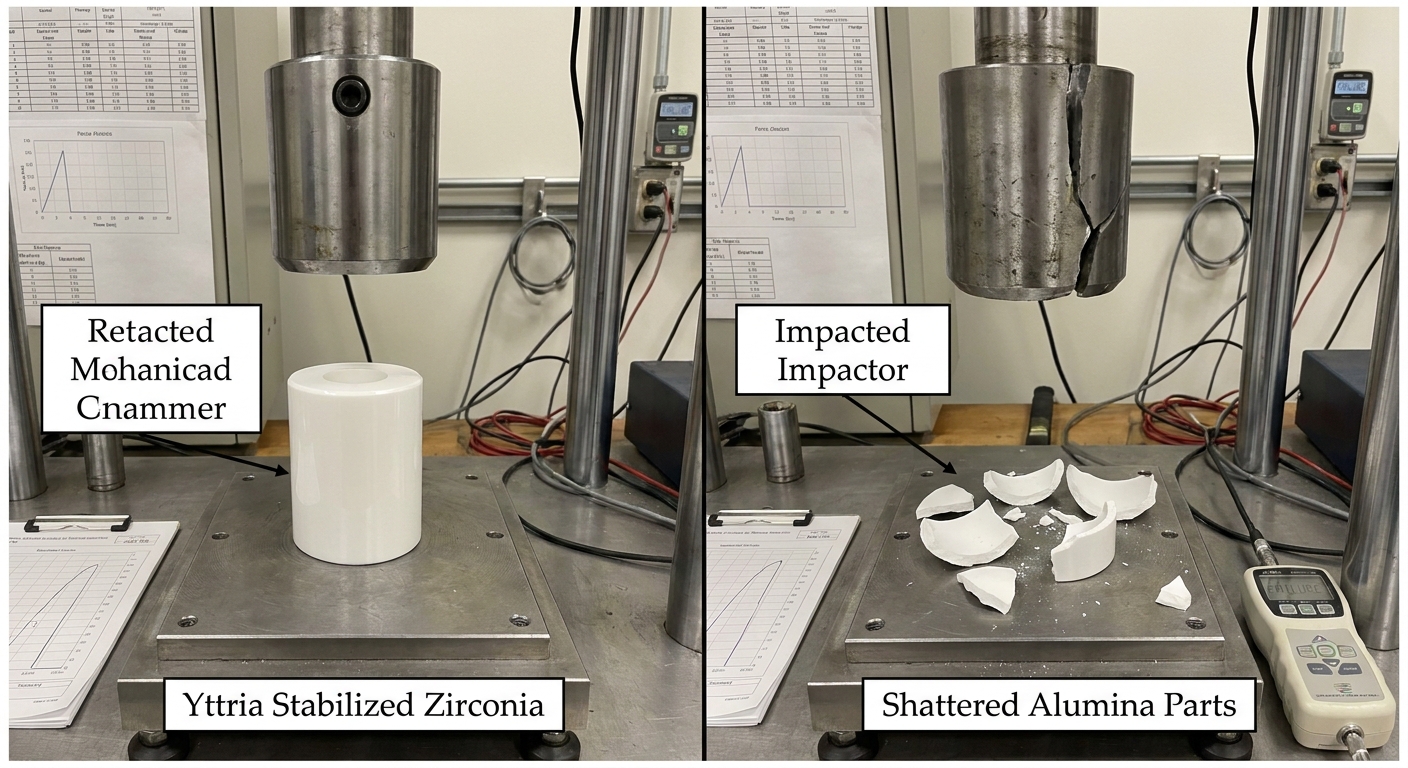
Advanced ceramics survive high impact loads by absorbing shock energy through stress-induced phase transformations that physically block cracks from spreading. When you compare different technical materials under heavy impact, yttria stabilized zirconia stands out due to its steel-like toughness and high flexural strength. While standard ceramics like alumina will shatter instantly when dropped or struck, stabilized zirconia absorbs the impact energy and remains intact. This high impact durability makes it the premier choice for demanding industrial applications.
If your equipment is exposed to sudden mechanical shocks, choosing a brittle material will lead to frequent failures and expensive downtime. Upgrading to high-toughness stabilized ceramics provides the mechanical security your operations require. You can run your machinery at higher speeds and pressures without any risk of brittle failure. It is the ultimate solution for extreme structural environments.
Why Does Alumina Shatter Under Impact?
Standard alumina is highly rigid but lacks any internal mechanism to absorb sudden impact energy. Here is the catch: when a crack begins to form, there is nothing to stop it from spreading instantly through the brittle crystal structure. You will observe your alumina components shattering completely under relatively low impact forces. This brittle behavior makes them highly risky for high-stress structural parts.
- Highly rigid structure lacks elastic compliance
- No active phase-transformation toughening mechanism
- Immediate, catastrophic cracking under sudden impact loads
To avoid these sudden failures, you must transition to materials with active toughening mechanisms. Stabilized ceramics absorb shock energy and distribute stress evenly across the part. This prevents micro-cracks from developing into major structural failures. You achieve unmatched mechanical reliability.
How Do We Maximize Fracture Toughness?
Maximizing the fracture toughness of your technical ceramics requires precise control of the metastable tetragonal phase. The best part? By optimizing the yttria concentration and keeping your grain size fine, you ensure that the transformation toughening mechanism operates at its peak efficiency. This allows your components to achieve fracture toughness values exceeding 10 MPa·m^(1/2). You get a ceramic that performs reliably under the harshest conditions.
When your components have this high toughness, they can handle extreme mechanical abuses that would easily destroy other materials. Your tools and wear parts remain sharp and intact, ensuring consistent production quality. You achieve higher efficiency and lower operating costs across your entire business. It is a critical upgrade for any industrial process.
Key Takeaway: Leveraging stress-induced transformation toughening allows advanced stabilized ceramics to absorb sudden impacts that would instantly shatter standard materials.
| Ceramic Material | Fracture Toughness | Impact Resistance | Primary Failure Mode |
|---|---|---|---|
| Alumina (Al₂O₃) | 3–4 MPa·m^(1/2) | Low | Brittle shattering |
| 3YSZ (Stabilized) | 8–10 MPa·m^(1/2) | Very High | Controlled micro-cracking |
| Silicon Carbide | 4–5 MPa·m^(1/2) | Moderate | Cleavage cracking |
Specifying high-toughness stabilized materials for your impact-prone parts is the most effective way to eliminate brittle failures.
Selecting the right material grade and managing phase stability, thermal properties, and microstructural parameters is essential for optimizing advanced engineering components. Standardizing these technical specifications prevents unexpected mechanical failures, premature wear, and costly production downtime across your operations. We offer vertically integrated manufacturing capabilities, complete material traceability, and direct engineering support to help you eliminate quality risks and secure stable B2B supply chains. To discuss your specific application challenges, request custom testing data, or obtain representative samples for your production trials, contact us today. Together, we can drive industrial innovation forward with technical ceramics engineered for absolute reliability under the most demanding conditions.
Frequently Asked Questions
Can I use 3YSZ instead of 8YSZ for solid oxide fuel cell electrolytes?
No, you cannot use 3YSZ because its ionic conductivity is too low for efficient energy conversion. While 3YSZ provides excellent mechanical strength, its partially stabilized structure lacks the high density of oxygen vacancies found in fully stabilized 8YSZ. These vacant sites are essential for allowing oxygen ions to migrate rapidly through the electrolyte membrane at high operating temperatures.
What’s the best way to prevent hydrothermal degradation in humid environments?
The best way is to keep the material’s grain size below 175 nanometers through post-sintering Hot Isostatic Pressing (HIP). This microstructural refinement increases the surface energy barrier, making it extremely difficult for water molecules to attack grain boundaries and trigger spontaneous monoclinic transitions. Controlling grain growth successfully protects your structural components from premature aging and cracking.
How do I know if my thermal barrier coating needs a plasma spray or physical vapor deposition process?
You should choose physical vapor deposition (EB-PVD) if your components are rotating turbine blades exposed to high mechanical strains, and atmospheric plasma spraying (APS) for large stationary parts. EB-PVD creates a columnar grain microstructure that allows the coating to expand and contract freely without peeling. APS is more cost-effective and produces a porous, overlapping splat structure that provides superior thermal insulation.
Can I customize the particle size distribution of my stabilized zirconia powders?
Yes, you can customize the particle size distribution to match your specific manufacturing process. Our engineering team can adjust D10, D50, and D90 values and control the distribution width to optimize powder flowability, green density, and sintering behavior. These custom specifications are typically validated through small trial batches before full-scale production.
How do I know if my dental restoration requires 3YSZ or 5YSZ?
You should choose 3YSZ if you require maximum flexural strength for heavy-duty posterior crowns or bridges, and 5YSZ if you need lifelike translucency for highly visible front teeth. 3YSZ utilizes transformation toughening to resist extreme chewing forces but remains relatively opaque. 5YSZ incorporates more yttria to stabilize the isotropic cubic phase, which minimizes light scattering but slightly reduces the material’s fracture toughness.