
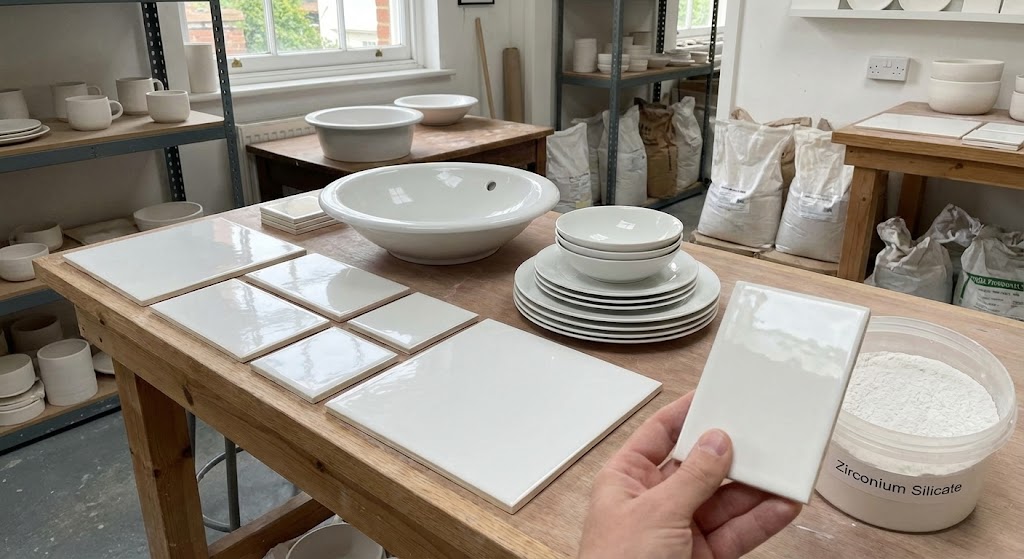
Ceramics Manufacturing Is More Sensitive Than It Looks
Achieving consistent whiteness, flawless glaze surfaces, and stable firing results requires more than just following a recipe. When raw material quality fluctuates, even proven formulations can produce unpredictable outcomes—leading to batch rejections, rework, and production delays.
The difference between acceptable and exceptional ceramic products often comes down to the consistency of zirconium materials used in the process.
Challenges Ceramic Manufacturers Know Too Well
These issues don't always appear on spec sheets, but they show up on the production floor—costing time, money, and customer trust.
Batch-to-Batch Inconsistency
Different batches of raw materials produce varying color tones and firing behaviors, making it difficult to maintain product uniformity across production runs.
Parameters OK, Results Not
Materials pass incoming inspection on paper, yet glaze surfaces show defects or body strength falls short—hidden quality issues that specs don't capture.
Sample Success, Production Failure
Trial samples perform beautifully, but scaling to mass production reveals inconsistencies—forcing costly reformulation or material changes mid-project.
Unstable Supply Chain
Irregular delivery schedules and material shortages disrupt production planning, leading to rushed orders and compromised quality control.
Suppliers Who Don't Understand Ceramics
Generic material suppliers lack knowledge of ceramic-specific requirements, providing one-size-fits-all solutions that don't address your unique formulation needs.
Unexpected Rework Costs
Minor material variations compound through the firing process, resulting in rejected products that must be reworked or scrapped—eroding margins silently.
Experiencing these challenges? A technical conversation can help identify root causes.
Why Ceramics Are So Sensitive to Zirconium Materials
Understanding why minor material variations create major production problems is the first step toward solving them.
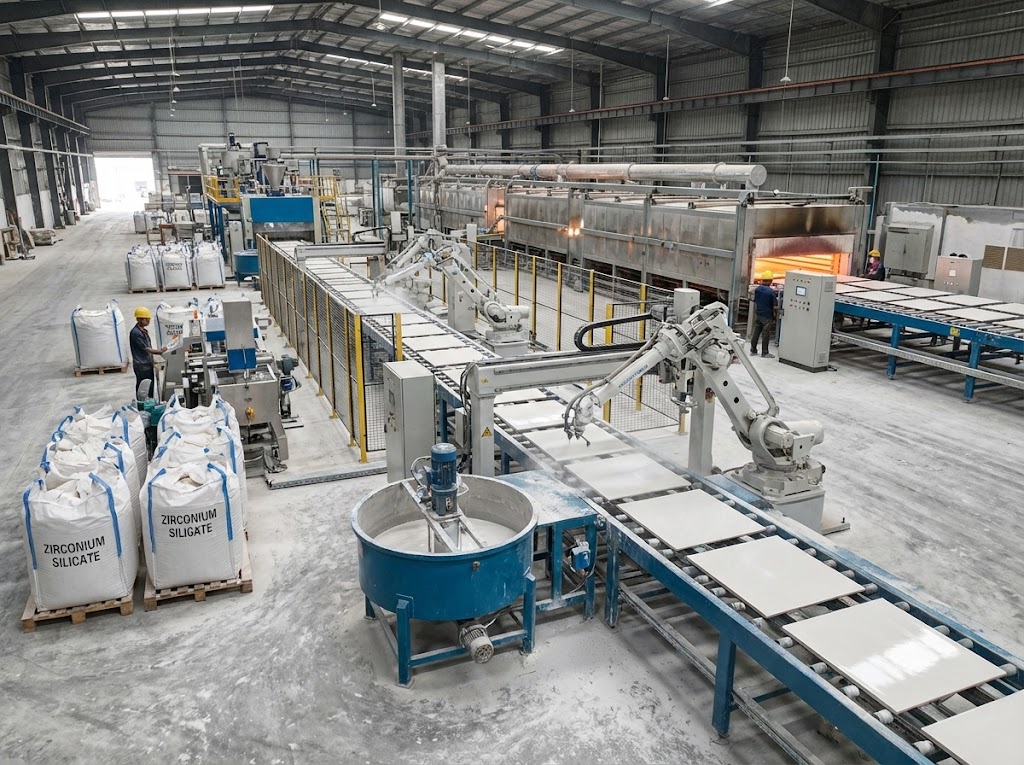
Ceramic production acts as an "amplification system"—where microscopic differences in raw materials become visible defects after firing.
Even small deviations in D50 or particle spread affect packing density, sintering behavior, and final surface quality.
Trace elements invisible in analysis can cause discoloration, pinholing, or unexpected phase changes at high temperatures.
Materials react and transform at high temperatures—minor input variations lead to magnified differences in the final product.
"In ceramics, problems often aren't errors—they're the accumulation of small deviations that become visible only after firing."
Understanding sensitivity helps prevent problems before they reach the kiln.
Why Traditional Procurement Approaches Fall Short
Common purchasing practices may seem efficient on paper but often create hidden costs and quality risks in ceramic production.
Selecting suppliers based on spec sheet parameters alone
Specs don't capture how materials actually perform in your specific ceramic body or glaze system.
Always choosing the lowest-priced option
Rework, rejects, and production delays often cost more than the initial savings from cheaper materials.
Purchasing on a single-order basis
Each new batch introduces variability, making consistent production quality nearly impossible to maintain.
Qualifying materials based on samples only
Trial samples often represent best-case scenarios that don't reflect typical production batch variability.
Moving beyond traditional procurement starts with understanding what ceramics actually require.
What Ceramic Production Actually Requires from Raw Materials
Beyond meeting basic specifications, zirconium materials for ceramics must satisfy a higher standard—one focused on production reality rather than laboratory ideals.
Batch-to-Batch Consistency
Every delivery must perform like the last. Consistency across batches eliminates the need for constant reformulation and ensures predictable production outcomes.
Controlled Particle Characteristics
Precise control over particle size distribution enables optimal packing, sintering behavior, and surface finish—critical factors that specs alone can't guarantee.
Formulation & Firing Compatibility
Materials must work within your specific ceramic body, glaze system, and firing curve—not just meet generic industry standards.
Long-Term Reproducibility
Stable production performance over months and years allows for continuous improvement rather than constant firefighting.
The Real Standard for Ceramic-Grade Zirconium Materials
True ceramic-grade materials don't just pass inspection—they enable stable, repeatable production. When raw materials behave predictably batch after batch, manufacturers can focus on improving their products rather than troubleshooting their inputs.
Ready to discuss materials that meet real ceramic production standards?
How We Support Ceramic Manufacturers
We don't just deliver zirconium materials—we approach every partnership from the perspective of ceramic application success.

Application-Focused Material Selection
We help identify the right zirconium material grade based on your specific ceramic body, glaze formulation, and firing conditions—not generic recommendations.
Consistent Supply for Stable Production
Our process controls ensure batch-to-batch consistency, allowing your production team to work with predictable materials every time.
Direct Technical Communication
When questions arise, you connect directly with engineers who understand ceramic processes—not sales representatives reading from scripts.
Long-Term Partnership Approach
We focus on building relationships that support your production stability over years, not just completing individual transactions.
Discover how our application-focused approach can support your ceramic production.
Zirconium Materials for Ceramic Applications
A comprehensive range of zirconium-based materials engineered to meet the diverse requirements of ceramic manufacturing processes.
Zirconia-Based Materials
High-performance zirconia powders and compounds designed for ceramic body enhancement, providing improved mechanical strength and thermal stability.
Zirconium Silicate
Versatile zirconium silicate products suitable for both glaze and body systems, offering excellent opacity and chemical resistance.
Zircon Opacifiers
Specialized zircon materials optimized for whitening and opacity control, delivering consistent color performance across production runs.
Material selection depends on your specific application requirements. Our technical team can help identify the most suitable options for your ceramic system.
Need help selecting the right material for your application?
Ceramic Application Scenarios We Serve
Our zirconium materials support a wide range of ceramic manufacturing applications, each with unique performance requirements.
Tableware Ceramics
Dinnerware, cookware, and decorative pieces requiring consistent whiteness, smooth glaze surfaces, and food-safe properties.
Sanitary Ceramics
Bathroom fixtures and sanitary ware demanding high surface quality, stain resistance, and dimensional stability after firing.
Architectural Ceramics
Floor tiles, wall tiles, and facade elements requiring durability, consistent aesthetics, and reliable production at scale.
Industrial Ceramics
Wear-resistant components, refractory linings, and industrial parts requiring precise material properties and performance consistency.
Technical / Advanced Ceramics
High-precision components for electronics, medical, and engineering applications with strict tolerances and purity requirements.
Don't see your application listed? We likely have experience with it.
Why Ceramic Manufacturers Choose Long-Term Partnership
Stability in ceramic production comes from consistency in every aspect of the supply relationship—not just the materials themselves.
Established Long-Term Relationships
Many of our ceramic customers have worked with us for years, building deep understanding of their specific requirements and processes.
Complete Batch Traceability
Every shipment is traceable back to production records, enabling quick identification and resolution of any quality questions.
Direct Engineer Communication
Technical questions go directly to engineers familiar with ceramic applications—no intermediaries or delayed responses.
Multi-Country Ceramic Experience
Experience serving ceramic manufacturers across different regions provides broad perspective on diverse production environments and requirements.
Ready to explore what a long-term material partnership could look like?
Facing Stability Challenges in Your Ceramic Production?
If consistency and yield matter in your ceramic production, a technical conversation is often the best starting point. Share your application details, and let's explore whether our materials and approach are the right fit for your requirements.