
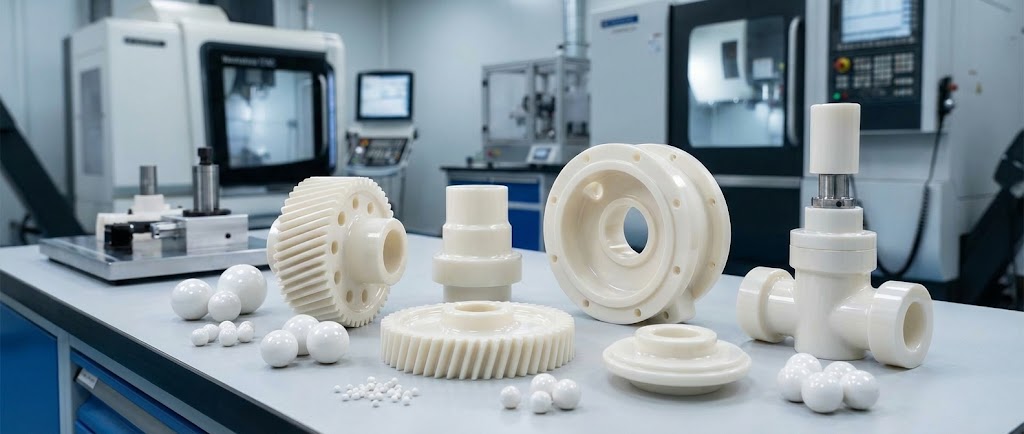
Challenges in Grinding Media & Structural Parts
Engineering and procurement teams face common challenges that directly impact operational efficiency and total cost of ownership
Unpredictable Wear Rates
Variable material quality leads to inconsistent wear behavior, making it impossible to schedule maintenance windows accurately. Your team spends more time reacting to problems than preventing them.
High Breakage Rates
Media fragments contaminate your product stream, requiring additional separation steps and potentially damaging downstream equipment. Quality issues cascade through your entire process.
Dimensional & Density Variations
Out-of-spec media sizes or inconsistent density distributions affect grinding efficiency and can cause equipment wear patterns that shorten mill service life.
Batch-to-Batch Inconsistency
Each new shipment requires requalification testing. Different batches perform differently in the same system, forcing constant process adjustments and quality monitoring.
Lab-to-Production Gap
Materials that perform well in controlled laboratory trials often behave differently under real production conditions—higher temperatures, longer cycles, and more aggressive environments.
Hidden Total Costs
Lower unit price often masks higher total cost of ownership. Replacement frequency, downtime losses, labor for changeovers, and quality issues add up to far more than the initial purchase price.
Experiencing these challenges? Let's discuss how material selection can address them.
Why Industrial Grinding & Structural Parts Are Material-Sensitive
Understanding the science behind material performance helps explain why small variations lead to significant operational differences
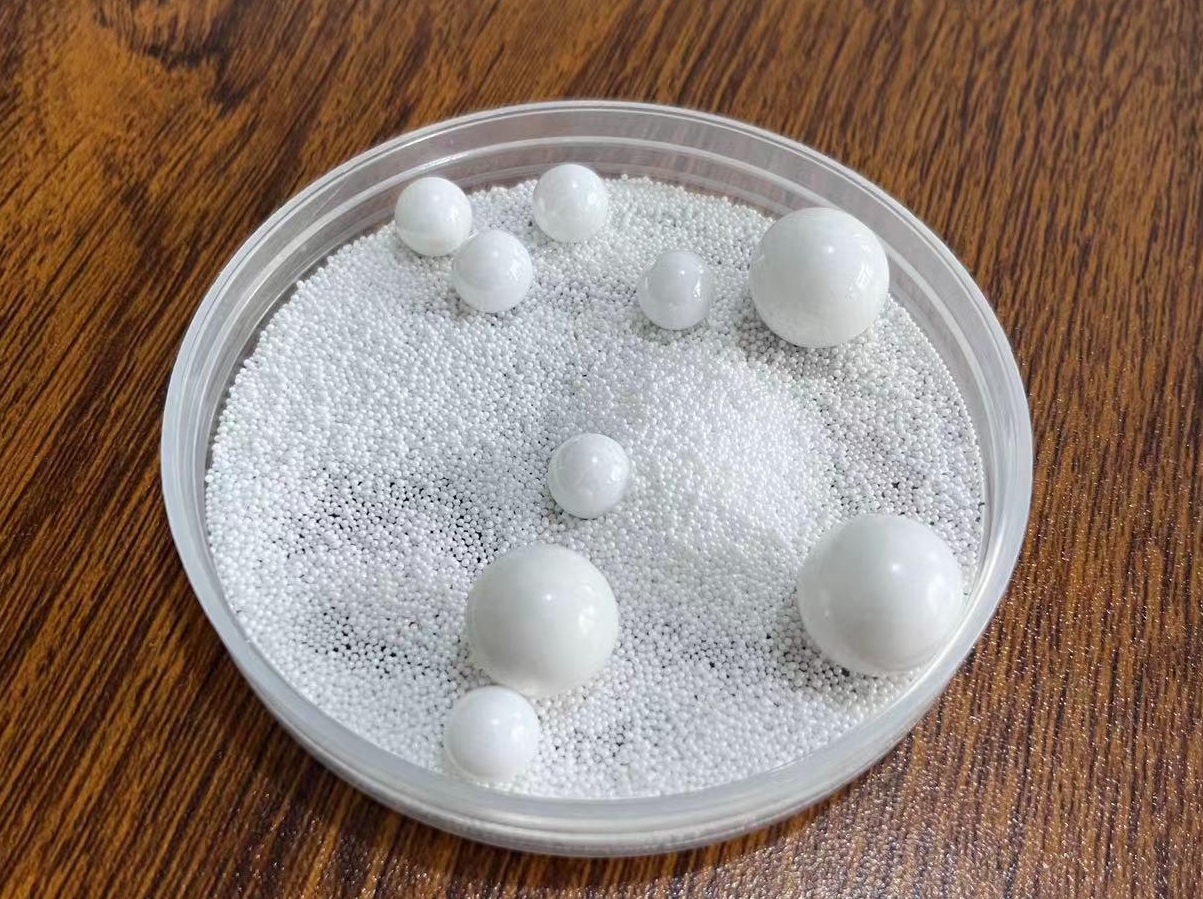
Grinding media and structural ceramics operate in extreme conditions where material properties directly determine performance and longevity.
High-Velocity Impact Loading
Repeated collisions at high speeds create stress concentrations that propagate through material grain boundaries. Uniform microstructure distributes these stresses evenly.
Continuous Abrasive Contact
Surface material is constantly removed through friction with processed materials. Consistent density and hardness ensure predictable, uniform wear patterns.
Chemical Environment Exposure
Acidic, alkaline, or oxidizing process conditions attack material surfaces. Phase stability and purity determine chemical resistance and contamination levels.
Cyclic Fatigue Accumulation
Millions of stress cycles amplify microscopic defects into crack initiation sites. Defect-free material with controlled porosity resists fatigue failure.
The bottom line: In industrial grinding and structural applications, a material's microscopic consistency—its grain structure, density uniformity, phase composition, and defect population—determines its macroscopic behavior. Small variations at the microstructural level translate directly into unpredictable wear rates, unexpected failures, and inconsistent service life.
Want to understand how material properties affect your specific application?
Hidden Risks in Traditional Material Selection
Common procurement approaches often overlook factors that significantly impact long-term performance and total cost
Selecting by Hardness Alone
Prioritizing maximum hardness values as the primary selection criterion
Ignores Fracture Behavior
Harder materials may be more brittle, leading to catastrophic failures instead of gradual wear
Comparing Unit Prices
Choosing suppliers based primarily on per-kilogram or per-piece cost
Overlooks Total Ownership Cost
Downtime, changeover labor, quality issues, and replacement frequency often exceed material savings
Single-Batch Testing
Qualifying materials based on performance of one sample batch
Cannot Predict Long-Term Consistency
Production batches may vary significantly from qualification samples without process controls
Switching Suppliers Freely
Treating grinding media as commodities interchangeable between suppliers
System Rebalancing Required
Different materials require process adjustments; mixing products can create unpredictable interactions
Ready to evaluate materials based on total performance, not just specifications?
What Industrial Grinding & Structural Parts Actually Require
Moving beyond datasheet specifications to the material characteristics that determine real-world performance
Stable Microstructure & Density
Uniform grain size distribution and controlled porosity throughout the material ensure consistent mechanical properties. When every particle responds the same way to stress, performance becomes predictable.
Controlled Wear & Breakage
Optimized balance between hardness and toughness delivers gradual, predictable wear rather than sudden fracture. Your maintenance windows remain on schedule, not driven by emergencies.
Batch-to-Batch Consistency
Rigorous process controls ensure that every shipment matches your qualified specifications. New batches integrate seamlessly with existing inventory without process adjustments.
Proven Production Performance
Materials validated not just in laboratory conditions, but in actual production environments with real process variables. What works in your plant, not just in controlled tests.
The true measure of grinding media and structural ceramic quality isn't found on a datasheet—it's measured in hours of predictable operation, maintenance windows that hold to schedule, and process parameters that don't need constant adjustment. This is what material consistency actually delivers.
Ready to discuss how consistent materials can stabilize your operations?
How We Support Industrial Grinding Systems
An engineering-driven approach focused on your system's long-term performance, not just material specifications
We understand that grinding media and structural ceramics are system components, not commodities. Their value lies in how they perform over thousands of operating hours.
Our technical team works with you to understand your specific operating conditions—mill type, process parameters, product requirements, and maintenance constraints. This allows us to recommend materials based on expected behavior in your actual system, not just laboratory benchmarks.
We track performance data across installations, building a knowledge base that helps predict service life and optimize material selection for different applications.
Want to discuss your specific grinding application with our engineering team?
Material Systems for Grinding & Structural Applications
Engineered ceramic solutions covering the full spectrum of industrial grinding and wear-resistant requirements
Zirconia-Based Grinding Media
Yttria-stabilized and ceria-stabilized zirconia beads delivering exceptional wear resistance and low contamination for fine and ultrafine grinding applications.
Zirconium Silicate Beads
Cost-effective ceramic media offering excellent performance in paint, ink, and coating dispersion applications with consistent sphericity and surface quality.
Structural Ceramic Components
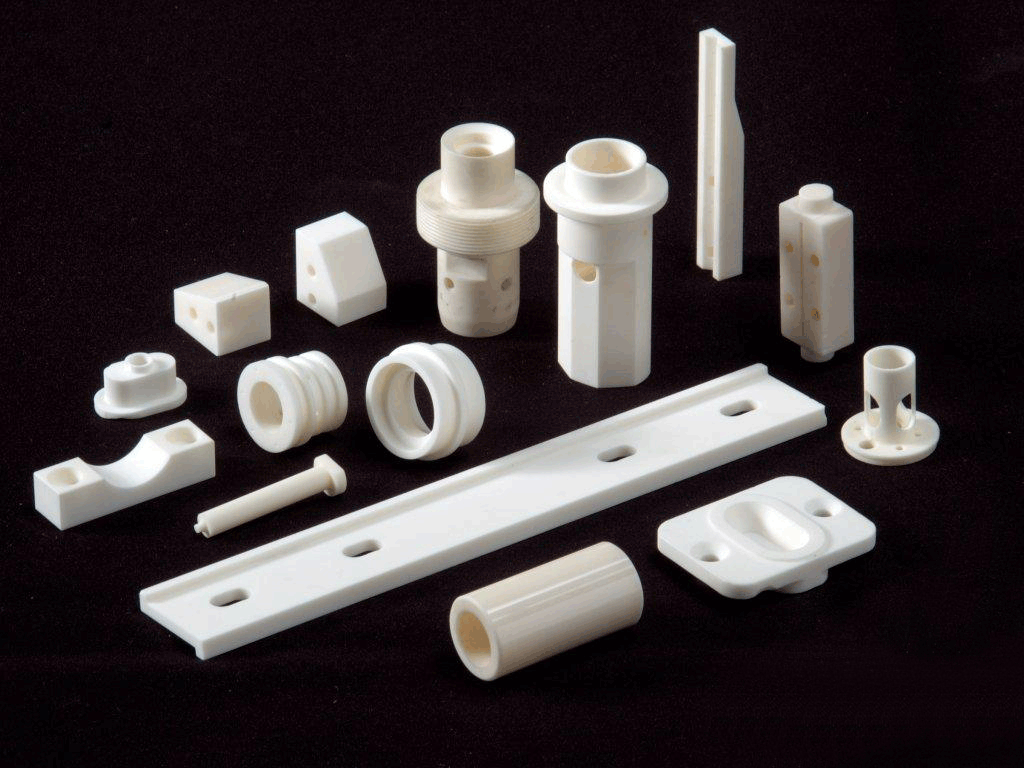
Custom-engineered zirconia and zircon-based wear parts including liners, nozzles, and precision components for demanding industrial environments.
Need detailed specifications or technical datasheets for your evaluation?
Typical Application Scenarios
Our materials serve diverse industrial sectors where consistent grinding performance and wear resistance are critical
Mineral Processing
Mining and ore beneficiation requiring high-volume grinding
Chemical & Pigments
Fine particle dispersion for paints, inks, and coatings
New Energy Materials
Lithium battery cathode and anode material processing
Electronic Materials
High-purity ceramic powder and slurry preparation
Industrial Equipment
Wear-resistant structural parts for continuous systems
Don't see your application? We serve many specialized industries.
Why Industrial Customers Choose Long-Term Partnership
Beyond material quality, the value of a reliable supplier relationship compounds over time
Accumulated Performance Data
Years of documented results across installations help predict behavior and optimize your system configuration.
Full Batch Traceability
Complete documentation from raw materials through delivery enables root cause analysis when issues arise.
Engineering Collaboration
Our technical team participates in material selection and process optimization, not just order fulfillment.
Multi-Industry Experience
Insights from diverse applications help identify solutions that may not be obvious within a single industry.
Interested in references from customers in your industry?
If System Reliability Matters More Than Material Price Alone
When wear rate predictability, breakage behavior, and consistent service life are priorities for your operation, a technical conversation is often the most efficient starting point. Let's discuss your specific system requirements.