
Fine ceramic materials and High-Purity Zirconia revolutionize modern industry by delivering unprecedented thermal resistance, extreme mechanical toughness, and superior chemical inertness to components operating under the harshest environments. If your operation struggles with premature component wear, frequent thermal shock failure, or chemical degradation, you are likely losing thousands of dollars hourly in unplanned downtime and maintenance costs. Standard industrial materials simply cannot survive the extreme stress of modern manufacturing. Fortunately, utilizing components engineered from these advanced formulations resolves these critical issues by offering an indestructible barrier against physical and chemical wear, keeping your production lines moving without interruption.
Why Is High-Purity Zirconia So Crucial?
High-Purity Zirconia is crucial because its unique crystalline structure enables self-healing phase transformations that prevent catastrophic mechanical failures under extreme stress. You can rely on this material to survive environments where traditional industrial ceramics crack or wear out.
What makes fine ceramics different?
Conventional ceramics rely on natural clay minerals, which introduce massive structural variations and impurities. In contrast, fine ceramics use synthetic chemical compositions that you can control at a molecular level. This precise formulation ensures that the finished parts perform reliably under intense physical loads.
You will immediately notice the uniform grain size and high density of these materials. They operate flawlessly where ordinary refractories would crack or degrade.
- Homogeneous grain structures.
- Zero porosity options for vacuum sealing.
- Highly controlled chemical purity exceeding 99%.
Here is the catch:
Unmatched microstructural stability
When stress is applied to the crystal structure, it triggers a phase transition from tetragonal to monoclinic. This transformation actually expands the local crystal volume to clamp micro-cracks shut. You get a ceramic material that acts more like steel than glass.
This self-healing characteristic is why engineers specify it for high-pressure applications. It absorbs energy that would break other oxide ceramics.
- Active crack retardation via phase transformation.
- Extremely high flexural strength (up to 1200 MPa).
- Exceptional fracture toughness matching metals.
Think about it.
Key Takeaway: Choosing advanced ceramic formulations protects your high-stress machinery from sudden brittle failure, ensuring your investments yield long-term reliability.
| Material Spec | High-Purity Zirconia (YSZ) | High-Purity Alumina (99.7%) | Silicon Nitride (Si3N4) |
|---|---|---|---|
| Density (g/cm³) | 6.05 | 3.95 | 3.25 |
| Fracture Toughness (MPa·m¹/²) | 8.0 – 10.0 | 3.5 – 4.0 | 5.0 – 7.0 |
| Flexural Strength (MPa) | 1000 – 1200 | 350 – 400 | 700 – 850 |
While alumina is a cost-effective choice for general wear, zirconia is non-negotiable when your application demands maximum fracture resistance and mechanical toughness.
How Does High-Purity Zirconia Resist Heat?
High-Purity Zirconia resists heat by utilizing its extremely low thermal conductivity and yttria stabilization to maintain structural integrity up to 1500°C. You can deploy it to shield your systems from severe thermal stress.
Managing extreme thermal barrier coatings
High-temperature environments will rapidly destroy unprotected metal substrates in turbines and engines. By applying a thermal barrier coating, you drastically lower the surface temperature of the underlying metal. This is achieved through the exceptionally low thermal conductivity of High-Purity Zirconia. The material acts as a robust shield, reflecting heat away from critical structural components.
You will achieve higher engine operating efficiencies by safely pushing combustion temperatures upward. This directly translates to significant fuel savings.
- Lowest thermal conductivity among dense structural ceramics.
- Excellent adhesion to metal bond coats.
- Coefficient of thermal expansion matching steel.
But that’s not all.
Can it withstand rapid temperature shifts?
Sudden temperature drops usually cause ceramics to shatter instantly due to internal stress. Zirconia counters this thermal shock through its stabilizer additives. By mixing in yttria, you keep the crystal structure stable over broad thermal ranges.
You can confidently cycle temperatures from room level to over 1000 degrees Celsius without causing physical cracking. This thermal stability keeps your continuous-run furnaces online longer.
- Yttria stabilization prevents destructive phase changes.
- High resistance to thermal shock cracking.
- Peak operating temperatures up to 1500°C.
Let’s break it down:
Key Takeaway: Deploying stabilized zirconia coatings enables your systems to run at higher, more efficient temperatures while preventing catastrophic thermal cracking.
| Thermal Property | Yttria-Stabilized Zirconia (YSZ) | Magnesia-Stabilized Zirconia (MSZ) | Fused Silica |
|---|---|---|---|
| Thermal Conductivity (W/m·K) | 2.5 – 3.0 | 2.2 – 2.5 | 1.4 |
| Thermal Expansion (10⁻⁶/K) | 10.5 | 9.5 | 0.5 |
| Max Use Temp (°C) | 1500 | 1400 | 1100 |
Magnesium-stabilized variants offer excellent thermal performance, but yttria-stabilized zirconia remains the industry gold standard for long-term thermal barrier applications.
Can High-Purity Zirconia Stop Severe Wear?
High-Purity Zirconia stops severe wear by providing an incredibly hard surface combined with high fracture toughness that prevents abrasive erosion and chipping. This ensures your high-stress machinery avoids premature mechanical degradation.
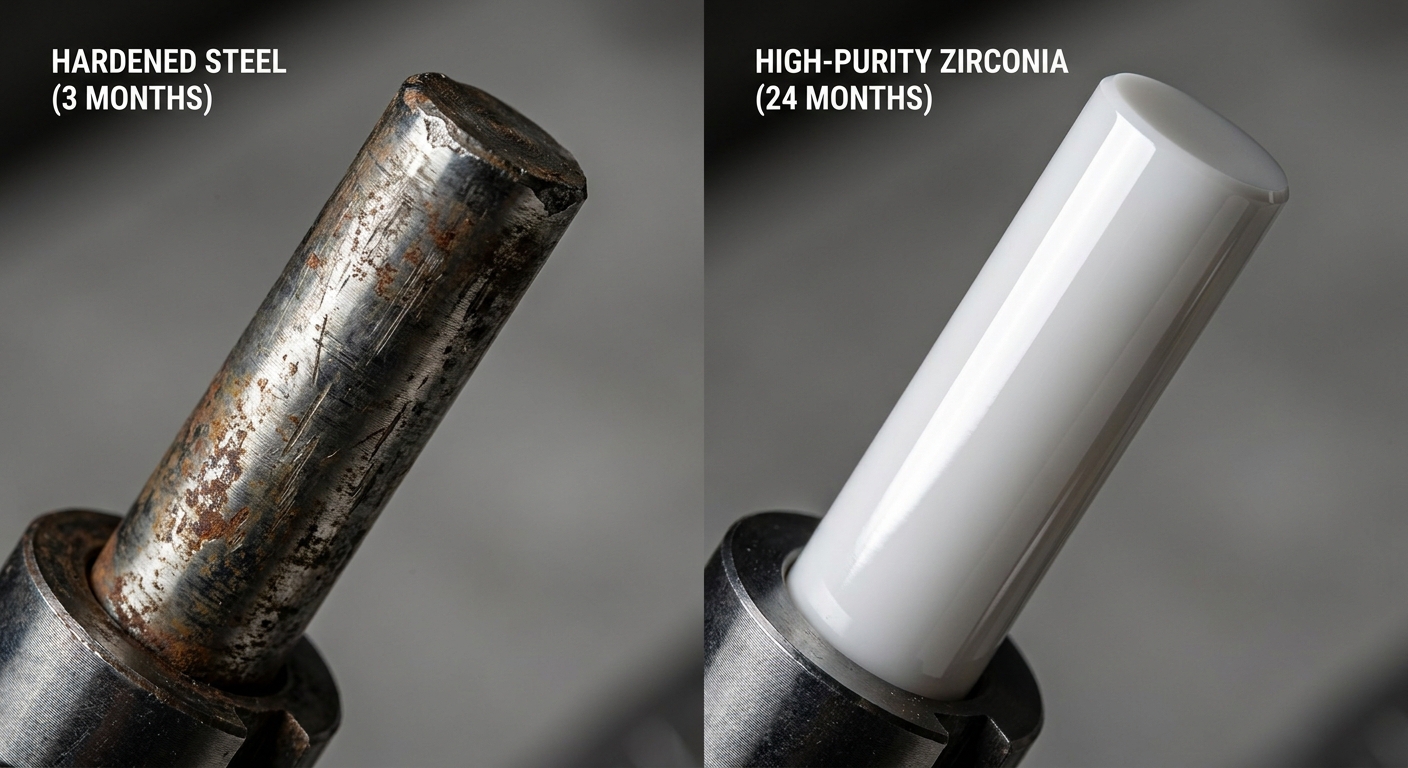
Surviving high-friction environments
Industrial pumps and valves handling abrasive slurries are subject to extreme mechanical erosion. If you use metal sleeves or impellers, you will face frequent maintenance cycles. High-Purity Zirconia provides a surface hardness that easily resists micro-scratching. This hard surface maintains a low friction coefficient over millions of sliding cycles.
You can dramatically extend your seal life by eliminating abrasive particulate wear. This means your process lines keep running without seal leaks.
- Exceptional Vickers hardness (Vickers >1200 HV).
- Polished surfaces yield ultra-low friction coefficients.
- Zero metal-to-metal galling or seizing.
Why does this matter?
Why does fracture toughness matter?
Hard materials are typically fragile and chip easily when struck. Zirconia solves this problem by offering a fracture toughness that outperforms other ceramics by a factor of three. This means you do not have to worry about tiny impacts causing massive structural failure.
You gain a reliable security margin when handling uneven loads or mechanical vibrations. Your tools and dies will last longer on the shop floor.
- Resists chipping during mechanical impacts.
- High elasticity modulus allows slight deflection.
- Prevents sudden, unexpected mechanical collapse.
Here is the deal:
Key Takeaway: By shifting your high-abrasion components to zirconia, you eliminate frequent maintenance stops and avoid brittle failures under vibration.
| Mechanical Metric | High-Purity Zirconia | Tungsten Carbide (WC) | Silicon Carbide (SiC) |
|---|---|---|---|
| Vickers Hardness (HV0.5) | 1250 | 1500 | 2500 |
| Fracture Toughness (MPa·m¹/²) | 9.0 | 10.0 | 3.0 |
| Wear Rate (mm³/N·m × 10⁻⁶) | 0.05 | 0.10 | 0.01 |
While silicon carbide is harder, zirconia’s superior fracture toughness makes it much safer for applications where shock loads or alignment errors exist.
Is High-Purity Zirconia Safe for Medical Use?
High-Purity Zirconia is perfectly safe for medical use due to its complete bio-inertness, excellent aesthetic translucency, and resistance to wear inside the human body. It integrates seamlessly into biological systems without causing adverse immune reactions.
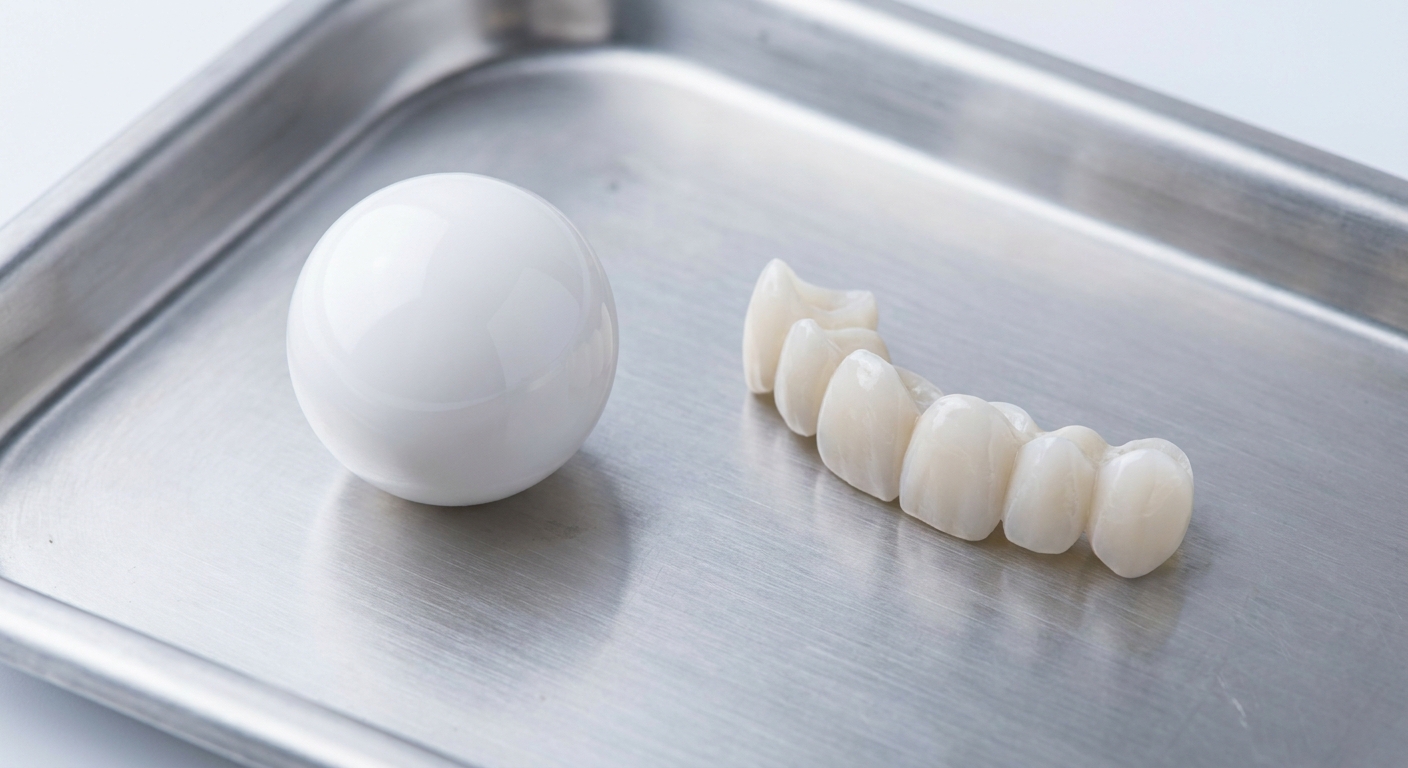
Enhancing human joint replacements
Medical implants must survive inside the human body for decades without degrading or causing adverse tissue reactions. If you use metal-on-metal implants, toxic wear debris can leach into surrounding tissues. Integrating medical-grade High-Purity Zirconia eliminates this risk entirely. The material is completely bio-inert, meaning it does not react with body fluids or release dangerous ions.
Your orthopedic components will exhibit extremely low wear rates over their long lifespans. This ensures patients avoid the pain of corrective revision surgeries.
- Bio-inert chemical structure prevents immune rejection.
- Mirror-like surface polish minimizes joint friction.
- Extremely low wear rate in synovial fluid.
What is the bottom line?
Are dental restorations highly aesthetic?
Patients demand dental restorations that look exactly like their natural teeth. Metal crowns look unnatural and can leave grey lines along the gums. Zirconia offers a natural translucency that mimics real tooth enamel perfectly.
You can easily match any natural tooth shade while providing the strength to chew tough foods. It gives patients both beautiful smiles and lasting function.
- Translucency that matches natural tooth enamel.
- Can be customized to precise patient shades.
- High strength prevents crown fractures.
Best of all:
Key Takeaway: Utilizing bio-inert zirconia for implants and dental restorations provides patients with permanent, allergy-free solutions that match natural aesthetics.
| Bio-Property | Medical-Grade Zirconia | Titanium Alloy (Ti-6Al-4V) | Cobalt-Chrome Alloy |
|---|---|---|---|
| Biocompatibility | Excellent (Inert) | High | Moderate (Ion Release) |
| Translucency (%) | 35 – 49 | 0 (Opaque) | 0 (Opaque) |
| In-Vivo Wear Rate | Extremely Low | Low | Moderate |
Zirconia’s combination of aesthetic appeal and complete bio-inertness makes it a superior alternative to titanium in visible dental and high-wear orthopedic implants.
Where Does High-Purity Zirconia Power Energy?
High-Purity Zirconia powers clean energy technologies by functioning as a highly efficient oxygen-ion conductor in solid oxide fuel cells and rugged oxygen sensors. It allows you to build highly responsive, stable systems.
Solid oxide fuel cell performance
Clean energy generation requires highly efficient electrochemical reactions at elevated temperatures. Solid oxide fuel cells rely on an electrolyte layer that can rapidly transport oxygen ions. High-Purity Zirconia doped with yttria acts as an exceptional solid electrolyte for this precise task.
You will generate electricity directly from hydrogen with minimal heat waste. This enables highly efficient decentralized power stations.
- Excellent oxygen-ion conductivity at 800°C.
- Perfect gas tightness prevents fuel-oxidant mixing.
- Maintains structural integrity under reducing atmospheres.
How does this work?
Can oxygen sensors survive harsh exhausts?
Combustion exhaust streams are filled with corrosive gases and highly volatile thermal currents. Standard sensor materials quickly degrade and send incorrect fuel-to-air mixture data to controllers. Zirconia-based oxygen sensors can withstand these brutal environments without drifting in calibration.
You can monitor emission levels continuously to meet strict environmental regulations. This ensures your industrial burners always burn fuel cleanly.
- Reliable signal response in highly corrosive exhaust gas.
- Direct measurement of real-time oxygen concentration.
- Thermally stable sensor body prevents mechanical drift.
You might be wondering:
Key Takeaway: Integrating zirconia electrolytes in your energy systems guarantees efficient power generation and precise, drift-free emission monitoring under corrosive conditions.
| Electrolyte Type | Yttria-Stabilized Zirconia (8YSZ) | Scandia-Stabilized Zirconia (ScSZ) | Gadolinia-Doped Ceria (GDC) |
|---|---|---|---|
| Ionic Conductivity (S/cm at 800°C) | 0.10 | 0.15 | 0.08 |
| Chemical Stability | Highly Stable | Stable | Medium (Reduces at high temp) |
| Mechanical Strength (MPa) | 350 | 400 | 200 |
While scandia-stabilized zirconia offers higher conductivity, yttria-stabilized formulations (8YSZ) remain the industrial favorite due to their excellent balance of mechanical toughness and thermal stability.
How Does High-Purity Zirconia Boost Electronics?
High-Purity Zirconia boosts electronic performance by providing superior electrical resistivity and non-magnetic insulation that prevents signal distortion and voltage leaks. This allows you to construct smaller, safer electrical components.
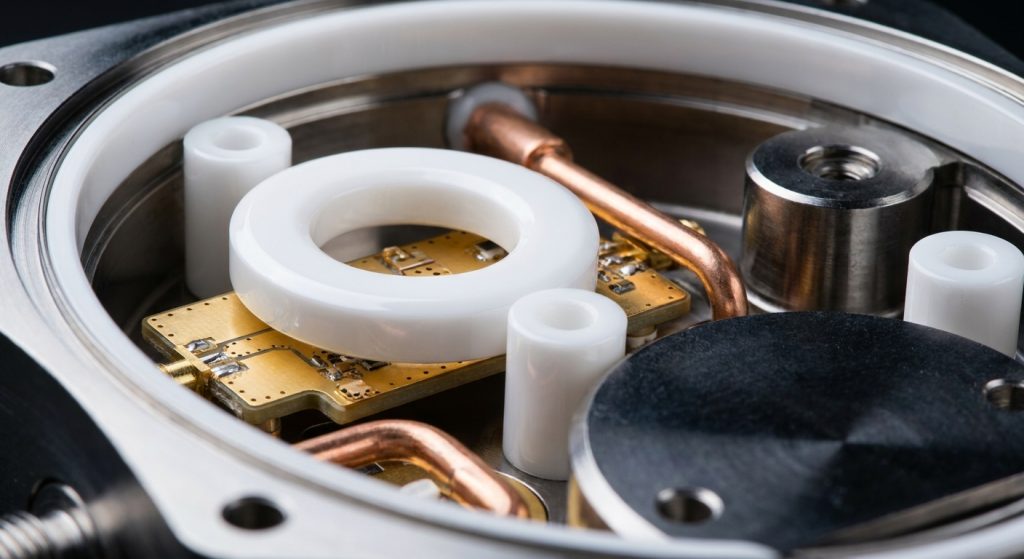
Isolating sensitive high-voltage components
High-voltage electronic circuits must prevent electrical leakage to avoid system shorts and fires. If you rely on plastic or standard glass insulators, they can break down under continuous voltage stress. Using High-Purity Zirconia guarantees excellent dielectric strength and electric insulation properties. The material blocks electric currents completely, even at high operating temperatures.
You can safely design smaller, more compact electrical enclosures. This saves valuable space in your power distribution cabinets.
- High electrical resistivity at elevated temperatures.
- Outstanding dielectric strength limits leakage current.
- Low dielectric loss prevents energy dissipation.
Here is the exciting part:
Why are non-magnetic properties essential?
High-frequency communication equipment and magnetic imaging devices are sensitive to magnetic distortion. If you use ferrous components, they will distort signal pathways and degrade device accuracy. Zirconia is completely non-magnetic and will not interfere with electromagnetic fields.
You get cleaner signal transmissions and much sharper data readings. This is highly critical for medical scanners and wireless communication hubs.
- Zero magnetic susceptibility prevents field distortion.
- High RF transparency allows clean wireless signals.
- High mechanical stability in powerful magnetic fields.
Let’s look closer:
Key Takeaway: Specifying non-magnetic zirconia insulators keeps your high-frequency electronics running cool, safe, and free from electromagnetic interference.
| Property | High-Purity Zirconia | Alumina (99%) | Steatite |
|---|---|---|---|
| Dielectric Strength (kV/mm) | 10 – 12 | 15 | 10 |
| Volume Resistivity (Ω·cm at 20°C) | >10¹² | >10¹⁴ | >10¹² |
| Magnetic Behavior | Diamagnetic (Inert) | Diamagnetic (Inert) | Diamagnetic (Inert) |
For standard insulation, alumina offers higher raw resistivity, but zirconia is chosen when mechanical stresses demand a material that will not chip or crack under assembly torque.
Why Trust High-Purity Zirconia in Aerospace?
High-Purity Zirconia is trusted in aerospace because it maintains extraordinary structural strength and thermal insulation during high-speed atmospheric reentry and extreme vibrations. It gives you absolute confidence when engineering high-altitude structures.
Surviving atmospheric reentry friction
Spacecraft and hypersonic jets encounter extreme thermal loads from atmospheric friction. Standard metals melt instantly under these conditions, and ordinary ceramics peel away from the structure. High-Purity Zirconia heat shields maintain their physical shape and insulate the crew cabin from deadly external heat.
You can confidently plan multiple atmospheric reentries without replacing expensive shield panels. This makes space transport much more sustainable.
- Extremely low heat transfer rates protect interior hulls.
- Excellent resistance to plasma erosion and high drag.
- Retains mechanical load capacity above 1400°C.
But wait, there’s more.
Is weight reduction highly critical?
Launching payloads into space is incredibly expensive, so every ounce of weight must be accounted for. You can design hollow, thin-walled structures that deliver the strength of solid steel at a lower mass. This optimization allows you to maximize your secondary fuel or cargo payload.
You get high mechanical safety margins without adding unnecessary weight to the vehicle. This improves your overall system efficiency.
- High strength-to-weight ratio compared to heavy superalloys.
- Thin-walled geometry options via precision molding.
- Resists extreme vibrations during launch.
Think about it.
Key Takeaway: Using engineered zirconia structural parts lets aerospace designers reduce overall dry weight while securing unmatched thermal and mechanical protection.
| Design Criteria | High-Purity Zirconia | Nickel Superalloy (Inconel) | Carbon-Carbon Composite |
|---|---|---|---|
| Max Service Temp (°C) | 1500 | 1000 | 2000 (Non-oxidizing only) |
| Oxidation Resistance | Inert | High | Very Low (Oxidizes rapidly) |
| Vibration Resistance | High | Excellent | Moderate |
While carbon composites handle higher absolute heat in vacuum, zirconia is superior for long-term orbital applications where atomic oxygen exposure would rapidly oxidize carbon.
Can High-Purity Zirconia Lower Industry Costs?
High-Purity Zirconia dramatically lowers industry costs by extending component lifespans up to tenfold and eliminating expensive unscheduled downtime. This makes your operation leaner and far more profitable.
Extending operational machine lifespans
Repeated component failure forces your production facility into constant shutdown cycles. If you use cheap metal or plastic bushings, they will wear down in a matter of weeks. Upgrading to components made from High-Purity Zirconia extends the lifespan of your critical machine parts by up to ten times. This high durability keeps your production lines running continuously.
You will see a massive drop in replacement part purchases within the first quarter of deployment. This directly increases your company’s operational profitability.
- Components last up to ten times longer than hardened steel.
- Reduces the need for routine maintenance checks.
- Lowers total cost of ownership over the machine lifecycle.
Why is this a game changer?
How does it prevent unplanned downtime?
Unpredicted machine failure throws your entire factory schedule into chaos and ruins customer delivery timelines. Zirconia parts wear down in an incredibly slow, predictable manner over millions of operating cycles. This allows you to plan your maintenance schedules months in advance with absolute confidence.
You eliminate costly emergency repairs and keep your customer order fulfillment rates high. It brings peace of mind to your maintenance managers.
- Highly predictable wear patterns eliminate surprise failures.
- Facilitates accurate preventative maintenance scheduling.
- Prevents downstream damage from broken component fragments.
Let’s be honest:
Key Takeaway: Upgrading to zirconia wear parts shifts your plant from reactive emergency maintenance to highly efficient, planned operational schedules.
| Cost Parameter | Hardened Tool Steel | High-Purity Alumina | High-Purity Zirconia |
|---|---|---|---|
| Initial Component Cost | Low | Medium | High |
| Service Lifespan (Months) | 2 – 3 | 6 – 8 | 24 – 36 |
| Annual Downtime Cost ($) | High | Moderate | Extremely Low |
Despite a higher upfront purchase price, zirconia components deliver the lowest total cost of ownership due to their extremely long service life and the elimination of downtime.
How Is High-Purity Zirconia Shaped and Made?
High-Purity Zirconia is shaped through methods like dry pressing and injection molding before undergoing high-temperature sintering to reach its maximum density. This process gives you total control over complex mechanical dimensions.
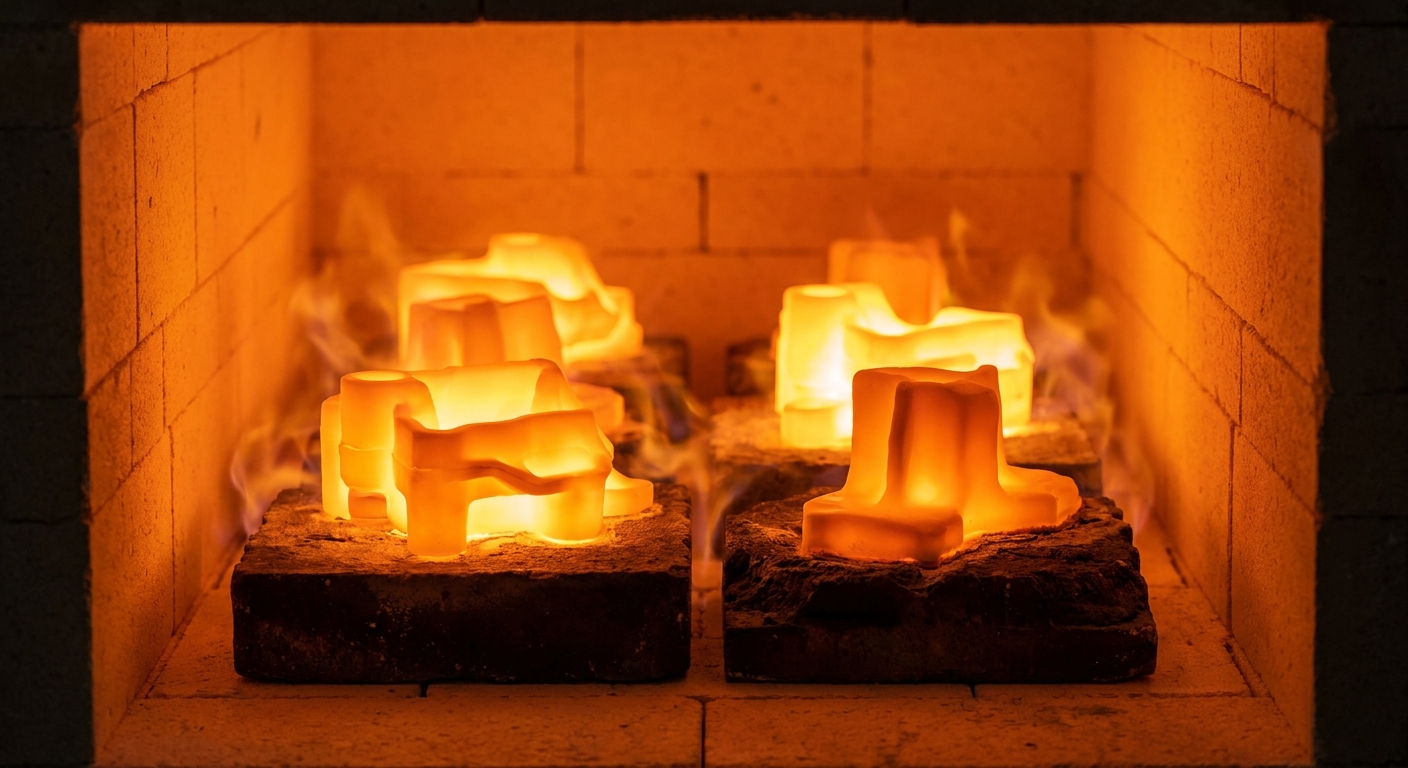
Choosing dry pressing or injection molding
Manufacturing complex industrial shapes requires different molding methods depending on the part geometry. For simple plates or rods, dry pressing offers rapid production and high green-body density. For highly intricate shapes with holes or threads, injection molding is the ideal choice.
You can select the most economical forming process to match your production volumes. This keeps your custom tooling costs within budget.
- Dry pressing is ideal for simple, flat shapes.
- Ceramic injection molding (CIM) enables complex geometries.
- High dimensional accuracy before entering the kiln.
Let’s delve deeper:
What happens during high-temp sintering?
The raw ceramic green body is fragile and must be heated to extreme temperatures to fuse the individual powder grains together. During sintering, High-Purity Zirconia experiences controlled shrinkage as voids are eliminated and densification occurs. This sintering process turns a soft powder shape into a rock-hard ceramic component.
You must calculate the precise shrinkage rate to ensure the final parts meet your blueprint tolerances. This requires deep engineering expertise.
- Firing temperatures range from 1400°C to 1600°C.
- Densification reaches up to 99.9% of theoretical limits.
- Precise shrinkage calculation prevents dimension errors.
This is where the magic happens:
Key Takeaway: Understanding ceramic forming and sintering processes allows you to design parts that are both highly functional and economical to produce.
| Process Phase | Dry Pressing | Injection Molding (CIM) | Isostatic Pressing |
|---|---|---|---|
| Geometric Complexity | Low | High | Medium |
| Tooling Setup Cost | Low | High | Medium |
| Density Uniformity | Moderate | High | Extremely High |
For prototypes and short production runs, isostatic pressing followed by green machining is the most cost-effective way to avoid expensive injection mold tooling.
What Is the Future of High-Purity Zirconia?
The future of High-Purity Zirconia lies in the expansion of 3D printing technologies and the development of embedded smart sensors for real-time diagnostic feedback. These innovations will keep your operations ahead of the competition.
Integrating 3D printing technologies
Traditional machining of sintered ceramics is incredibly difficult and expensive due to the material’s extreme hardness. If you need a customized prototype, wait times can stretch to several weeks. Printing components using High-Purity Zirconia paste allows you to bypass tooling requirements entirely. You can produce complex internal channels that are impossible to create with standard drills.
You can test and refine your custom designs in days rather than months. This rapid iteration speed keeps you ahead of your competitors.
- Tool-free additive manufacturing reduces design turnaround.
- Enables complex internal cooling channels.
- Zero material waste during the printing process.
And the best part?
Will smart ceramic sensors dominate?
Modern industries are moving toward fully automated, self-monitoring production environments. Future zirconia parts will have embedded electronic sensors to monitor real-time stress and temperature levels. These smart parts will send health data directly to your factory control systems.
You will receive automatic alerts before a part even begins to show signs of wear. This creates a truly intelligent, zero-downtime manufacturing facility.
- Real-time stress and temperature data tracking.
- Direct communication with factory IoT networks.
- Automatic wear warnings prevent system failures.
Look at it this way:
Key Takeaway: By preparing for 3D-printed and smart zirconia parts, you ensure your manufacturing operations remain highly flexible and connected.
| Future Tech | Additive Manufacturing (3D Print) | Green Machining | CNC Diamond Grinding |
|---|---|---|---|
| Design Freedom | Unlimited | Moderate | Low |
| Material Waste | Near Zero | Medium | High |
| Lead Time | Very Short | Medium | Long |
While 3D printing of ceramics is evolving rapidly, precision CNC diamond grinding remains essential for achieving extremely tight tolerances under ±0.005mm.
Conclusion
If your business continues to rely on traditional metal components, you will continue to suffer from premature equipment failure, expensive downtime, and lost revenue. By choosing High-Purity Zirconia components, you can solve these critical wear and thermal issues, keeping your processes running with absolute reliability. As a global leader in advanced technical ceramics, we design and manufacture high-performance solutions tailored to your specific industrial needs. Do not let outdated materials limit your operational success; contact us today to speak with an engineering specialist and discover how our advanced ceramic materials can transform your equipment performance.
Frequently Asked Questions
Can I machine zirconia parts myself?
No, you cannot machine fully sintered zirconia with standard workshop tools. Because of its extreme hardness, any post-sintering adjustments require specialized diamond-grit grinding wheels and high-precision CNC equipment. For this reason, it is always best to have your components machined to their final dimensions in their soft “green” state before they undergo final sintering.
What’s the best stabilizer for high-temperature applications?
Yttria is the best overall stabilizer for high-temperature applications up to 1500°C. It provides the most reliable crystalline phase stability and prevents the structural cracking associated with rapid thermal cycling. If you are dealing with extremely high mechanical impact at slightly lower temperatures, magnesia-stabilized zirconia can be a viable alternative.
How do I know if zirconia is better than alumina for my process?
You should choose zirconia if your components are failing due to chipping, cracking, or severe mechanical shock. While alumina is highly wear-resistant and more affordable, it is far more brittle and prone to catastrophic failure under impact. If your application involves heavy vibration, high structural stress, or tight assembly tolerances, zirconia is the safer and more reliable choice.
Can zirconia tolerate contact with strong acids?
Yes, zirconia has excellent chemical inertness and resists corrosion from most strong acids and basic solutions. Unlike metals that corrode and contaminate your process streams, zirconia remains stable and clean over long-term exposure. However, you should avoid exposing it to concentrated hydrofluoric acid, as this chemical can attack the oxide structure.
What’s the best way to clean ceramic components?
Ultrasonic cleaning in a mild detergent solution is the best way to clean ceramic components. This method removes surface oils, particulates, and biological contaminants without risking chemical etching or micro-scratching. Avoid using abrasive steel wool or harsh chemicals that can degrade surface finishes.