
Zirconia Ceramic is a high-performance crystalline material derived from the mineral zircon, prized for its unique ability to resist fractures and withstand extreme industrial environments while maintaining structural integrity. You often face the challenge of component failure where traditional materials crack under high stress or erode in harsh chemical settings, leading to expensive downtime. This fragility agitates production schedules and inflates maintenance budgets, creating a persistent bottleneck in your operations. By integrating Zirconia Ceramic into your technical workflow, you utilize a “ceramic steel” that offers the fracture toughness and longevity required for the most demanding B2B applications.
1. What makes Zirconia Ceramic an ideal industrial material?
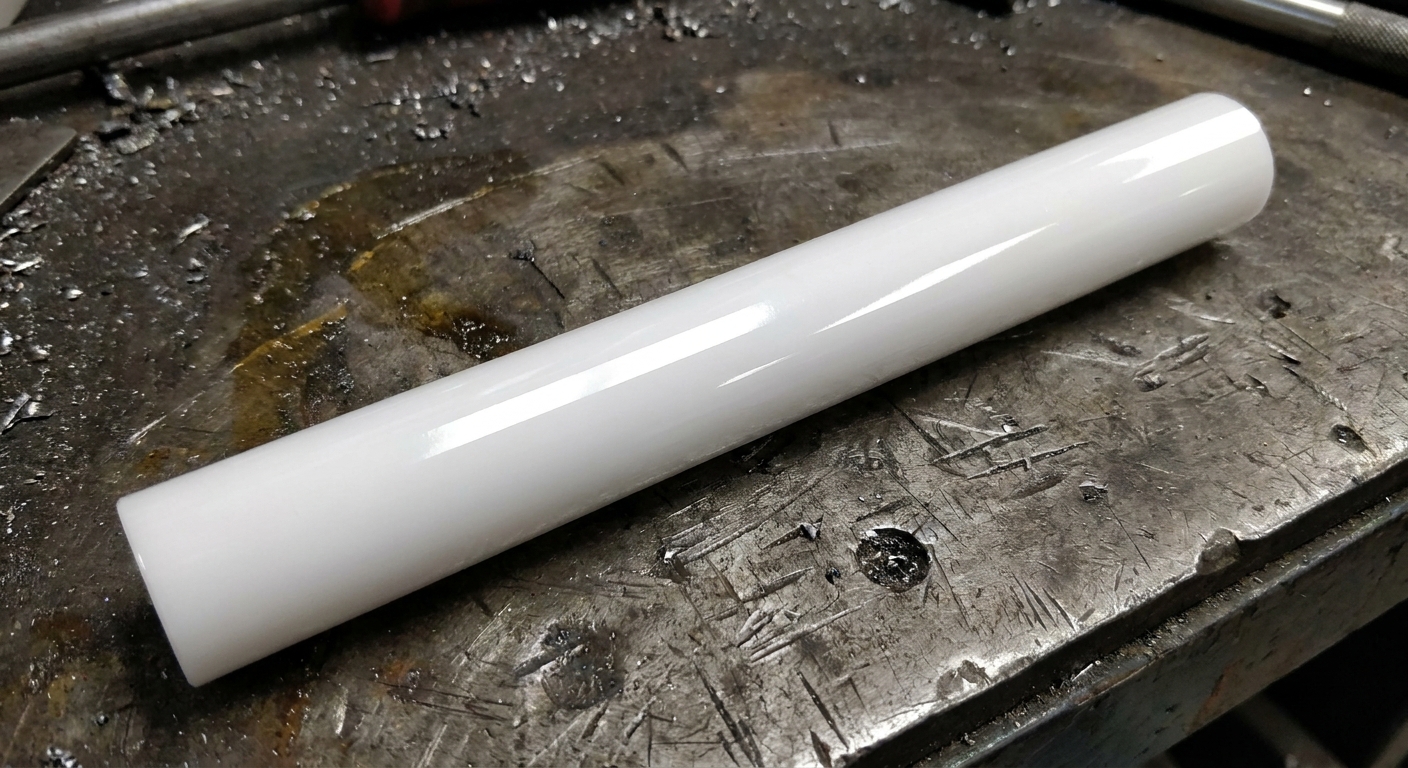
Zirconia Ceramic stands out because it possesses a rare combination of high fracture toughness, extreme hardness, and excellent corrosion resistance. This unique profile allows Zirconia Ceramic to perform in structural applications where other ceramics would typically fail due to brittleness.
The material’s high density and robust chemical bonds create a surface that resists wear and environmental degradation. This makes it an essential choice for you when reliability in extreme conditions is a non-negotiable requirement.
Unmatched Mechanical Strength
When you evaluate materials for heavy-duty components, mechanical strength is usually the deciding factor. Zirconia provides a level of toughness that rivals certain metals while retaining the lightweight and non-conductive benefits of a ceramic.
Here’s the deal: Traditional ceramics shatter upon impact, but zirconia undergoes a specific internal transformation that actually stops cracks in their tracks. This is why many engineers refer to it as the ultimate problem-solver for high-friction parts.
- High fracture toughness prevents catastrophic failure.
- Extreme hardness resists surface scratching.
- Chemical inertness allows use in acidic environments.
Why Surface Finish Matters
A smooth surface finish is critical for reducing friction and extending the life of moving parts. Because this material can be polished to a diamond-like luster, it significantly lowers the coefficient of friction in industrial assemblies.
Key TakeawayUsing this material reduces the frequency of part replacements, saving you significant long-term costs in maintenance and logistics.
| Property | Value/Benefit | |
|---|---|---|
| Fracture Toughness | Exceptional (Ceramic Steel) | |
| Chemical Stability | High (Inert to most acids) | |
| Hardness | HV 1200+ | |
| Density | ~6.0 g/cm³ |
Zirconia’s physical properties provide a foundation for engineering components that simply do not wear out under normal operating cycles.
2. How was the history of Zirconia Ceramic first established?
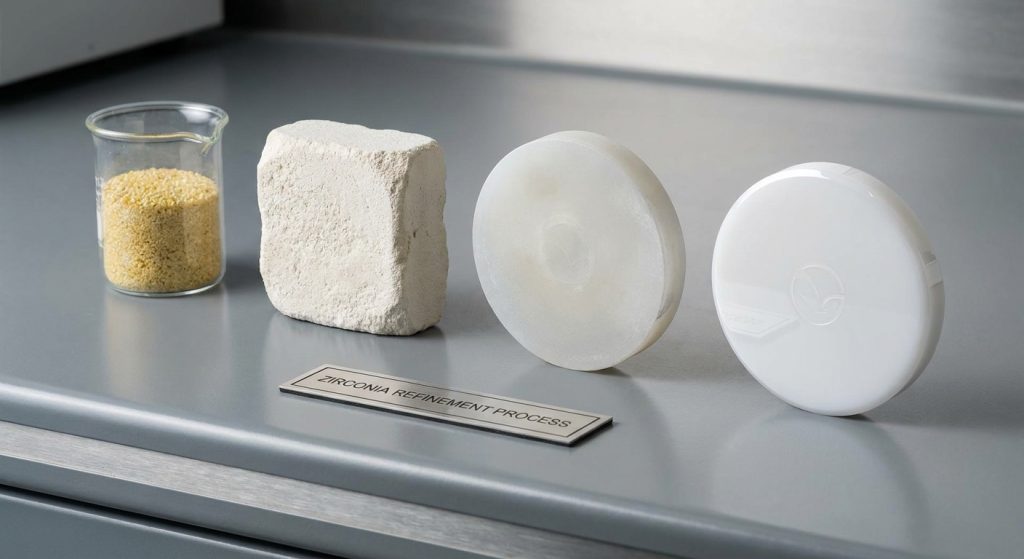
The history of Zirconia Ceramic traces back to 1789 when German chemist Martin Heinrich Klaproth succeeded in extracting zirconium oxide from the mineral zircon. While it was initially recognized for its beauty in gemstones, its technical potential was not fully unlocked until the industrial revolutions of the 19th and 20th centuries.
As the demand for more resilient materials grew, researchers began to experiment with the oxide’s properties for abrasive and refractory uses. Today, you see the result of centuries of refinement in every high-tech zirconia component.
Evolution from Abrasive to Aerospace
Initially, the material found its niche as a powerful abrasive for grinding wheels and cutting tools. However, as science progressed, its ability to withstand extreme heat made it indispensable for aerospace and automotive engineering.
But wait: The journey didn’t stop at heavy industry, as the 21st century saw the material move into the highly precise world of medical implants.
- 18th Century: Discovery by Martin Heinrich Klaproth.
- 19th Century: Primary use in abrasives and grinding tools.
- 20th Century: Development of structural ceramics for engineering.
The Rise of High-Tech Applications
Modern manufacturing has allowed for the stabilization of the material, making it useful for everything from oxygen sensors to dental crowns. This transition from a basic mineral to a sophisticated engineered solution reflects its incredible versatility.
Key TakeawayUnderstanding the historical journey of this material reveals a legacy of reliability and a constant expansion into more demanding technical fields.
| Period | Major Milestones | |
|---|---|---|
| 1789 | Discovery of Zirconia by Klaproth | |
| 1800s | Adoption in industrial grinding tools | |
| 1970s | Discovery of “Transformation Toughening” | |
| Present | Global standard for dental and aerospace parts |
The long history of this oxide ensures that you are working with a well-documented and deeply understood industrial substance.
3. What are the primary phases of Zirconia Ceramic structure?
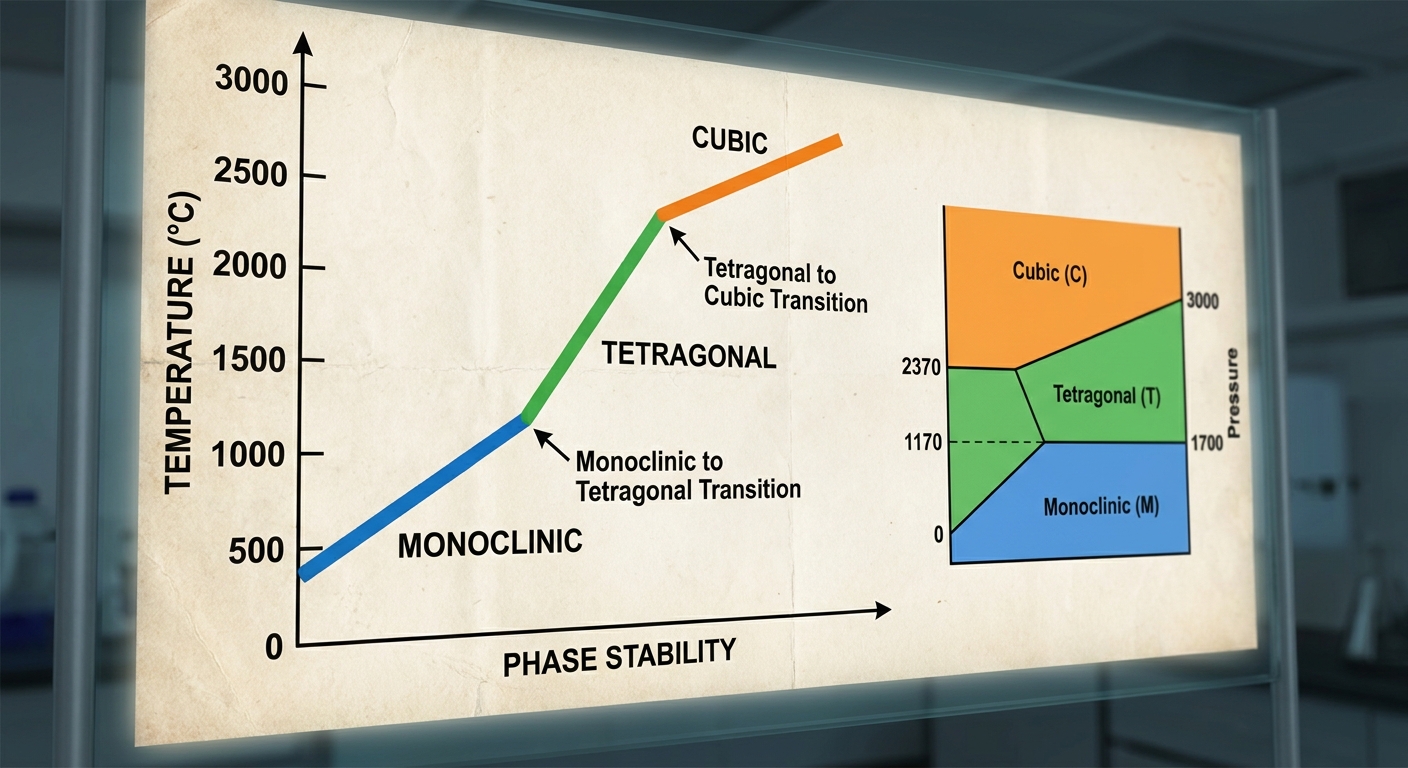
The crystal structure of Zirconia Ceramic is polymorphic, meaning it exists in three distinct shapes—monoclinic, tetragonal, and cubic—depending on the temperature it is subjected to. At room temperature, the material is naturally monoclinic, but it transforms into a tetragonal phase at 1170°C and a cubic phase at 2370°C.
This ability to change phases is actually the secret behind the material’s legendary toughness. When you stress the material, it triggers a phase transition that creates internal pressure to squeeze cracks shut.
Managing Phase Transitions
For industrial use, maintaining the right phase is critical to ensuring the part does not become brittle or lose its shape. Most structural components use stabilizers like yttria to keep the material in its strong tetragonal state at room temperature.
Think about this: If the material is not properly stabilized, it can undergo a volume change during cooling that causes the part to crumble.
- Monoclinic: Stable up to 1170°C (low density).
- Tetragonal: High strength phase (1170°C–2370°C).
- Cubic: Highest temperature phase (above 2370°C).
The Power of Transformation Toughening
When a crack attempts to form, the crystals around it transform from tetragonal to monoclinic. This expansion acts as a mechanical “brake,” preventing the crack from spreading through the rest of the component.
Key TakeawayZirconia’s polymorphic nature allows it to “heal” internal stresses, giving you a safety margin that other ceramics simply cannot provide.
| Phase | Characteristics | Temperature Stability | |
|---|---|---|---|
| Monoclinic | Stable, low strength | Below 1170°C | |
| Tetragonal | Highest toughness | 1170°C to 2370°C | |
| Cubic | High temperature stable | 2370°C to 2700°C |
This phase-shifting ability is why engineers rely on this specific ceramic for high-load structural applications.
4. How is Zirconia Ceramic manufactured from raw zircon?
The manufacturing of Zirconia Ceramic begins with a process called calcination, where raw zircon sand is purified and subjected to intense heat in an oxygen-rich environment. This chemical reaction converts the zircon into a pure oxide powder, which serves as the raw material for all subsequent engineering.
After the powder is formed, it is often mixed with stabilizers and ground to a specific particle size to ensure uniform density. For you, this means receiving a material that is predictable and consistent across every batch.
From Ore to Oxide
The refining process is highly technical and requires precise control over temperature and chemistry. Once the impurities are removed, the resulting zirconia is ready for pressing into complex shapes or being used as a high-purity coating.
Here is the deal: The quality of the final ceramic part is determined by the purity of the initial calcined powder.
- Extraction: Mining zircon from natural reservoirs.
- Purification: Removing titanium and iron impurities.
- Calcination: Heating to 2000°C to create the oxide.
- Milling: Grinding the oxide into sub-micron powder.
Forming the Final Component
Once the powder is ready, it can be formed using several methods such as dry pressing or injection molding. These techniques allow for the creation of intricate parts with very tight dimensional tolerances.
Key TakeawayA controlled manufacturing process ensures that the material you integrate into your production line meets strict performance and safety standards.
| Production Step | Purpose | Critical Factor | |
|---|---|---|---|
| Calcination | Transform Zircon to Zirconia | Oxygen Control | |
| Stabilization | Prevent Phase Crumbling | Additive Purity | |
| Milling | Control Particle Size | PSD Consistency | |
| Sintering | Solidify the Part | Temperature Ramp |
The transformation from raw sand to industrial-grade oxide is a testament to modern chemical engineering and material science.
5. Which types of Zirconia Ceramic are best for your project?
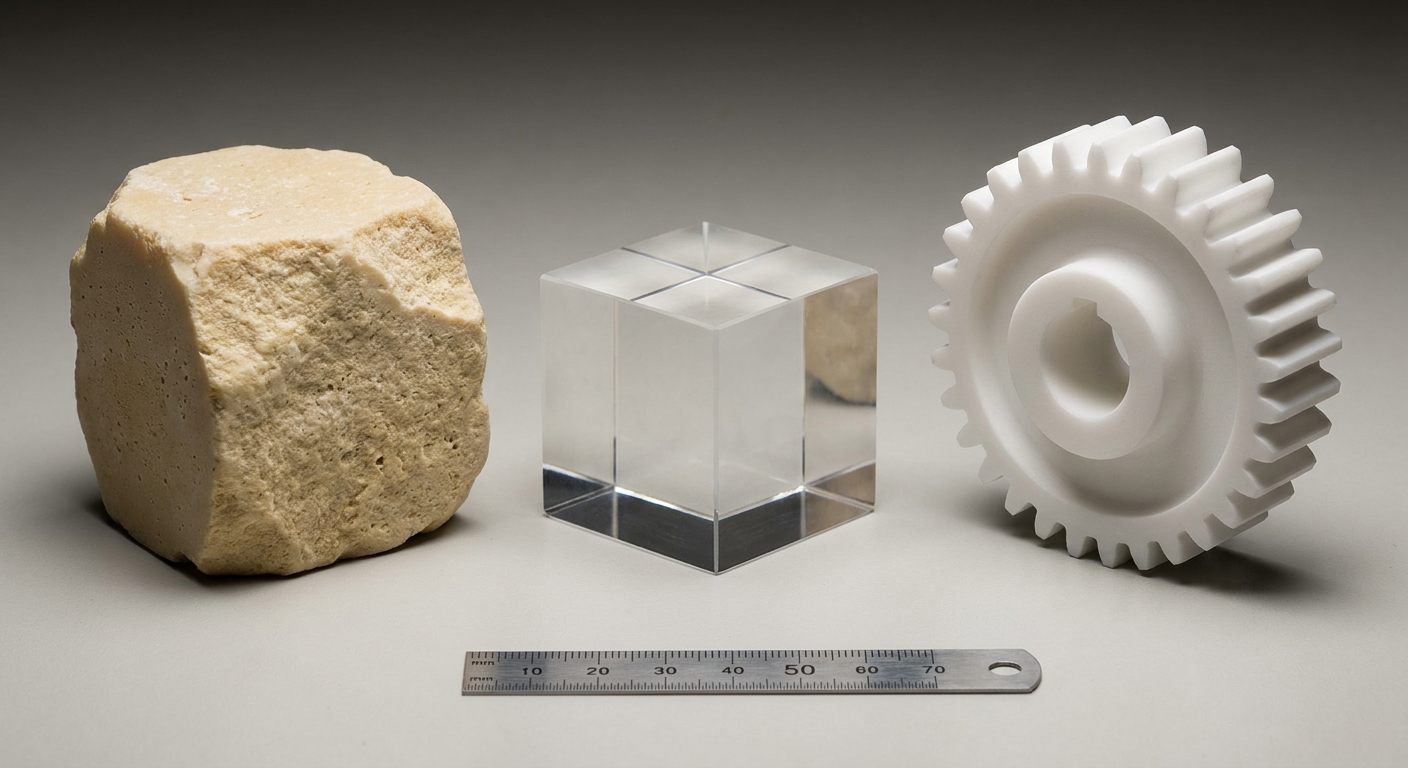
You should choose a specific type of Zirconia Ceramic based on whether your application requires optical clarity, extreme thermal resistance, or high fracture toughness. Common types include monoclinic for basic refractories, cubic for optical and high-heat tubes, and stabilized grades for structural engineering.
Most B2B industrial projects utilize Stabilized Zirconia, where yttria or magnesia is added to the mixture. This ensures the material remains durable and functional throughout thousands of high-stress cycles.
Comparing Stabilized Grades
Different stabilizers change how the material interacts with heat and stress. For instance, yttria-stabilized zirconia (YSZ) is the gold standard for structural integrity and load-bearing components in manufacturing.
But wait: If your project involves sensors or fuel cells, the electrical properties of the stabilizer become more important than the mechanical strength.
- Yttria-Stabilized: Best for general structural parts.
- Magnesia-Stabilized: Ideal for high-temperature refractory use.
- Ceria-Stabilized: Used for environments requiring higher thermal stability.
The Role of Monoclinic and Cubic
While monoclinic zirconia is excellent for simple abrasives, cubic zirconia is prized for its high refractive index and its use in high-temperature thermal protection. Choosing between these depends entirely on your specific industry performance metrics.
Key TakeawaySelecting the correct grade of this material ensures that your components are optimized for their specific environment, preventing early wear or failure.
| Grade Type | Best Application | Primary Advantage | |
|---|---|---|---|
| Y-TZP | Structural Parts | Highest Toughness | |
| Mg-PSZ | Refractories | Thermal Shock Resistance | |
| Cubic | Optical/High Heat | High Refractive Index | |
| Monoclinic | Grinding Tools | Economical and Stable |
Understanding these grades allows you to make informed procurement decisions that align with your engineering goals.
6. Why is Zirconia Ceramic the top choice for structural parts?
Zirconia Ceramic is the preferred choice for structural parts because its density and hardness allow it to withstand mechanical loads that would cause other materials to deform or fail. In the aerospace and automotive sectors, components like valves and seals must survive extreme friction without surface degradation.
Because this material resists corrosion and chemical attack, it is also ideal for the manufacturing and chemical processing industries. You can rely on these parts to maintain their dimensions even when exposed to harsh industrial solvents.
Superior Wear Resistance
In any B2B setting, downtime caused by worn-out parts is a major financial drain. Zirconia structural parts last significantly longer than metal counterparts, particularly in abrasive environments.
Look at it this way: Metal parts often rust or lose their edge over time, but zirconia remains sharp and inert, protecting your machinery’s precision.
- Aerospace: Used in heat shields and structural engine parts.
- Automotive: Found in oxygen sensors and wear-resistant bearings.
- Manufacturing: Ideal for cutting blades and high-pressure valves.
High-Load Reliability
The structural integrity of this material means it can support heavy loads without the risk of sudden, catastrophic breakage. This reliability is why it is often chosen for mission-critical assemblies where failure is not an option.
Key TakeawaySwitching to structural zirconia components improves your operational uptime by reducing the frequency of part-related failures.
| Industrial Part | Material Benefit | Operational Result | |
|---|---|---|---|
| Bearings | Low friction | Energy Efficiency | |
| Pump Seals | Corrosion resistance | Zero Leakage | |
| Cutting Blades | Edge retention | Consistent Quality | |
| Valves | High hardness | Longer Life Cycle |
The mechanical superiority of this material makes it an investment in the long-term health of your industrial equipment.
7. Can Zirconia Ceramic withstand extreme thermal environments?
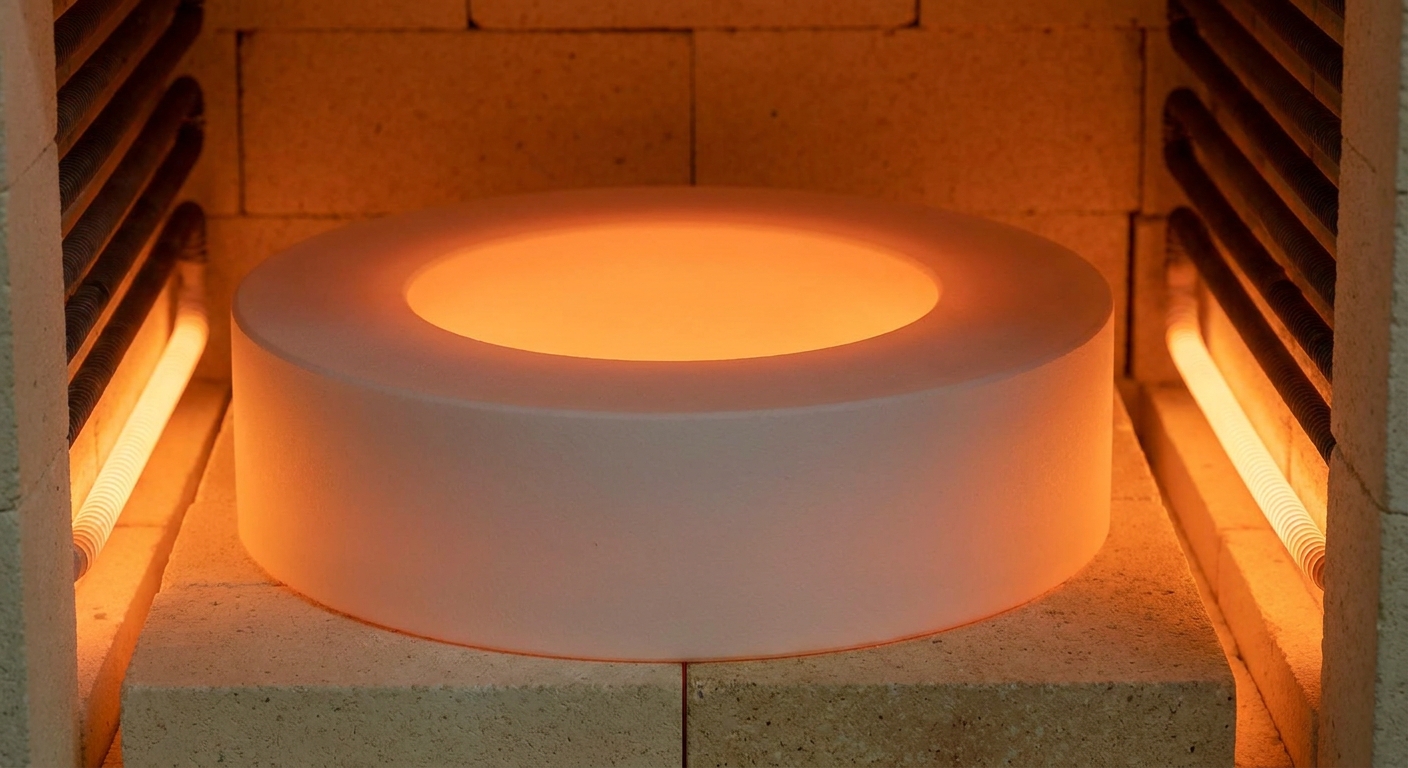
Zirconia Ceramic is a refractory material with an incredibly high melting point of approximately 2700°C, making it capable of operating in heat that would melt most metals. It also features a low coefficient of thermal expansion, which helps it maintain its shape and avoid warping during rapid temperature shifts.
These thermal properties make it an excellent electrical insulator even at high temperatures. If you are designing systems for high-heat environments, this material provides the thermal barrier and insulation you need.
Thermal Shock Resistance
Rapid heating and cooling can crack most industrial materials, but the specific structure of zirconia allows it to absorb these thermal shocks. This is vital for applications like furnace linings and engine coatings that face constant heat cycling.
Here’s the deal: Most materials expand and contract significantly with heat, but zirconia stays remarkably stable, preserving the tight tolerances of your components.
- Low thermal conductivity acts as a natural heat shield.
- High melting point allows for use in ultra-high-temp furnaces.
- Excellent electrical insulation prevents short circuits in hot environments.
Ideal for Thermal Barriers
The material’s ability to resist chemical reactions at high temperatures also makes it a prime candidate for thermal barrier coatings (TBCs). These coatings protect sensitive metal engine parts from the extreme combustion temperatures of modern jet engines.
Key TakeawayIntegrating this material into high-heat systems ensures that your components remain dimensionally stable and chemically inert, even under the most brutal thermal conditions.
| Thermal Indicator | Performance | Industry Benefit | |
|---|---|---|---|
| Melting Point | ~2700°C | Extreme Heat Capability | |
| Thermal Expansion | Minimal | Dimensional Stability | |
| Insulation | Excellent | Electrical Safety | |
| Conductivity | Low | Effective Heat Shield |
Its refractory nature ensures that your most critical components are protected from the destructive effects of high heat.
8. How does sintering optimize Zirconia Ceramic properties?
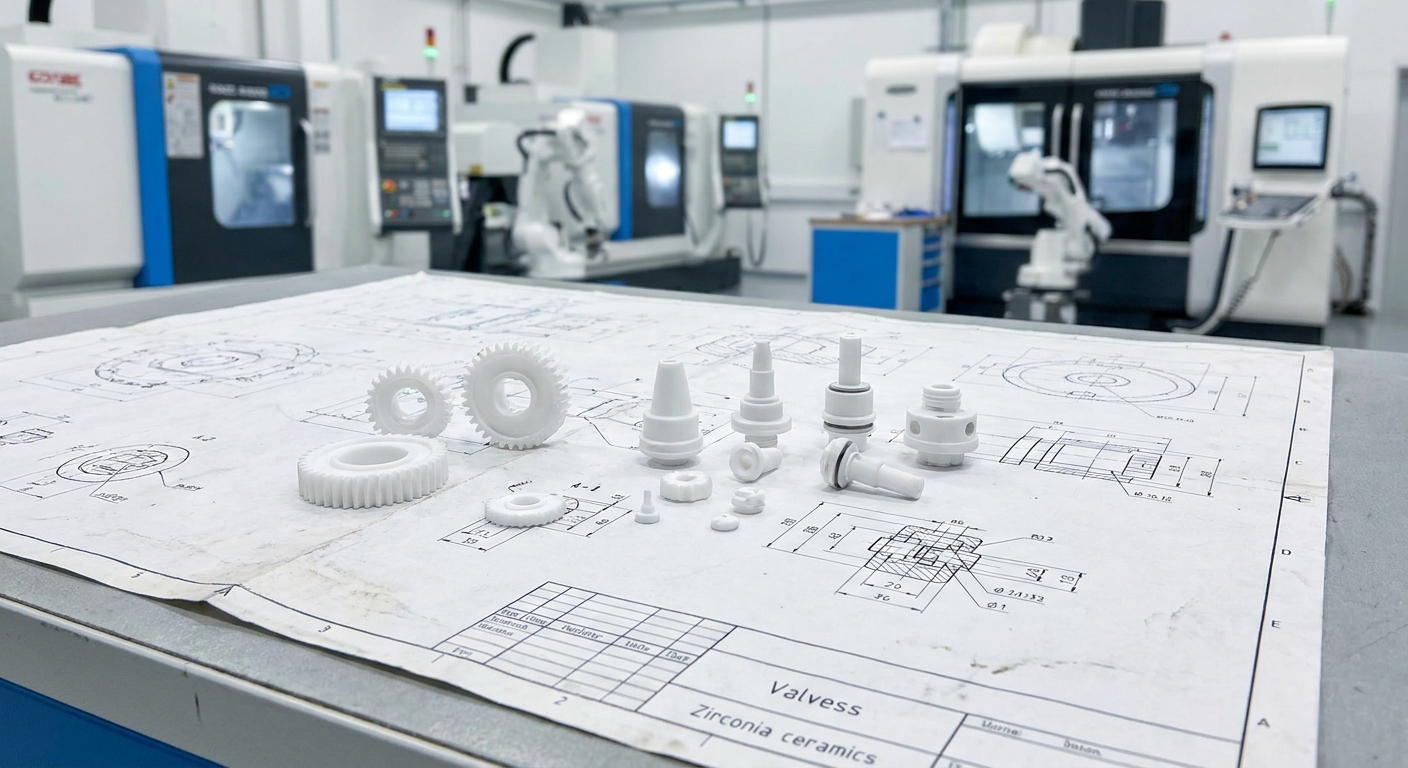
The sintering of Zirconia Ceramic is the process of heating the shaped powder to temperatures between 1600°C and 1800°C to fuse the particles into a solid, high-density component. This thermal treatment is what gives the final part its incredible strength and removes the porosity that would otherwise lead to failure.
Advanced techniques like Hot Isostatic Pressing (HIP) can be used during sintering to create an even denser microstructure. For you, this results in a component with superior fracture toughness and a flawless surface finish.
Achieving High Density
During the sintering process, the powder particles coalesce, reducing the overall volume and increasing the density of the part. This consolidation is what transforms a fragile powder shape into a “ceramic steel” component.
But wait, there’s more: The precision of the sintering furnace’s temperature ramp is what determines whether the part achieves its maximum theoretical density or contains internal defects.
- Conventional Sintering: Standard thermal bonding for most parts.
- Hot Pressing: Simultaneous heat and pressure for maximum strength.
- Reaction Bonding: Creates a fortified piece through specific chemical reactions.
Minimizing Surface Porosity
A dense, non-porous structure is essential for parts that must resist chemical infiltration and surface wear. High-quality sintering ensures that your components are nearly 100% dense and free of structural weaknesses.
Key TakeawayExpertly controlled sintering is the final hurdle in the manufacturing process that guarantees the reliability and durability of your ceramic parts.
| Sintering Method | Temperature Range | Resulting Density | |
|---|---|---|---|
| Conventional | 1600°C – 1800°C | High Density | |
| Hot Pressing | High Temp + Pressure | Ultra-High Density | |
| HIP | Uniform Gas Pressure | Maximum Theoretical Density |
High-density sintering is what allows this ceramic to bridge the gap between traditional brittle materials and high-performance engineering metals.
9. Why is Zirconia Ceramic vital for modern dental implants?
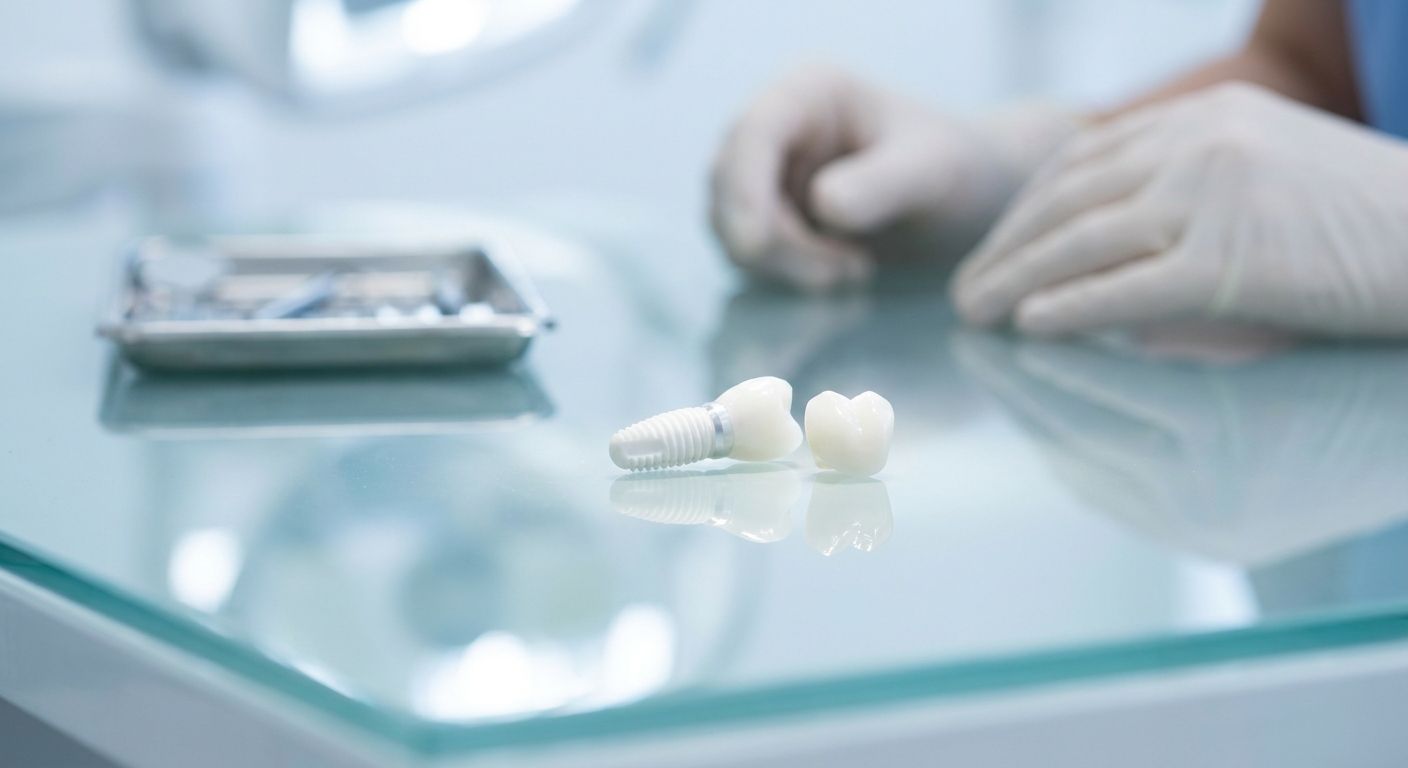
Zirconia Ceramic has revolutionized the medical and dental fields because it is highly biocompatible and does not trigger the immune reactions often associated with metallic implants. In dentistry, it is used for crowns, bridges, and implant abutments due to its natural, tooth-like appearance and its ability to withstand the forces of chewing.
The material’s resistance to oral acids and its low wear rate make it a long-term solution for patients. For you in the medical device sector, this means providing a product that is both aesthetically pleasing and structurally sound.
Biocompatibility and Tissue Health
Unlike metals that can leach ions into the body, zirconia is chemically inert and promotes healthy tissue integration. This reduces the risk of inflammation and implant rejection, making it a safer choice for long-term medical use.
Think about this: Patient safety and satisfaction depend on materials that feel natural and do not cause allergic reactions. Zirconia ticks every box for modern healthcare.
- Dental Crowns: Offers natural translucency and durability.
- Joint Prosthetics: Low wear rate for hip and knee replacements.
- Surgical Tools: Provides non-magnetic, extremely sharp edges.
Longevity and Wear Resistance
The high fracture toughness of this ceramic ensures that dental restorations do not chip or break over time. This reliability minimizes the need for patient follow-up procedures, enhancing the reputation of your medical solutions.
Key TakeawayUsing this material for medical and dental applications provides a unique blend of safety, strength, and aesthetics that improves patient outcomes.
| Application | Benefit | Key Property | |
|---|---|---|---|
| Dental Bridges | Aesthetic Appeal | Natural Translucency | |
| Joint Replacements | High Durability | Low Friction / Wear | |
| Abutments | Tissue Integration | Biocompatibility | |
| Scalpels | Precision | Edge Retention |
The adoption of this material in healthcare is a direct result of its superior physical and chemical compatibility with the human body.
10. What future innovations await Zirconia Ceramic technology?
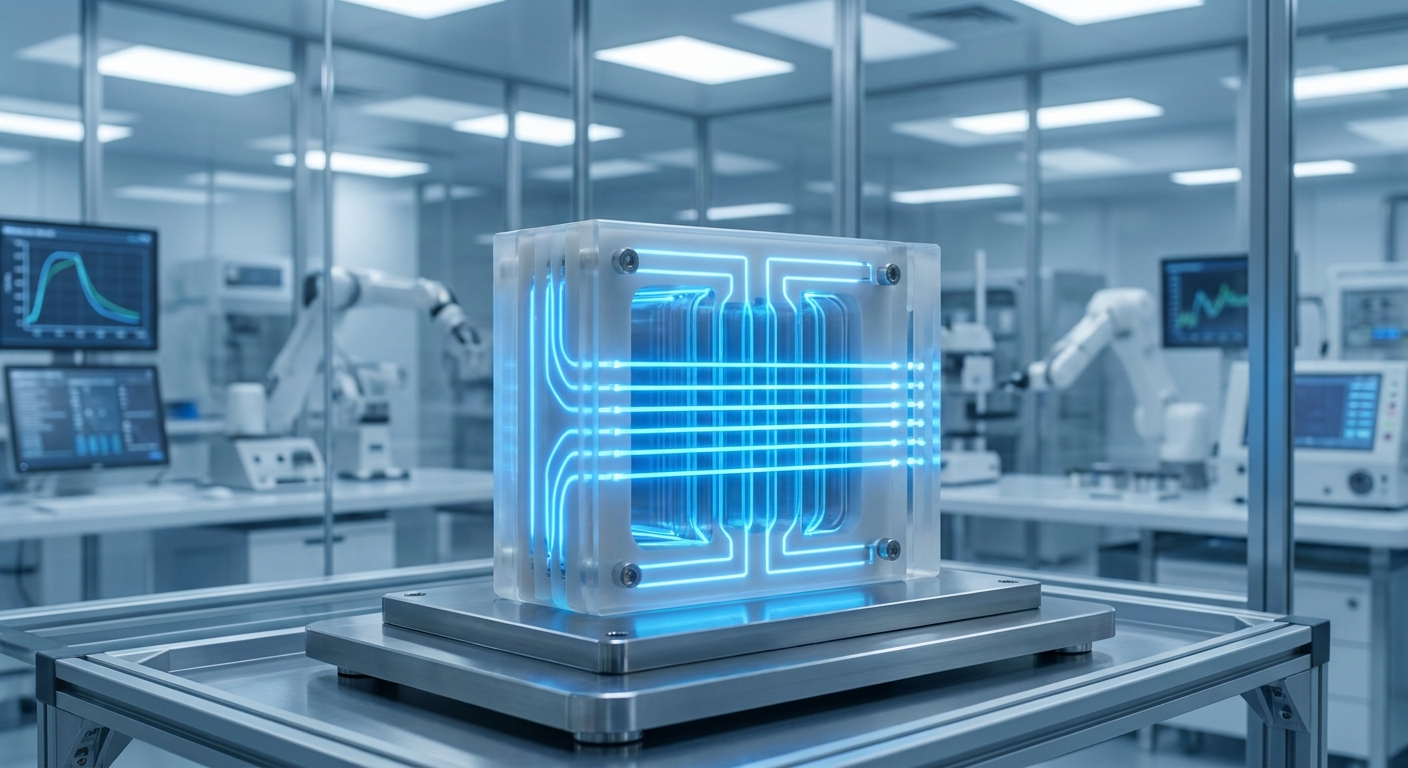
Future developments in Zirconia Ceramic are focused on increasing its electrical conductivity for use in solid oxide fuel cells and further enhancing its fracture toughness through nanotechnology. Researchers are investigating “doping” methods where specific additives allow the material to conduct oxygen ions more efficiently at high temperatures.
As these innovations mature, you will likely see this material playing a central role in clean energy generation and next-generation aerospace infrastructure. The focus is on moving beyond structural strength and into functional versatility.
Advancements in Energy Storage
One of the most exciting areas of research is the use of stabilized zirconia in fuel cells. Its ability to facilitate ionic flow while remaining thermally stable makes it the ideal material for high-efficiency energy systems.
Here is the deal: The next generation of ceramics will be “smarter,” with built-in sensors and enhanced conductive paths that allow for real-time monitoring of structural health.
- Nanocrystalline Zirconia: Creates parts with even higher density and zero porosity.
- Ionic Conductivity: Doping techniques to improve fuel cell efficiency.
- Smart Coatings: Sensors embedded directly into thermal barrier layers.
The Role of Nanotechnology
By using ultrafine particles, manufacturers can create components that are stronger and more ductile than ever before. This opens the door for using ceramics in applications that were previously reserved for high-performance steel alloys.
Key TakeawayThe future of this material lies in its transformation from a structural component into a functional material that powers the energy and aerospace systems of tomorrow.
| Innovation Area | Target Goal | Expected Impact | |
|---|---|---|---|
| Fuel Cells | Ionic Conductivity | Clean Energy Efficiency | |
| Nanotech | Increased Ductility | Expanded Engineering Use | |
| Coatings | Surface Protection | Longer Aerospace Life | |
| Smart Ceramics | Embedded Sensors | Enhanced Safety / Monitoring |
Staying ahead of these technological shifts will allow you to leverage the full potential of this versatile material in your upcoming industrial projects.
Frequently Asked Questions
Can I use Zirconia Ceramic for high-pressure fluid valves?Yes. You can use it because its high hardness and corrosion resistance allow it to maintain a perfect seal even when exposed to abrasive fluids and high pressure, far outlasting metal valves.
What’s the best way to choose between Yttria and Magnesia stabilization?The best way depends on your operating temperature. Yttria-stabilized grades are superior for high-load structural parts at moderate temperatures, while magnesia-stabilized grades are better suited for extreme thermal shock and high-heat refractory environments.
How do I know if my Zirconia Ceramic parts are high purity?It depends on the certification provided by your supplier. You should always request a Certificate of Analysis (COA) to verify that the impurity levels (like iron and titanium) are low enough for your specific technical requirements.
Can I customize the particle size for my injection molding process?Yes. You can work with manufacturers to adjust the Particle Size Distribution (PSD) to ensure the material flows correctly into your molds and achieves the desired shrinkage rates during sintering.
How do I know if Zirconia Ceramic is safer than metal for my medical device?Yes. Zirconia is widely considered safer because it is bio-inert, non-corrosive within the body, and lacks the allergic potential of nickel or chrome-based alloys often used in metallic implants.
Conclusion
Zirconia Ceramic has solidified its place as the definitive “ceramic steel” for industries that demand the highest levels of durability, heat resistance, and structural reliability. Whether you are solving for component failure in a manufacturing plant, designing high-precision dental restorations, or engineering the next generation of fuel cells, this material provides the mechanical safety margin your project requires. We solve the problems of material fatigue and environmental degradation by providing vertically integrated zircon solutions tailored to your exact specifications. If you are ready to eliminate process variation and enhance your product’s performance with consistent, high-stability materials, contact us today to start a technical discussion with our engineering team.