
Choosing between 3Y and 5Y tetragonal or cubic zirconia determines whether you prioritize unmatched physical toughness or high-end cosmetic translucency. Imagine you are managing high-volume clinical restorations or engineering demanding mechanical parts, only to face premature wear, cracks, or dull cosmetic integrations that fail under stress. This high-wear rate and aesthetic inconsistency lead to costly remakes, disrupted schedules, and a severe loss of trust from your clients. To solve these critical failures, mastering the crystalline phase transitions of high-performance Zirconia Structural Components allows you to select the exact yttria concentration for every stress condition.
Why Choose Zirconia Structural Components for Strength?
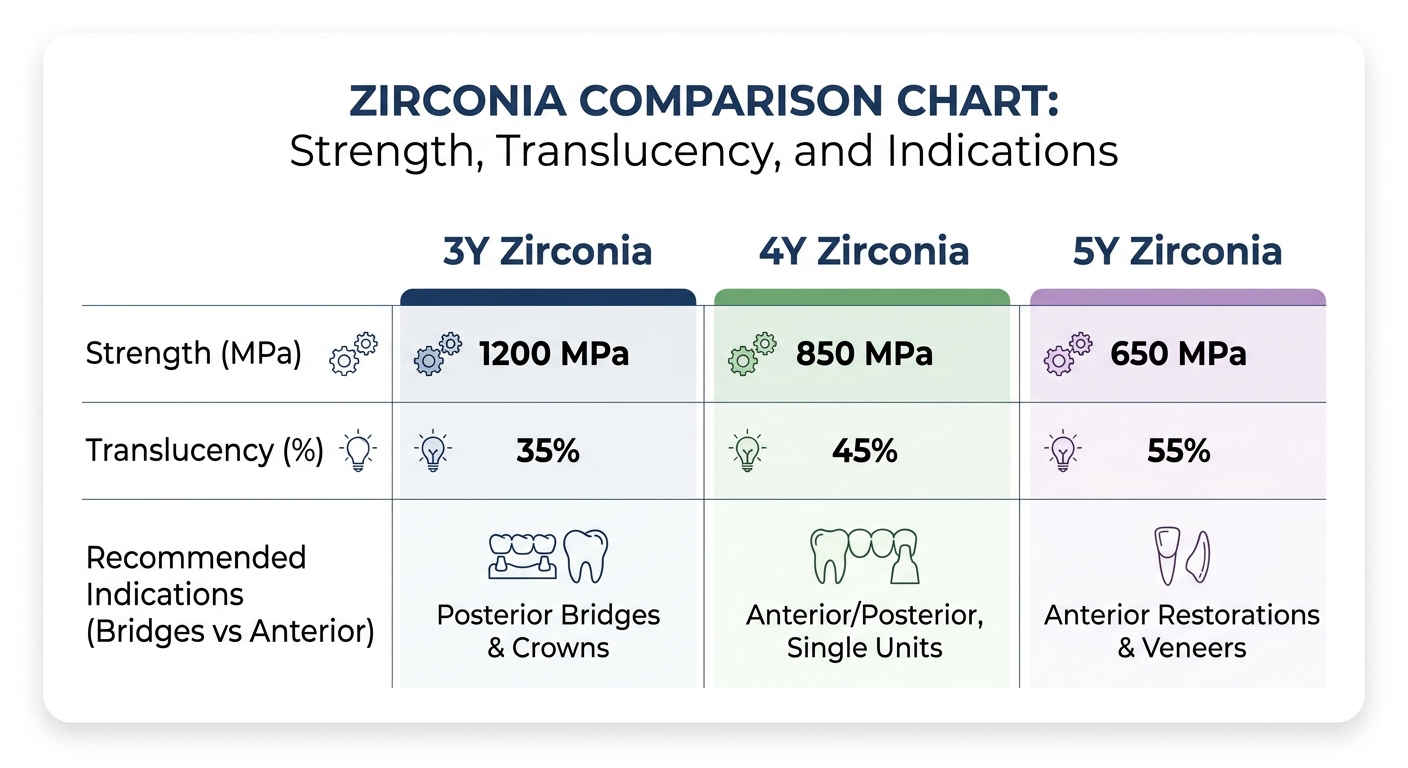
You should choose Zirconia Structural Components for strength because their 3Y (3 mol% yttria) formulation provides an unmatched flexural strength of 1200 MPa, making them ideal for heavy posterior loads. These components utilize a fully tetragonal crystal structure to stop cracks before they can spread.
Maximizing Load Capabilities with 3Y Formulations
Think about it: when a multi-unit posterior restoration is subjected to daily chewing forces, any micro-fissure can cause catastrophic failure in weaker glass-ceramics. However, 3Y tetragonal zirconia chemically resists this stress by blocking fractures at the atomic level.
- It maintains a 100% tetragonal phase at room temperature.
- It delivers up to 1200 MPa of flexural strength.
- It minimizes the need for bulky framework designs.
The practical utility of 3Y formulations lies in their mechanical reliability for high-stress posterior areas where failure is not an option.
| Zirconia Grade | Yttria Content | Flexural Strength | Primary Indication |
|---|---|---|---|
| 3Y-TZP | 3 mol% | 1200 MPa | Posterior bridges & crowns |
| 4Y-TZP | 4 mol% | 850 MPa | Universal restorations |
| 5Y-TZP | 5 mol% | 650 MPa | Anterior restorations & veneers |
Selecting 3Y-TZP ensures maximum physical security under high masticatory loads.
How Do Zirconia Structural Components Resist Sintering Heat?
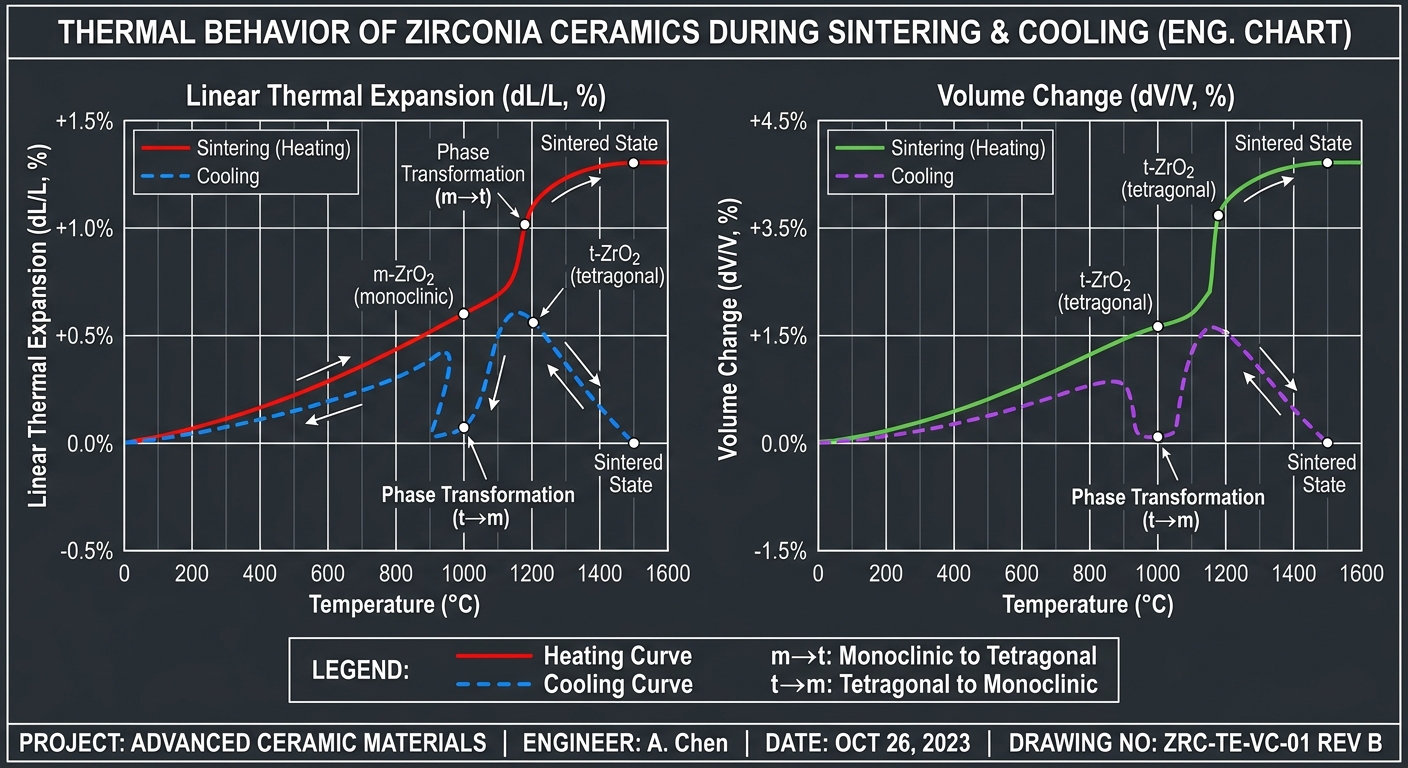
Zirconia Structural Components resist sintering heat through the addition of stabilizing oxides that prevent destructive volume changes during high-temperature thermal cycles. These stabilizing agents keep the high-temperature crystal phases stable as the material cools down.
Thermal Behavior During Industrial Sintering
What is the catch? Pure unstabilized zirconia undergoes a massive 4.5% volume expansion when cooling, which instantly cracks the ceramic matrix.
- Sintering heats the ceramic to over 1450°C to achieve full density.
- Controlled cooling prevents sudden thermal shocks.
- Stabilizers prevent the sudden monoclinic phase shift.
Carefully managing sintering schedules ensures complete density without introducing microscopic thermal fractures.
| Sintering State | Phase Transition | Volumetric Change | Structural Impact |
|---|---|---|---|
| Heating (>1170°C) | Monoclinic to Tetragonal | ~3.4% Contraction | Normal densification |
| Cooling (<1170°C) | Tetragonal to Monoclinic | ~4.5% Expansion | Fracture risk if unstabilized |
Maintaining slow, controlled cooling rates protects the microstructural stability of sintered components.
Why Do Zirconia Structural Components Not Crack Under Stress?
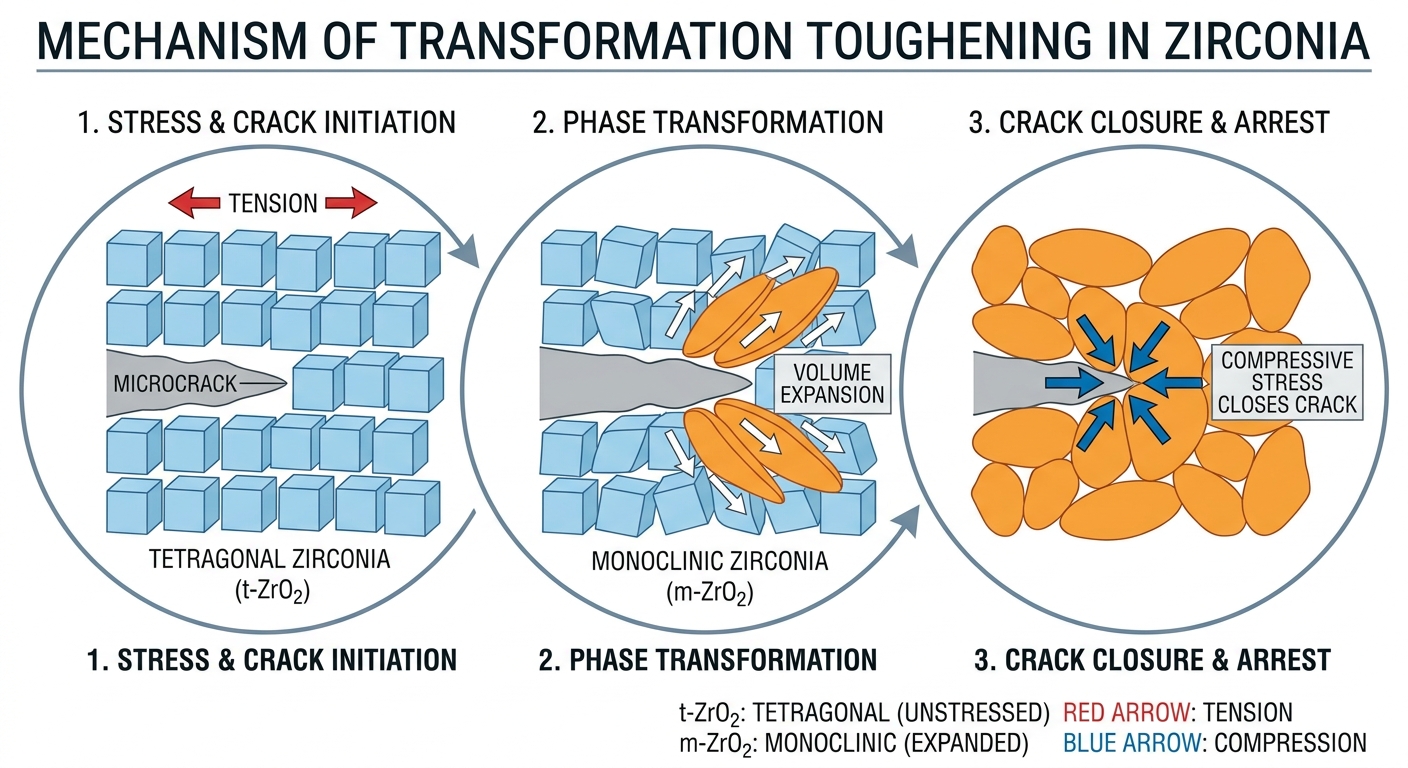
These Zirconia Structural Components do not crack under stress because they feature a self-healing mechanism called transformation toughening that actively clamps down on crack propagation. This mechanical defense is unique to the tetragonal crystal phase.
The Phase Transformation Toughening Process
Here is why: when a tensile load starts to pull a micro-fissure apart, the high-stress field at the crack tip forces the metastable tetragonal grains to expand. This sudden crystalline expansion creates local compressive forces that pinch the crack tip shut.
- Tetragonal grains transform instantly to the larger monoclinic phase.
- The transformation causes a localized 4.5% volume expansion.
- This volume change exerts compressive pressure to stop crack propagation.
Utilizing materials with active transformation toughening prevents sudden brittle fractures under heavy cyclic stress.
| Crystal Phase | Crystalline Geometry | Toughness Status | Structural Role |
|---|---|---|---|
| Tetragonal | Prismatic | High (Meta-stable) | Active crack arrest |
| Monoclinic | Asymmetrical | Low (Expanded) | Arrested crack state |
Localized volume expansion creates a compressive shield that blocks crack growth.
Can Zirconia Structural Components Face Low-Temp Degradation?
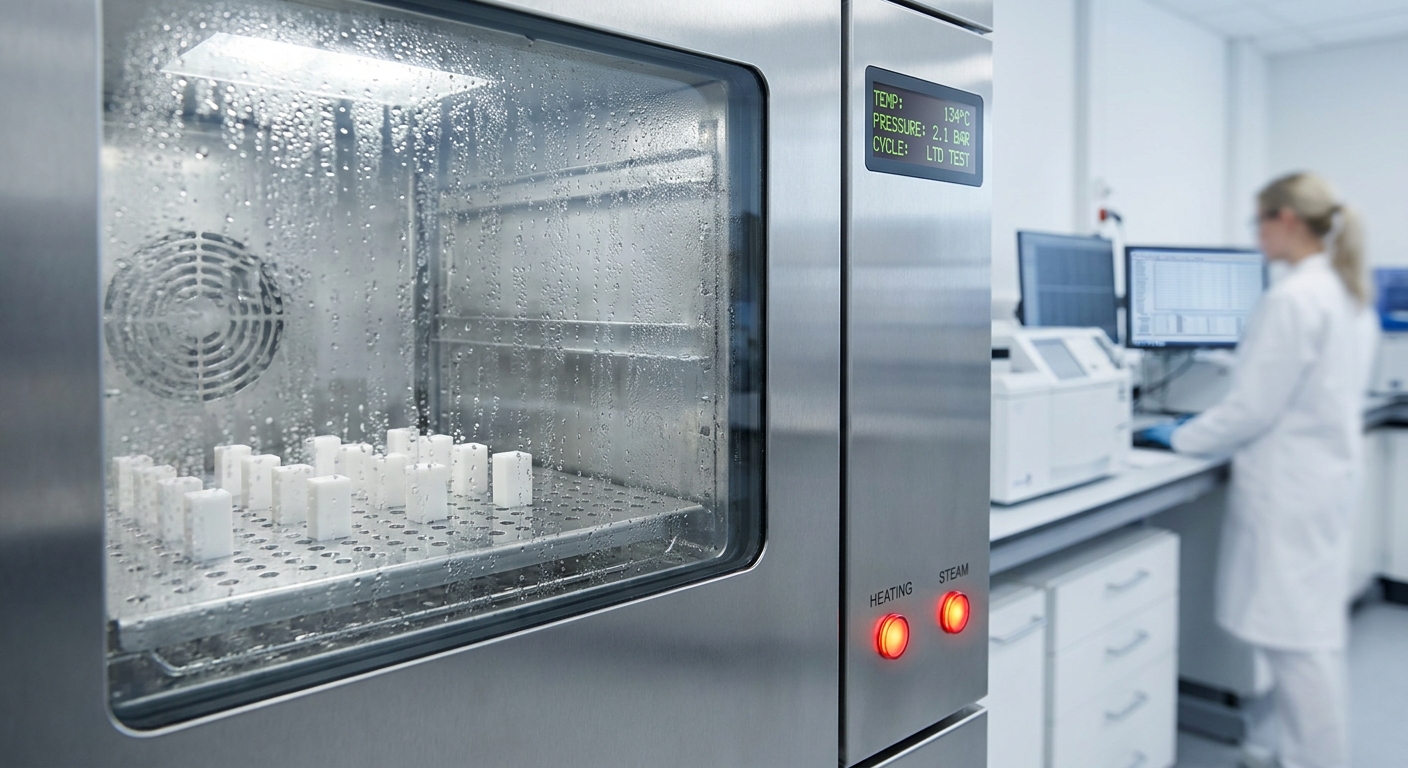
Yes, Zirconia Structural Components can face low-temperature degradation (LTD) when exposed to hot, moist environments over long periods, which triggers a slow surface aging process. This hydrothermal aging can slowly convert stable tetragonal grains into weaker monoclinic grains on the surface.
Preventing Surface Aging in Humid Environments
Think about it: if water molecules react with the oxygen vacancies in the zirconia lattice, a progressive surface degradation begins. This can lead to increased roughness and micro-cracking if the material is not processed correctly.
- Avoid grinding sintered surfaces without active water cooling.
- Keep laboratory air abrasion pressures strictly below 2 bar.
- Ensure the material contains an optimized alumina dopant fraction.
Controlling your laboratory surface finishing protocols preserves the structural integrity of the ceramic in humid conditions.
| Degradation Phase | Core Trigger | Physical Outcome | Mitigation Strategy |
|---|---|---|---|
| Hydrothermal Aging (LTD) | Hot water/steam exposure | Surface roughness, micro-cracks | Optimize alumina content |
| Mechanical Surface Damage | Excessive sandblasting pressure | Microstructural phase stress | Keep abrasion below 2 bar |
Minimizing mechanical surface stress prevents early hydrothermal degradation in humid environments.
How High-Purity Oxides Shape Zirconia Structural Components?
High-purity oxides shape Zirconia Structural Components by acting as precise chemical stabilizers that determine the final mechanical strength and optical properties of the ceramic. These dopants must be blended under strict laboratory conditions to ensure a flawless crystal lattice.
The Role of Yttria and Alumina Stabilizers
What is the catch? Even a tiny trace of impurity in the oxide powder can disrupt the delicate tetragonal stabilization, leading to premature material failures. This is why cleanroom weighing and high-purity raw materials are non-negotiable.
- Yttrium oxide ($Y_2O_3$) locks the tetragonal phase at room temperature.
- Aluminum oxide ($Al_2O_3$) accumulates at boundaries to block moisture.
- High purity prevents internal discoloration during sintering.
Using certified high-purity oxide formulations guarantees consistent physical performance across every production batch.
| Stabilizer Oxide | Common Mol % | Primary Function | Performance Impact |
|---|---|---|---|
| Yttrium Oxide | 3.0% – 5.0% | Lattice phase stabilization | High-temperature phase retention |
| Aluminum Oxide | 0.02% – 0.25% | Grain boundary protection | Enhanced hydrothermal resistance |
Strict oxide purity standards prevent internal defects and unexpected mechanical breakdowns.
How Do Zirconia Structural Components Achieve Translucency?
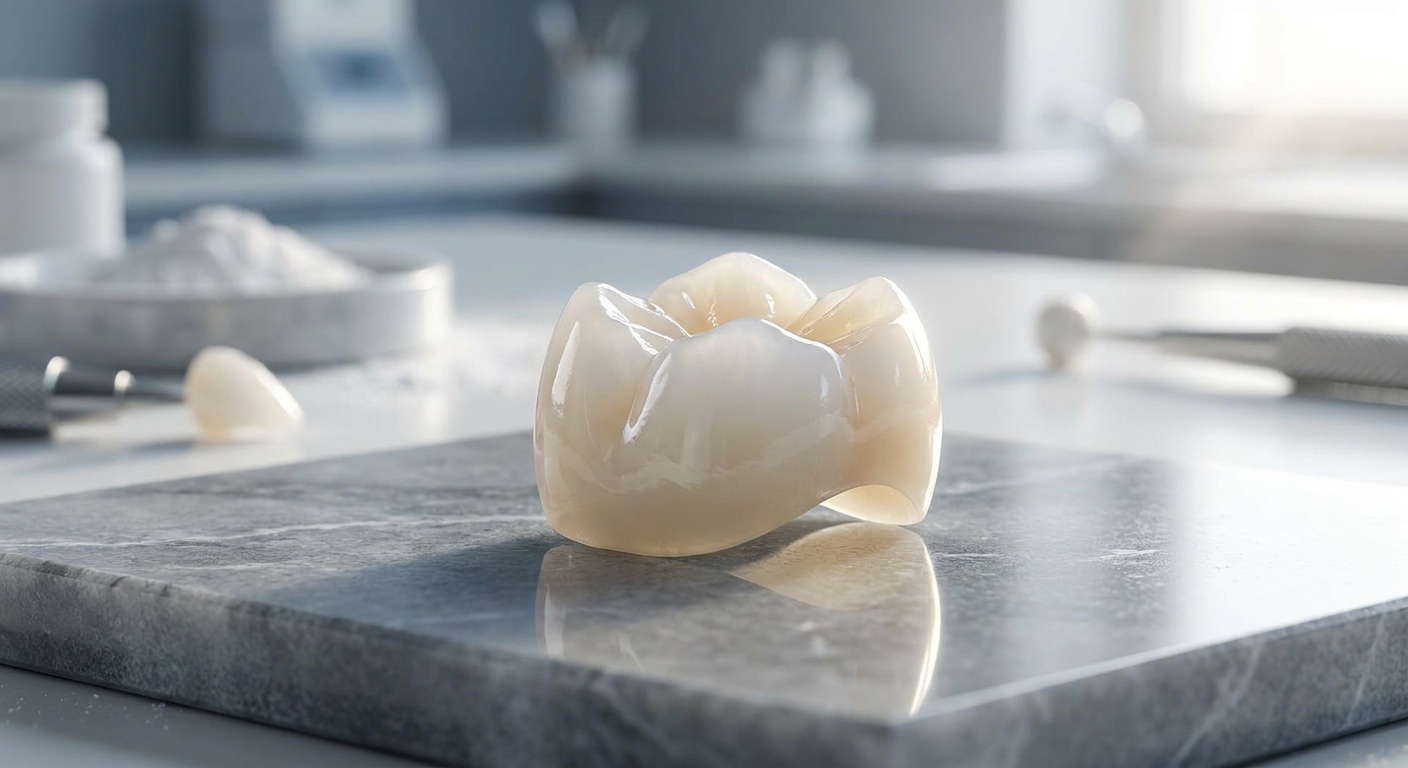
Zirconia Structural Components achieve translucency by increasing the yttria stabilizer content to generate a high proportion of the symmetrical cubic phase. This highly symmetrical cubic crystal lattice minimizes light scattering at grain boundaries, allowing light to pass directly through the material.
Aesthetics and the Cubic Crystal Lattice
Here is why: while traditional tetragonal structures scatter light and appear opaque, the cubic lattice mimics natural tooth enamel by transmitting light beautifully. This allows clinicians to achieve highly aesthetic results in the smile zone.
- Symmetrical cubic crystals allow uniform light transmission.
- 5Y formulations achieve up to 55% translucency.
- The lack of grain boundary scattering eliminates the chalky appearance.
Leveraging highly translucent cubic-phase materials is perfect for anterior restorations where visual integration is the primary goal.
| Zirconia Grade | Cubic Phase % | Translucency Level | Flexural Strength |
|---|---|---|---|
| 3Y-TZP | ~0% | Moderate (~35%) | ~1200 MPa |
| 5Y-TZP | ~50% | High (~55%) | ~650 MPa |
Increasing the cubic phase improves aesthetics but naturally reduces mechanical flexural strength.
Are Zirconia Structural Components Ready for High-Load Tests?
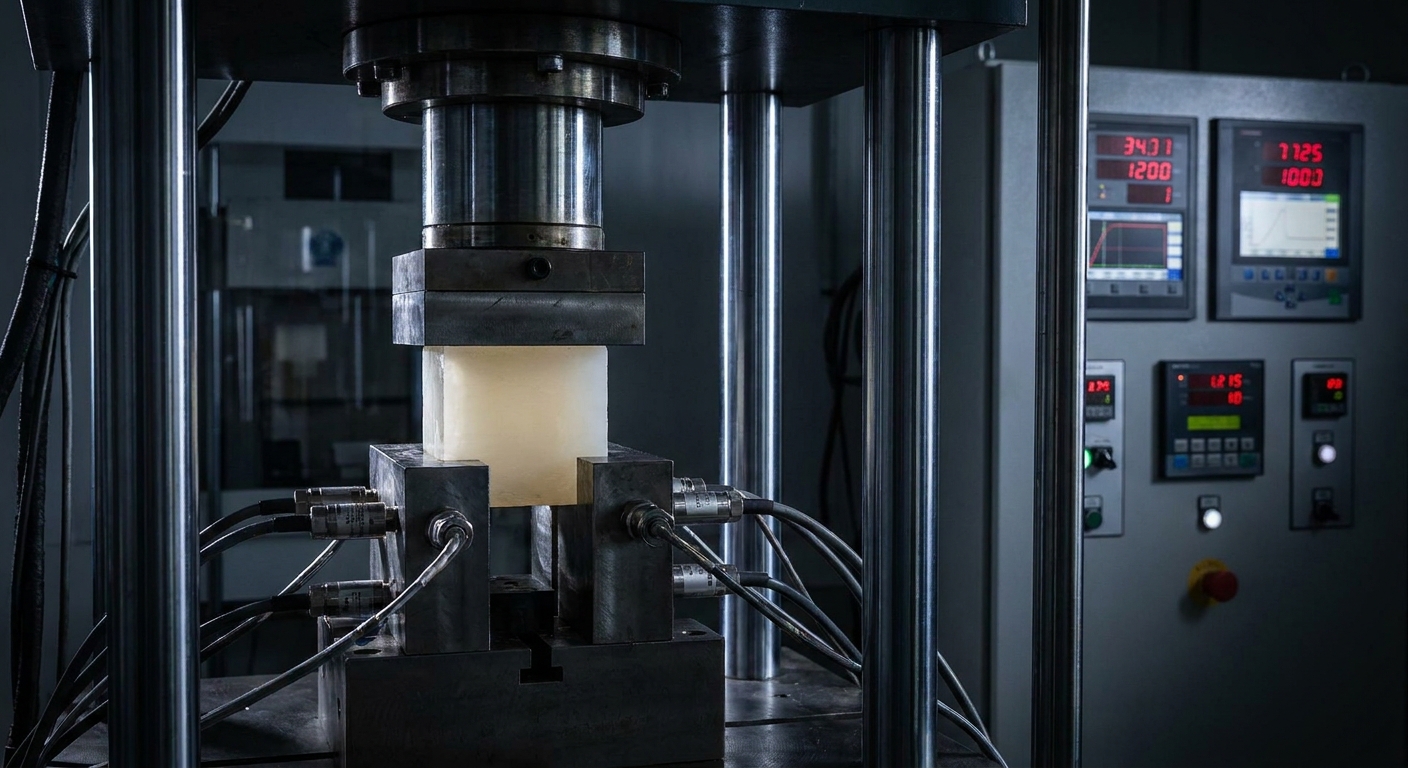
Yes, Zirconia Structural Components are ready for high-load tests because they undergo intensive mechanical validation, including three-point flexural strength and cyclic fracture testing, before clinical or industrial use. These strict tests ensure the ceramic can withstand heavy masticatory forces over decades.
Mechanical Testing Standards for Dental Ceramics
Think about it: how can you trust a ceramic block to survive millions of chewing cycles without fracturing? Specialized hydraulic testing machines apply precise mechanical loads to verify the material’s safety limits.
- Three-point bending tests measure exact flexural strength in MPa.
- Cyclic fatigue tests simulate real-world physical wear.
- Fracture toughness values verify resistance to crack growth.
Using mechanically certified materials guarantees clinical safety and prevents costly restoration failures.
| Test Type | Metric Measured | Minimum Requirement | Structural Purpose |
|---|---|---|---|
| Flexural Strength | Maximum load capacity (MPa) | > 800 MPa (Multi-unit) | Prevents structural snap |
| Fracture Toughness | Resistance to crack propagation | > 5.0 MPa·m^1/2 | Stops microcrack growth |
Rigorous physical testing validates the safety limits of ceramic components before processing.
What Crystal Phases Define Zirconia Structural Components?
Zirconia Structural Components are defined by three distinct crystal phases: monoclinic, tetragonal, and cubic, each offering unique physical properties. The precise control of these phases using stabilizing oxides determines the ceramic’s final strength and translucency.
Comparing the Three Crystalline Structures
What is the catch? Pure zirconia reverts to the weak monoclinic phase at room temperature, making stabilization with other oxides absolutely necessary. By controlling the yttria content, we can choose which phases dominate the material.
- Monoclinic: Stable at room temperature, low strength, highly brittle.
- Tetragonal: Highly stable with dopants, exceptional strength.
- Cubic: Stable at high temperatures, isometric, highly translucent.
Understanding how these phases interact allows you to select the perfect balance of aesthetics and strength for your project.
| Crystal Phase | Crystal Symmetry | Flexural Strength | Translucency Status |
|---|---|---|---|
| Monoclinic | Asymmetric | Low (< 300 MPa) | Highly opaque |
| Tetragonal | Prismatic (Symmetrical) | Exceptional (900-1200 MPa) | Semi-translucent |
| Cubic | Isometric (Symmetrical) | Moderate (500-800 MPa) | Highly translucent |
The balance of crystal phases directly dictates the mechanical and optical limits of the ceramic.
Can Zirconia Structural Components Bond with Resin Cements?
Yes, Zirconia Structural Components can bond with resin cements when using an adhesive protocol based on the 10-MDP monomer, which creates a durable chemical bond with the ceramic’s oxide surface. This chemical bonding system ensures high retention even on non-retentive preparations.
MDP Chemical Bonding vs. Conventional Cementation
Here is why: because zirconia has no glass phase, it cannot be etched with traditional hydrofluoric acid. Achieving a strong bond requires a combination of mechanical surface preparation and chemical primers.
- Lightly sandblast the internal surface to increase micro-retention.
- Apply a primer containing the 10-MDP adhesive monomer.
- Seat the restoration using a compatible dual-cure resin cement.
Using an MDP-based adhesive protocol ensures exceptional retention and margin sealing for non-retentive preparations.
| Prep Style | Recommended Cement Class | Core Pre-treatment | Key Advantage |
|---|---|---|---|
| Retentive Prep | Conventional GIC | Surface clean + light sandblast | Easy, fast cleanup |
| Non-Retentive Prep | MDP-based Resin Cement | Sandblast + MDP chemical primer | Maximum bond strength |
Combining mechanical sandblasting with chemical MDP primers maximizes bond reliability.
How Do We Select Zirconia Structural Components for Crowns?
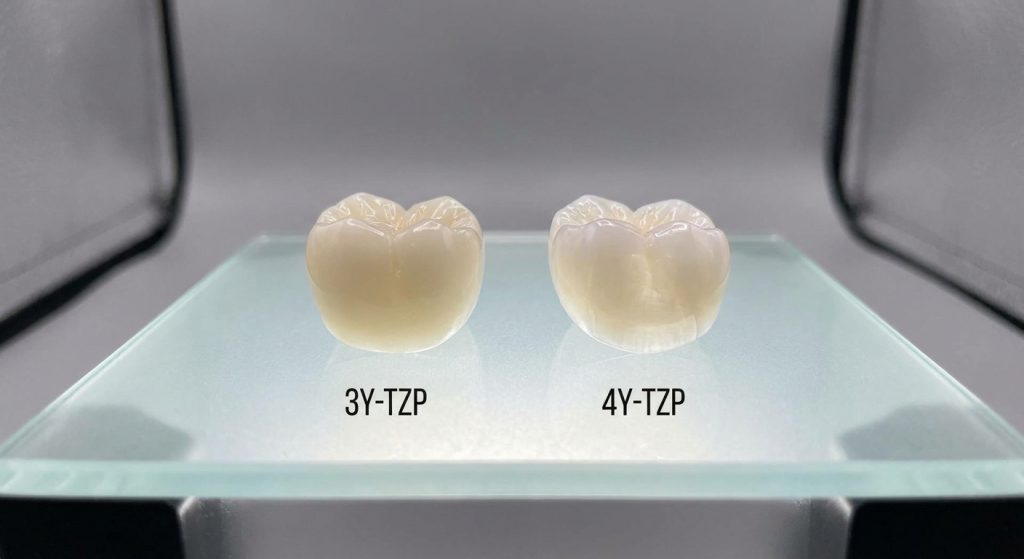
We select Zirconia Structural Components for crowns by evaluating the clinical location of the restoration and matching posterior crowns to high-strength 3Y materials and anterior crowns to highly translucent 4Y or 5Y materials. This matching process ensures that you never sacrifice structural safety for aesthetics.
Standardizing Your Material Selection Process
Think about it: why risk posterior fracture by using a highly translucent 5Y material, or place an opaque 3Y crown in the aesthetic zone? Standardizing your choices based on yttria concentration yields predictable clinical success.
- Posterior teeth: Use 3Y-TZP for maximum load resistance.
- Anterior teeth: Use 4Y or 5Y for natural translucency.
- Multi-unit frameworks: Always select high-strength 3Y-TZP.
Creating a clear selection protocol based on yttria content standardizes your clinical and laboratory workflows.
| Clinical Zone | Ideal Zirconia Grade | Yttria Content | Core Requirement |
|---|---|---|---|
| Posterior masticatory | High Toughness (HT) | 3Y | High flexural strength |
| Anterior cosmetic | Ultra Translucent (UT) | 5Y | High light transmission |
Matching yttria content to the physical load prevents early structural failure.
Conclusion
Navigating the technical trade-offs between physical strength and visual aesthetics no longer has to be a source of frustration for B2B engineering and clinical teams. By matching the specific requirements of your restorations with the ideal 3Y, 4Y, or 5Y yttria-stabilized zirconia grade, you can guarantee long-term clinical reliability while achieving exceptional, natural translucency. We provide high-purity, precision-engineered ceramic materials designed to streamline your production workflows and completely eliminate premature mechanical wear. To elevate your clinical and manufacturing standards with the next generation of advanced ceramics, contact us to speak with a materials specialist.
Frequently Asked Questions
Can I sandblast 5Y zirconia restorations without risking structural damage?
Yes, but you must use lower pressures compared to 3Y materials. Because 5Y zirconia contains a high proportion of the cubic phase, it lacks active transformation toughening, making it more brittle and susceptible to micro-fractures if sandblasted at pressures exceeding 2 bar.
What’s the best cement to use for non-retentive zirconia preparations?
An adhesive resin cement containing the 10-MDP monomer is the best choice. This active monomer forms a durable chemical bond with the metal oxides on the surface of the zirconia, which provides high retention and sealed margins even on non-retentive preparations.
How do I know if my laboratory is using high-purity stabilized zirconia?
You can verify this by checking the manufacturer’s material certification documents. High-purity stabilized zirconia is produced under strict cleanroom conditions, ensuring precise yttria and alumina distributions that prevent unexpected fractures and clinical discoloration.
Can I use 5Y zirconia for a long-span posterior bridge restoration?
No, 5Y zirconia is not suitable for posterior multi-unit frameworks. Its lower flexural strength of approximately 650 MPa and lack of self-healing transformation toughening make it highly susceptible to catastrophic failure under posterior chewing loads.
How do I know if my zirconia is experiencing hydrothermal degradation?
It is difficult to spot visually, but you can prevent it by avoiding excessive surface grinding after sintering. Hydrothermal aging happens when moisture reacts with oxygen vacancies, and keeping surface grinding to a minimum under water cooling protects the crystalline structure.