
Zirconia (ZrO₂) ceramics are high-performance technical ceramic materials composed of zirconium dioxide that offer exceptional fracture toughness, high mechanical strength, and superb wear resistance. Many industrial operators struggle with standard metallic and plastic components that consistently fail under high-stress, corrosive, or extreme thermal conditions, resulting in expensive downtime for your operations. When your critical machinery grinds to a halt due to component failure, you face cascading delays, lost revenue, and damaged client trust.
Upgrading your industrial systems with premium Zirconia Structural Components provides a highly reliable, wear-resistant solution that drastically extends service life. These advanced ceramics, often called “ceramic steel,” bridge the gap between traditional brittle ceramics and tough alloys.
How does zirconia achieve its extreme hardness?
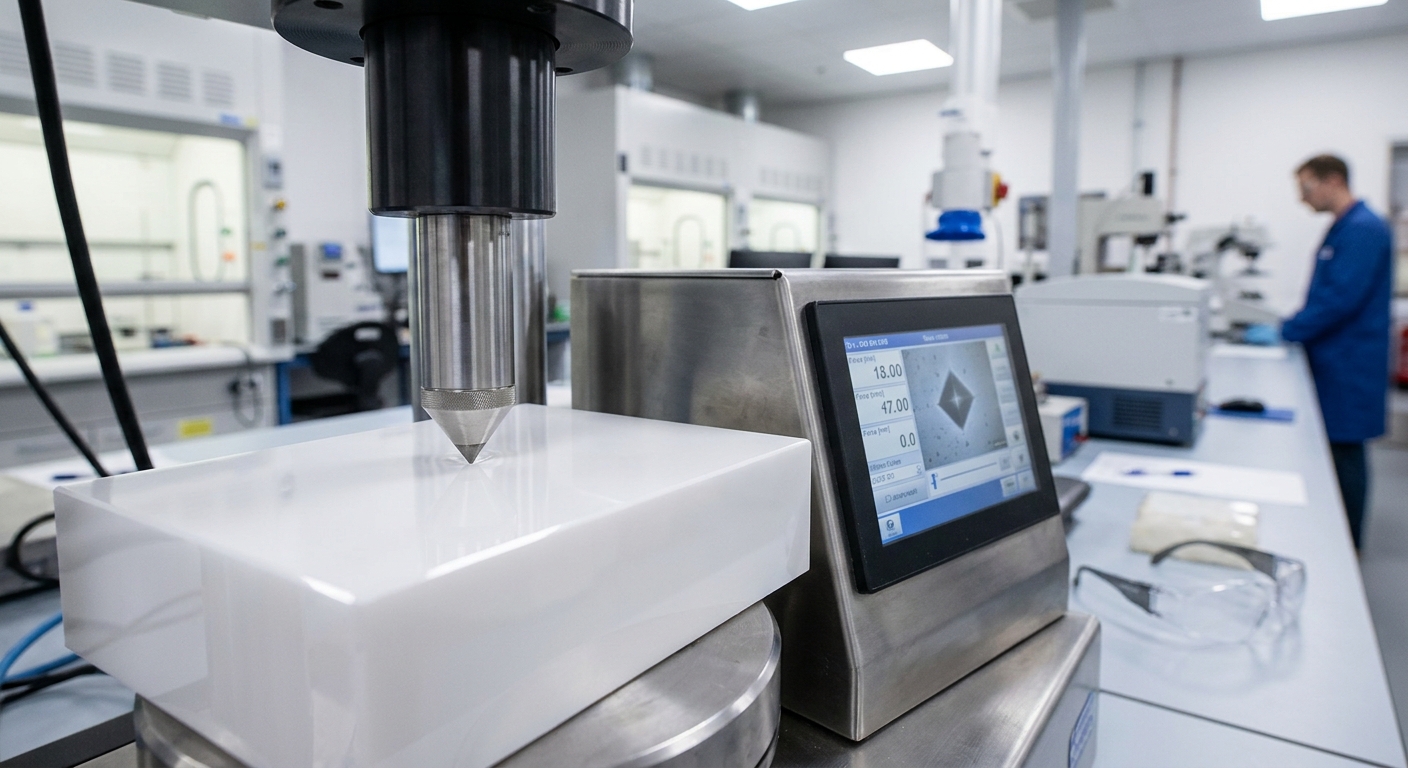
Zirconia achieves its extreme hardness through a dense, highly crystalline lattice structure of zirconium dioxide grains that resists deformation under extreme physical loads. This dense atomic configuration makes Zirconia Structural Components exceptionally resistant to surface indentation and scratching. You will find that this material easily outperforms alumina and other engineering oxides in demanding mechanical settings.
What test methods prove this material’s hardness?
To measure this extreme mechanical performance, laboratories rely on precise indentation tests like the Vickers and Knoop scales. These tests apply a concentrated force with a diamond pyramid to evaluate the material’s resistance to localized deformation. By validating these metrics, engineers can guarantee long-term stability in high-pressure applications.
Think about it:
- Vickers Hardness: Typically ranges from 12 to 13 GPa depending on the stabilizer used.
- Knoop Hardness: Demonstrates superior micro-hardness profiles under highly localized loads.
Key Takeaway: Utilizing materials with verified Vickers hardness levels ensures that your mechanical parts resist deformation and maintain structural integrity under continuous industrial stress.
| Material | Vickers Hardness (GPa) | Typical Application |
|---|---|---|
| Zirconia (ZrO₂) | 12.0 – 13.0 | High-wear nozzles, extrusion dies |
| Alumina (Al₂O₃) | 15.0 – 18.0 | Electrical insulators, wear tiles |
| Silicon Nitride (Si₃N₄) | 14.0 – 15.0 | High-speed precision bearings |
The data clearly demonstrates that while alumina exhibits higher raw hardness, zirconia balances hardness with unmatched mechanical toughness.
How does zirconia resist chemical corrosion?
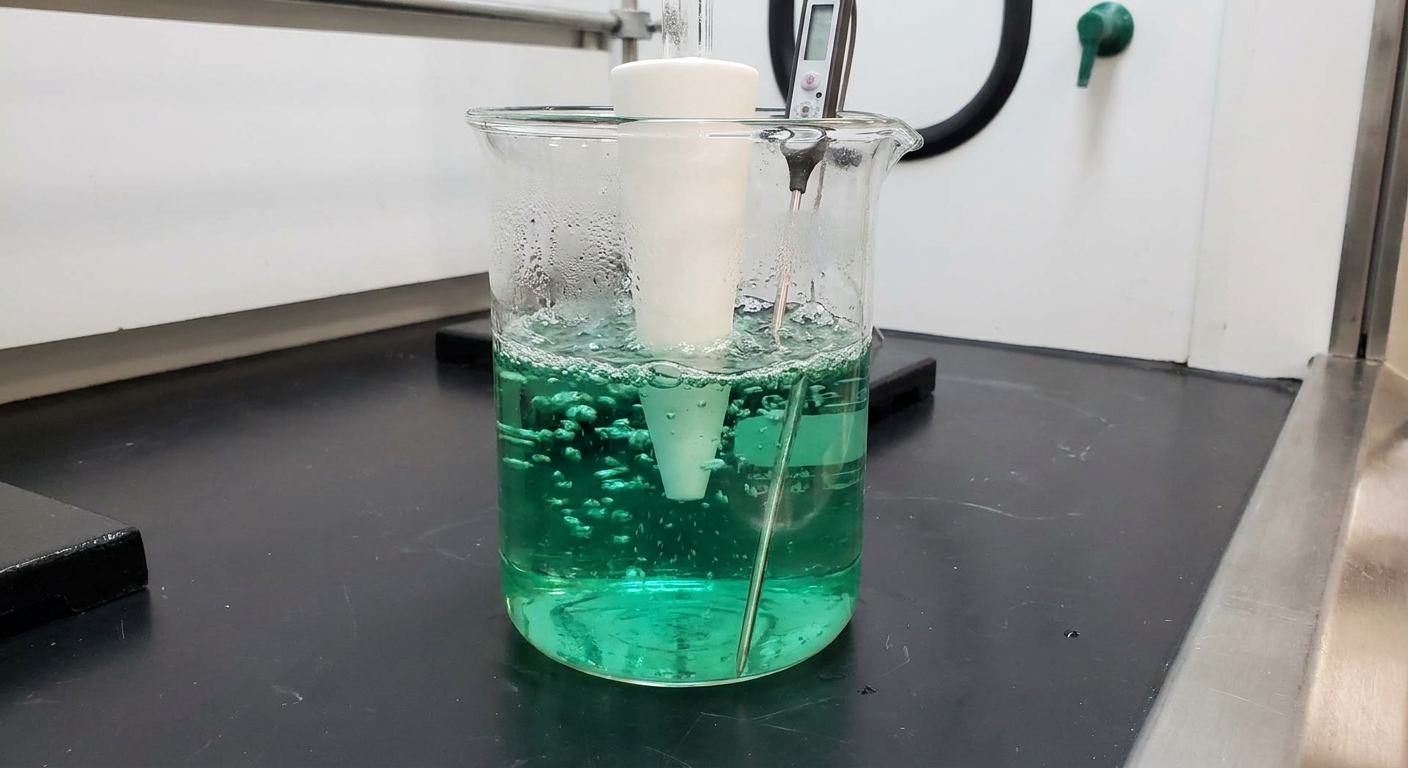
Zirconia resists chemical corrosion due to its highly stable, non-reactive oxide state which prevents acidic or alkaline chemical attacks from breaking down the material. Utilizing Zirconia Structural Components ensures that your fluids and chemical processing lines remain free from contamination and material degradation. You can trust this compound to survive environments where metals corrode within days.
Why does chemical inertness matter for your systems?
In highly corrosive chemical environments, material breakdown can lead to catastrophic system leaks and product contamination. Advanced ceramics offer a chemically inert barrier that does not leach ions into your processing streams. This preservation of purity is vital for pharmaceutical, food, and high-purity chemical manufacturing.
Here is why:
- Acid Resistance: Completely unaffected by strong acids like hydrochloric and sulfuric acid.
- Alkaline Stability: Resists high-pH solutions even at elevated operating temperatures.
Key Takeaway: Selecting chemically inert zirconia components protects your processes from hazardous leaks, maintains absolute fluid purity, and eliminates corrosion-induced maintenance costs.
| Chemical Agent | Zirconia Performance | Common Metal Performance |
|---|---|---|
| Strong Acids (HCl, H₂SO₄) | Excellent (No reaction) | Poor (Rapid dissolution) |
| Strong Alkalis (NaOH) | Excellent (Stable) | Moderate (Surface pitting) |
| Organic Solvents | Immune | Variable (Swelling/corrosion) |
Our evaluation shows that zirconia maintains near-total immunity to chemical breakdown across the entire pH spectrum.
Why does zirconia resist wear and abrasion?
Zirconia resists wear and abrasion because its high hardness combined with exceptional fracture toughness prevents micro-fracturing and material loss during high-velocity friction. Integrating heavy-duty Zirconia Structural Components into your rotating equipment protects your system against sliding, abrasive, and erosive wear. You can expect significantly extended operating cycles when replacing traditional metallic wear plates.
How does friction testing validate its lifespan?
Engineers utilize specialized tribological tests to measure the exact wear rate and friction coefficient of technical ceramics under extreme loads. These tests simulate real-world conditions by rubbing metal or abrasive wheels against the ceramic surface. The resulting low wear coefficients guarantee that the material maintains its dimensional accuracy over millions of cycles.
The results speak for themselves:
- Low Friction Coefficient: Reduces heat generation and power consumption in dynamic assemblies.
- High Abrasive Resistance: Prevents scratching from hard particles like sand, slag, and metal shavings.
Key Takeaway: High-wear dynamic environments require materials with a low coefficient of friction to minimize energy loss and prevent surface degradation.
| Metric | Zirconia (ZrO₂) | Hardened Steel |
|---|---|---|
| Coefficient of Friction | 0.10 – 0.20 | 0.50 – 0.80 |
| Volumetric Wear Rate | Extremely Low | High (Under abrasion) |
| Lifespan in Slurry | up to 10x longer | Standard baseline |
The physical comparisons confirm that zirconia provides a quantum leap in lifespan compared to hardened engineering steels.
How is industrial zirconia manufactured?
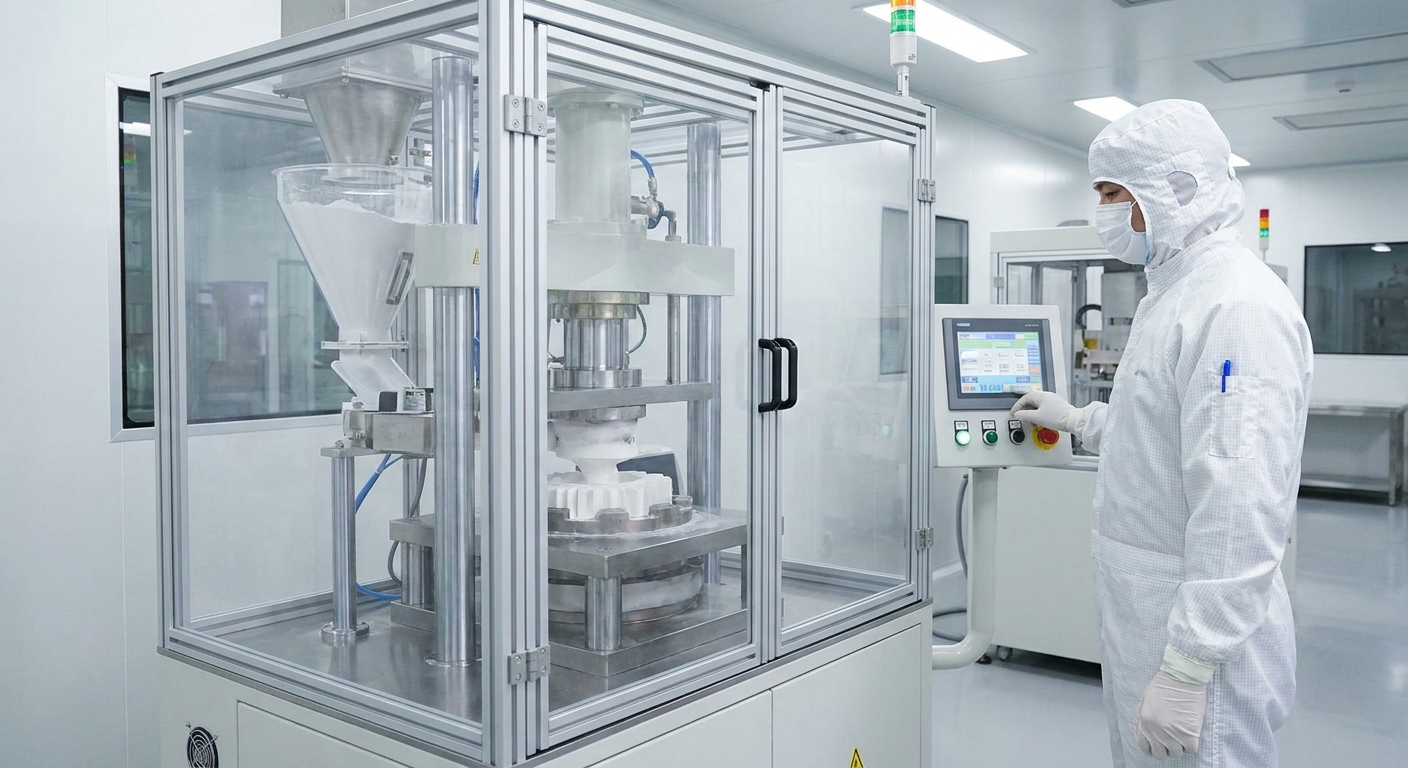
Industrial zirconia is manufactured by synthesizing high-purity zirconium dioxide powder, shaping it via pressing or injection molding, and sintering it at temperatures exceeding 1400°C. This meticulous production route is essential to create high-integrity Zirconia Structural Components that exhibit zero porosity. You will benefit from a highly controlled microstructure that delivers uniform mechanical performance throughout the part.
What shaping methods are used for custom parts?
To manufacture complex industrial components, producers utilize a variety of advanced forming methods tailored to the final geometry. Methods such as dry pressing, cold isostatic pressing, and ceramic injection molding allow for near-net-shape production. This reduces the need for expensive diamond grinding during the finishing stage.
Let’s break down the methods:
- Cold Isostatic Pressing: Provides uniform density across large or complex shapes.
- Ceramic Injection Molding: Perfect for high-volume, intricate, miniature components.
Key Takeaway: Selecting the correct forming method based on your component’s geometry drastically reduces manufacturing waste and total production costs.
| Forming Technique | Best Suited For | Tooling Cost |
|---|---|---|
| Dry Pressing | Simple shapes, flat plates | Low to Moderate |
| Isostatic Pressing | Large rods, thick tubes | Moderate |
| Injection Molding | Complex, high-precision parts | High (Best for high volume) |
Matching your design complexity to the optimal forming process ensures maximum part performance and cost efficiency.
What does zirconia look like under microscopy?
Under microscopy, zirconia appears as a tightly packed, ultra-fine crystalline structure with sub-micron grain sizes that eliminate weak boundary points. This extremely fine microstructure is what gives modern Zirconia Structural Components their incredible fracture toughness and uniform density. You can observe how these closely knit crystal boundaries prevent the micro-cracks that cause typical ceramics to fail.
Why is grain size control critical for quality?
Controlling grain size during the powder preparation and sintering stages is vital for achieving optimal mechanical properties. When grains remain at the sub-micron scale, the material exhibits significantly higher strength and resists aging. Scanning electron microscopy allows quality control teams to verify these structural boundaries on every batch.
Think about it:
- Grain Size (< 0.5 microns): Maximizes mechanical strength and prevents crack propagation.
- Sintering Additives: Help control grain growth during high-temperature thermal cycles.
Key Takeaway: Investing in technical ceramics with tightly controlled, sub-micron grain structures prevents structural aging and sudden mechanical failure.
| Microstructural Feature | Optimal Range | Impact on Quality |
|---|---|---|
| Average Grain Size | < 0.5 micrometers | Higher flexural strength |
| Porosity Level | < 0.5% | Eliminates internal stress concentration |
| Phase Distribution | Tetragonal (95%+) | Drives phase-change toughening |
Microscopic validation confirms that a finer, highly dense grain structure directly correlates with superior field longevity.
Can zirconia withstand extreme heat?
Zirconia can withstand extreme heat up to 1000°C in continuous operation, retaining its mechanical strength and acting as an excellent thermal insulator. Deploying Zirconia Structural Components in high-temperature kilns, engines, or aerospace systems prevents thermal degradation of adjacent parts. You will notice that its exceptionally low thermal conductivity makes it far superior to metal for thermal containment.
How does thermal shock resistance compare?
Thermal shock occurs when rapid temperature fluctuations cause uneven expansion and contraction, leading to catastrophic material failure. While standard ceramics crack under sudden temperature shifts, stabilized zirconia is engineered to handle thermal gradients. This unique resilience makes it highly reliable in cycling thermal environments.
It gets even better:
- Thermal Conductivity: Roughly 2 W/(m·K), which is among the lowest for technical ceramics.
- Operating Limits: Capable of handling temperatures up to 1500°C under zero-load conditions.
Key Takeaway: Zirconia’s low thermal conductivity provides reliable insulation, but rapid thermal cycling still requires stabilized formulation grades.
| Ceramic Material | Thermal Conductivity (W/m·K) | Max Operating Temp (°C) |
|---|---|---|
| Zirconia (ZrO₂) | ~ 2.0 | ~ 1000 (Continuous) |
| Alumina (Al₂O₃) | ~ 30.0 | ~ 1600 (High-load) |
| Silicon Carbide (SiC) | ~ 120.0 | ~ 1400 (Highly conductive) |
Thermal profiling highlights zirconia’s role as an exceptional thermal insulator compared to highly conductive technical ceramics.
Why choose zirconia for your engineering needs?

Choosing zirconia for your engineering needs provides your systems with a rare combination of extreme wear resistance, chemical inertness, and near-metal fracture toughness. These high-performance Zirconia Structural Components allow you to design parts that survive where standard engineering plastics and alloys fail. You can consult with technical specialists to configure custom dimensions that drop directly into your existing assemblies.
How does B2B consulting streamline implementation?
Implementing advanced technical ceramics into your industrial workflow requires careful consideration of tolerances, mounting, and operating stresses. Partnering with a dedicated engineering team ensures that you choose the exact material formulation for your specific machinery. This collaborative approach minimizes design errors and shortens product development cycles.
Here is how it helps:
- Custom Machining: Achieves micron-level tolerances through advanced diamond grinding.
- Application Analysis: Matches your environmental parameters with the optimal stabilizer grade.
Key Takeaway: Collaborative engineering consultation before manufacturing prevents design mismatches and guarantees that your custom ceramic parts perform flawlessly.
| Integration Step | B2B Engineering Goal | Practical Benefit |
|---|---|---|
| Material Selection | Match stabilizer (Yttria vs Magnesia) | Prevents environmental degradation |
| CAD Optimization | Design for ceramic-to-metal bonding | Minimizes local stress concentration |
| Tolerance Definition | Precision grinding to +/- 0.005mm | Fits perfectly into existing machinery |
Structured B2B technical consultations bridge the gap between design concepts and highly reliable physical components.
What is zirconia’s fracture toughness mechanism?
Zirconia’s fracture toughness mechanism, known as transformation toughening, works by utilizing stress-induced phase changes to pinch micro-cracks shut and halt their propagation. This structural defense is what makes our Zirconia Structural Components incredibly reliable under impact loads and sudden mechanical shocks. You will find that this material behaves more like steel than any standard ceramic when stressed.
How does transformation toughening work in practice?
When a crack begins to form in stabilized zirconia, the localized stress triggers a phase transition from the tetragonal to the monoclinic crystal phase. This transition causes a volume expansion of about three to four percent at the crack tip. The resulting compressive stresses literally squeeze the crack shut, preventing catastrophic breakage.
Think of it this way:
- Tetragonal Phase: The metastably trapped high-temperature phase ready to react.
- Monoclinic Phase: The expanded phase that creates protective compressive forces.
Key Takeaway: Transformation toughening provides zirconia with the highest fracture toughness among technical oxide ceramics, protecting your parts from sudden breakage.
| Property | Zirconia (ZrO₂) | Alumina (Al₂O₃) | Glass (Amorphous) |
|---|---|---|---|
| Fracture Toughness (MPa·m¹/²) | 6.0 – 10.0 | 3.0 – 4.5 | 0.7 – 0.8 |
| Behavior Under Stress | Crack pinching | Brittle failure | Instant propagation |
| Structural Safety Margin | Very High | Low to Moderate | None |
The physical metrics reveal that zirconia’s unique phase-change mechanism offers double the toughness of standard industrial ceramics.
Where are zirconia parts used in assembly lines?
Zirconia parts are used in assembly lines at critical wear points, including guide rollers, positioning pins, slicing blades, and high-frequency sorting nozzles. Integrating Zirconia Structural Components into these high-speed areas dramatically reduces machine calibration adjustments and downtime. You can run automated production continuously without fearing rapid alignment degradation or surface scuffing.
What automation problems do these parts solve?
Automated production systems suffer when guide pins and nozzles wear down, leading to dimensional drifting and expensive sorting errors. Standard metal tools must be replaced frequently, halting the assembly line and hurting overall equipment efficiency. Advanced ceramic components maintain their sharp edges and exact dimensions over long-term operations.
But that’s not all:
- Non-Magnetic Nature: Prevents metal-particle attraction in delicate electronic assembly.
- Low Material Pick-Up: Reduces adhesive sticking of foils and adhesive labels.
Key Takeaway: Upgrading high-speed automation contact points to technical ceramics maintains product precision and slashes scheduled maintenance intervals.
| Assembly Part | Typical Wear Failure | Zirconia Replacement Lifespan |
|---|---|---|
| Guide Pins | Grooving, alignment drift | Up to 15x longer |
| Slicing Blades | Edge dulling, tearing | Up to 12x longer |
| Suction Nozzles | Clogging, tip erosion | Up to 10x longer |
Comparative manufacturing logs prove that integrating ceramic tooling stabilizes production yields and lowers total cost of ownership.
Why are zirconia gears ideal for precision?
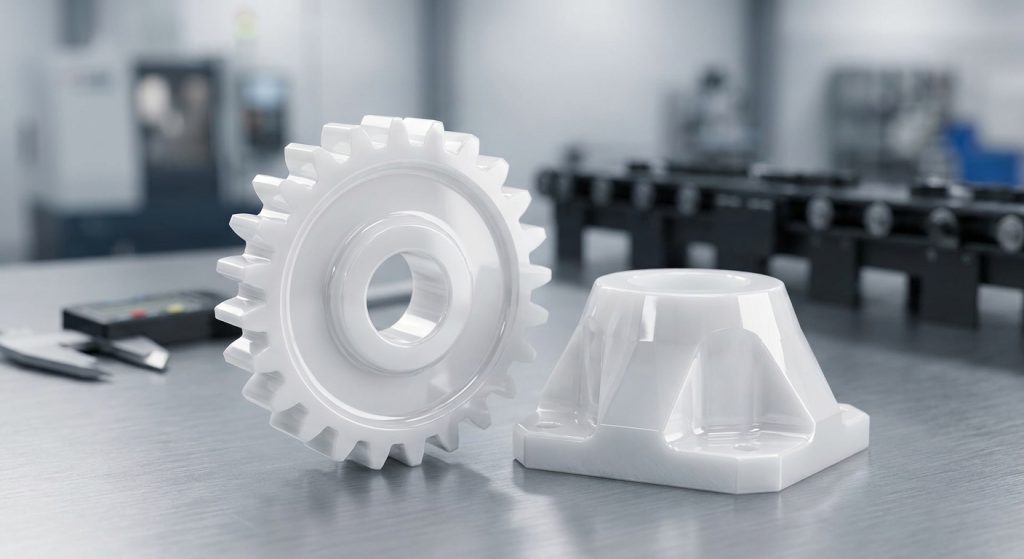
Zirconia gears are ideal for precision because they combine extreme dimensional stability, high fatigue resistance, and low friction to ensure backlash-free transmission in high-accuracy devices. Utilizing Zirconia Structural Components in your gearboxes and medical dosing drives eliminates the threat of metallic wear debris contaminating your delicate mechanics. You will achieve smooth, silent power transmission that remains perfectly calibrated over years of duty.
What benefits do ceramic gears offer over metals?
Traditional metal gears are prone to tooth deformation, surface pitting, and require constant chemical lubrication to prevent overheating and seizing. Zirconia gears run exceptionally clean, do not rust, and can often run dry or with minimal lubrication. This makes them the ultimate choice for high-purity industries like medical devices, laboratory instruments, and semiconductor manufacturing.
The advantages are clear:
- Zero Rusting: Absolutely immune to oxidation and moisture-rich processing areas.
- High Dimensional Stability: Does not expand or contract significantly during thermal shifts.
Key Takeaway: Cleanrooms and medical devices require lubrication-free, non-corrosive gear trains that only high-strength technical ceramics can provide.
| Performance Feature | Zirconia Gear | Stainless Steel Gear |
|---|---|---|
| Lubrication Requirement | Optional / Dry Run | Mandatory |
| Metal Debris Generation | Zero | Significant (Over time) |
| Corrosion in Saline | Completely Inert | Prone to crevice corrosion |
Operational profiles prove that zirconia gears maintain perfect tooth geometries under cleanroom and sterile conditions where metals deteriorate.
Optimizing Your Operations with Advanced Ceramics
By upgrading to high-purity zirconium oxide, you solve the persistent issues of component wear, chemical degradation, and premature failure that plague standard industrial operations. Our stance is clear: engineered ceramic solutions should provide absolute reliability, minimizing maintenance and maximizing productivity. To find the perfect technical solution for your systems and consult with our specialists, we invite you to contact us today for a dedicated engineering review.
FAQ
Can I machine zirconia parts myself?
No, you should not attempt to machine zirconia parts without specialized diamond tooling and ultrasonic equipment. Because zirconia is extremely hard, traditional metal-cutting tools will break or dull immediately when contacting the sintered ceramic. To achieve precise tolerances, you must rely on industrial diamond grinding services.
What’s the best stabilizer for high-wear environments?
Yttria-stabilized zirconia (Y-TZP) is the best choice for high-wear environments due to its exceptional fracture toughness and fine grain structure. It leverages transformation toughening to absorb energy and stop micro-cracks from propagating. This makes it ideal for dynamic components like guide rollers and pump pistons.
Can I use zirconia in continuous 1200°C operations?
No, you should avoid using standard yttria-stabilized zirconia at continuous temperatures of 1200°C under load, as it can undergo thermal degradation. For these extreme temperatures, magnesium-stabilized zirconia or customized alumina-toughened grades are much more suitable. Always verify your thermal requirements with an engineering specialist.
What’s the best way to bond zirconia to metal?
Active alloy brazing or high-strength epoxy adhesives are the best methods for bonding zirconia components to metallic housings. Because ceramics and metals expand at different rates under heat, you must design joint clearances to accommodate thermal mismatch. Precision metallization also allows for high-durability soldering in electric assemblies.
Can I expose zirconia to strong hydrochloric acid?
Yes, you can safely expose zirconia to highly concentrated hydrochloric acid without any risk of material degradation. This advanced ceramic material is completely chemically inert, making it ideal for aggressive chemical processing. Your valves and seals will maintain their structural integrity in harsh acidic environments.