
Zirconia-based materials are essential for aerospace applications because they provide unmatched thermal insulation, fracture toughness, and wear resistance under extreme environmental conditions that would instantly destroy conventional metal alloys. In modern aviation, engine components face intense thermal and mechanical stress daily.
When traditional nickel-based superalloys reach their physical limits, they suffer from creep, deformation, and catastrophic failure. This bottleneck severely limits engine efficiency and spikes maintenance overhead. By integrating high-performance Zirconia Structural Components, you can confidently push operating temperatures higher, achieving superior fuel economy and system reliability.
Why Trust Zirconia Structural Components?
You should trust these materials because they exhibit exceptional phase-toughening behavior that arrests crack propagation in high-stress environments. This structural reliability is why engineers deploy advanced Zirconia Structural Components in critical jet engine assemblies. Standard ceramic materials are notoriously brittle, but zirconia behaves more like a metal when subjected to mechanical stress. This unique combination of properties makes it the premier choice for demanding aerospace components.
Thermal Performance in Combustors
Operating jet engine combustors requires dealing with temperatures that easily exceed 1,500°C. If you rely solely on metal liners, you will experience rapid thermal degradation and frequent overhauls. Think about it. A single component failure in mid-flight is not an option in aerospace engineering.
- Thermal conductivity below 2.0 W/m·K minimizes heat transfer.
- High thermal expansion coefficient matches titanium and steel alloys.
- Superior chemical inertness resists aggressive combustion byproducts.
By shielding metal parts with these advanced liners, you keep the underlying structure cool while maximizing combustion efficiency. Here is the kicker: higher combustion temperatures translate directly to lower fuel burn and reduced emissions. You get a reliable, long-lasting solution that stands up to the harshest thermal environments imaginable.
| Material / Metric | Thermal Conductivity (W/m·K) | Max Operating Temp (°C) | Thermal Expansion ($10^{-6}$/K) |
|---|---|---|---|
| Zirconia (YSZ) | 1.5 – 2.0 | 1650 | 10.5 |
| Alumina ($Al_2O_3$) | 30.0 | 1700 | 8.0 |
| Nickel Superalloy | 11.0 – 15.0 | 1050 | 13.0 |
Evaluating these thermal characteristics reveals why zirconia outperforms both standard ceramics and superalloys in extreme environments.
Key Takeaway: Implementing zirconia liners in your combustion chambers dramatically increases thermal margins, ensuring long-term structural integrity and fuel savings.
How Do Zirconia Structural Components Form?
These components form through advanced sintering and precision additive manufacturing techniques that ensure dense, flawless microstructures. By utilizing state-of-the-art thermal processing, manufacturers can shape Zirconia Structural Components into complex, highly optimized geometries. This level of precision eliminates internal voids that typically compromise ceramic strength. Consequently, you receive parts engineered to withstand extreme aerospace stresses.
Can Additive Manufacturing Succeed?
Traditional machining of ceramics is notoriously difficult and expensive due to their extreme hardness. Fortunately, laser additive manufacturing changes the game entirely by allowing you to print complex lattice structures directly. But that’s not all. This method dramatically reduces material waste, making high-end aerospace production highly cost-effective.
- Laser sintering enables intricate internal cooling channels.
- Near-net-shape printing minimizes expensive diamond-grinding steps.
- Lattice designs reduce component weight while maintaining structural strength.
When you print zirconia, you maintain control over local density and mechanical properties. This means you can design lightweight, high-strength parts that were previously impossible to manufacture. You ultimately achieve faster prototyping cycles and superior performance in the field.
| Manufacturing Method | Dimensional Tolerance (mm) | Design Complexity | Material Waste (%) |
|---|---|---|---|
| Additive Manufacturing | ±0.05 | High (Lattices/Channels) | < 10% |
| Precision Diamond Grinding | ±0.005 | Low to Medium | > 50% |
| Dry Pressing & Sintering | ±0.20 | Medium | 15 – 20% |
Comparing these production pathways highlights how additive technology optimizes both design freedom and resource utilization.
Key Takeaway: Leveraging additive manufacturing for zirconia allows you to create highly complex, lightweight structures that lower production costs and fuel consumption.
Where Are Zirconia Structural Components Used?
These parts are primarily deployed in spacecraft thermal protection systems, gas turbines, and high-wear aerospace instrumentation. The extreme heat-shielding capability of these Zirconia Structural Components makes them indispensable for atmospheric reentry vehicles. Their low thermal conductivity prevents heat from penetrating critical avionics bay structures. No other material offers this specific balance of thermal defense and mechanical durability.
Surviving Atmospheric Reentry
Reentering the atmosphere subjects a spacecraft to friction-generated temperatures soaring past 1,600°C. Under these brutal conditions, metallic shields would melt instantly, leading to catastrophic vehicle loss. You must have a material that acts as an impenetrable thermal barrier. Here is the kicker: zirconia does not just survive; it thrives under these conditions.
- Maintains structural integrity up to 2400°C.
- Resists severe thermal shock during rapid descent.
- Reflects radiative heat away from internal payloads.
When you utilize zirconia-based thermal tiles, you protect both the crew and sensitive electronics. You can rely on its predictable thermal performance flight after flight. This reliability gives aerospace engineers the confidence needed to design safer, reusable spacecraft.
| Shield Material | Max Temp Limit (°C) | Thermal Shock Resistance | Reusability Rate |
|---|---|---|---|
| Zirconia-based Tile | 2400 | Excellent | High |
| Carbon-Carbon Composite | 2000 | Good | Medium |
| Silica-based Tile | 1260 | Fair | Low |
Evaluating thermal limits across these shield options clearly shows why zirconia is the superior choice for high-speed atmospheric entries.
Key Takeaway: Specifying zirconia thermal protection shields guarantees your spacecraft will survive the extreme thermal gradients of atmospheric reentry without degradation.
What Limits Zirconia Structural Components?
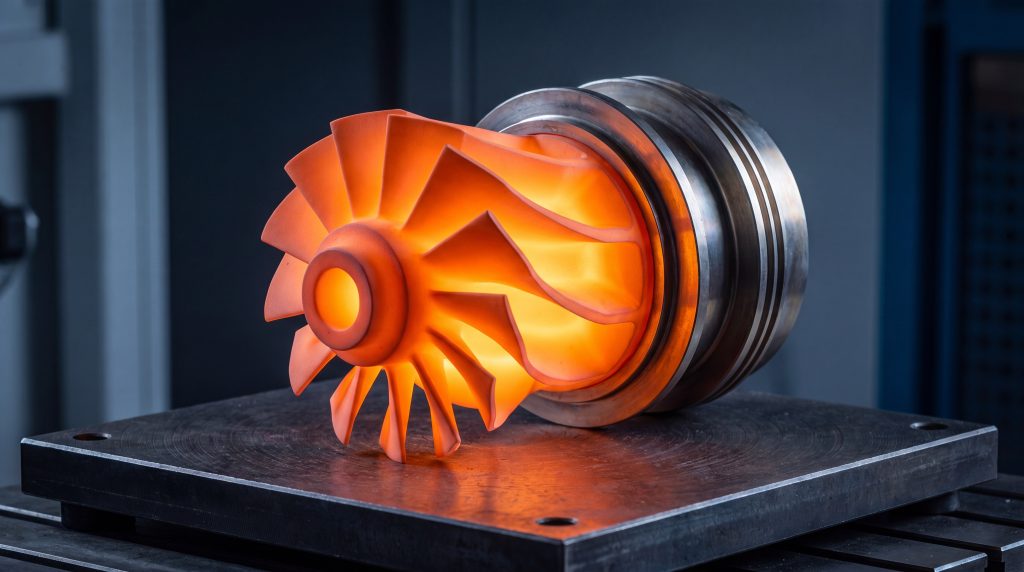
These components are limited by a phenomenon known as low-temperature degradation, which occurs when they are exposed to moisture at moderate temperatures. To mitigate this, developers of Zirconia Structural Components add stabilizers like yttria to maintain the material’s structural integrity. This stabilizing agent prevents the premature phase transitions that cause microcracking and failure. Understanding these material limits is essential for ensuring long-term safety in aerospace systems.
Enhancing Gas Turbine Efficiency
Turbine engines operate on a simple principle: higher combustion temperatures yield greater thermodynamic efficiency. However, if you run metal turbine blades past their thermal limits, they will deform or creep. This is where zirconia comes to the rescue. Think about it. Replacing heavy metal parts with lightweight ceramics boosts fuel efficiency and extends engine service life.
- High-temperature stability prevents blade deformation.
- Low density reduces centrifugal stress on rotating parts.
- Outstanding wear resistance minimizes erosion from airborne particulates.
When you optimize turbine blades with zirconia coatings or solid components, you achieve higher thrust-to-weight ratios. You also slash maintenance downtime, since these parts do not suffer from thermal fatigue like metals do. This translates to substantial operational savings and enhanced fleet readiness.
| Parameter / Blade Type | Nickel Superalloy | Coated Superalloy (YSZ) | Solid Zirconia (Custom) |
|---|---|---|---|
| Max Operating Gas Temp | 1100°C | 1350°C | 1650°C |
| Component Density | 8.4 g/cm³ | 8.0 g/cm³ | 6.0 g/cm³ |
| Relative Service Life | Baseline | 2.5x Baseline | 5.0x Baseline |
Assessing these performance gains demonstrates that shifting toward solid ceramic designs drastically improves engine efficiency.
Key Takeaway: Integrating stabilized zirconia components into your gas turbines unlocks higher operating temperatures, directly translating into superior fuel economy.
Why Do Zirconia Structural Components Change?
These parts change because zirconia undergoes temperature-dependent phase transformations that alter its crystal structure. This polymorphism is why high-performance Zirconia Structural Components must be chemically stabilized to prevent volume expansion during cooling. If unstabilized, the material transitions from a tetragonal phase to a monoclinic phase, causing internal cracking. Proper stabilization locks the tetragonal phase at room temperature, turning a potential weakness into a toughness mechanism.
What Drives Phase Transformations?
Pure zirconia changes its crystal structure as it heats up and cools down. If you cool the material down from high sintering temperatures, the crystal lattice expands by about 4%, which is enough to shatter the part. But that’s not all. By adding yttrium oxide ($Y_2O_3$), you can arrest this transformation and capture the highly desirable tetragonal phase.
- Monoclinic phase is stable at room temperature.
- Tetragonal phase offers superior mechanical strength.
- Cubic phase provides high ionic conductivity and stability.
When a crack starts to form in yttria-stabilized zirconia, the stress field induces a transformation from the tetragonal to the monoclinic phase. This local phase change expands the crystals, compressing the crack tip and stopping it in its tracks. You get a ceramic material that literally heals its own microcracks under stress.
| Phase State | Crystal Structure | Temp Range (Pure ZrO2) | Volumetric Change |
|---|---|---|---|
| Monoclinic | Monoclinic | Room Temp to 1170°C | Baseline |
| Tetragonal | Tetragonal | 1170°C to 2370°C | +3% to 5% Expansion |
| Cubic | Cubic | 2370°C to Melting Point | Minimal |
Analyzing these phase relationships shows how stabilizing agents are crucial for preventing structural failure during thermal cycling.
Key Takeaway: Utilizing yttria-stabilized zirconia ensures your components exploit phase-transformation toughening, making them incredibly resistant to catastrophic cracking.
How Do Zirconia Structural Components Coat?
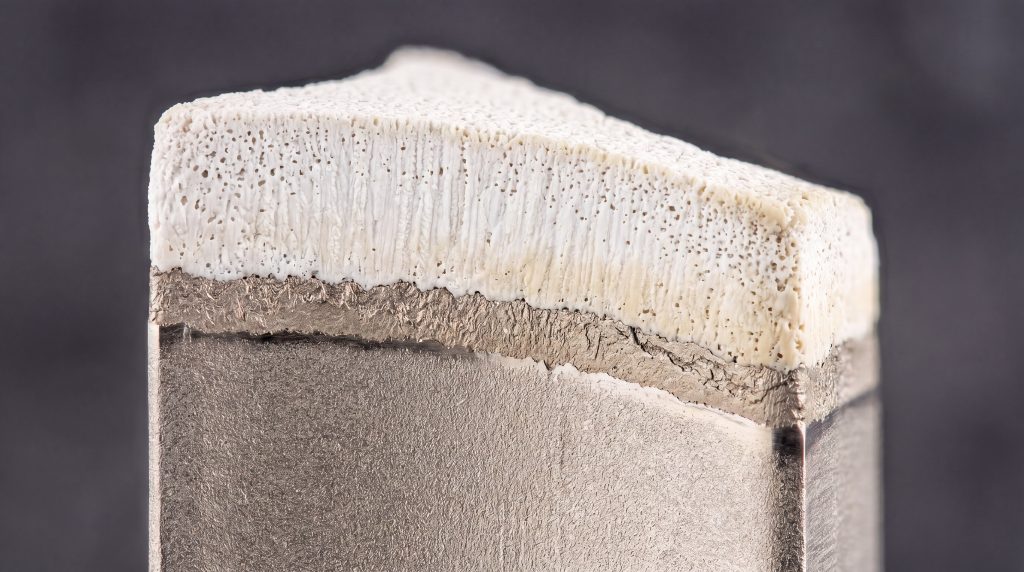
These parts coat metal substrates through advanced thermal spray processes that create a highly porous, insulating barrier. This application method is a cornerstone for Zirconia Structural Components used as thermal barrier coatings (TBCs) on jet engine blades. The micro-porosity within the coating layer traps air, further reducing the overall thermal conductivity. This protective layer allows the underlying metal to operate safely in gas streams that exceed its melting point.
Thermal Barrier Coating Systems
Modern jet engine turbine blades are coated with a layer of yttria-stabilized zirconia that is only a fraction of a millimeter thick. If you operate these blades without this coating, the extreme heat of the gas stream would cause them to melt within minutes. Here is the kicker: this thin ceramic layer drops the metal surface temperature by up to 150°C.
- Bond coat ensures excellent adhesion to the superalloy.
- Thermally grown oxide layer prevents oxidation.
- Zirconia topcoat provides elite thermal insulation.
When you apply this coating via electron beam physical vapor deposition (EB-PVD), you create a columnar microstructure. This structure allows the ceramic to expand and contract freely with the metal blade, preventing delamination. You achieve a highly robust system that survives thousands of thermal cycles.
| Coating Layer | Primary Function | Standard Material | Thickness Range (μm) |
|---|---|---|---|
| Topcoat | Thermal Insulation | Yttria-Stabilized Zirconia | 125 – 250 |
| Thermally Grown Oxide | Oxidation Barrier | Alumina ($Al_2O_3$) | 1 – 5 |
| Bond Coat | Adhesion & Oxidation | MCrAlY Alloy | 50 – 125 |
Studying these distinct coating layers reveals the complex materials science required to keep modern jet engines flying safely.
Key Takeaway: Specifying zirconia-based thermal barrier coatings allows you to run engines hotter while protecting metal parts, saving fuel and extending lifespan.
Can Zirconia Structural Components Bend?
While they cannot bend like metals, these parts exhibit a degree of flexural strength and fracture toughness that is unmatched by any other ceramic material. This high mechanical performance is why leading manufacturers design Zirconia Structural Components for highly loaded applications. Their unique microstructural mechanism absorbs energy, allowing the material to withstand significant bending stresses without failing. This makes zirconia the “ceramic steel” of the industrial world.
How Strong Is This Ceramic?
Most ceramics shatter instantly when subjected to tensile or bending loads. If you attempt to bend a standard alumina rod, it will snap without warning due to its low fracture toughness. Think about it. You cannot risk sudden material failures in critical aerospace systems.
- Flexural strength exceeds 1000 MPa in optimized grades.
- Fracture toughness reaches up to 12 $MPa\cdot m^{1/2}$.
- High elastic modulus provides exceptional structural rigidity.
When you choose zirconia, you get a material that actively resists cracking. The phase transformation mechanism acts as a shock absorber, absorbing energy and keeping the component intact. You receive an unparalleled blend of ceramic hardness and metallic-like toughness.
| Mechanical Property | Structural Zirconia (YSZ) | Alumina ($Al_2O_3$) | Silicon Nitride ($Si_3N_4$) |
|---|---|---|---|
| Flexural Strength (MPa) | 900 – 1200 | 350 – 450 | 700 – 900 |
| Fracture Toughness | 8 – 12 | 3 – 4 | 5 – 7 |
| Compressive Strength (MPa) | 2000 | 2500 | 3000 |
Evaluating these strength metrics demonstrates why zirconia is uniquely qualified for high-stress aerospace applications compared to other ceramics.
Key Takeaway: Selecting zirconia for high-load components provides your designs with “ceramic steel” toughness, preventing catastrophic brittle failures under mechanical stress.
Whence Do Zirconia Structural Components Come?
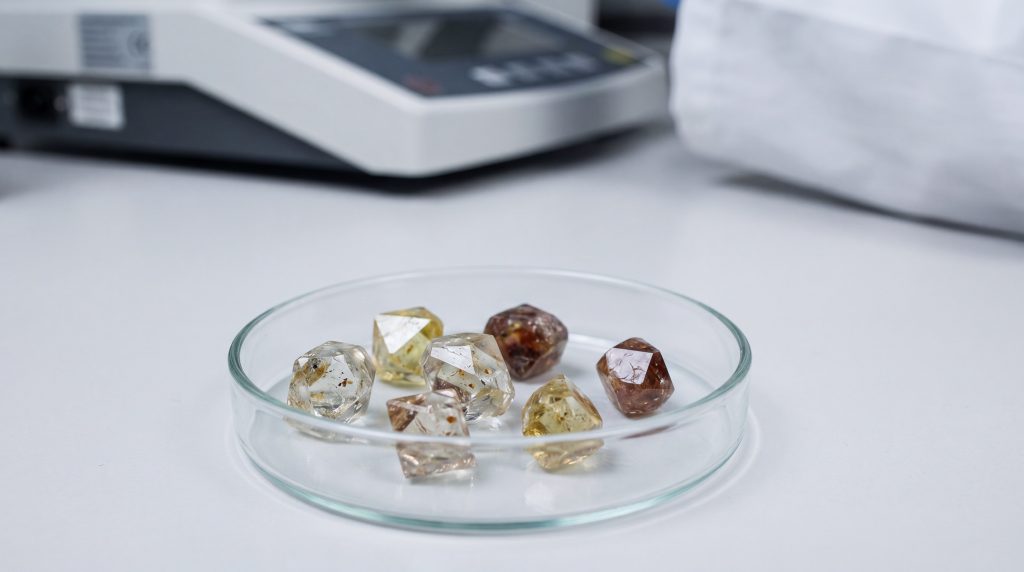
These components originate from natural zircon mineral deposits that undergo extensive chemical refining to extract pure zirconium dioxide. This refined powder is then stabilized and sintered to form high-purity Zirconia Structural Components. The purity of the starting material is critical, as even minor trace impurities can degrade high-temperature performance. Consequently, strict quality control during raw material processing is essential for aerospace-grade applications.
Mineral Origin to Pure Ceramic
The journey of zirconia starts deep in the Earth’s crust as zircon sand ($ZrSiO_4$). To turn this raw mineral into a high-performance aerospace ceramic, you must chemically separate the zirconium from silica and other impurities. But that’s not all. You must also remove hafnium, which is chemically almost identical to zirconium but alters its nuclear and thermal properties.
- Acid leaching removes silica and iron impurities.
- Calcination converts zirconium hydroxide to oxide powder.
- Sintering at 1500°C fuses the powder into solid components.
When you control this refining process, you get an ultra-pure powder with uniform particle size. This consistency ensures that the final sintered components perform predictably under stress. You ultimately receive a reliable, high-purity product that meets the most stringent aerospace standards.
| Processing Stage | Input Material | Output Material | Primary Objective |
|---|---|---|---|
| Chemical Extraction | Zircon Sand | Zirconium Hydroxide | Remove Silica & Impurities |
| Calcination | Zirconium Hydroxide | Zirconium Dioxide | Phase Conversion to Oxide |
| Sintering | Stabilized Powder | Solid Component | Densification & Toughening |
Tracking this purification process highlights the rigorous material control required to produce aerospace-grade ceramics.
Key Takeaway: Sourcing components from highly refined zircon ensures you receive maximum mechanical strength and predictable high-temperature performance.
Do Zirconia Structural Components Corrode?
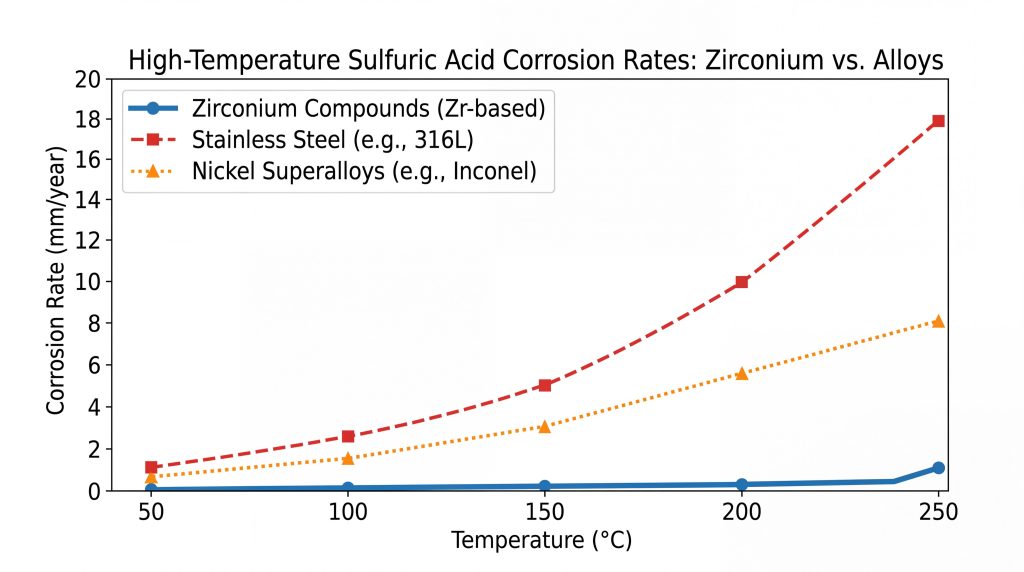
These components do not corrode because zirconium dioxide is highly stable and chemically inert in almost all acidic and alkaline environments. This extraordinary chemical resistance is why engineers utilize Zirconia Structural Components in aggressive chemical and high-temperature environments. Unlike metals, which form unstable oxide layers that flake off, zirconia maintains its structural integrity over time. This makes it ideal for components exposed to corrosive gases and combustion byproducts.
Acid and Corrosion Resistance
Metals like stainless steel and nickel superalloys degrade rapidly when exposed to hot acids or corrosive gases. If you rely on metal components in aggressive environments, you will face high maintenance costs and frequent downtime. Think about it. Replacing corroded parts every few months is a massive drain on operational efficiency.
- Completely immune to oxidation at high temperatures.
- Resists corrosion from strong acids and bases.
- No galvanic corrosion when paired with metals.
When you replace these vulnerable metal parts with zirconia, you eliminate chemical degradation entirely. The ceramic does not react with corrosive combustion products, ensuring consistent performance. You achieve a longer component lifespan and significantly lower maintenance overhead.
| Material Class | Corrosion Rate in Hot Acid | Oxidation Resistance | Galvanic Corrosion |
|---|---|---|---|
| Zirconia Ceramic | Virtually Zero | Outstanding | None |
| Nickel Superalloy | Low to Medium | Good | Medium |
| Stainless Steel (316L) | High | Moderate | High |
Comparing these corrosion metrics clearly illustrates how zirconia outclasses traditional engineering metals in harsh chemical environments.
Key Takeaway: Switching to zirconia components completely eliminates corrosion and oxidation issues, drastically extending the service life of your aerospace systems.
Why Buy Zirconia Structural Components?
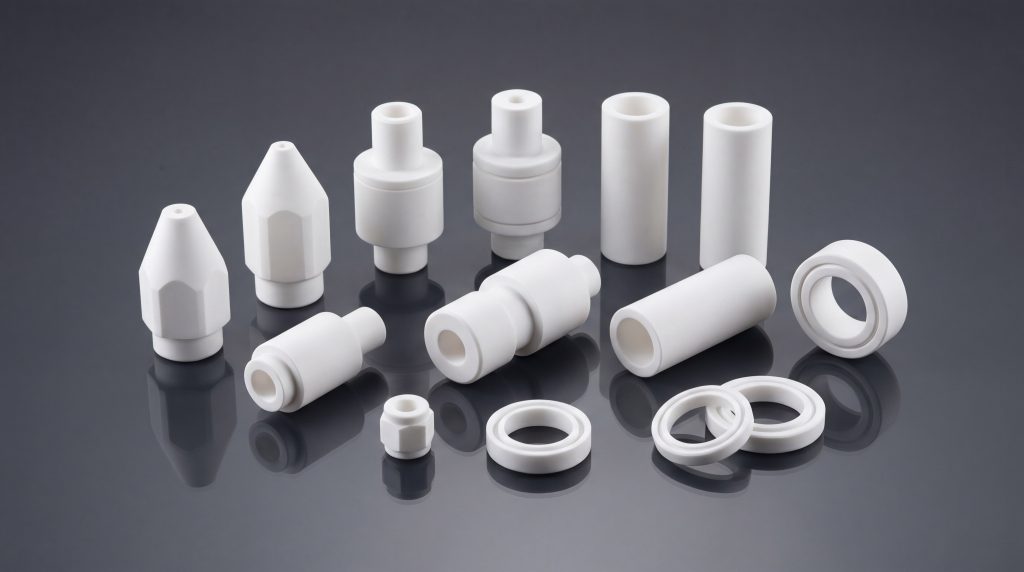
You should buy these components because they offer a tailored, high-performance solution that optimizes efficiency, reduces wear, and slashes maintenance downtime. Investing in custom Zirconia Structural Components ensures your critical assemblies are designed precisely for your application’s unique stresses. These custom parts can be engineered with specific dimensional tolerances and stabilizer concentrations. This level of customization ensures maximum performance and reliability in the field.
Custom Engineering Solutions
Standard off-the-shelf components rarely meet the exacting demands of modern aerospace engineering. If you force a generic part into a custom system, you risk premature failure and poor performance. Here is the kicker: custom-engineered zirconia parts can be tailored down to the micron.
- Custom geometries match your exact design specifications.
- Tailored stabilizer ratios optimize thermal or mechanical properties.
- Ultra-precise tolerances ensure perfect fit and assembly.
When you collaborate with a specialized manufacturer, you receive components that are optimized for your specific operating environment. This means you do not have to compromise on performance or reliability. You ultimately achieve a highly optimized system that outperforms the competition.
| Customization Option | Available Range | Primary Benefit | Application Example |
|---|---|---|---|
| Stabilizer Ratio | 3mol% – 8mol% $Y_2O_3$ | Optimizes toughness/conductivity | TBCs vs Structural parts |
| Surface Finish | Ra < 0.1 μm | Minimizes friction and wear | Bearings and Seals |
| Precision Tolerance | Down to ±0.002 mm | Ensures perfect fitment | Aerospace valves |
Reviewing these customization capabilities demonstrates why custom-engineered ceramics deliver superior value compared to off-the-shelf alternatives.
Key Takeaway: Investing in custom-engineered zirconia components ensures your aerospace systems operate at peak efficiency with minimal wear and zero compromises.
Operating at the cutting edge of aerospace engineering requires materials that refuse to compromise under extreme stress. Zirconia-based ceramics solve the fundamental thermal and mechanical bottlenecks of modern metallurgy, delivering unparalleled fracture toughness, wear resistance, and thermal insulation. Whether you are upgrading gas turbine liners, designing advanced spacecraft heat shields, or engineering custom high-wear parts, these advanced ceramics pave the way for safer, more efficient flights. We are dedicated to providing the high-precision ceramic solutions your mission-critical applications require. Partner with an industry leader and contact us today to discuss your custom engineering requirements and bring your next-generation aerospace designs to life.
FAQ
Can I replace my titanium turbine parts with zirconia ceramics?
Yes, you can replace certain high-temperature titanium parts with zirconia, but you must carefully evaluate the load profiles first. While zirconia offers far superior thermal resistance and compressive strength, titanium still excels in high-tensile, dynamic structural applications.
What’s the best stabilizer for aerospace zirconia components?
Yttria (yttrium oxide) is generally the best stabilizer for aerospace applications because it optimizes fracture toughness through phase-transformation toughening. For exceptionally high-temperature thermal barriers, co-doping with rare-earth oxides can provide even lower thermal conductivity and higher phase stability.
How do I know if my design requires custom-engineered zirconia?
You need custom zirconia if your application operates in environments exceeding 1000°C or requires tight dimensional tolerances that standard ceramics cannot achieve. Customization allows you to specify precise geometries, surface finishes, and stabilizer chemistry tailored to your operating conditions.
Can zirconia withstand rapid thermal shock without cracking?
Yes, stabilized zirconia is highly resistant to thermal shock compared to other ceramics, but it does have limits under extreme temperature transitions. To maximize thermal shock resistance, engineers design components with optimized thicknesses or specialized microstructures like those found in thermal barrier coatings.