
The main difference between 3Y, 4Y, and 5Y zirconia lies in their yttria stabilizer content, which determines the ideal balance between mechanical flexural strength and optical translucency. Dental laboratories and advanced structural ceramic manufacturers often struggle with catastrophic material fractures or dull, opaque aesthetics when selecting incorrect zirconia blocks. Sponsoring a beautiful restoration only to have it crack under masticatory force, or placing a lifeless, chalky crown in an aesthetic zone can ruin your business reputation and cost thousands of dollars in remakes. Understanding the precise chemical and physical differences between these grades allows you to select the optimal material for every clinical or industrial indication. Sourcing high-quality raw materials is key, and using premium 3Y Zirconia ensures your CAD/CAM blocks or components achieve the highest possible structural reliability.
How does 3Y Zirconia compare in flexural strength?
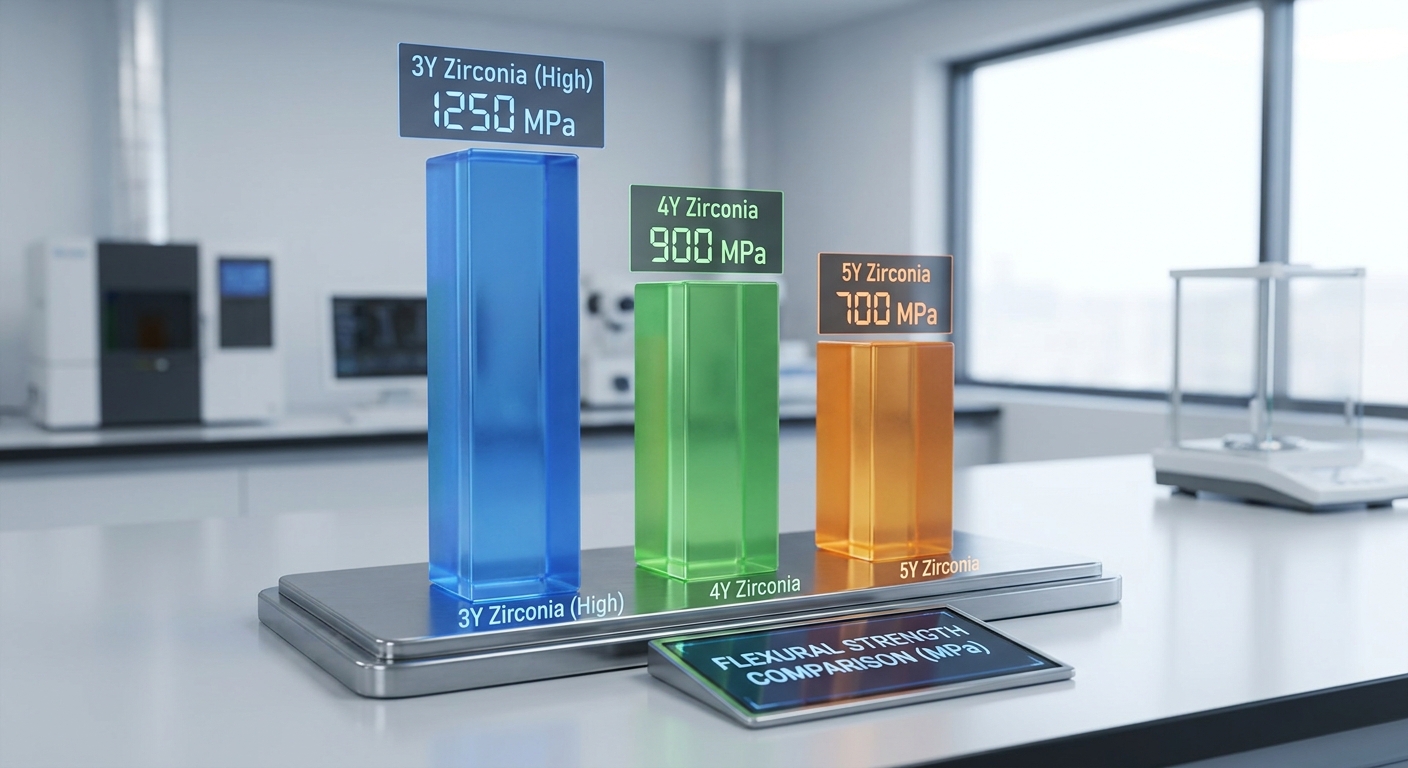
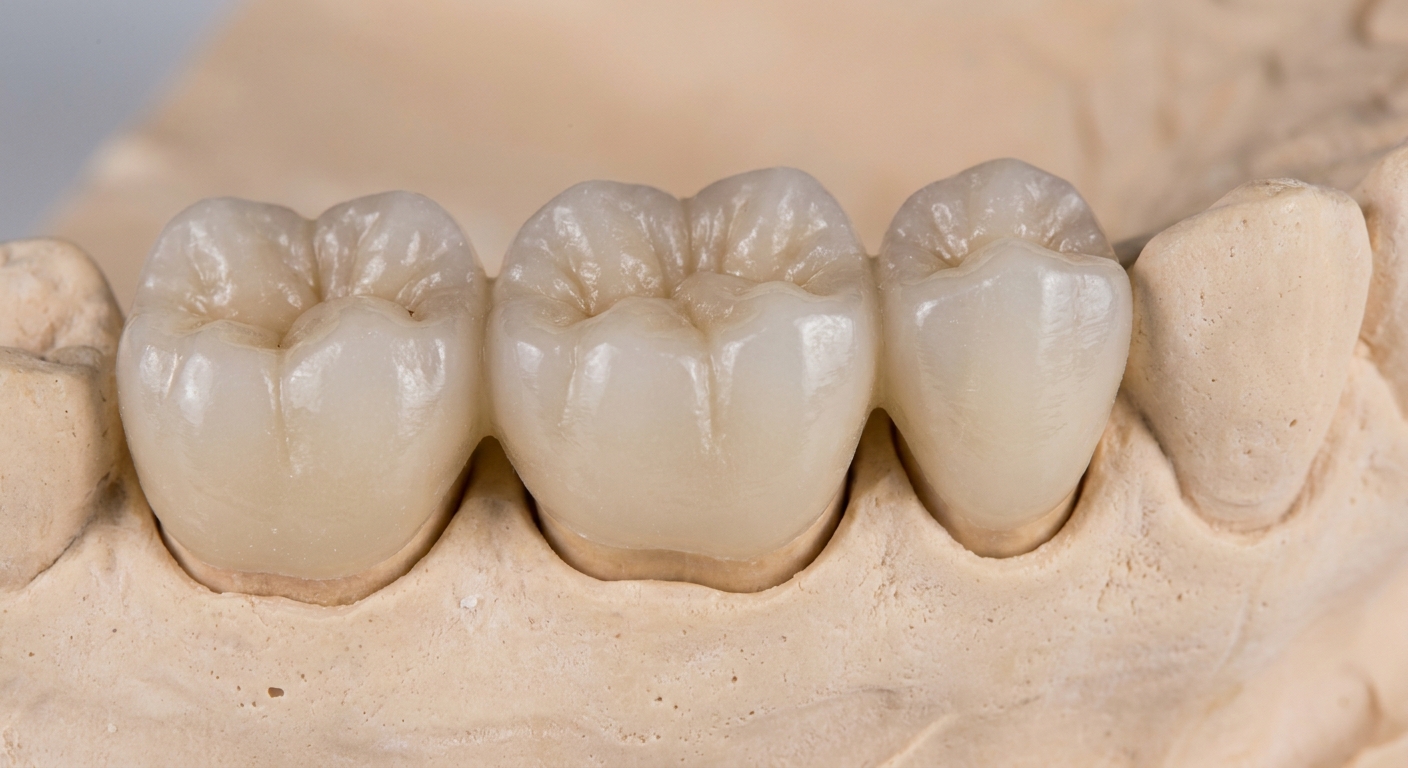
3Y Zirconia provides the highest flexural strength among the three grades, typically exceeding 1,200 MPa, making it highly resistant to heavy-duty mechanical loads. This immense physical strength allows dental professionals and structural engineers to confidently deploy the material in high-stress areas. If you are manufacturing multi-unit posterior bridges or industrial components, utilizing premium 3Y Zirconia is essential for long-term clinical and functional success. This structural grade delivers the structural integrity required to prevent premature cracks and structural deformation.
By comparison, 4Y zirconia drops to around 900 MPa, and 5Y zirconia decreases further to approximately 700 MPa. This significant drop in strength highlights why choosing the correct material grade is vital for load-bearing areas. Selecting a lower strength grade for high-impact zones can quickly lead to catastrophic mechanical failure.
Mechanical Limits: What is the Flexural Strength Profile?
Determining the mechanical boundaries of dental ceramics is critical to avoiding structural failures under heavy cyclic loading. Let’s dive in. The flexural strength profile of yttria-stabilized ceramics is determined through precise testing methods like the three-point bending test.
- Average flexural strength exceeds 1,200 MPa.
- Offers unmatched resistance to plastic deformation under mechanical load.
- Retains high elastic modulus to ensure minimal flexing.
This mechanical durability ensures that structural components remain stable under continuous pressure.
Can 3Y Zirconia Handle Multi-Unit Posterior Bridges?
Large-span dental restorations in the posterior region require materials that can handle intense masticatory forces without fracturing. Standard lithium disilicate or high-yttria ceramics often lack the structural integrity needed to support these spans. Think about it.
- High fracture toughness prevents cracks from forming in thin connector zones.
- Excellent resistance to fatigue failure makes it ideal for long-term wear.
- Provides a stable foundation that protects against chewing pressures.
Using this material ensures your dental restorations remain durable over years of daily function.
Key Takeaway: The outstanding mechanical strength of 3Y-TZP makes it the safest and most reliable choice for multi-unit posterior bridges where durability cannot be compromised.
| Zirconia Grade | Flexural Strength (MPa) | Fracture Toughness (MPa·m^1/2) | Primary Indication |
|---|---|---|---|
| 3Y Zirconia | 900 – 1,400 | 5.0 – 8.0 | Posterior Bridges & Structural Frames |
| 4Y Zirconia | 600 – 900 | 4.0 – 5.5 | Universal Crowns & Short Bridges |
| 5Y Zirconia | 500 – 650 | 3.0 – 4.0 | High-Esthetic Anterior Crowns |
The physical data confirms that 3Y Zirconia provides double the mechanical resistance of 5Y Zirconia, explaining why it remains irreplaceable for load-bearing zones.
Why is 3Y Zirconia less translucent than other grades?
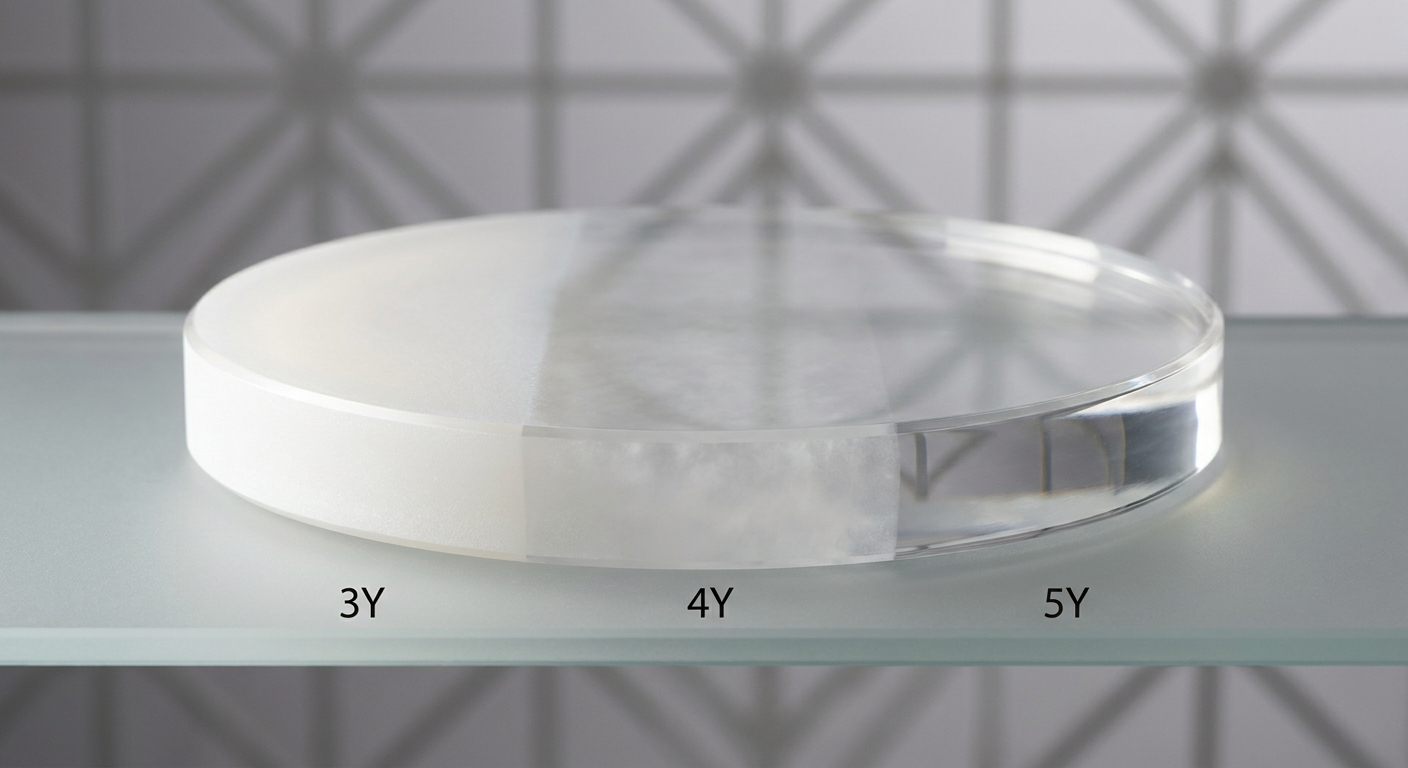
3Y Zirconia is less translucent because its lower yttria content stabilizes a highly tetragonal crystal phase, which scatters light instead of allowing it to pass through. This unique atomic structure results in a highly reflective, opaque appearance compared to more translucent grades. Incorporating 3Y Zirconia into your laboratory workflow requires understanding these optical boundaries. This opacity can result in a chalky appearance if used inappropriately in aesthetic zones.
As yttria levels increase in 4Y and 5Y formulations, more isotropic cubic crystals are formed. These cubic crystals do not scatter light at grain boundaries, allowing for greater light transmission. Consequently, higher-yttria grades achieve the translucency necessary to mimic natural tooth enamel.
Crystal Lattice Physics: Tetragonal vs Cubic Phases
At a microscopic level, the layout of the crystal lattice determines how light waves travel through the ceramic material. Here is why:
- Tetragonal crystals scatter light along their grain boundaries due to optical anisotropy.
- Cubic crystals exhibit isotropic optical properties, permitting direct light transmission.
- Lower yttria levels maintain a high ratio of light-scattering tetragonal crystals.
This difference in crystal physics explains why low-yttria ceramics look more opaque.
How Does Light Transmission Change with Yttria Levels?
As the mole percentage of yttrium oxide increases from 3% to 5%, light transmission rates rise significantly. Let’s dive in.
- 3Y Zirconia features ~35% light transmission (mostly opaque).
- 4Y Zirconia features ~45% light transmission (medium translucency).
- 5Y Zirconia features ~50% light transmission (ideal for enamel).
This progression highlights the direct relationship between chemical composition and aesthetic properties.
Key Takeaway: The lower translucency of 3Y zirconia is the physical trade-off for its unmatched structural toughness, which limits its aesthetic use to framework substructures.
| Zirconia Grade | Yttria Content (mol%) | Translucency Level (%) | Dominant Crystal Phase |
|---|---|---|---|
| 3Y Zirconia | ~3.0% | ~35% | Tetragonal (95%) |
| 4Y Zirconia | ~4.0% | ~45% | Mixed Tetragonal-Cubic |
| 5Y Zirconia | ~5.0% | ~50% | Cubic (Over 50%) |
This chemical-optical correlation dictates that as you increase aesthetic translucency, you inevitably lose mechanical fracture toughness.
When should you choose 3Y Zirconia over 4Y or 5Y?
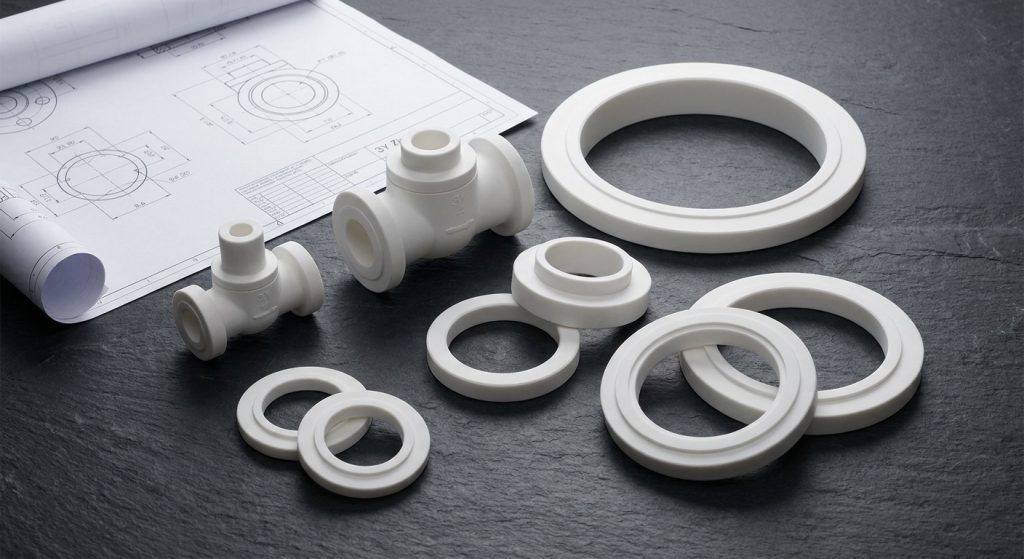
You should choose 3Y Zirconia over other grades when fabricating high-load restorations such as multi-unit posterior bridges, implant custom abutments, or industrial structural parts. This structural material provides the highest safety margin against fracturing under heavy daily forces. Selecting premium 3Y Zirconia ensures that long-span components remain intact for decades. This makes it the go-to standard for heavy-duty structural applications.
Conversely, 4Y and 5Y grades are better suited for single crowns and anterior restorations where aesthetics are the primary concern. Using higher-yttria grades in heavy-load zones is a risky decision that often leads to mechanical failure. Therefore, mapping out the stress demands of your application is the first step in material selection.
Heavy-Load Indications: Selecting for Posterior Sectors
Posterior restorations must withstand intense chewing forces, especially in patients who suffer from bruxism. Think about it:
- High crushing forces in the molar region can easily crack weaker ceramics.
- Monolithic restorations in posterior sectors require maximum structural support.
- Thick ceramic frameworks are necessary to distribute masticatory loads evenly.
Choosing a material with high load-bearing capacity prevents these costly clinical failures.
Which Applications Require High Fracture Toughness?
High fracture toughness is essential for dental and industrial parts exposed to sudden impacts or continuous high-stress loads. Let’s dive in.
- Industrial pump impellers, valves, and nozzles benefit from high toughness.
- Dental implant custom abutments require high resistance to screw-loosening and shear stress.
- Large multi-unit dental bridges rely on tough connectors to prevent structural snapping.
This property measures how effectively a material prevents minor surface cracks from growing.
Key Takeaway: For heavy-duty industrial wear parts or complex multi-unit posterior frameworks, 3Y zirconia remains the only viable choice to ensure absolute fracture resistance.
| Material Requirement | 3Y Zirconia Suitability | 4Y Zirconia Suitability | 5Y Zirconia Suitability |
|---|---|---|---|
| High Fracture Toughness | Excellent (5.0 – 8.0 MPa·m^1/2) | Moderate (4.0 – 5.5 MPa·m^1/2) | Poor (3.0 – 4.0 MPa·m^1/2) |
| Long-Span Bridges | Highly Recommended | Limited (Short-span only) | Contraindicated |
| High Aesthetic Demand | Poor (Requires veneering) | Excellent (Monolithic) | Outstanding (Monolithic) |
This comparison confirms that while 4Y and 5Y zirconia excel in cosmetic zones, 3Y zirconia is the undisputed choice for heavy structural loads.
How does yttria stabilization affect 3Y Zirconia?
Yttria stabilization affects 3Y Zirconia by trapping its crystal structure in a metastable tetragonal phase at room temperature, which enables the unique mechanism of transformation toughness. Without the addition of yttrium oxide, pure zirconia would crack and crumble during the cooling process. This chemical modification is what gives 3Y Zirconia its outstanding physical properties. It allows the material to perform reliably under extreme mechanical stress.
Adding approximately 3 mole percent of yttrium oxide acts as a crystalline stabilizer, preventing the natural transition to a weaker monoclinic phase. This stabilization keeps the crystals in tension, ready to react to external stresses. As a result, the ceramic behaves more like high-strength steel than brittle glass.
The Role of 3 Mol% Yttrium Oxide Stabilizer
The precise addition of 3 mole percent yttria is the secret to creating high-strength structural ceramics. But that’s not all:
- Locks the high-strength tetragonal phase into room-temperature stability.
- Inhibits spontaneous, destructive phase transformations during cooling.
- Provides the chemical groundwork for active structural self-healing.
This specific chemical ratio ensures the material retains its shape and structural integrity.
What is Stress-Induced Transformation Toughening?
Stress-induced transformation toughening is the active mechanism that allows stabilized zirconia to stop cracks in their tracks. Think about it.
- Microscopic cracks create intense localized stress fields at their tips.
- This stress triggers the metastable tetragonal crystals to transform immediately.
- The crystals swell into the larger monoclinic phase, expanding by 3% to 4%.
This expansion clamps the crack shut, preventing it from spreading through the material.
Key Takeaway: Stress-induced transformation toughening acts as an active chemical shield, using localized crystal expansion to pinch micro-cracks shut.
| Phase Parameter | Tetragonal Phase (Pre-Stress) | Monoclinic Phase (Post-Stress) | Impact on Crack Tip |
|---|---|---|---|
| Relative Volume | Baseline (100%) | Expanded (~103% to 104%) | Generates localized compressive stress |
| Crystal Geometry | Tetragonal Prism | Monoclinic Prism | Compresses and closes micro-gaps |
| Internal Energy State | Metastable | Stable | Dissipates crack propagation energy |
The physics of phase transitions demonstrate how chemical stabilizers translate directly into active mechanical protection.
Can 3Y Zirconia resist hydrothermal aging effects?
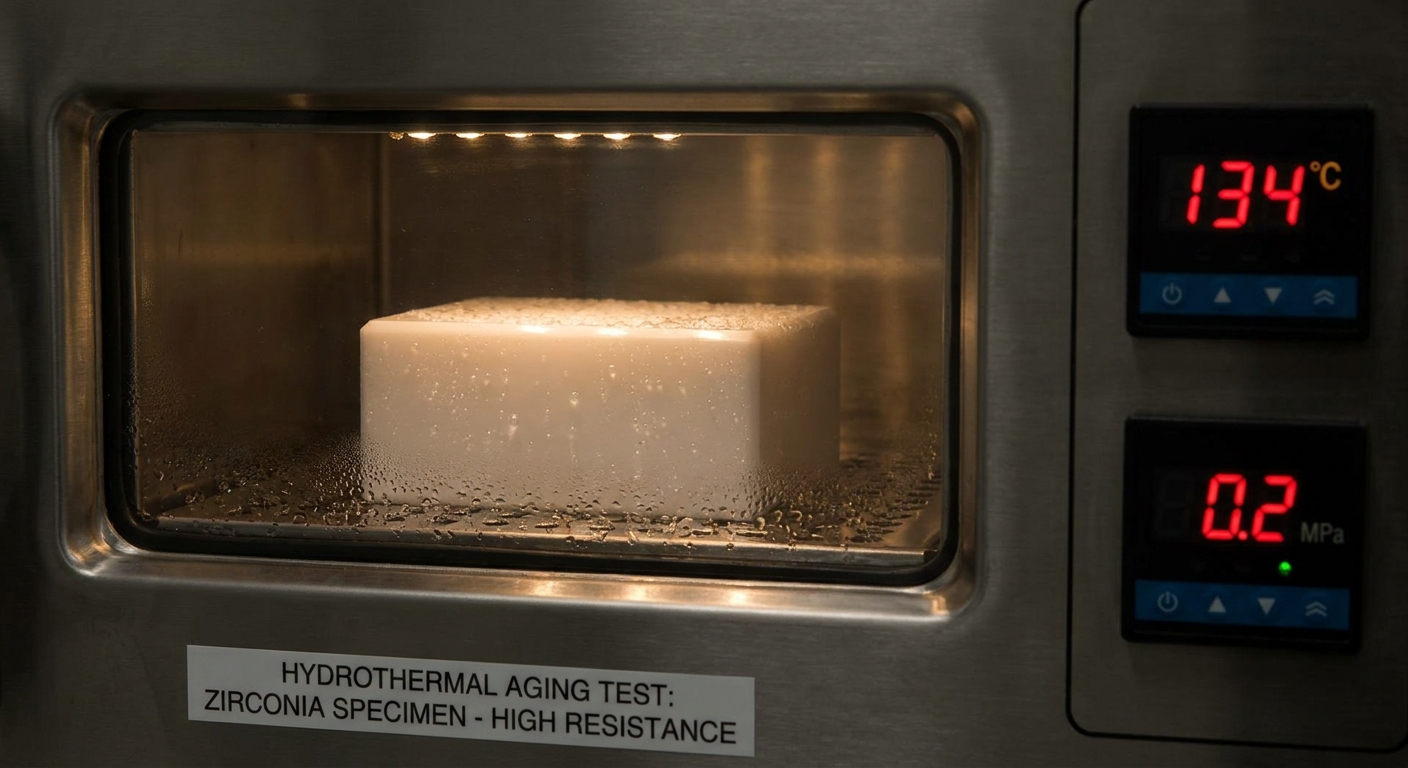
Yes, 3Y Zirconia can effectively resist hydrothermal aging and low-temperature degradation when it is manufactured with a highly homogenous sub-micron grain structure. This environmental resistance prevents moisture from destabilizing the stabilized crystal lattice over time. Sourcing high-quality raw materials is critical, and choosing premium 3Y Zirconia prevents premature surface degradation in warm, humid conditions. This resistance is highly vital for long-term clinical success inside the oral cavity.
Hydrothermal aging, also known as low-temperature degradation, occurs when water molecules gradually penetrate the grain boundaries. This moisture exposure can cause the stabilized tetragonal crystals to revert to the monoclinic phase without any external stress. If left unchecked, this degradation leads to surface roughness, micro-cracking, and a significant loss in flexural strength.
Low-Temperature Degradation: The Silent Risk
Low-temperature degradation represents a major long-term risk for zirconia components exposed to warm, humid environments. Let’s dive in.
- Water molecules slowly disrupt the yttrium-oxygen bonds at grain boundaries.
- This disruption triggers a slow, spontaneous tetragonal-to-monoclinic transition.
- The transition spreads across the surface, leading to micro-cracks and rough spots.
Using poorly formulated raw materials can accelerate this silent degradation process.
How Do Dense Grain Structures Prevent Failure?
Maximizing sintering density and minimizing grain size are the most effective defenses against hydrothermal aging. Think about it.
- Ultra-fine grains (under 0.5 microns) are highly resistant to spontaneous phase transitions.
- Dense sintering eliminates open porosities, blocking water pathways into the core.
- Uniform yttria distribution ensures there are no weak, under-stabilized zones.
These structural features block moisture infiltration and protect the material’s integrity.
Key Takeaway: Achieving high density and sub-micron grain sizes is crucial to defending 3Y zirconia against the progressive damage of hydrothermal aging.
| Environmental Stress | Destabilization Mechanism | Material Defenses (3Y) | Long-Term Reliability |
|---|---|---|---|
| Moisture Exposure | Destabilizes yttria stabilizer | High density, low open porosity | High (when properly sintered) |
| Cyclic Loading | Promotes fatigue crack growth | Phase transformation toughening | Excellent (resists fatigue) |
| Thermal Fluctuation | Triggers thermal expansion stress | Low thermal expansion coefficient | High (resists thermal shock) |
Maintaining absolute control over sintering density and grain size remains your best defense against moisture-induced surface degradation.
What phase transformations occur in 3Y Zirconia?
The primary phase transformation that occurs in 3Y Zirconia is the stress-induced martensitic shift from the metastable tetragonal phase to the stable monoclinic phase. This transformation acts as an internal active defense mechanism against fracturing. Understanding how 3Y Zirconia reacts to mechanical stress is essential for structural engineers and dental technicians alike. This rapid crystal transformation is what gives the material its exceptional, steel-like fracture toughness.
Under normal room-temperature conditions, the yttria stabilizer keeps the tetragonal phase locked in place. However, when an external load creates a micro-crack, the high stress at the crack tip overcomes this stabilization. This localized stress triggers an immediate crystalline transformation that actively works to arrest the crack.
Tetragonal to Monoclinic: The Stress Response
The tetragonal-to-monoclinic transformation is a fast, diffusionless physical response to localized mechanical energy. Here is why:
- Triggered instantly by external tension or impact at the crack tip.
- Occurs without the need for high temperatures or chemical reactions.
- Changes the shape of the crystal lattice into a monoclinic prism.
This rapid mechanical response dissipates the energy driving the crack forward.
Does Volumetric Expansion Prevent Crack Propagation?
The volumetric expansion that occurs during this phase change is key to stopping crack propagation. Think about it.
- The crystal transition causes a localized volume expansion of 3% to 4%.
- This expansion exerts immense compressive stress on the surrounding crack tip.
- The compressive force physically pinches the crack closed, stopping its growth.
This structural defense system prevents minor scratches from developing into major breaks.
Key Takeaway: The rapid, stress-induced volume expansion of tetragonal crystals acts as a physical brake that arrests cracks before they cause structural failure.
| Crystal State | Symmetry Class | Volumetric Density (g/cm^3) | Shear Strain Resistance |
|---|---|---|---|
| Tetragonal Phase | Tetragonal | High (~6.08) | High |
| Monoclinic Phase | Monoclinic | Lower (~5.82) | Lower |
This structural transition physics explains why yttria-stabilized ceramics achieve physical properties that surpass traditional brittle glass-ceramics.
Is 3Y Zirconia suitable for anterior restorations?
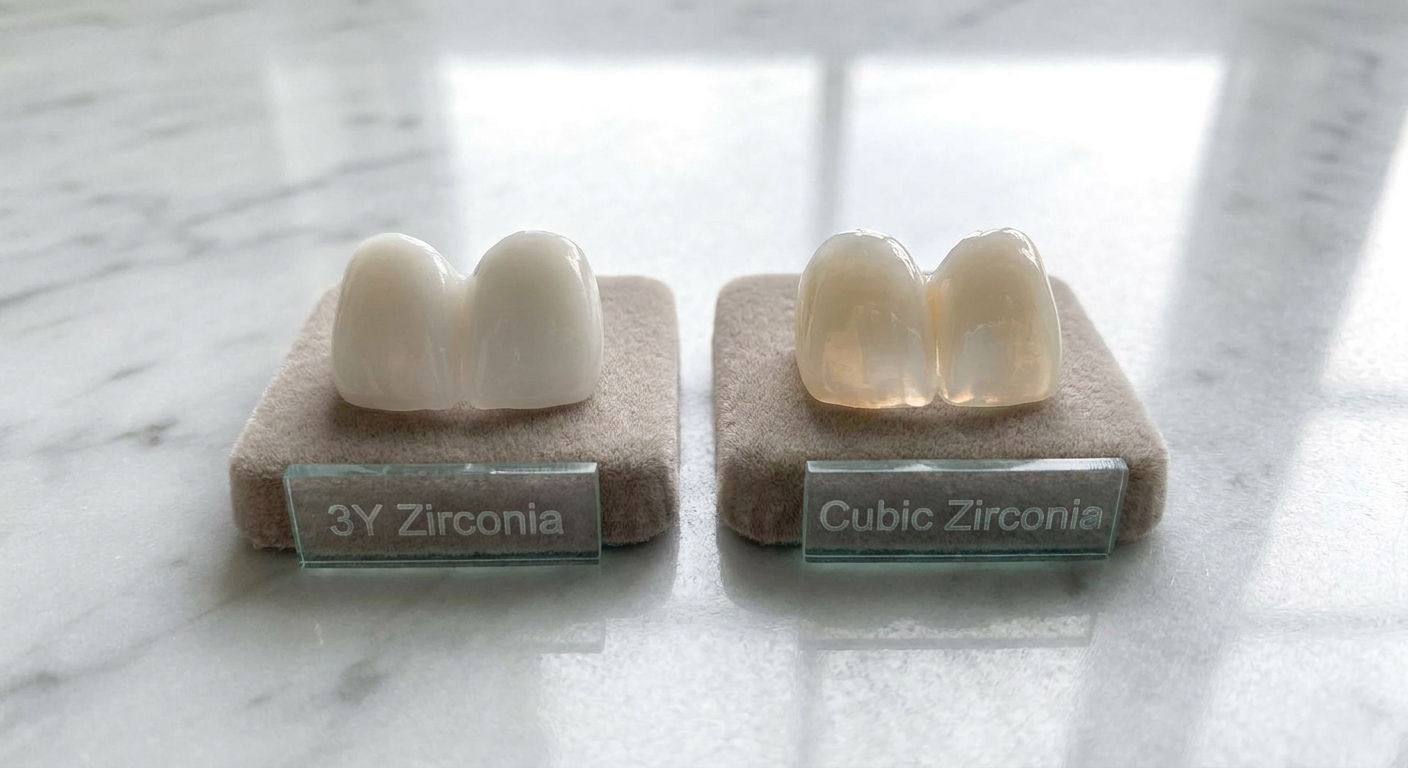
No, monolithic 3Y Zirconia is generally not suitable for anterior restorations due to its high opacity, but it is an outstanding framework substrate for hand-layered porcelain veneering. This high opacity causes monolithic restorations to look flat, bright, and unnaturally chalky in the aesthetic zone. Sourcing the right material is vital, and utilizing high-quality 3Y Zirconia as a core material provides the structural strength needed to support delicate veneer porcelain. This combined method delivers excellent aesthetics while maintaining high structural durability.
For monolithic restorations in the anterior region, more translucent options like 4Y or 5Y zirconia are highly recommended. These grades contain more cubic crystals, which allow light to pass through naturally and mimic real tooth structure. However, they lack the raw mechanical strength of the classic three-percent yttria grade.
Esthetic Trade-Offs: Combating the Chalky Appearance
Using monolithic high-strength ceramics in the aesthetic zone often results in poor cosmetic outcomes. Let’s dive in.
- High light reflection makes the restoration appear unnaturally opaque and white.
- Lack of light transmission prevents the natural tooth root from showing through.
- Shading and surface staining cannot fully replicate the deep translucency of enamel.
These aesthetic limitations can lead to unsatisfied patients and costly laboratory remakes.
Can Framework Veneering Solve Esthetic Limits?
Veneering a high-strength ceramic core with translucent dental porcelain allows you to achieve both strength and beauty. Think about it.
- The strong internal core handles the high physical loads in the mouth.
- Translucent feldspathic porcelain is hand-layered on top to mimic natural enamel.
- This combination delivers lifelike optical depth and excellent light transmission.
This hybrid technique remains a highly reliable option for demanding cosmetic cases.
Key Takeaway: While monolithic 3Y-TZP is too opaque for anterior use, utilizing it as a veneered core framework successfully combines high strength with beautiful aesthetics.
| Restorative Approach | Strength Profile (Core) | Esthetic Realism | Clinical Complexity | Risk of Chipping |
|---|---|---|---|---|
| Monolithic 3Y | Ultra-High (>1,200 MPa) | Low (Chalky/Opaque) | Low | None |
| Veneered 3Y | Ultra-High (>1,200 MPa) | Outstanding | High | Moderate (Veneer wear) |
| Monolithic 5Y | Moderate (~600 MPa) | Excellent | Low | None |
This comparison shows that combining a strong core with aesthetic veneering porcelain is the best way to bypass the opacity of low-yttria ceramics.
How does milling wear impact tools for 3Y Zirconia?
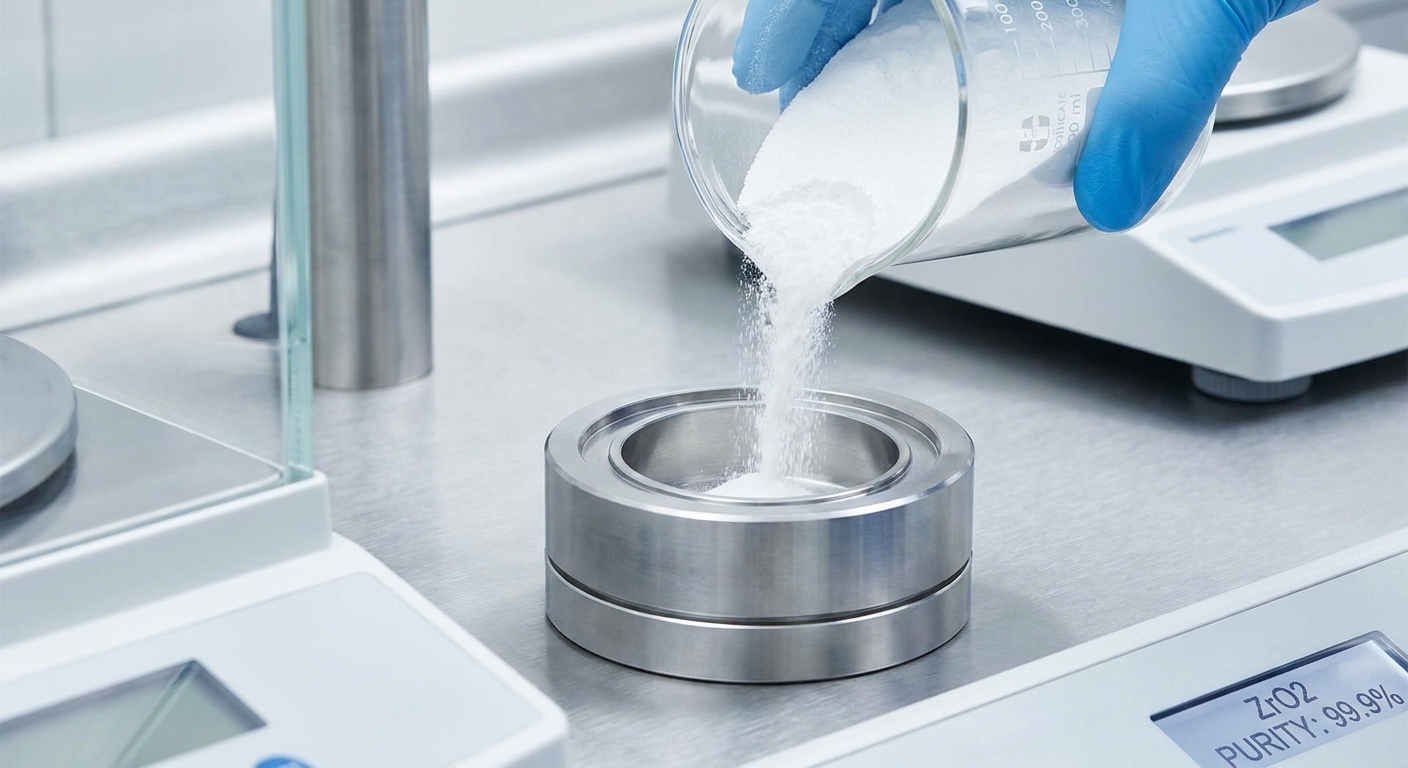
Milling wear from processing 3Y Zirconia is highly dependent on the material’s pre-sintered green state density, with optimized binder formulations significantly extending the service life of CAD/CAM diamond burs. This chalk-like green state allows milling burs to cut the material easily before it is sintered at high temperatures. Processing 3Y Zirconia with highly consistent green density helps reduce mechanical stress on your milling equipment. This consistency is essential to maintaining low tooling costs and high margins.
Although the green state material is soft, its abrasive particles still cause gradual wear on diamond-coated carbide tools. Inconsistent density or low-quality binder formulations can cause premature bur chipping and uneven tool wear. Therefore, sourcing premium CAD/CAM blanks is vital to ensuring efficient milling workflows.
Green State Density and Green-Machining Dynamics
The physical state of pre-sintered ceramic blanks determines how easily they can be cut and shaped in CAD/CAM milling units. Let’s dive in.
- Uniform pre-sintered density prevents micro-chipping along delicate crown margins.
- Balanced binder distribution allows for clean material removal and low dust.
- Consistent density ensures predictable shrinkage and an accurate final fit.
These physical factors allow for fast, precise milling without putting excessive stress on tools.
What Factors Determine CAD/CAM Tool Service Life?
Several critical factors influence how long your diamond-coated milling burs will last when processing abrasive ceramic blanks. Think about it.
- High-quality diamond coatings resist abrasive wear from zirconia particles.
- Optimizing milling paths and feed rates minimizes mechanical stress on burs.
- Consistent, high-purity materials reduce vibrations that can cause tool breakage.
Managing these factors is essential to keeping laboratory operating costs low.
Key Takeaway: Sourcing pre-sintered ceramic blanks with a highly uniform green-state density is crucial to extending tool life and ensuring precise margin detail.
| Green State Parameter | Bur Lifetime Impact | Edge-Chipping Risk | Post-Sintering Fit |
|---|---|---|---|
| High Uniformity | Long bur service life | Low (Clean margins) | Predictable, accurate |
| Low Uniformity | Rapid coating wear | High (Micro-cracks) | Unpredictable warping |
Controlling variations in pre-sintered density is the most effective way to lower tooling costs and improve the precision of your CAD/CAM workflow.
Which sintering protocol optimizes 3Y Zirconia?
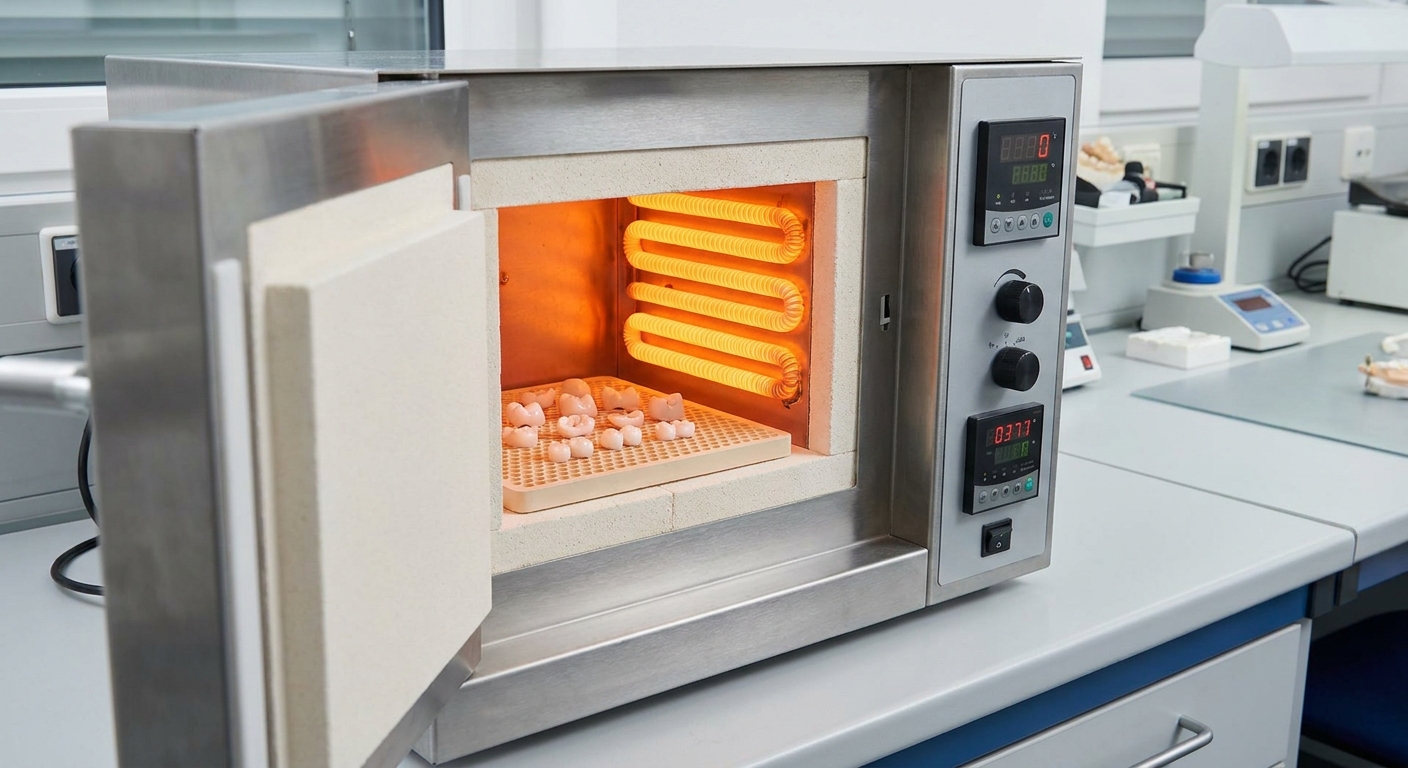
The optimal sintering protocol for 3Y Zirconia requires a precise heating ramp to a peak temperature of 1,450°C to 1,530°C, followed by a controlled cooling phase to prevent thermal shock. This precise heat treatment is necessary to achieve full material density and maximum mechanical strength. When processing 3Y Zirconia, following the manufacturer’s exact thermal guidelines prevents micro-structural defects and warping. This careful processing ensures that the final restorations perform reliably under extreme loads.
Sintering triggers a massive physical change, during which the porous green state ceramic shrinks by 20% to 25% into a highly dense material. Deviating from the recommended heating rate or holding time can lead to incomplete densification or excessive grain growth. This can severely compromise the final fit and strength of the component.
Peak Temperatures and Heating Rate Dynamics
Careful control of furnace temperatures is essential to achieving optimal density and maintaining a stable grain structure. Here is why:
- Standard heating ramps of 2°C to 8°C per minute prevent internal thermal stresses.
- Peak holding times of 2 to 2.5 hours allow for complete, uniform densification.
- Controlled cooling speeds prevent micro-cracks from thermal shock.
These thermal parameters must be carefully managed to lock in the material’s strength.
How Does Sintering Shrinkage Affect Final Fit?
Because the ceramic shrinks significantly during sintering, CAD/CAM systems must calculate this shrinkage factor with high precision. Think about it.
- Shrinkage must occur uniformly in all three dimensions to ensure an accurate fit.
- Any variation in pre-sintered density can cause warping during the shrinkage process.
- CAD/CAM software relies on the precise scaling factor printed on each ceramic disk.
Achieving a perfect fit requires highly uniform raw materials and a calibrated furnace.
Key Takeaway: Strict adherence to manufacturer-specified sintering protocols is crucial to achieving predictable shrinkage and a perfect final fit.
| Sintering Variable | Optimal Target Range | Deviation Consequences |
|---|---|---|
| Peak Temperature | 1,450°C – 1,530°C | Over 1,550°C: Rapid grain growth, reduced strength |
| Heating Ramp | 2°C to 8°C per minute | Excess speed: Internal thermal cracking, warp risk |
| Holding Time | 2.0 to 2.5 Hours | Under-holding: Incomplete densification, porosity |
This precise thermal data proves that achieving high-performance results depends as much on careful sintering as on the quality of the raw ceramic powder.
Does grain size limit the use of 3Y Zirconia?
Yes, grain size directly limits the physical performance and optical properties of 3Y Zirconia, where maintaining sub-micron grain boundaries is crucial for preventing hydrothermal degradation and maximizing mechanical strength. Keeping the average grain size under 0.5 microns is necessary to achieve the highest possible durability. Sourcing high-quality 3Y Zirconia ensures that grain growth remains tightly controlled during the sintering process. This microscopic control is the foundation of high-performance ceramic engineering.
When grain sizes exceed one micron, the material becomes much more susceptible to spontaneous phase transformations and micro-cracking. This rapid grain growth can significantly weaken the structural core and reduce the component’s lifespan. Therefore, maintaining tight control over grain boundaries is vital for long-term reliability.
Nanoscale Microstructure and Sintering Science
The physical properties of advanced ceramics are heavily influenced by their microscopic grain size. Let’s dive in.
- Fine sub-micron grain structures (under 0.5 microns) exhibit outstanding fracture toughness.
- Smaller grains limit the pathways through which water molecules can penetrate.
- Highly uniform microstructures help slightly improve light transmission.
This nanoscale engineering is what allows modern dental ceramics to achieve such high strength.
What Happens to Mechanical Strength as Grains Grow?
Allowing grains to grow too large during the heating cycle can lead to a significant drop in mechanical performance. Think about it.
- Coarser grains are less stable and prone to spontaneous monoclinic transitions.
- Large grain boundaries create weak points that are more susceptible to crack growth.
- Over-sintering leads to a weaker structural core and reduced fatigue resistance.
Controlling grain growth by using precise sintering protocols is vital to preserving material strength.
Key Takeaway: Maintaining fine sub-micron grain sizes through precise temperature control is critical to ensuring high strength and excellent aging resistance.
| Sintered Grain Size | Flexural Strength (MPa) | Hydrothermal Degradation Resistance | Translucent Depth |
|---|---|---|---|
| Sub-micron (<0.5 μm) | Peak (1,200+ MPa) | High Resistance | Moderately improved |
| Coarse (>1.2 μm) | Decreased (<900 MPa) | Low Resistance (Unstable) | Severely reduced |
This microscopic analysis confirms that maintaining fine grain boundaries is key to preserving the physical properties of high-strength ceramics.
Conclusion
Choosing between 3Y, 4Y, and 5Y zirconia requires a clear understanding of the trade-off between strength and beauty. While more translucent grades are perfect for simple anterior cases, 3Y zirconia remains the undisputed standard for complex, high-load structural frameworks and posterior bridges. By choosing premium materials with precise stabilization, uniform density, and sub-micron grain boundaries, you can ensure reliable, fracture-free restorations for your clients.
As a leading manufacturer of high-performance CAD/CAM dental materials, Zrbrontec is dedicated to providing laboratories worldwide with outstanding consistency and batch traceability. We are committed to empowering dental technicians and engineers with the highest-quality zirconia solutions to elevate patient care and process efficiency. To explore our full product range or to discuss custom materials for your workflow, get in touch with us today to consult with our specialized technical team.
Reader-Centric FAQ
Can I use 3Y Zirconia for thin anterior veneers?
No, you should avoid using monolithic 3Y zirconia for thin anterior veneers because its high opacity will result in an unnaturally opaque, flat appearance. For highly visible cosmetic zones, 5Y zirconia or lithium disilicate are much better options as they mimic the natural translucency of real enamel.
What’s the best zirconia grade for a posterior 4-unit bridge?
The best choice for a posterior 4-unit bridge is 3Y zirconia due to its outstanding flexural strength and fracture toughness. Using 5Y or even standard 4Y zirconia in this high-stress zone carries a significantly higher risk of connector breakage under masticatory loads.
How do I know if my laboratory should stock 4Y Zirconia instead of 3Y?
Your laboratory should stock 4Y zirconia if you are looking for a versatile, single-disc option for standard anterior and posterior single crowns. This universal grade balances strength and translucency well, though you should still keep 3Y zirconia on hand for long-span posterior bridges and implant frameworks.
Can I intermix sintering schedules for 3Y, 4Y, and 5Y Zirconia in the same furnace run?
No, you should not intermix these sintering schedules unless they share identical thermal parameters as specified by the manufacturer. Intermixing different material grades can lead to incomplete densification, excessive grain growth, or warping, which will compromise the final fit and strength of your restorations.
How do I know if hydrothermal degradation is affecting my zirconia components?
Hydrothermal degradation typically shows up as surface micro-cracking, a loss of surface polish, or premature grain boundaries weakening. You can prevent this aging process by sourcing high-quality zirconia blocks with uniform green-state density and maintaining strict control over your sintering furnace temperatures.