
The application of yttria-stabilized zirconia (YSZ) represents the ultimate material solution for extreme industrial environments where standard metals and plastics fail. If your production line suffers from constant component wear or thermal degradation, you know how devastating unexpected shutdowns can be. This ongoing equipment failure delays your deliveries and erodes your market credibility. Fortunately, yttria stabilized zirconia resolves these vulnerabilities through advanced phase transformation and chemical stabilization.
How does yttria stabilized zirconia perform under stress?
Yttria stabilized zirconia performs exceptionally well under high mechanical stress by leveraging solid-state chemical stabilization to prevent catastrophic cracking. Under normal thermal cooling, pure zirconia experiences severe volumetric expansion that leads to structural crumbling. By introducing yttrium oxide as a chemical stabilizer, the ceramic preserves high-temperature crystal structures like tetragonal and cubic phases at room temperature. This precise modification locks in superior engineering phases to deliver high-performance structural properties.
The mechanical output depends heavily on sintering temperatures and the precise mole percentage of yttria added. Adjusting these parameters allows you to customize the ceramic’s phase composition for demanding industrial applications.
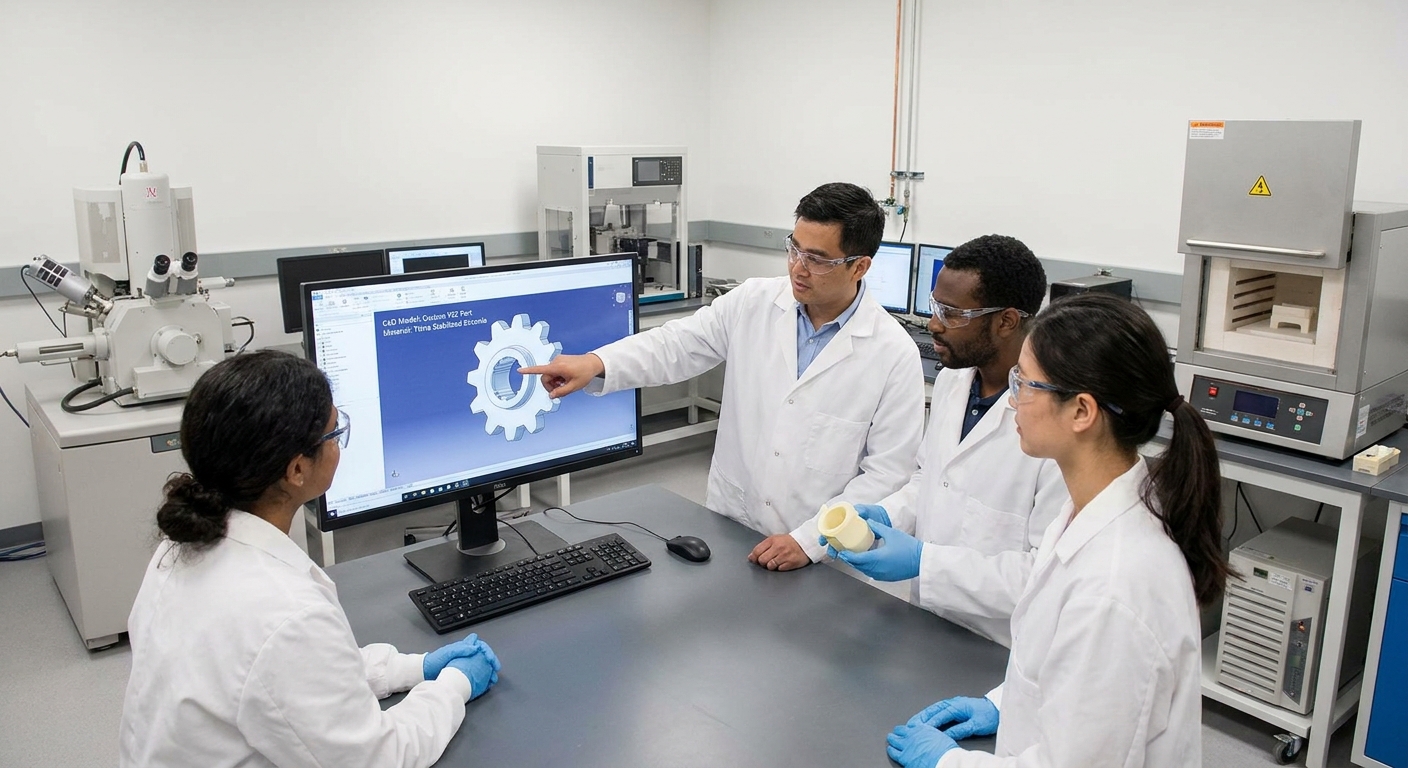
What is the sintering chemistry of this advanced material?
Sintering temperature and stabilizer concentration play a vital role in dictating the final crystal structures of your parts. When you heat zirconia alongside yttrium oxide, the yttrium ions substitute directly into the zirconium lattice. This solid-state reaction generates a high density of stabilizing oxygen vacancies.
Think about it: without these microscopic vacancy defects, your advanced ceramic tools would easily crack under mechanical stress.
- Yttria mole percentage (mol%) determines the stabilized crystal phase.
- High-temperature heating triggers solid-state ionic substitution.
- Oxygen vacancy creation preserves high lattice symmetry at room temperature.
How do grain sizes impact overall mechanical performance?
The average grain size plays a highly critical role in determining the final hardness, elastic modulus, and fracture toughness of your structural components. Scanning Electron Microscope (SEM) images reveal that higher yttria concentrations generate larger ceramic grains during sintering.
Here’s the deal: you can engineer these grain sizes to unlock specific mechanical advantages for your B2B applications. Fine grain boundaries maximize mechanical hardness and wear resistance, while coarse grains alter transport behaviors.
- Fine grain boundaries maximize mechanical hardness and wear resistance.
- Coarse ceramic grains alter electrical and thermal transport behaviors.
- Optimized sintering cycles prevent microstructural defects and cracking.
Key Takeaway: Stabilizing zirconia with yttria creates a structural ceramic with adjustable grain sizes and phases, allowing you to tailor mechanical properties to match extreme industrial conditions.
| Material Grade | Grain Size Range (μm) | Hardness (GPa) | Primary Stress Benefit |
|---|---|---|---|
| Fine-Grained YSZ | < 0.5 | 12.5 | Superior wear and hardness |
| Coarse-Grained YSZ | > 2.0 | 10.0 | Enhanced thermal stability |
This data demonstrates how selecting the correct grain size allows you to optimize mechanical strength for specific stress environments.
Why is yttria stabilized zirconia structurally phase-stable?
Structurally, yttria stabilized zirconia achieves its phase stability because yttrium oxide replaces zirconium ions in the lattice, creating oxygen vacancies that thermodynamically lock high-symmetry phases at room temperature. In pure zirconia, the reversible transition from monoclinic to tetragonal occurs as temperature rises, causing a dangerous volume change. You can avoid this volume mismatch entirely when the stabilizer is distributed evenly throughout the lattice.
This stabilization prevents catastrophic failure under rapid thermal cycles. Consequently, you can use these ceramics in environments where thermal shock would destroy standard industrial metals.
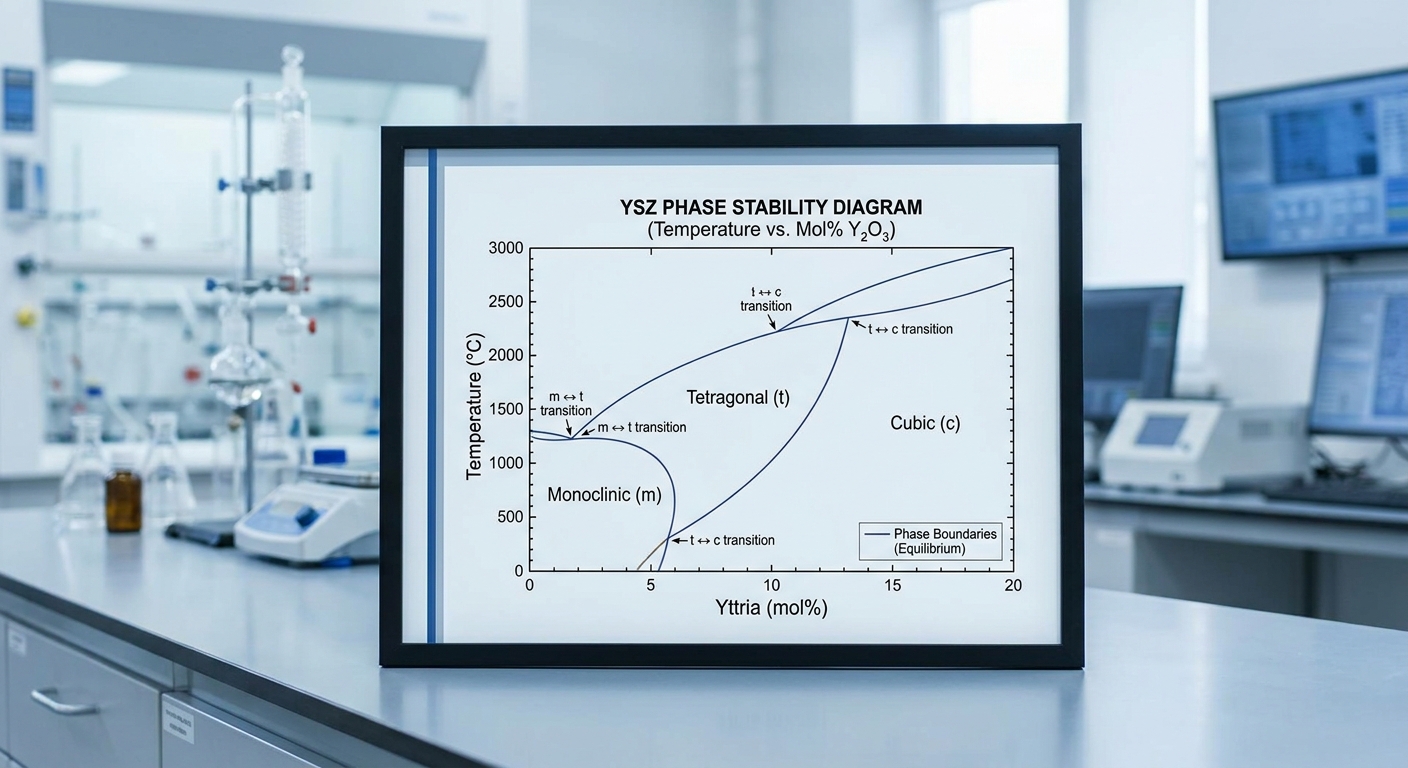
What are the three distinct polymorphic crystal phases?
Zirconia naturally exhibits three structural polymorphs: low-symmetry monoclinic, mid-symmetry tetragonal, and high-symmetry cubic. By adjusting the yttria dopant, you can stabilize these higher-temperature phases under normal conditions.
Let’s face it: keeping these phases stable is essential for your engineering success.
- Monoclinic phase: Stable at room temperature but lacks high strength.
- Tetragonal phase: Highly tough and ideal for high-stress tooling.
- Cubic phase: Possesses high oxygen-ion conductivity for fuel cells.
How does yttria addition prevent crack propagation?
When tensile stress acts on the tetragonal phase, it triggers a local transformation back to the monoclinic phase, expanding the lattice and squeezing the crack shut. This phenomenon, known as transformation toughening, provides your ceramic components with steel-like resistance.
Here is the catch: you need the right yttria content to keep this metastable state active.
- Tensile stresses trigger the local phase change.
- Volume expansion exerts compressive stress on the crack tip.
- Crack propagation is effectively halted inside the matrix.
Key Takeaway: Yttria addition retains the metastable tetragonal phase, unlocking a self-healing transformation toughening mechanism that protects your components from brittle failure.
| Phase | Crystal Structure | Main Industry Application | Key Benefit Offered |
|---|---|---|---|
| Monoclinic | Low-symmetry monoclinic | None (unstable pure state) | Highly prone to cracking |
| Tetragonal | Mid-symmetry tetragonal | Dental restorations, wear parts | Exceptional fracture toughness |
| Cubic | High-symmetry cubic | Fuel cell electrolytes (SOFC) | High oxygen-ion conductivity |
Understanding how crystal structures map to real-world benefits allows you to select the precise phase composition needed for your engineering applications.
How does yttria stabilized zirconia resist extreme thermal loads?
Highly resilient yttria stabilized zirconia resists heat by acting as a top-coat thermal barrier coating (TBC) that utilizes its low thermal conductivity and high coefficient of thermal expansion to insulate critical metal substrates from extreme gas turbine temperatures. This dual-action protection ensures that the base superalloys do not melt under heavy operating loads. When you apply this coat, you significantly extend machine lifespan.
The ceramic layer withstands temperatures well above the melting points of common metals. This allows you to increase combustion temperatures and boost overall thermodynamic efficiency.
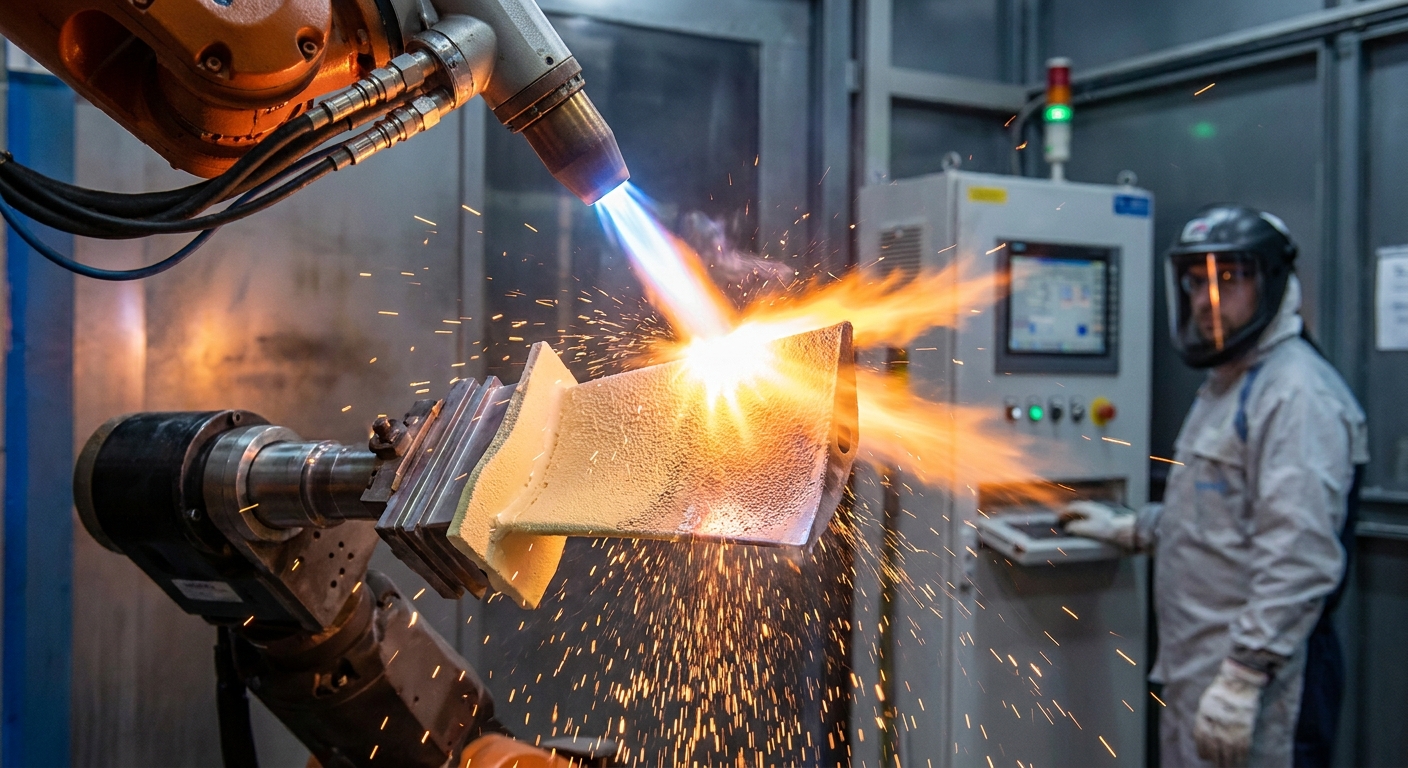
What role does the top-coat play in gas turbine systems?
The top-coat (TC) layer of a thermal barrier coating must withstand severe hot corrosion and high-velocity gas streams. By utilizing 6–8 mol% yttria-stabilized zirconia (6-8YSZ), you get an excellent balance of low thermal conductivity and high structural adhesion.
As it turns out, this layer keeps your turbine blades running at maximum performance.
- Top-coat (TC): Restricts heat transfer to the metal.
- Thermally Grown Oxide (TGO): Formed by bond coat oxidation.
- Bond coat (BC): Enhances TC adhesion and limits oxidation.
How do co-doping strategies enhance thermal stability limits?
To push operating temperatures from 1200°C to over 1500°C, engineers use co-doping elements like ytterbium and gadolinium oxides. These dopants induce lattice distortions that restrict phonon movement, further reducing thermal conductivity for your aerospace systems.
Think about it: lower conductivity means higher engine efficiency.
- Co-doping (YGYZ) preserves stable tetragonal phases.
- Titanium dioxide (TiO2) doping boosts thermal limits to 1600°C.
- Sol-gel aerogel methods produce advanced porous barriers.
Key Takeaway: Co-doping thermal barrier coatings with extra rare-earth oxides lowers thermal conductivity and blocks phase transformation, enabling you to operate turbines at much higher thermal efficiencies.
| Coating Layer | Common Material | Function | Key Thermal Parameter |
|---|---|---|---|
| Top-Coat (TC) | 6-8 mol% YSZ | Direct thermal insulation | Very low thermal conductivity |
| Thermal Grown Oxide | Alumina (Al₂O₃) | Oxidation barrier | High oxygen barrier protection |
| Bond Coat (BC) | MCrAlY alloy | Adhesion & oxidation control | Matches thermal expansion of TC |
This multi-layer coating system acts as a high-temperature shield, ensuring that gas turbines run cooler, safer, and longer.
Why is yttria stabilized zirconia highly ideal for SOFCs?
Superior yttria stabilized zirconia serves as the ideal solid electrolyte in solid oxide fuel cells (SOFCs) because 8 mol% yttria-stabilized zirconia (8YSZ) preserves a fully stabilized cubic phase that provides a high concentration of oxygen-ion vacancies for rapid ion migration. This unique electrochemical structure allows oxygen ions to migrate from the cathode to the anode under operating temperatures of 800°C to 1000°C. When you integrate this material, your green energy conversion becomes highly efficient.
The fully stabilized cubic phase maintains its electrical properties over long operational cycles. This ensures your fuel cell systems remain stable and durable.
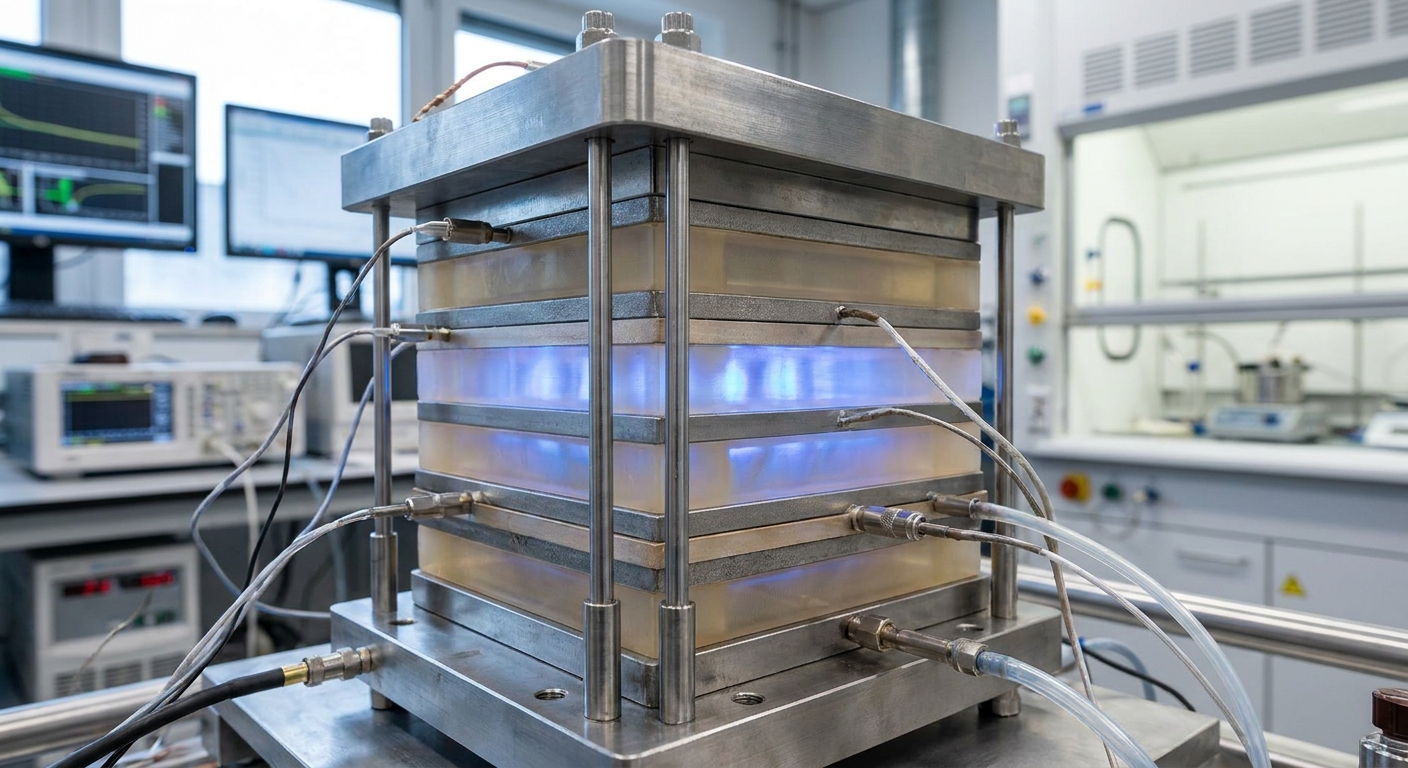
How do oxygen ion vacancies enable solid electrolytes?
Substitutional doping of yttrium into the zirconia crystal lattice forces the removal of oxygen ions to maintain charge neutrality, generating vacancies. These empty lattice sites allow oxygen ions to hop across the electrolyte when you run the cell.
The best part? This process produces clean electricity with only water as a byproduct.
- Cathode: Oxygen reacts with electrons to form ions.
- Electrolyte: Vacancies allow ion migration to the anode.
- Anode: Hydrogen fuel combines with oxygen ions to release electrons.
Can sintering aids successfully lower operating temperatures?
Traditional SOFCs require extreme temperatures to activate ionic transport, which can degrade your system over time. By incorporating transition metal oxide dopants like Fe₂O₃, CuO, or Bi₂O₃, you can lower the sintering temperature and improve grain-boundary conductivity.
Let’s face it: lowering operating temperatures saves massive energy costs.
- Fe₂O₃ doping stabilizes the cubic phase via cold sintering.
- Flash sintering creates smaller grains with higher conductivity.
- Lutetium oxide (Lu₂O) doping improves electrolyte flexural strength.
Key Takeaway: Optimizing 8YSZ electrolytes with sintering aids and advanced processing allows you to achieve maximum ionic conductivity at lower, more manageable operating temperatures.
| Electrolyte Grade | Sintering Aid / Method | Operational Temp. | Main Engineering Benefit |
|---|---|---|---|
| Standard 8YSZ | Conventional Sintering | 800°C – 1000°C | Standard baseline ionic transport |
| Fe₂O₃-doped 8YSZ | Cold Sintering Process | Under 600°C | High conductivity, low processing cost |
| Flash-Sintered 8YSZ | Flash Sintering | Lower Operating | Smaller grain size, high vacancy count |
Implementing advanced sintering techniques allows you to design solid oxide fuel cells that perform reliably at reduced operational temperatures.
Can yttria stabilized zirconia revolutionize dental restorations?
Biocompatible yttria stabilized zirconia significantly improves dental crowns by utilizing 3 mol% yttria-stabilized tetragonal zirconia polycrystals (3Y-TZP) to deliver extreme mechanical strength, metal-free aesthetics, and excellent tissue compatibility for modern restorative dentistry. This advanced ceramic material is highly resistant to oral wear and biting forces. When you use this ceramic, your patients enjoy lifelong restorations.
The metal-free nature of the crown prevents allergic reactions and gum discoloration. This makes it the preferred material for high-end aesthetic dental clinics.
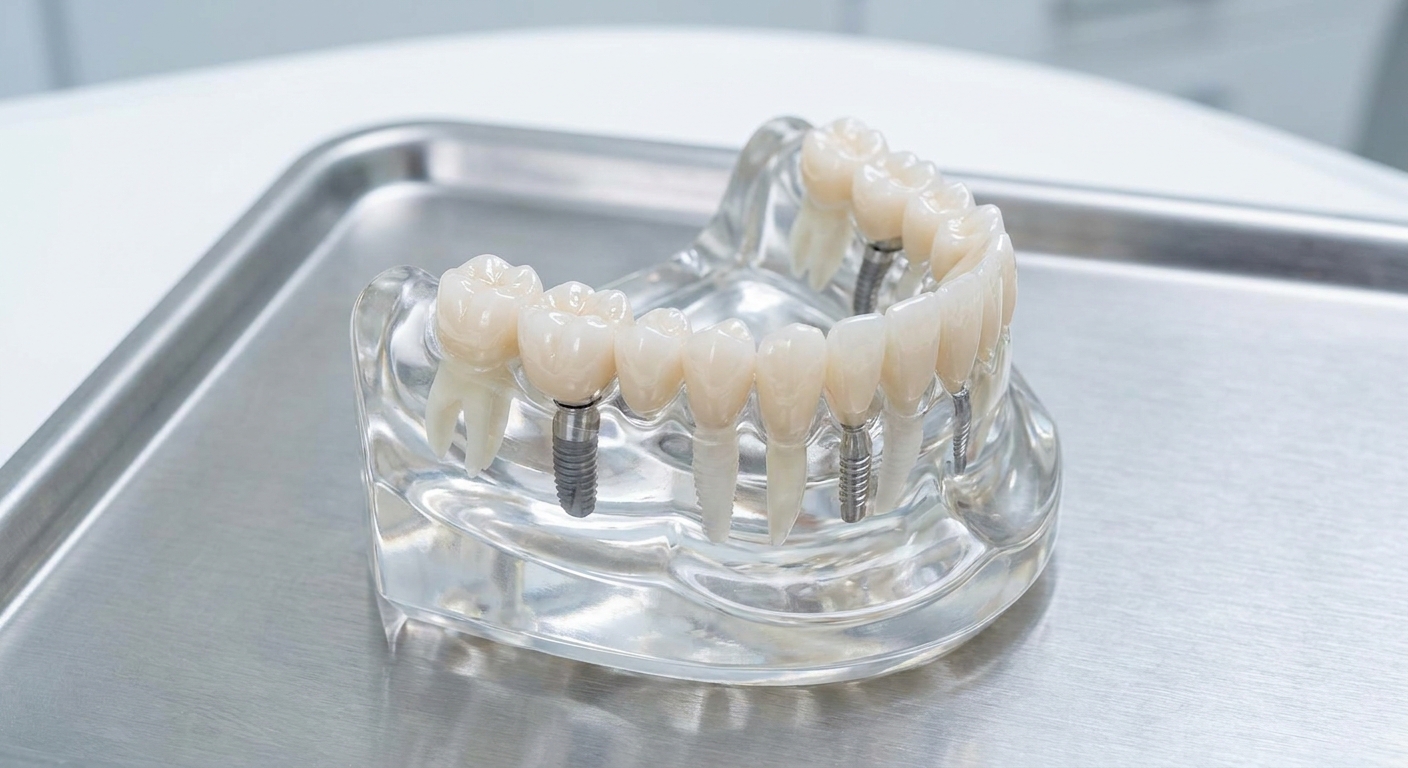
How does transformation toughening benefit dental crowns?
Bite forces can cause micro-cracks to develop in ceramic dental restorations over time. Fortunately, the metastable tetragonal grains in 3Y-TZP transform into monoclinic grains at the crack tip, compressing the crack shut and preventing failure.
Think about it: this self-healing quality gives you metal-like durability in a non-metal crown.
- High flexural strength typically exceeds 1000 to 1200 MPa.
- Stress-induced phase expansion halts crack growth.
- Excellent wear resistance ensures long-term oral performance.
Can co-doping solve monolithic restoration trade-offs?
High-strength 3Y-TZP is opaque, which can look unnatural in monolithic anterior crowns. To resolve this, you can co-dope zirconia with ceria or alumina to balance fracture resistance and translucency.
As it turns out, this is exactly what modern CAD/CAM clinics require.
- Alumina additions refine grain boundaries for light transmission.
- Ceria co-doping maintains mechanical durability in thin crowns.
- Controlled grain sizes preserve optical translucency.
Key Takeaway: Using co-doped 3Y-TZP grades in dental CAD/CAM systems allows you to provide crowns that combine natural light translucency with unmatched bite-force resistance.
| Dental Grade | Yttria Content | Translucency Level | Typical Application |
|---|---|---|---|
| 3Y-TZP | 3 mol% | Standard (Opaque) | Posterior crowns, multi-unit bridges |
| 4Y-PSZ | 4 mol% | High Translucency | Anterior and posterior monolithic crowns |
| 5Y-PSZ | 5 mol% | Ultra-High Translucency | Anterior veneers, highly aesthetic crowns |
This grade selection system shows how you can adjust the stabilizer level to trade aesthetic translucency for structural strength.
How does yttria stabilized zirconia prevent mechanical wear?
Excellent yttria stabilized zirconia prevents premature wear in heavy-duty machinery by offering high hardness, low friction coefficients, and high density in grinding beads and structural wear parts. Unlike brittle alumina or steel, this ceramic does not contaminate your milled products with metallic ions or wear debris. When you choose this material, your maintenance costs plummet.
The high material density increases grinding efficiency and shortens cycle times. This directly increases the throughput of your production line.
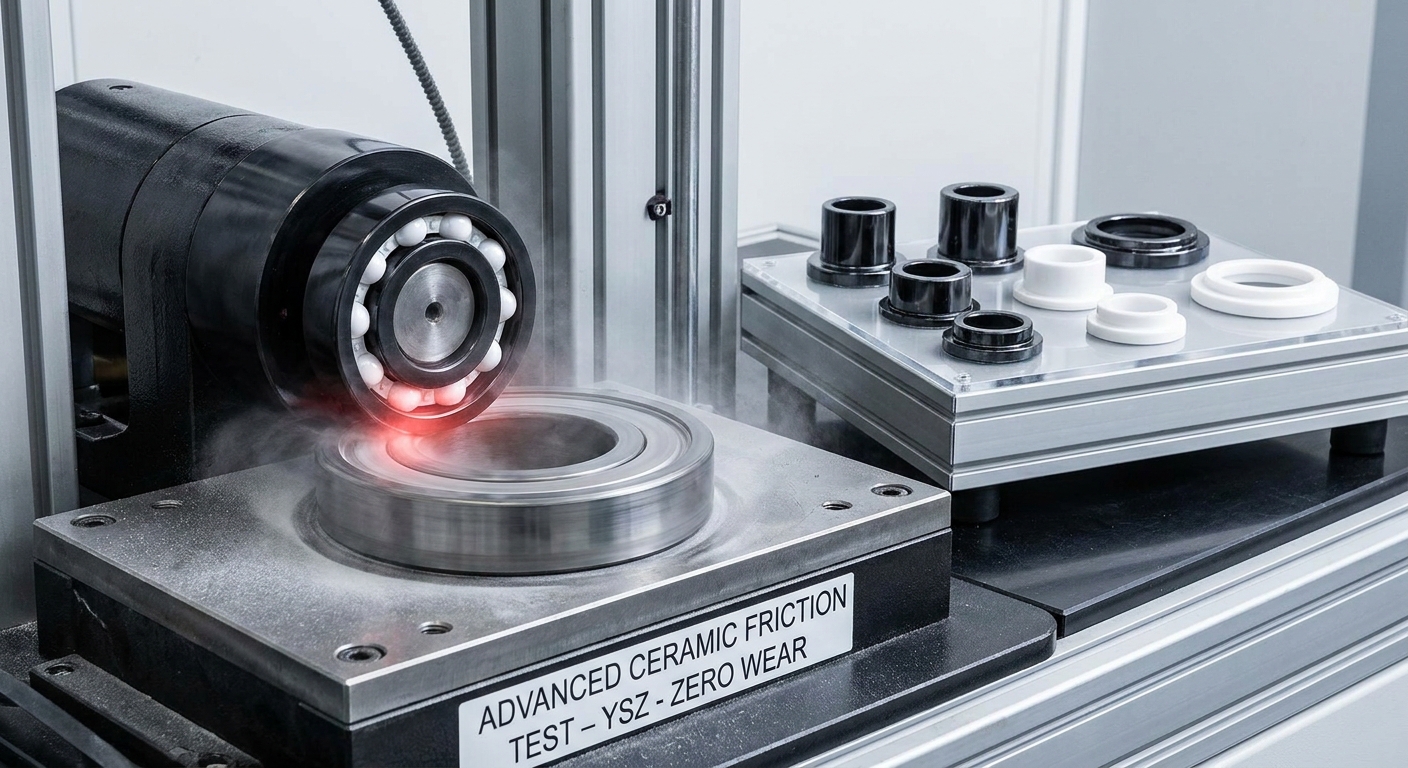
Why do high-density beads outperform alumina grinding media?
Ultrafine grinding mills operate at extremely high speeds, subjecting grinding media to continuous impact. High-density YSZ beads deliver superior kinetic energy while resisting brittle cracking far better than standard alumina.
Here is the catch: you need high-purity beads to prevent batch contamination.
- Higher density accelerates milling speed and output.
- Low wear rates prevent ionic leaching and degradation.
- Consistent sphericity maintains stable milling operations.
How do custom-engineered wear liners resist severe abrasion?
Industrial pumps, nozzles, and chemical valves face continuous chemical attack and abrasive wear. Installing custom-engineered zirconia structural components preserves critical tolerances under the most demanding mechanical stresses.
The best part? Your manufacturing yield increases due to less downtime.
- Extreme surface hardness resists abrasive particles.
- Inert chemical properties block corrosive attacks.
- Smooth surfaces reduce friction and material drag.
Key Takeaway: Implementing high-density YSZ grinding media and structural components protects your processes from product contamination while extending tool life under continuous abrasion.
| Wear Part Type | Key Material Grade | Main Stress Faced | Operational Lifetime Benefit |
|---|---|---|---|
| Grinding Beads | High-purity YSZ | Constant high-speed impact | Low product contamination, fast milling |
| Pump Liners | 3Y-TZP | Chemical corrosion & friction | Maintains precise dimensional tolerances |
| Spray Nozzles | Stabilized zirconia | High-velocity abrasive wear | Resists erosion from suspended solids |
Installing zirconia wear parts minimizes friction-related friction wear and keeps industrial lines running without unexpected maintenance breaks.
Is yttria stabilized zirconia stable in hydrothermal conditions?
While vulnerable under certain conditions, yttria stabilized zirconia can be made highly hydrothermally stable by reducing the average ceramic grain size below three microns and utilizing specific co-dopants to delay low-temperature degradation (LTD). This aging process typically occurs when moisture triggers a premature tetragonal-to-monoclinic phase change. When you control these structural factors, you protect your parts from early failure.
Uncontrolled aging leads to surface cracking and strength loss over time. By implementing strict design rules, you ensure your components survive in hot, humid environments.
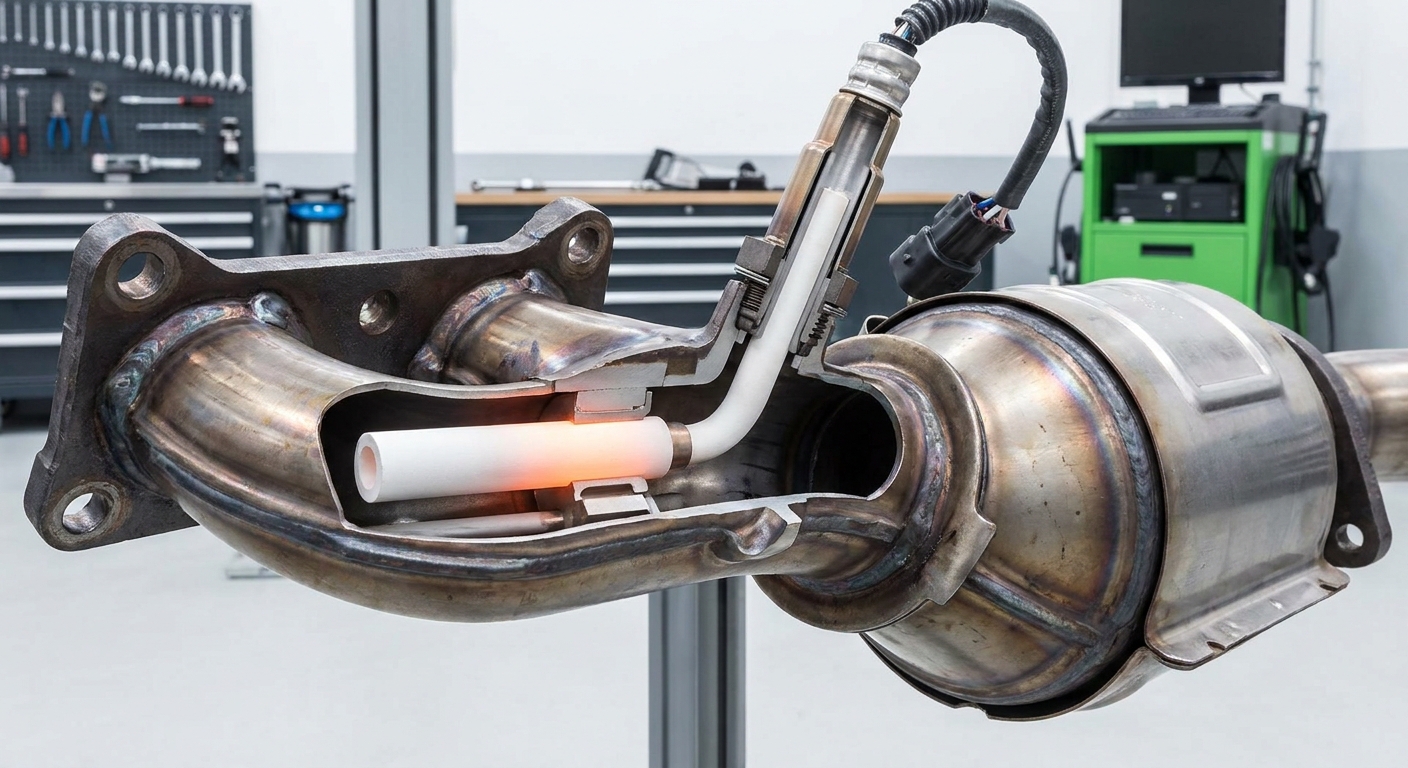
What triggers low-temperature hydrothermal degradation?
When zirconia parts are exposed to water vapor or bodily fluids between 65°C and 400°C, oxygen vacancies attract water molecules. This reaction destabilizes the tetragonal phase, initiating a surface-level transformation to monoclinic that causes micro-cracking.
Let’s face it: hydrothermal aging is the biggest threat to your implants.
- Moisture penetrates grain boundaries and fills oxygen vacancies.
- Tetragonal-to-monoclinic transition propagates from the surface.
- Intergranular micro-cracks degrade overall mechanical strength.
How do specific sintering parameters delay material aging?
Sintering temperature and holding time directly determine grain size, which is the main defense against hydrothermal aging. Keeping the grain size below three microns effectively prevents spontaneous phase degradation.
Think about it: a tighter grain boundary structure blocks moisture ingress.
- Co-doping with manganese dioxide (MnO₂) increases LTD resistance.
- Calcia and ceria co-doping completely eliminates monoclinic phases.
- Controlled heating rates optimize the final microstructures.
Key Takeaway: Controlling hydrothermal aging requires you to maintain a sub-micron grain size and utilize specific co-dopants like manganese or ceria during thermal processing.
| Anti-Aging Strategy | Mechanism Involved | LTD Resistance | Hardness & Toughness |
|---|---|---|---|
| Grain Size < 3 μm | Blocks spontaneous phase change | Excellent | Maintained at high levels |
| MnO₂ Co-Doping | Stabilizes tetragonal phase | Very High | Slightly increased |
| CeO2/CaO Co-Doping | Restricts water molecule bonding | Outstanding | Well-balanced mechanicals |
Microstructural control remains your most effective defense against long-term mechanical decay in wet B2B industrial environments.
How is yttria stabilized zirconia powder chemically synthesized?
Precise yttria stabilized zirconia powder is synthesized using chemical precipitation, sol-gel processes, or hydrothermal methods to ensure an ultra-fine, homogeneous distribution of yttrium oxide within the zirconium dioxide precursor. Achieving a uniform chemical mixture is necessary to prevent phase separation during subsequent high-temperature sintering. When you procure uniformly doped powders, your sintering outcomes become highly predictable.
Homogeneous powders sinter to full density at lower temperatures. This lowers processing energy costs and reduces the risk of thermal defects.
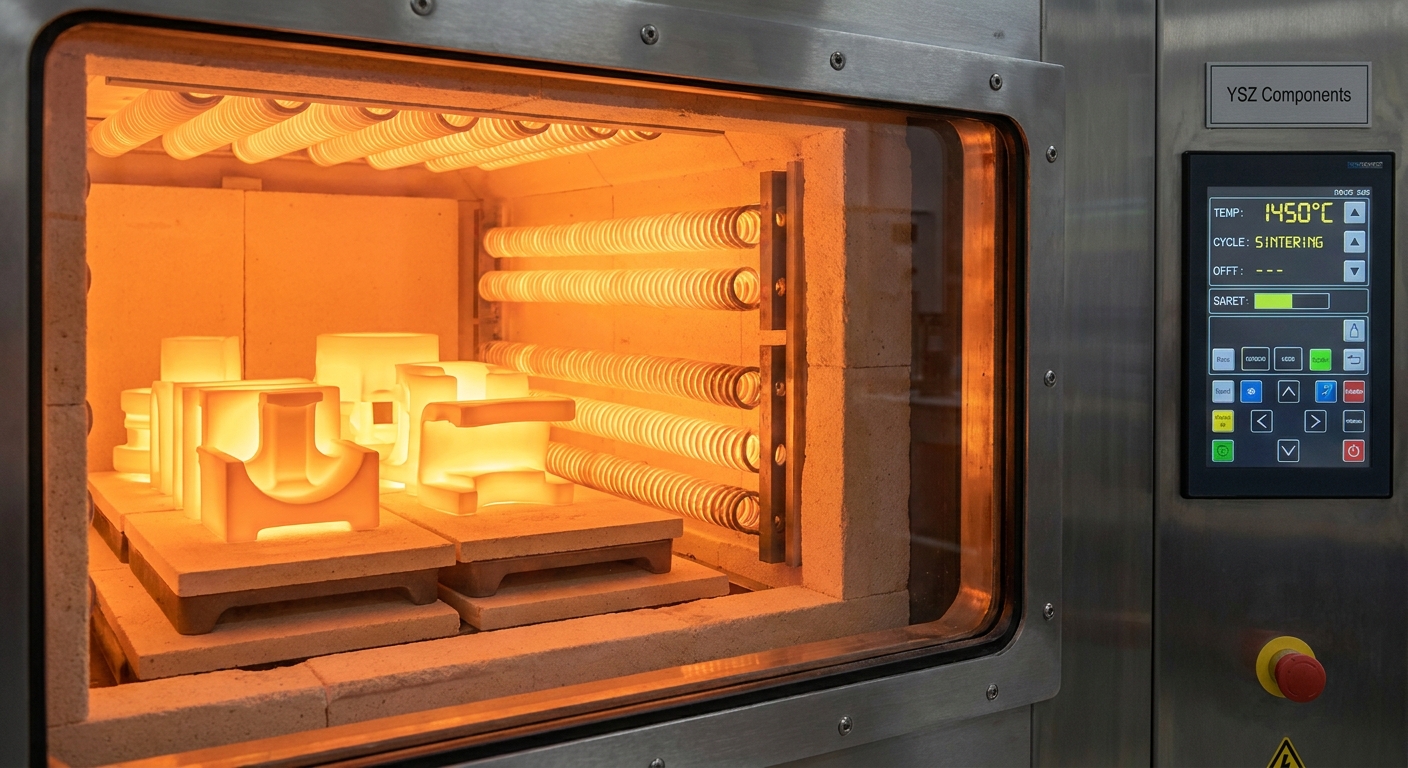
How does sintering temperature govern full densification?
Sintering temperatures between 1450°C and 1650°C drive solid-state diffusion, which removes internal pores and densifies the ceramic. However, excessively high temperatures or long holding times will trigger rapid grain growth and weaken your final product.
As it turns out, finding the sweet spot is critical for high-load components.
- 1500°C is the optimum sintering temperature for balanced properties.
- Pore removal increases the density and strength of the ceramic.
- Over-sintering increases sensitivity to hydrothermal degradation.
Why is the pressureless two-step sintering method preferred?
To achieve full densification without triggering undesirable grain growth, engineers use a pressureless two-step sintering method. This advanced thermal cycle heats the green body to a high temperature, then cools it to a lower holding stage.
The best part? You obtain a completely dense ceramic with a uniform, ultra-fine microstructure.
- First heating step activates initial grain boundary densification.
- Second cooling stage suppresses final grain boundary growth.
- Resulting material features outstanding hardness and toughness.
Key Takeaway: Fine-tuning your thermal profiles using pressureless two-step sintering allows you to achieve maximum density while keeping grain size low enough to resist aging.
| Sintering Technique | Processing Temp. | Microstructure | Typical Mechanical Quality |
|---|---|---|---|
| Conventional Sintering | 1450°C – 1650°C | Larger, uneven grains | Baseline mechanical strength |
| Two-Step Sintering | Dual heating stages | Ultra-fine, uniform grains | Superior hardness & high toughness |
| Cold Sintering (CSP) | Low temperature | High density, fine grains | High ionic conductivity (SOFC) |
Selecting advanced heating techniques ensures your B2B parts achieve maximum density without structural compromise.
What are the future trends for yttria stabilized zirconia?
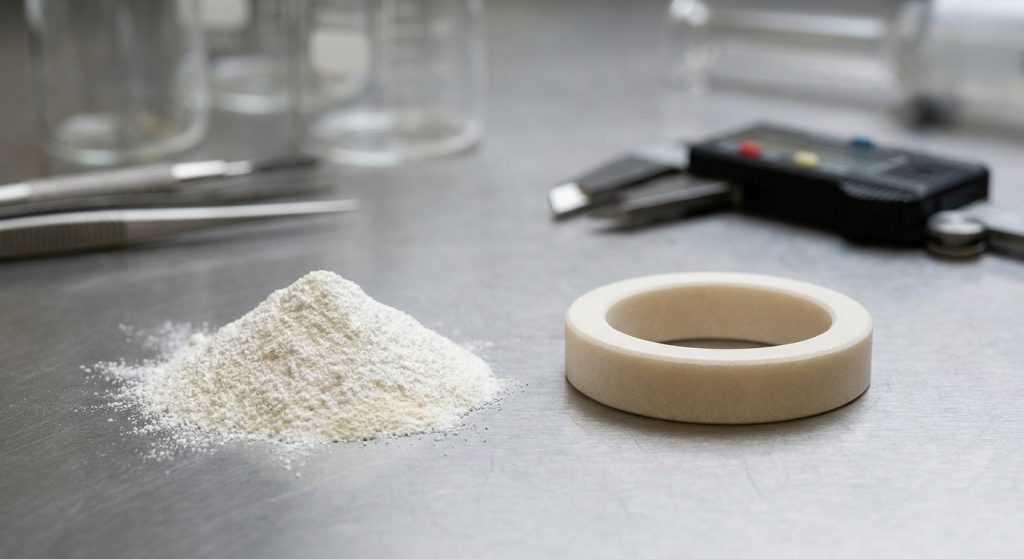
Future trends in yttria stabilized zirconia focus on synthesizing nanoscale powders and advanced aerogel structures to dramatically lower thermal conductivity and maximize mechanical toughness across aerospace and clean energy applications. These structural innovations open new possibilities for ultra-efficient thermal insulation and high-durability fuel cell electrolytes. When you adopt these cutting-edge grades, you secure a major market advantage.
Nanotech-enabled ceramics deliver performance leaps that were previously impossible. This allows you to design smaller, lighter, and more efficient industrial systems.
How do nanoscale powders improve electrochemical performance?
Shifting from micro-sized to nanoscale grains increases the grain-boundary density of your solid electrolyte, creating a massive network of paths for fast oxygen-ion transport. This allows next-generation SOFCs to operate at much lower, cost-effective temperatures.
Think about it: nanoscale engineering unlocks clean energy performance never seen before.
- Nanoparticles lower the required thermal activation energy.
- Shorter diffusion paths accelerate ionic migration rates.
- Low-temperature operations reduce overall system wear.
What is the role of YSZ aerogels in advanced insulation?
Synthesizing YSZ using sol-gel processes produces highly porous aerogels that trap air within nanoscale chambers. This unique structure restricts phonon and gas molecule movement, delivering exceptional thermal insulation for gas turbine blades.
Let’s face it: this is the future of aerospace thermal barriers.
- Aerogel structures minimize overall component weight.
- Fine porosity delivers extremely low thermal conductivity.
- Aerogels maintain structural integrity under extreme heat.
Key Takeaway: Transitioning to nanoscale powders and lightweight aerogel structures allows you to design aerospace and energy systems with higher efficiency and significantly lower operating wear.
| Advanced Innovation | Structural Feature | Target Sector | Expected Performance Leap |
|---|---|---|---|
| Nanoscale Powders | High density of grain boundaries | SOFC Electrolytes | High conductivity at low operational temp. |
| Sol-Gel YSZ Aerogels | Nanoscale porosity & low density | Aerospace Engines | Unmatched insulation, minimal weight |
| Multi-Element Doping | Complex distorted crystal lattice | Gas Turbines | Thermal stability above 1600°C |
Keeping up with these emerging nanomaterial formulations keeps your company ahead of competitors in harsh industrial fields.
Why trust our yttria stabilized zirconia for your B2B needs?
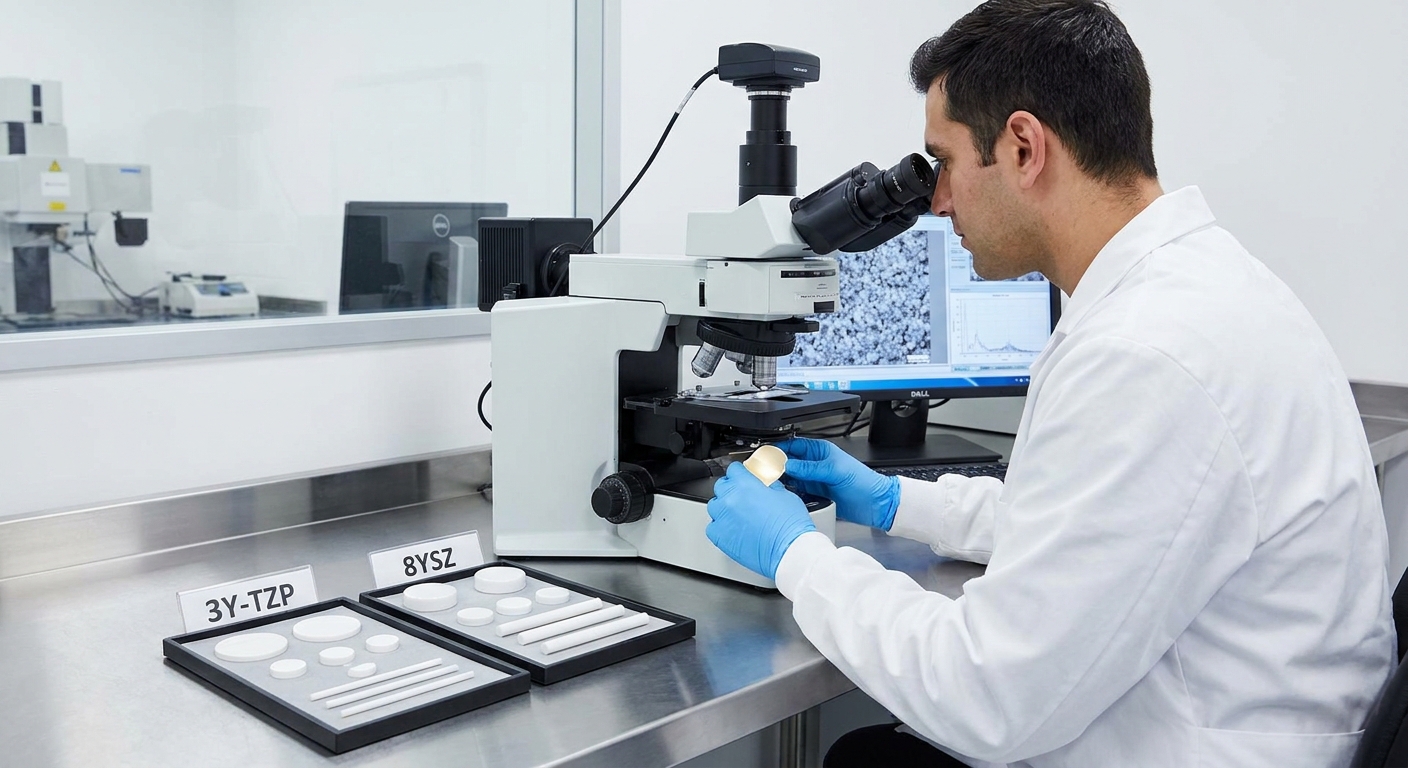
You should trust our yttria stabilized zirconia solutions because we combine high-purity chemical synthesis, precise sintering control, and custom engineering to deliver wear parts, dental blanks, and thermal coatings that meet the strictest industrial standards. Our advanced production processes ensure that every batch of material is consistent, reliable, and optimized for your specific application. When you partner with us, you eliminate production variables.
We provide a comprehensive range of stabilized zirconia grades designed to survive extreme heat, friction, and chemical degradation.
How can high-purity materials stabilize your production?
Inconsistent raw materials lead to unexpected component failures and costly downtime on your production line. Our high-purity ceramic powders undergo rigorous quality control to ensure uniform stabilizer distribution and reliable performance.
As it turns out, consistent material quality is the key to predictable operational lifetimes.
- Rigorous batch testing ensures zero contamination.
- Uniform yttria distribution prevents premature phase changes.
- Precise particle size control ensures reliable sintering results.
Are you ready to partner for custom ceramic engineering?
We do not just supply raw powders; we work alongside your engineering teams to design, prototype, and manufacture custom structural components that solve your toughest wear and thermal challenges. Our expert engineers provide unmatched technical support to optimize your designs.
The best part? Our team of ceramic experts is ready to guide you through every step of material selection.
- Expert technical support helps you select the right grade.
- Fast prototyping accelerates your product development cycles.
- Scalable manufacturing meets your large-scale B2B production needs.
Key Takeaway: Choosing a reliable partner for high-purity zirconia ensures consistent component lifespans, stable manufacturing processes, and access to custom ceramic engineering support.
| Partnership Level | Services Provided | Ideal Customer | Main Business Outcome |
|---|---|---|---|
| Powder Supply | High-purity custom formulated powders | Ceramic parts manufacturers | Highly predictable sintering and density |
| Custom Component | End-to-end design and manufacturing | Processing plants & OEM brands | Zero wear-related downtime and failures |
| R&D Collaboration | Custom co-doping & phase optimization | Advanced technology firms | Leading-edge performance advantages |
Partnering with us provides your operations with elite metallurgical and ceramic expertise to future-proof your processing equipment.
We have successfully solved the mechanical and thermal vulnerabilities of legacy industrial components by manufacturing high-purity, phase-optimized advanced ceramics that resist failure under extreme conditions. What we can do for you is analyze your specific operational stresses, design tailored prototypes, and supply high-performance ceramic materials that double the operational lifetime of your equipment. Our vision is to empower global B2B operations with robust, wear-free, and thermally isolated engineering solutions that drive efficiency into the next decade. If you are ready to upgrade your hardware reliability, contact us today to collaborate with our specialist engineering team.
Frequently Asked Questions
Can I use 3Y-TZP in environments with high moisture and temperature?
Yes, but you must select a grade optimized with co-dopants or sub-micron grain sizes. While standard 3Y-TZP is susceptible to low-temperature degradation (LTD), refined manufacturing keeps the grain boundary structure dense enough to block moisture ingress and prevent structural decay.
What’s the best yttria concentration for high-temperature thermal barrier coatings?
A range of 6 to 8 mol% yttria (6-8YSZ) is the industry standard. This specific composition provides a stable tetragonal-prime phase, low thermal conductivity, and a high thermal expansion coefficient that matches metal substrates under extreme heat.
How do I know if 8YSZ is the right electrolyte for my solid oxide fuel cell?
You will know it is right if your system operates between 800°C and 1000°C and requires maximum oxygen-ion conductivity. If you need to lower operating temperatures, you should look for modified grades processed with sintering aids like copper oxide or iron oxide.
Can I substitute yttria-stabilized zirconia for heavy-duty industrial metal parts?
Absolutely, provided that your component is not subjected to extreme, unbuffered tensile forces. Under abrasive wear and corrosive chemical environments, this material far outperforms traditional metals like tool steel and bronze.