
5Y Zirconia has become a key material in modern esthetic dentistry, offering exceptional translucency for natural-looking restorations. However, its increased cubic phase also brings challenges in strength and fracture resistance. This article explores how graded structures and surface engineering can help balance the esthetics and mechanical performance of 5Y Zirconia.
Is Ultra-Translucent Zirconia the Ultimate Dental Solution?
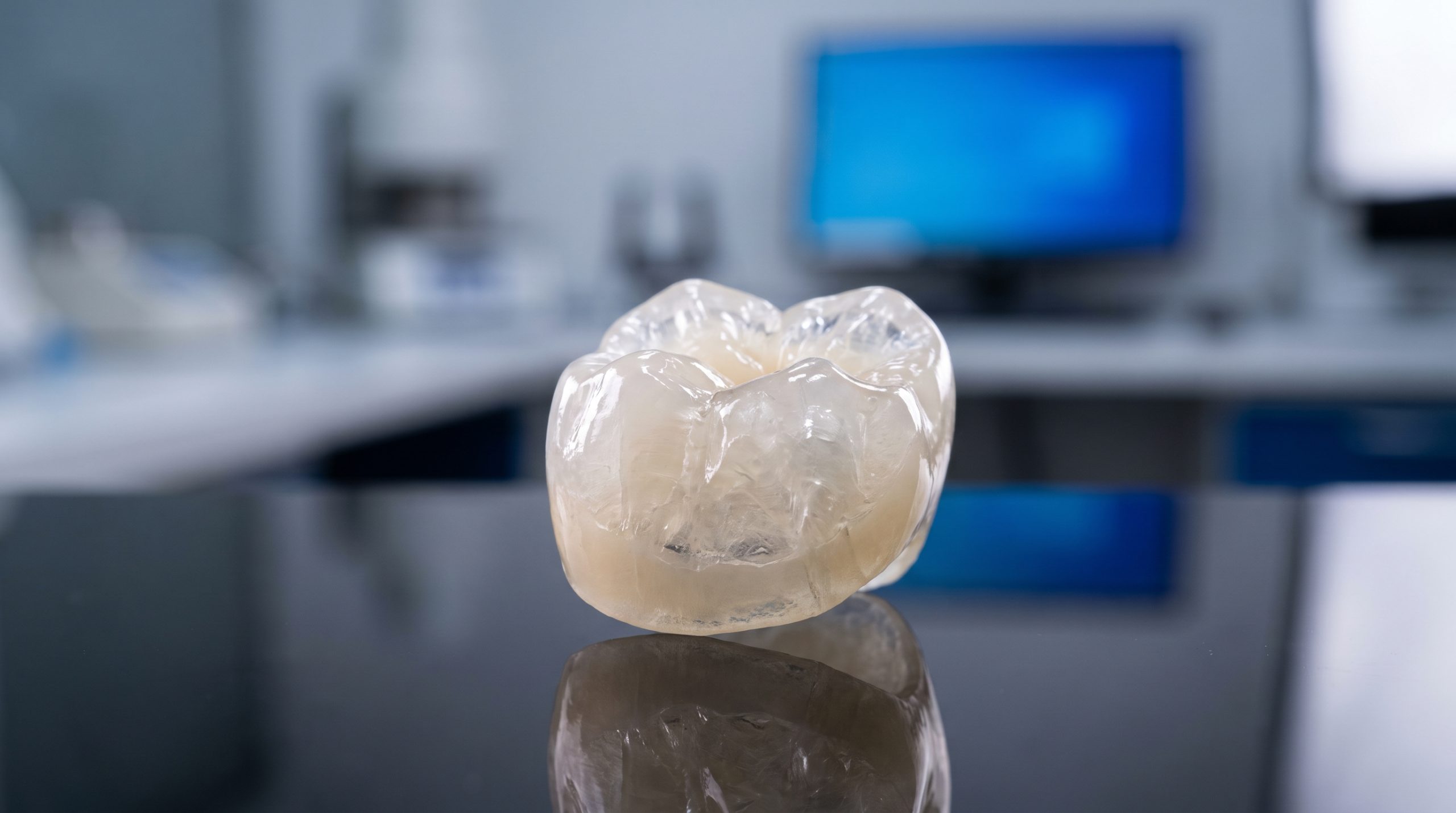
Yes, ultra-translucent zirconia offers incredible esthetic value for anterior teeth, but traditional options compromise vital mechanical safety margins. B2B dental labs struggle to produce high-end anterior crowns that survive cyclic masticatory loading without fracturing. When these restorations fail prematurely, you face frustrated dentists and costly remakes. Our advanced glass-infiltrated 5Y Zirconia solves this dilemma by blending pristine optical translucency with rugged core strength.
Modern material science now allows us to move away from homogenous, brittle monolithic blocks. By modifying the structural phases of the ceramic, we can create graded structures that handle real-world bite forces. Let’s explore how these physical alterations can elevate your laboratory outputs.
What Drives the Esthetic Shift in Restorative Materials?
Your clients continuously demand restoration work that looks entirely indistinguishable from natural tooth enamel. Think about it: the days of accepting dull, chalky crowns are long gone. To achieve this lifelike depth, you need materials that allow light to pass through.
- Optimal light scattering reduction.
- Natural enamel shade matching.
- Elimination of opaque metallic frameworks.
Here is the key: this optical evolution enables monolithic crowns to blend seamlessly into the esthetic zone. You no longer have to waste hours applying fragile porcelain overlays just to achieve an acceptable look.
Why Does Translucency Force a Structural Compromise?
The physical modifications required to let light pass through a ceramic matrix naturally weaken its load-bearing skeleton. When you increase the yttria stabilizer, you expand the isotropic cubic crystal phase to reduce light scattering. But that’s not all.
- Loss of crack-pinching behavior.
- Increased susceptibility to cyclic fatigue.
- Brittle grain boundaries.
As you reduce the tough tetragonal phases, you leave the restoration highly vulnerable to catastrophic clinical failures.
Key Takeaway: Understanding this structural compromise helps you select advanced materials that reinforce critical tension zones while maintaining premium esthetics.
Why Does 5Y Zirconia Struggle with Mechanical Strength?
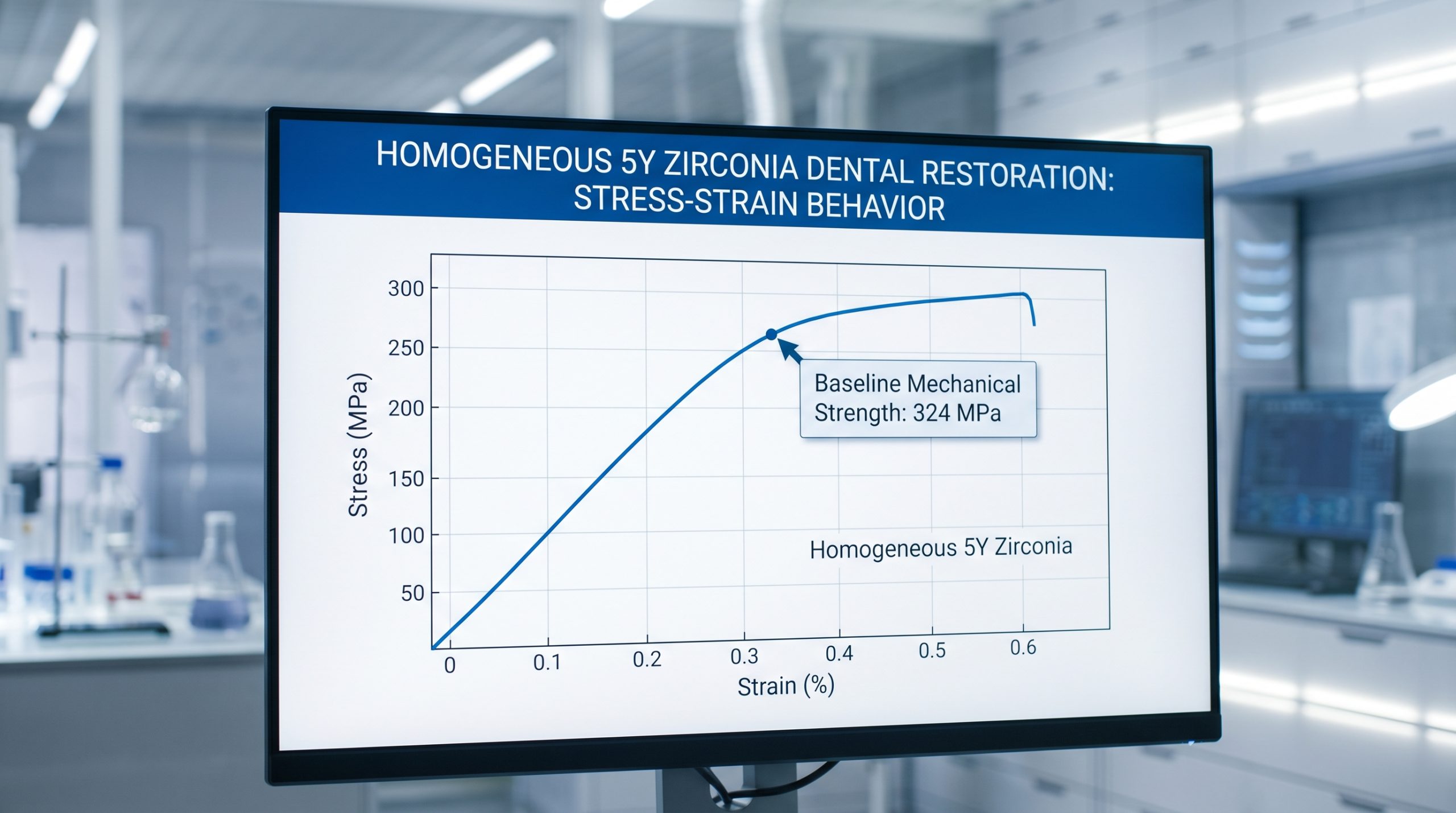
Monolithic 5Y Zirconia struggles with mechanical strength because its high yttria stabilizer concentration suppresses its natural phase-transformation toughening. This material contains approximately 5 mol% yttria, which forces the ceramic into a dominant cubic crystal phase. While this phase is exceptionally clear, it lacks the ability to stop micro-cracks from propagating.
This lack of active mechanical defense drops the baseline flexural strength of the material to a fragile level. In high-load scenarios, you cannot rely on traditional formulas to withstand heavy chewing. Let’s look closely at the underlying physics.
How Does Yttria Content Suppress Transformation Toughening?
Traditional ceramics utilize a phase-transformation mechanism that pinches propagating cracks shut under tensile stress. When a crack starts, metastable tetragonal grains transform into larger monoclinic grains to squeeze the defect. Think about it: without this active compression, cracks run wild.
- Suppression of stress-induced phase changes.
- Absence of localized volume expansion.
- Unrestricted crack growth under load.
Because of the high yttria concentration, the stable cubic crystals block this protective transformation. You are left with a material that behaves like standard glass when stressed.
What is the Role of High Cubic Phase Volumetric Fraction?
The cubic phase represents a highly symmetric atomic arrangement that does not polarize light, allowing superior translucency. However, these cubic grains grow significantly larger than their tetragonal counterparts during sintering. Here is the key: larger grains create wide, brittle boundaries that fail easily under force.
- Isotropic light transmission.
- Enlarged grain structure.
- Reduced interfacial toughness.
When you combine non-transforming crystals with oversized grains, the ceramic loses its toughness. You must understand these baseline physical properties before planning complex, long-span restorations.
Key Takeaway: Managing the high cubic fraction is essential for preventing premature material failure in load-bearing crown applications.
| Material Property | 3Y-TZP (Traditional) | 5Y-PSZ (Ultra-Translucent) |
|---|---|---|
| Yttria Content | ~3 mol% | ~5 mol% |
| Dominant Phase | Tetragonal (>95%) | Cubic (~70 wt%) / Tetragonal (~30 wt%) |
| Flexural Strength | 900 – 1200 MPa | 324 ± 57 MPa |
| Toughening Mechanism | Active Transformation | Highly Suppressed |
Evaluating these mechanical variations helps laboratories choose the correct material grade based on structural demands.
What Makes Graded Zirconia Different from Homogenous Materials?
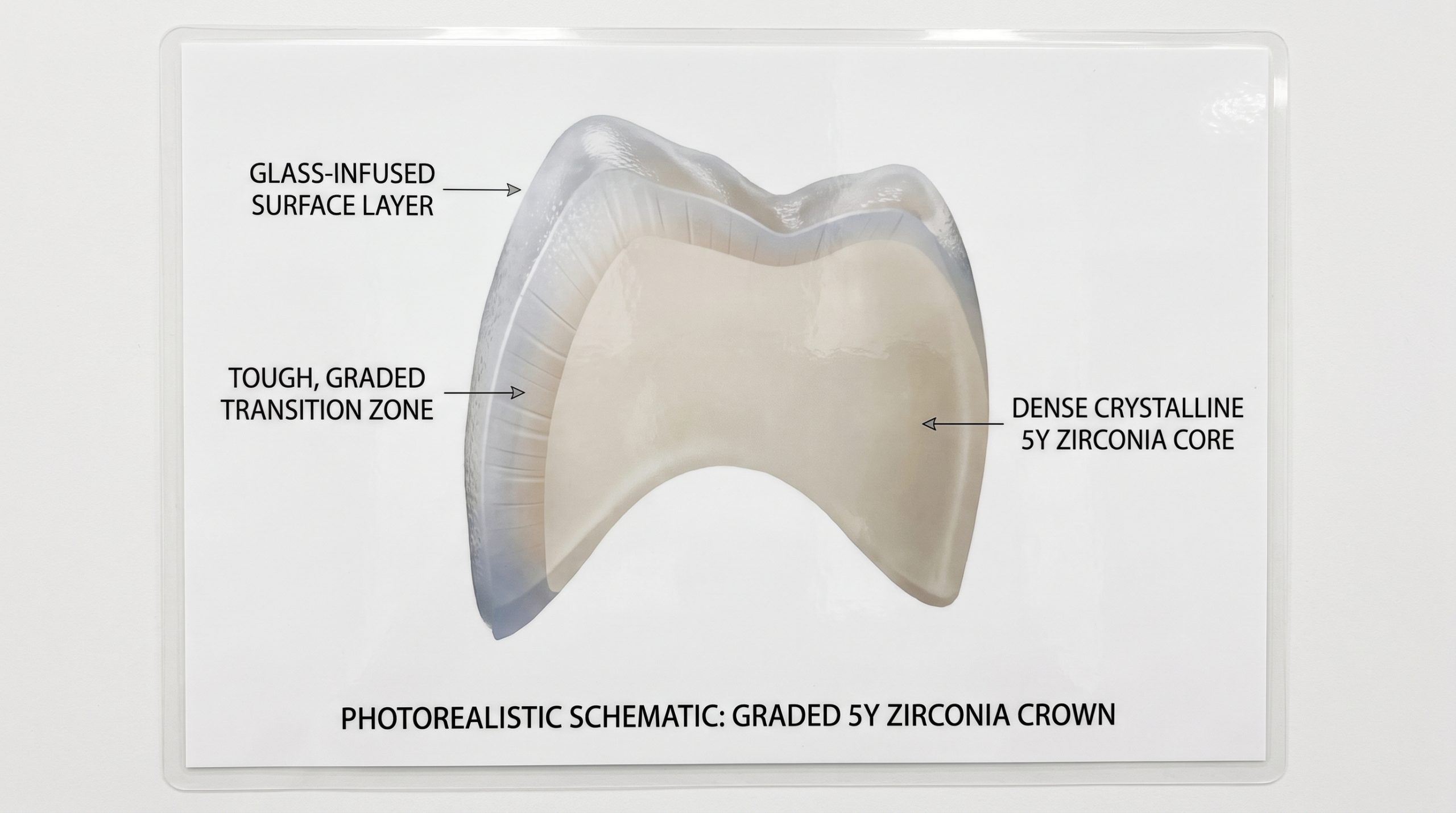
Graded zirconia differs from homogenous materials by transitioning its chemical composition and physical properties from the outer surface to the core. Instead of using a uniform block, graded 5Y Zirconia implements a structural gradient to optimize local performance. This means you can have a highly aesthetic exterior combined with a durable, fracture-resistant core.
This advanced engineering concept distributes stresses smoothly across the entire body of the crown. It allows you to offer premium-grade aesthetics without sacrificing the structural safety margins of your work. Let’s examine how this revolutionary transition works in practice.
Can Surface Glass Infiltration Restore Mechanical Integrity?
Infiltrating a low-viscosity glass into the outer surface of ultra-translucent frameworks creates a tough, graded hybrid layer. This glass-infused skin modifies the local thermal and elastic properties to resist cracking. But that’s not all.
- Creation of a protective outer skin.
- Reduction of surface micro-defects.
- Modification of the local elastic modulus.
To get perfect results, utilizing premium zircon-based engineered components ensures that the underlying ceramic framework remains defect-free prior to infiltration. You will notice a major difference in durability once this protective glass layer is established.
How Does a Graded Interface Differ from Traditional Veneering?
Traditional bilayer restorations have a sharp, weak interface between the zirconia core and the hand-layered veneering porcelain. This abrupt transition concentrates stress and often leads to porcelain chipping or delamination. Think about it: a smooth, continuous gradient eliminates this weak point entirely.
- Elimination of sharp material boundaries.
- Continuous, step-free phase transition.
- Even distribution of functional loads.
By transitioning smoothly over a scale of microns, the graded material prevents localized stress spikes. You get a durable, monolithic-like restoration that will not chip or peel.
Key Takeaway: Graded interfaces eliminate the delamination risks of hand-layered porcelain, giving you a stronger, more reliable B2B product.
| Restoration Interface Type | Joint Description | Stress Concentration | Delamination Risk |
|---|---|---|---|
| Traditional Veneered | Sharp, abrupt bilayer boundary | Very High | Severe Chipping |
| Graded Glass-Infiltrated | Continuous, smooth micro-transition | Extremely Low | Minimal to None |
Transitioning to a graded structural interface significantly reduces the incidence of mechanical failures at material boundaries.
How Do Compositional Gradients Prevent Dental Restorative Failures?
Compositional gradients prevent dental restorative failures by introducing a protective zone of residual compressive stress on the restoration surfaces. Monolithic 5Y Zirconia typically fails from micro-cracks starting at the vulnerable tensile surfaces and propagating inward. By controlling the coefficient of thermal expansion across the ceramic’s depth, a graded structure blocks this crack growth.
This engineering design creates a protective barrier that actively halts catastrophic cracks in their tracks. It allows your restorations to survive under the harsh, cyclic chewing pressures of the oral cavity. Let’s look at the stress mitigation mechanisms.
Why Do Sharp Material Interfaces Accelerate Delamination?
Under cyclic biting loads, mismatching physical properties at sharp boundaries cause extreme localized stress concentrations. This mismatch causes micro-cracks to form along the joint, leading to rapid debonding of the outer esthetic layer. Here is the key: you must eliminate these sharp joints to prevent failure.
- Stress concentration at boundaries.
- Mismatched thermal expansion coefficients.
- Interfacial micro-cracking.
To minimize these failures, B2B laboratories should partner with suppliers specializing in dental restoration manufacturing solutions to access advanced graded materials. This helps you deliver highly consistent, fracture-resistant results to your clinicians.
How Do Elastic Modulus Gradients Mitigate Stress Concentration?
When a rigid material sits directly on top of a highly flexible one, functional forces concentrate at the boundary. A graded surface layer smooths this transition, allowing the restoration to flex naturally under load without cracking. Think about it: a gentle shift in stiffness prevents stress spikes.
- Continuous elastic modulus transition.
- Reduced strain energy density.
- Enhanced fatigue resistance.
This elastic transition zone prevents stress from peaking at any single point in the crown. As a result, your restorations can absorb higher impacts and resist fatigue propagation over millions of chew cycles.
Key Takeaway: Modulating the elastic modulus across the material’s depth protects your restorations from stress-induced failures under heavy mastication.
| Boundary Type | Stress Mismatch | Failure Mode | Lifetime Expectancy |
|---|---|---|---|
| Homogenous/Sharp Interface | Severe | Localized Delamination / Cracking | Short to Medium |
| Elastic Modulus Gradient | Minimal | Diffuse Energy Absorption | Extended / High Fatigue |
Utilizing graded structures minimizes stress mismatches, ensuring long-term physical integrity in heavy-wear regions.
Can We Balance Translucency and Toughness in Anterior Crowns?
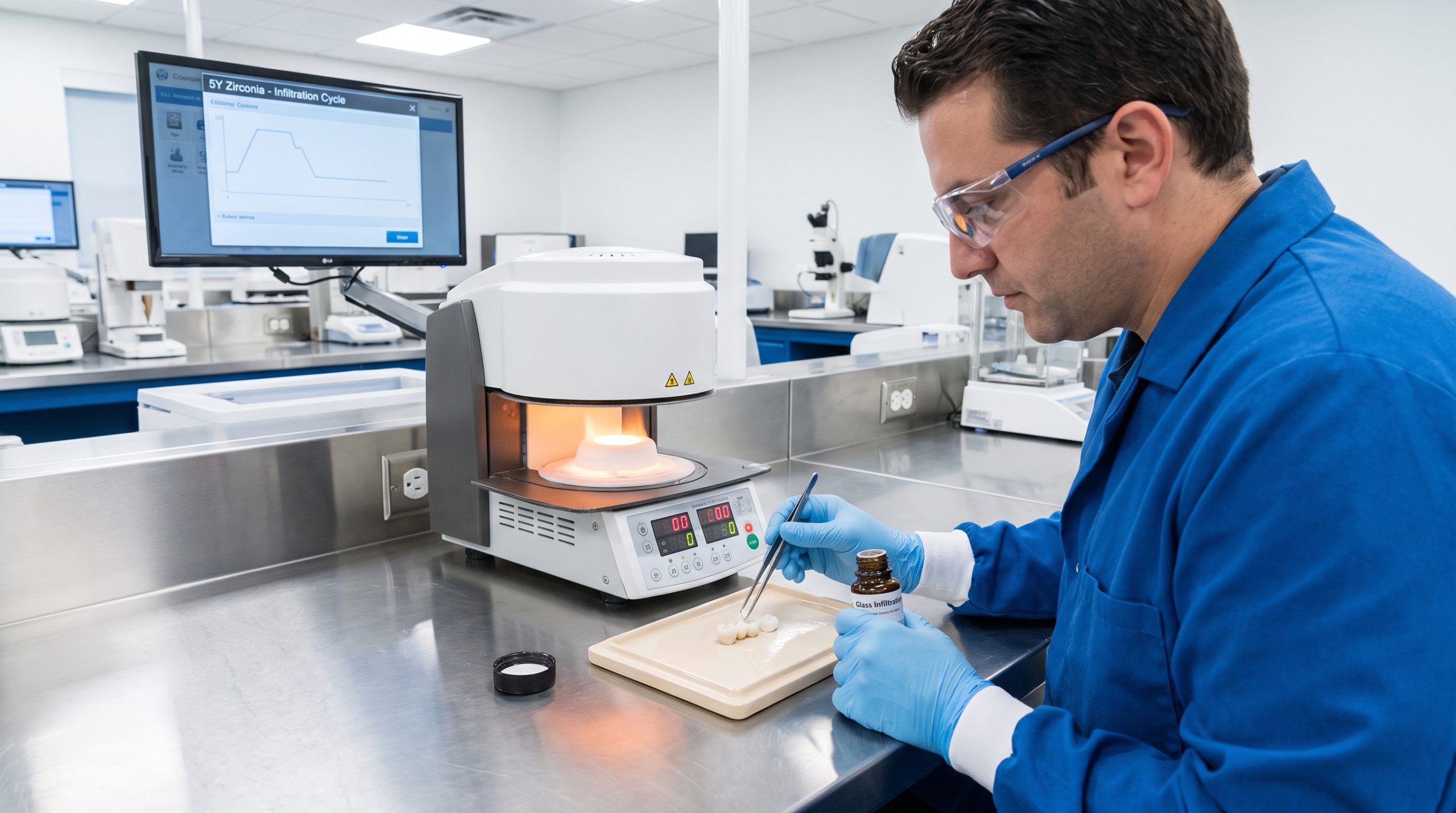
Yes, we can balance translucency and toughness in anterior crowns by using surface glass infiltration on ultra-translucent zirconia. This advanced manufacturing technique reinforces the underlying material without clouding its natural optical properties. By matching the refractive index of the infiltrating glass to the 5Y Zirconia matrix, we maintain beautiful light transmission.
This breakthrough resolves the historic conflict between dental beauty and mechanical strength. You no longer have to risk crown fractures just to get a natural, lifelike smile. Let’s examine the optical and structural data.
Does Glass Infiltration Impact Clinical Translucency Parameters?
A common concern is that infiltrating glass into the surface of zirconia will cloud the restoration and ruin its natural look. However, matching the refractive index of the glass to the cubic zirconia host keeps the material highly translucent. But that’s not all.
- Maintains Translucency Parameter (TP) of 34.
- Preserves a highly esthetic Contrast Ratio (CR) of 0.31 to 0.32.
- Eliminates the “chalky” appearance of older materials.
Once you remove excess surface glass with fine diamond grits, the original translucency is fully restored. You get a crown that blends seamlessly with the natural dentition.
How Do We Manage Surface Glaze Wear Over Time?
External glaze coatings worn away by oral acids and brushing often expose highly abrasive underlying ceramic surfaces. This exposed ceramic can cause rapid wear on opposing natural teeth. Think about it: an integrated graded glass-infiltrated zirconia solves this issue at the structural level.
- Deeply integrated protective glass phase.
- High wear resistance over years of use.
- Protects opposing natural tooth enamel.
Because the glass phase is fused into the ceramic matrix rather than sitting as a thin layer on top, it does not wear away easily. Your patients will enjoy a smooth, tissue-friendly surface that remains pristine over time.
Key Takeaway: Integrated graded glass structures preserve beautiful esthetics while shielding opposing dentition from abrasive wear.
| Aesthetic Parameter | Pre-Infiltration | Post-Infiltration & Polished | Clinical Impact |
|---|---|---|---|
| Translucency Parameter (TP) | 34 | 34 | Uncompromised light passage |
| Contrast Ratio (CR) | 0.31 | 0.32 | Lifelike blending with enamel |
Verifying these optical values ensures that strengthening protocols do not degrade the vital esthetic qualities of anterior restorations.
What Does the Research Say About 5Y-PSZ Fatigue Limits?
Research indicates that 5Y-PSZ fatigue limits are highly sensitive to surface treatments, with glass infiltration increasing strength by over 70% while glazing or sandblasting causes severe strength drops. Landmark studies show that untreated ultra-translucent 5Y Zirconia is quite weak, averaging a flexural strength of only 324 MPa. However, surface-engineered adjustments can significantly boost or destroy this structural baseline.
Understanding these exact figures helps you avoid catastrophic failures during everyday clinical adjustments. Let’s look at the data-backed limits of various laboratory and chairside modifications.
What Are the Real-World Implications of Scientific Strength Studies?
Clinical studies show that basic, untreated ultra-translucent restorations are highly risky for posterior or multi-unit applications due to their low baseline strength. But that’s not all. Applying surface glass infiltration boosts its strength to an impressive 582 MPa.
- Untreated control strength: 324 ± 57 MPa.
- Glass-infiltrated strength: 582 ± 20 MPa.
- Polished-only strength: 467 ± 38 MPa.
Here is the key: this massive strength upgrade expands the clinical indications for highly aesthetic zirconia. You can now confidently prescribe these beautiful materials for more demanding restorations.
How Does Sandblasting and Glazing Compromise Strength?
Common dental lab practices like sandblasting and glazing can actually damage ultra-translucent zirconia. Because this material lacks transformation toughening, sandblasting introduces deep micro-cracks instead of protective compressive stresses. Think about it: a low-strength glaze can easily crack under load and spread directly into the zirconia.
- Sandblasting decreases strength to 274 ± 55 MPa.
- Glazing the tensile surface drops strength to 211 ± 21 MPa.
- Absence of protective phase transformation.
When you glaze or sandblast the internal surfaces of these crowns, you severely compromise their survival. You must adopt strict polished-only or glass-infiltrated protocols for these high-cubic materials.
Key Takeaway: Avoiding sandblasting and glazing on tensile surfaces prevents premature mechanical failures, preserving the crown’s load capacity.
| Surface Treatment State | Mean Flexural Strength (MPa) | Statistical Strength Impact | Clinical Recommendation |
|---|---|---|---|
| Glass-Infiltrated & Polished | 582 ± 20 MPa | +71.6% Increase | Highly recommended |
| Highly Polished Only | 467 ± 38 MPa | +44.1% Increase | Standard lab protocol |
| Untreated Control | 324 ± 57 MPa | Baseline | Avoid direct use |
| Air-Abraded (Sandblasted) | 274 ± 55 MPa | -15.4% Decrease | Avoid on tensile surfaces |
| Glazed (Tensile Surface) | 211 ± 21 MPa | -34.9% Decrease | Avoid internal glazing |
These empirical results highlight why traditional laboratory finishing techniques must be modified for modern ultra-translucent ceramics.
How Do Dental Labs Benefit from Graded Zirconia Blanks?
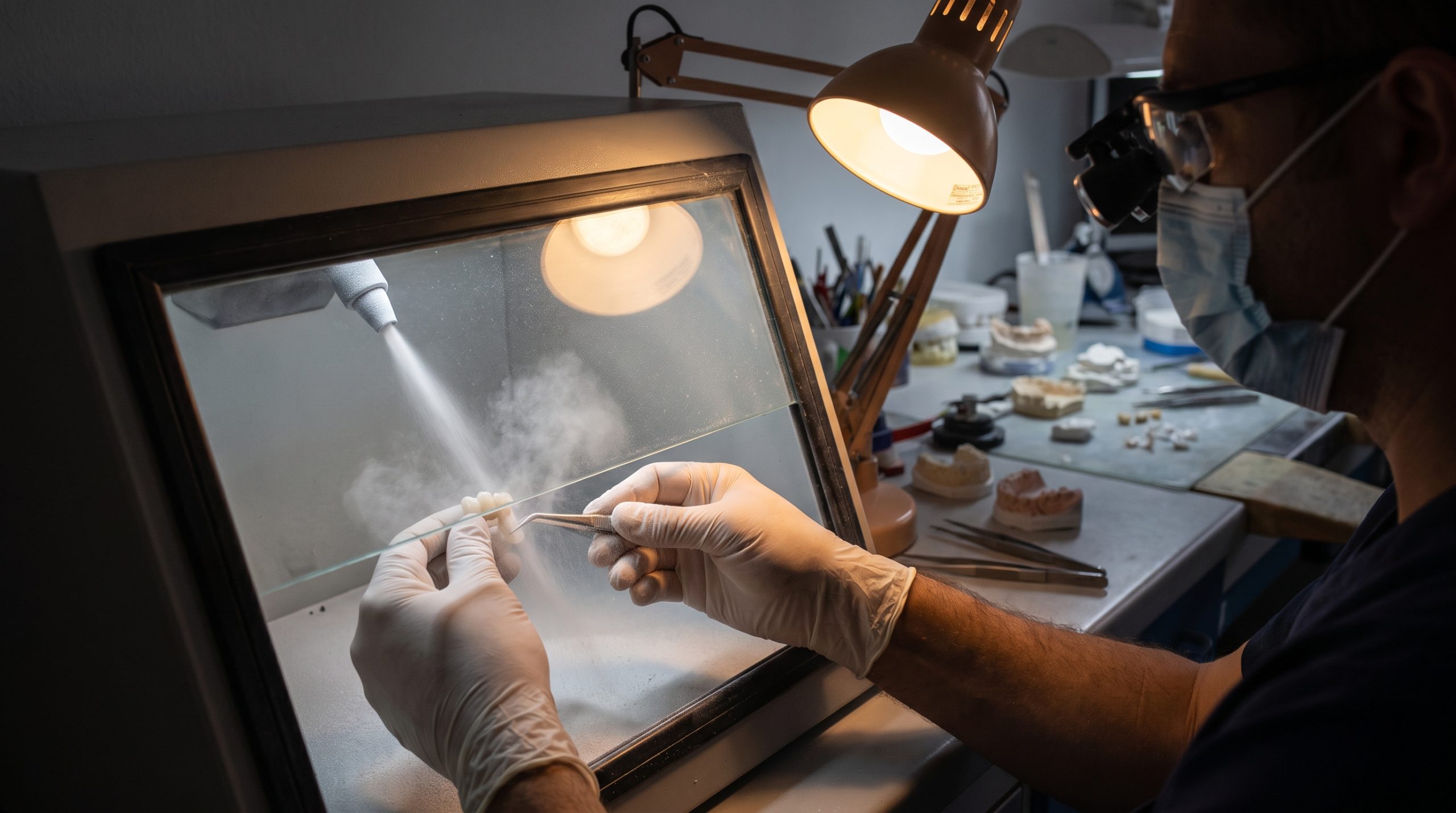
Dental labs benefit from graded zirconia blanks by streamlining production workflows, reducing labor costs, and significantly increasing clinical reliability. By adopting pre-graded 5Y Zirconia blanks, you can eliminate complex, multi-step hand-layering procedures. This allows your laboratory to achieve natural aesthetics straight out of the sintering furnace.
This manufacturing efficiency is essential for staying competitive in today’s fast-paced digital dental market. Let’s analyze how switching to graded blanks optimizes your internal operations and material procurement.
Can Graded Materials Simplify Lab Finishing Workflows?
Traditional monolithic restorations require extensive manual staining, shading, and glazing to look natural. Graded blanks come with pre-configured shade, translucency, and strength transitions built right into the disk. Here is the key: you save hours of tedious bench work on every unit.
- Pre-configured shade and translucency gradients.
- Consistent, predictable aesthetic results.
- Drastic reduction in manual processing time.
This automated beauty allows your technicians to focus on precision fits rather than coloring. You get beautiful results with maximum efficiency.
What Are the Key Considerations for Lab Procurement?
When sourcing zirconia blanks, you must verify raw material consistency and batch-to-batch quality. Partnering with a reliable, vertically integrated advanced zircon materials manufacturer ensures consistent sintering shrinkage and reliable physical properties. Think about it: a small variation in shrinkage can ruin your CAD/CAM fits.
- Vertically integrated powder production.
- Consistent, certified batch shrinkage values.
- Traceable raw material chemistry.
High-quality manufacturers provide detailed certificates of analysis (COA) and precise particle size distributions for every batch. This technical support minimizes milling errors and guarantees perfect margins.
Key Takeaway: Partnering with a vertically integrated manufacturer ensures consistent shrinkage and high-precision fits, reducing costly remakes.
| Procurement Standard | Non-Integrated Supplier | Vertically Integrated Partner | Lab Benefit |
|---|---|---|---|
| Shrinkage Tolerance | Inconsistent (high variance) | Highly Precise (±0.3% variance) | Fewer remakes, perfect fit |
| Batch Traceability | Limited or unavailable | Full chain records & COA | High quality control |
Sourcing raw materials from verified manufacturers stabilizes laboratory operations and enhances product predictability.
Where Does 5Y Zirconia Fit in Modern Esthetic Dentistry?
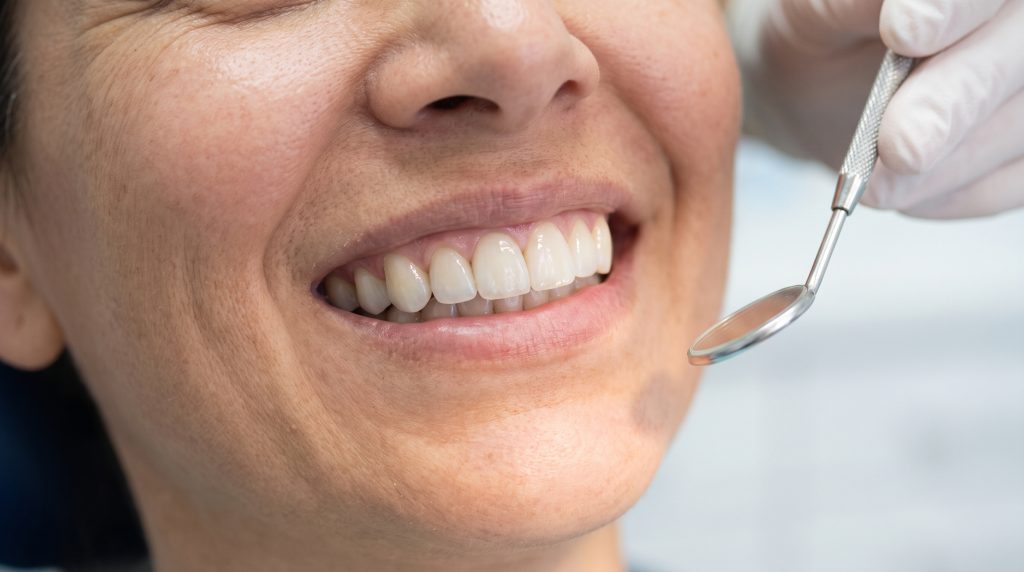
Modern 5Y Zirconia fits perfectly in highly aesthetic, low-load indications where natural tooth appearance is the primary objective. This material is designed specifically for single anterior crowns, veneers, and conservative three-unit anterior bridges. Thanks to graded technology, you can confidently place these restorations without the risk of veneer chipping.
Choosing the correct clinical indications is crucial for preventing unexpected failures. Let’s explore when to prescribe these highly aesthetic materials and when to stick with high-strength alternatives.
When Should Clinicians Choose 3Y Over 5Y Formulations?
For posterior restorations, high-load bruxism patients, and long-span bridges, the high strength of 3Y-TZP remains the gold standard. Its superior transformation toughening provides the safety margin needed for these high-stress areas. But that’s not all.
- Superior fracture toughness.
- Ideal for heavy posterior biting forces.
- Recommended for multi-unit posterior bridges.
Conversely, anterior restorations with tight margins demand the premium optical properties of translucent materials. Specifying materials manufactured to high-aesthetic dental restorative standards ensures you get the perfect balance of beauty and strength.
Is Anterior Monolithic Restoring Ready for Primetime?
Yes, monolithic anterior restorations are absolutely ready for daily use thanks to modern graded technology. You no longer have to compromise on strength for beauty. Here is the key: monolithic designs eliminate the weak porcelain interfaces that plague traditional crowns.
- High resistance to edge chipping.
- Excellent marginal integrity.
- Beautiful, natural-looking tooth shades.
When you mill these crowns with proper margin designs and polish them to a mirror finish, they perform exceptionally well in the anterior zone. This makes them a highly reliable choice for modern esthetic dentistry.
Key Takeaway: Utilizing monolithic anterior restorations cuts out delamination risks while delivering pristine, lifelike esthetics.
| Clinical Indication | Recommended Material Option | Primary Reason |
|---|---|---|
| High-Stress Posterior Bridge | 3Y-TZP (High Strength) | Maximum transformation toughening |
| Single Anterior Crown | Graded 5Y-PSZ (High Translucency) | Premium natural enamel match |
Aligning clinical indications with the correct material composition ensures long-term restoration success and client satisfaction.
How Do You Optimize Sintering for Graded Zirconia Restorations?
You optimize sintering for graded zirconia restorations by implementing a precise temperature curve with slow heating and cooling rates to manage the material’s different structural phases. Graded 5Y Zirconia contains varying phase compositions that expand and contract differently under heat. Failing to control these temperatures can lead to internal stress, warping, or micro-cracks.
A carefully calibrated sintering cycle ensures that both the cubic and tetragonal phases reach their optimal density. Let’s outline the essential temperature controls and heating protocols.
How Does Sintering Temperature Affect Grain Growth?
Sintering above the manufacturer’s recommended temperature can increase translucency, but it also causes excessive grain growth. This over-sintering weakens the material’s structural skeleton, making it brittle. Think about it: oversized grains lead to weak crowns.
- Optimal sintering range: 1450°C to 1500°C.
- Over-sintering (>1530°C) causes brittle boundaries.
- Under-sintering (<1430°C) leaves light-scattering voids.
By keeping your furnace calibrated within the perfect window, you ensure the material reaches maximum density without over-growing its grains. This balance is critical for maintaining mechanical strength.
What Sintering Parameters Prevent Internal Thermal Stress?
Because graded materials transition through different thermal expansion zones, rapid temperature changes can freeze internal stresses in place. This can lead to immediate warping or invisible micro-fractures that fail later in the mouth. Here is the key: slow, controlled cooling is absolutely mandatory.
- Slow heating rate (not exceeding 4°C/min).
- Sustained hold time (exactly 2 hours at peak).
- Slow cooling rate (not exceeding 3°C/min down to 200°C).
If you observe unusual shrinkage or firing inconsistencies, it is highly recommended to consult with our technical engineers. Our team can help you customize sintering curves to match your lab’s specific equipment and environmental conditions.
Key Takeaway: Strictly following a slow cooling protocol protects graded restorations from thermal shock and internal structural micro-cracks.
| Sintering Phase | Parameter Standard | Critical Control | Structural Impact |
|---|---|---|---|
| Heating Ramp | ≤ 4°C per minute | Uniform thermal penetration | Prevents micro-cracking |
| Peak Temp & Hold | 1450°C – 1500°C (2 hrs) | Controlled grain growth | Optimizes strength & clarity |
| Cooling Ramp | ≤ 3°C per minute | Internal stress relaxation | Prevents immediate warping |
Calibrating your laboratory furnace to these exact parameters guarantees consistent density and structural reliability.
How Do We Wrap Up the Graded Zirconia Debate?
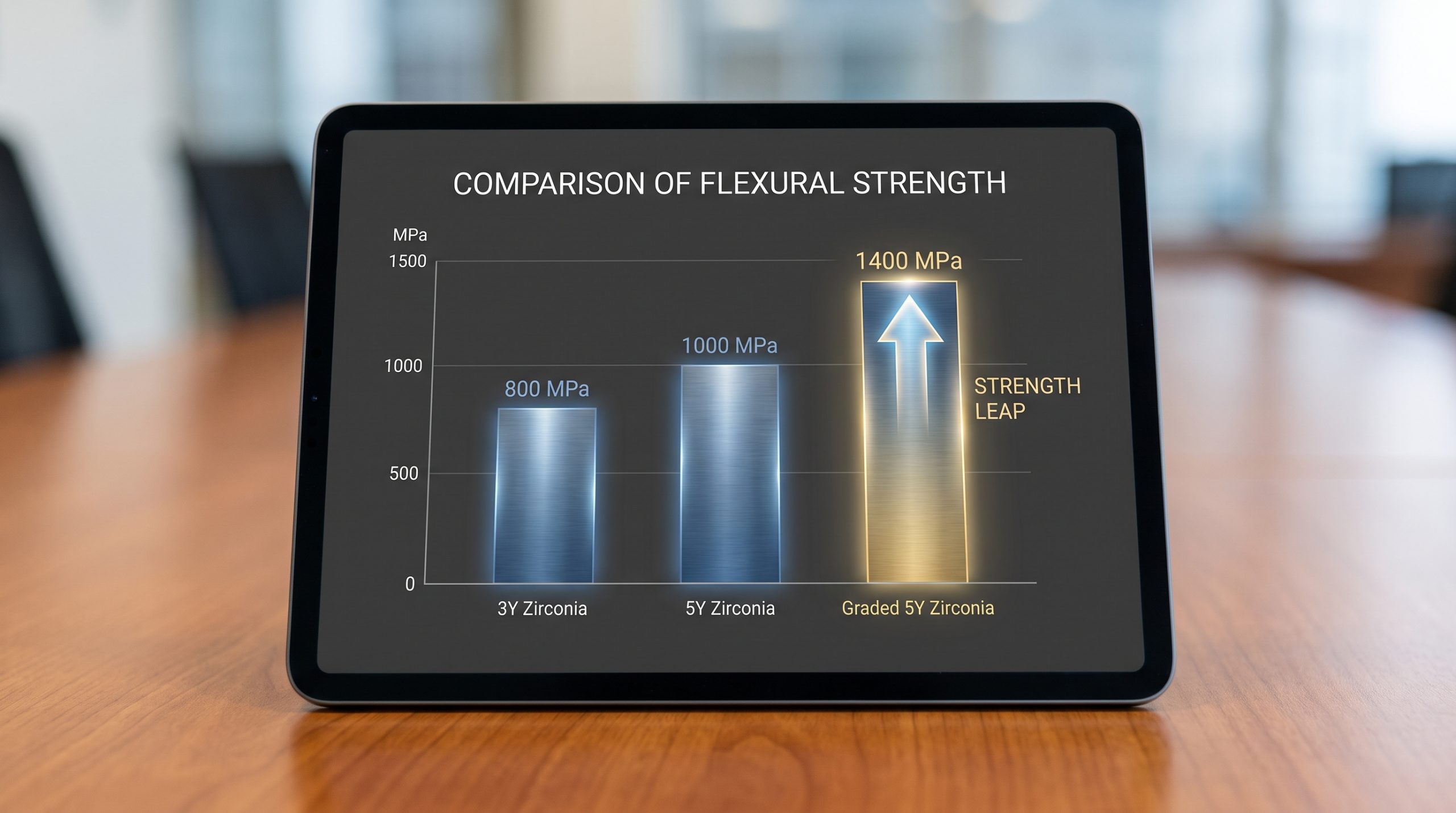
We wrap up the graded zirconia debate by recognizing that graded glass-infiltration technology successfully resolves the long-standing compromise between optical translucency and mechanical strength in 5Y Zirconia restorations. This scientific advancement allows B2B dental laboratories to offer highly aesthetic anterior crowns that possess a durable, fracture-resistant core. By moving away from weak, homogenous blocks, you can elevate your dental offerings.
Embracing this structural transition helps you meet clinician demands and stands you out in a highly competitive market. Let’s look at how this shift defines the future of restorative dentistry.
Is the Future of Dentistry Fully Graded?
Homogenous dental ceramics are gradually being replaced by smarter, multi-functional graded materials. This design closely mimics the natural structure of human teeth, which transition from tough dentin to translucent enamel. Think about it: nature designed teeth with gradients, so why shouldn’t we?
- Natural tooth structure replication.
- Elimination of weak bilayer boundaries.
- Simultaneous optimization of aesthetics and strength.
As dental technology moves forward, graded materials are rapidly becoming the industry standard. Adapting early positions your lab as a leader in premium aesthetic solutions.
How Can Labs Stay Ahead of This Material Transition?
Dental laboratories that master advanced material technologies early can stand out and win premium accounts. Offering high-strength, ultra-translucent monolithic restorations helps you build strong, lasting relationships with clinicians. But that’s not all.
- Invest in technician training on sintering protocols.
- Source from vertically integrated manufacturers.
- Promote risk-free, monolithic anterior solutions.
By ensuring your workflows are fully optimized, you minimize costly remakes and maximize laboratory profitability. The transition to graded materials is a major step toward a more efficient, high-yield digital dental workflow.
Key Takeaway: Adopting graded material workflows secures your position at the cutting edge of digital dentistry, driving higher lab margins and customer loyalty.
| Material Stage | Homogenous Approach | Graded Approach | Lab Outcome |
|---|---|---|---|
| Aesthetics | Flat, monochromatic color | Natural incisal translucency | High clinician satisfaction |
| Strength | Low baseline (324 MPa) | High core strength (582 MPa) | Zero chipping, low remake rate |
Making the transition to advanced graded ceramics is the most direct path to boosting both B2B laboratory efficiency and clinical success.
To ensure your dental laboratory remains competitive, you must address the classic compromise between beauty and mechanical failures. By integrating advanced graded technology, our manufacturing facility delivers the ultimate combination of high-translucency and long-term durability. We handle the complex material science so you can focus on crafting flawless, high-precision restorations that clinicians trust. If you are ready to eliminate chipping issues, minimize remakes, and upgrade your product line, contact us today to explore our advanced material solutions. Together, we can shape the future of high-aesthetic digital dentistry and redefine what is possible in monolithic restorations.
Frequently Asked Questions (FAQ)
Can I adjust a graded 5Y zirconia crown chairside?
Yes, you can adjust a graded crown chairside, but you must do so with extreme caution to avoid introducing micro-cracks. Use only ultra-fine grit diamonds under continuous water cooling. Follow this immediately with a multi-step polishing sequence to restore the smooth, protective surface layer.
What’s the best way to avoid micro-fractures during sandblasting?
The best way to avoid sandblasting damage is to use low pressure and small alumina particles, or bypass mechanical abrasion entirely. Because ultra-translucent materials lack transformation toughening, traditional high-pressure blasting creates deep surface flaws. Opt instead for chemical primers or gentle, non-abrasive prep protocols.
Why does glazing weaken the tensile surfaces of ultra-translucent zirconia?
Glazing weakens these surfaces because low-strength glazes easily crack under load and propagate defects straight into the underlying zirconia. Since the glaze layer has a different thermal expansion rate than the zirconia, it introduces internal stress mismatches. Keeping internal and tensile surfaces highly polished instead of glazed preserves crucial structural margins.
How do I know if 5Y zirconia is appropriate for a posterior restoration?
You can determine this by assessing the patient’s masticatory forces and whether the restoration is single-unit or a multi-unit bridge. For heavy posterior chewing loads or severe bruxism, high-strength options remain a safer clinical choice. However, if you are using graded materials with reinforced core properties, single-unit posterior restorations can be used successfully.