
Selecting the correct zirconia beads for your specific industrial grinding applications is a highly technical process that directly determines your manufacturing efficiency, product quality, and long-term operating costs. You set up your high-energy horizontal mill with brand new grinding media, hoping to achieve a perfect sub-micron particle distribution for your high-value paint or battery electrode slurry. But within just a few runs, you notice a dramatic drop in milling efficiency, unexpected heat buildup, and gray contamination lines spoiling your pure white slurry—all because your media is rapidly wearing down, chipping, and clogging the discharge screen. The ultimate key to resolving these costly disruptions lies in selecting premium Zirconia Grinding Beads engineered specifically for your mill type, raw material hardness, and viscosity requirements.
What Are the Basics of Zirconia Grinding Beads?
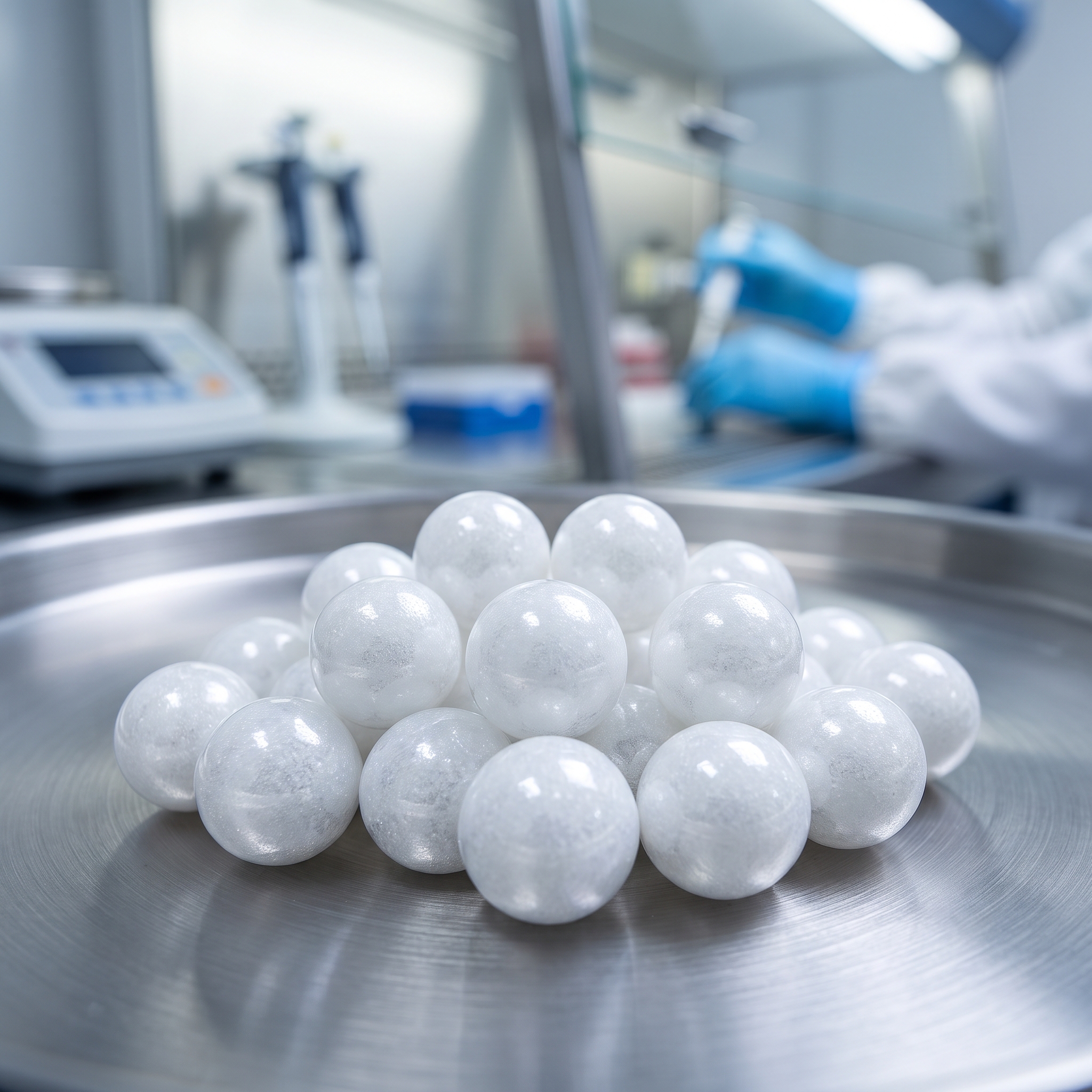
Understanding the fundamental properties of Zirconia Grinding Beads is essential because their phase-stabilized structure directly drives high energy transfer and extreme wear resistance in demanding industrial mills. These advanced media leverage optimized crystalline structures to withstand harsh mechanical stress. By choosing the right baseline chemistry, you can dramatically improve your milling throughput.
Selecting these beads involves assessing how their density and internal fracture toughness match your specific raw material inputs. If you start with a clear grasp of these material physics, your scaling decisions become far more predictable. Let us look at what makes this ceramic material stand out.
What Makes Zirconia the Ultimate Media?
Here is the kicker: zirconium dioxide stands out among industrial materials due to its exceptional phase stability and high fracture toughness. When subjected to intense mechanical stress, its dense crystalline structure actively resists micro-cracking and chipping. This ensures your processes run smoothly without premature media breakdown.
- Exceptional fracture toughness that prevents bead deformation.
- Dense crystalline matrix designed for longevity.
- Inert chemical profile that avoids contaminating sensitive chemical mixtures.
This self-healing behavior sets a new standard for high-performance milling applications. You will notice a major difference in how these beads maintain their spherical shape compared to softer glass media.
Understanding the Role of High-Density Beads
Think about this for a second: the density of your grinding media directly controls the kinetic energy transferred during agitator rotation. Standard composite media might struggle at around 4.0 g/cm³, whereas pure stabilized zirconia reaches a dense 6.0 g/cm³. This physical difference means every single collision carries significantly more impact force.
- Rapid cycle times due to higher impact force per collision.
- Reduced buoyancy issues in highly viscous slurries.
- Optimized energy input that lowers electricity consumption per batch.
By maximizing this energy transfer, you can easily crack tough agglomerates that would otherwise resist lower-density materials. This density advantage is the primary lever you can pull to optimize your mill’s performance.
Key Principles of Choosing Grinding Media
Let’s break it down: successful selection is an optimization puzzle that balances material hardness, viscosity, and chemical compatibility. You cannot simply buy the heaviest bead and expect it to work in every mill.
- Chemical compatibility to safeguard against process contamination.
- Equipment limits to protect your mill’s internal liner.
- Overall lifetime value over the initial purchase price.
By analyzing these variables holistically, you protect your system from costly mechanical wear and unnecessary downtime. Finding this balance is the key to achieving long-term industrial success.
| Media Material | Average Density (g/cm³) | Hardness (Mohs) | Best Application Type |
|---|---|---|---|
| Glass Beads | 2.5 | 5.5 | Low-viscosity, low-stress |
| Alumina Beads | 3.6 – 3.9 | 9.0 | Medium-stress mineral mills |
| Zirconia Beads | 6.0 | 9.0 | High-energy, ultra-fine nano-milling |
This data demonstrates that zirconia beads provide the ideal combination of maximum density and extreme hardness required for high-stress industrial operations.
Key Takeaway: Choosing high-density zirconia beads ensures your mill achieves maximum energy transfer, cutting down processing times while protecting your product from early media degradation.
How Do Hard Materials Impact Zirconia Grinding Beads?
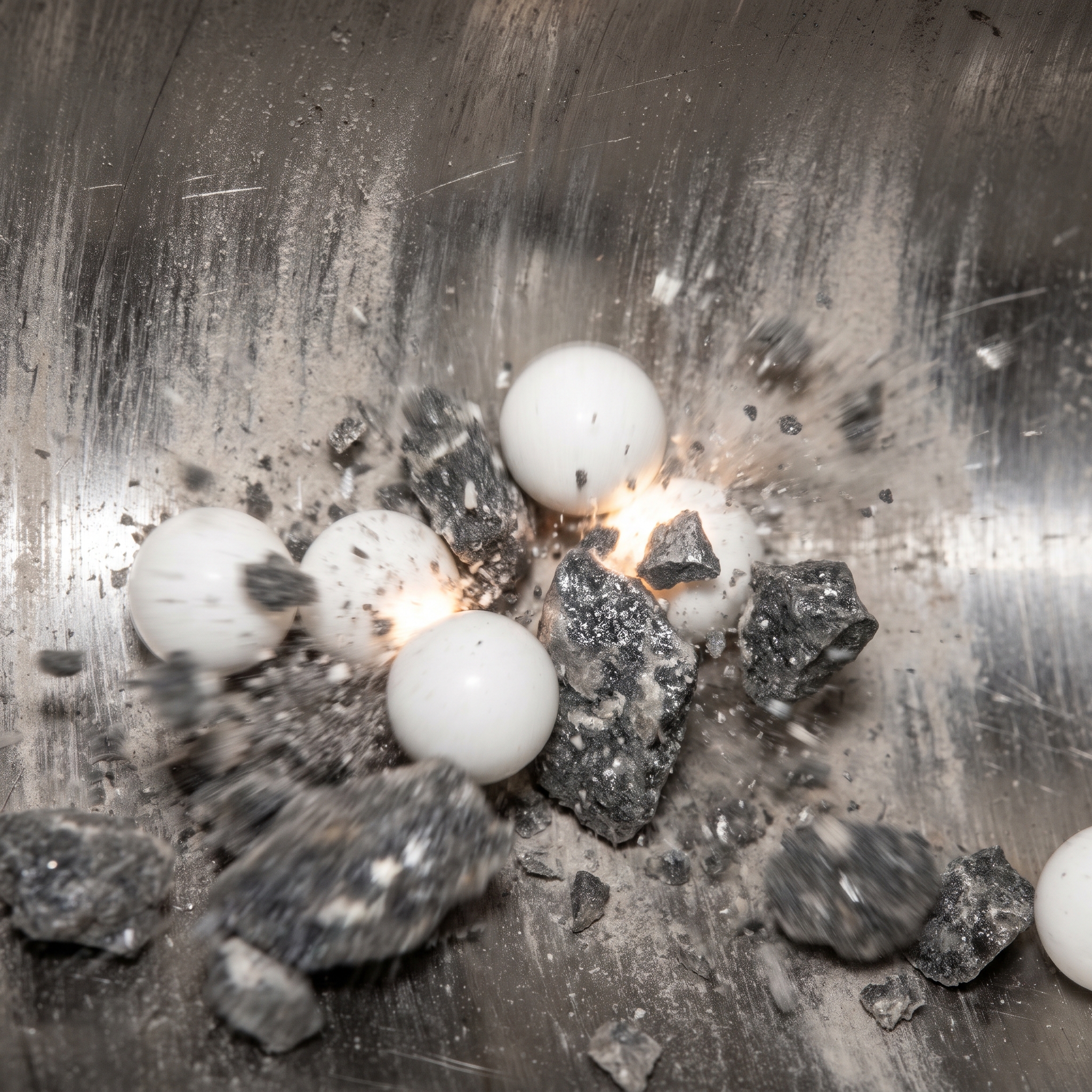
Milling hard feedstocks with Zirconia Grinding Beads requires matching the media’s fracture toughness with the feed’s structural resistance to prevent rapid wear and contamination. If your raw material is highly abrasive, selecting an incorrect bead grade can lead to catastrophic media failure. Ensuring a proper match safeguards your equipment and maintains product purity.
Grinding Soft to Medium-Hard Materials
But wait, there is more: soft feedstocks like organic pigments and polymer coatings do not require maximum impact energy to break down. In fact, applying excessive impact can damage the delicate molecular structures of your product or cause overheating. For these applications, lower-density composite media is often highly effective.
- Use composite beads to manage energy use.
- Reduce rotor speeds to protect delicate target molecules.
- Monitor temperature limits to avoid thermal degradation.
This targeted approach helps you save on operating costs while ensuring your soft materials retain their physical properties. You will get a superior finish without wasting excess energy.
Tackling Highly Abrasive Feedstock
This is where it gets tough: materials like battery cathode powders, industrial quartz, and mineral ores will quickly destroy lower-grade media. To handle these highly abrasive materials, you must use high-purity, maximum-density yttria-stabilized zirconia media. These beads have a unique crystalline structure that resists constant frictional wear.
- High-density media to crush hard particle boundaries.
- Excellent wear resistance to keep contamination at near-zero ppm.
- Exceptional fracture toughness to prevent bead fracturing.
By using premium media, you keep your process clean and avoid the headache of filtering out broken bead fragments. It is the only way to process tough feedstocks reliably.
Why Density Matters for Tough Materials?
Why does this matter? Well, hard raw particles require a stress level that exceeds their internal fracture limits to break apart. Low-density media simply bounces off these hard surfaces, leading to long milling cycles and high heat buildup.
- High shear and normal stress applied directly to the particle.
- Shorter milling runtimes that increase weekly plant throughput.
- Fewer micro-fractures in the grinding media itself.
You will find that matching bead density to feedstock hardness is the most direct way to eliminate milling bottlenecks. It keeps your plant running efficiently without unnecessary downtime.
| Material Class | Hardness Profile | Recommended Bead Type | Minimum Target Density |
|---|---|---|---|
| Soft Organics | Low (< 3 Mohs) | Composite Zirconia | 4.0 – 4.5 g/cm³ |
| Medium Minerals | Moderate (3–6 Mohs) | Cerium-Stabilized Zirconia | 5.0 – 5.5 g/cm³ |
| Abrasive Ceramics | High (> 7 Mohs) | Yttria-Stabilized Zirconia | $\ge$ 6.0 g/cm³ |
This comparison highlights how feedstock hardness dictates the required density and stabilizer type of your grinding media.
Key Takeaway: Matching your bead density to the hardness of your feedstock ensures clean, high-impact particle fractures and protects your system from high scrap rates.
What Size of Zirconia Grinding Beads Do You Need?
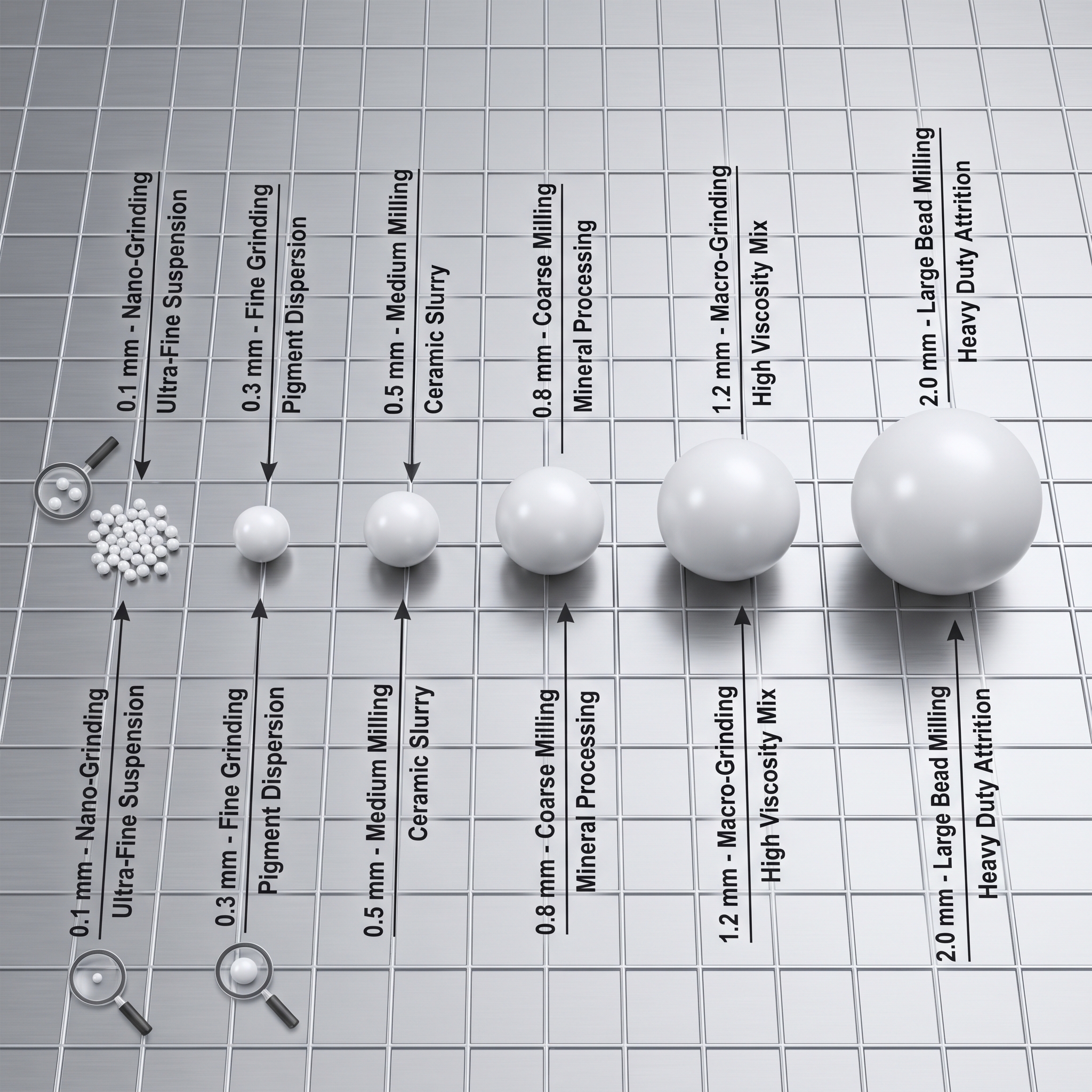
Selecting the correct size of Zirconia Grinding Beads directly dictates your final particle size distribution and prevents common flow failures inside the mill chamber. The physical diameter of your media controls the number of contact points available during rotation. Finding the right size ensures high grinding efficiency.
Micron-Level vs. Nano-Grinding Requirements
Here is the general rule of thumb: your target particle size determines how small your media needs to be. For standard micron-level grinding, larger beads are perfect because they offer high kinetic impact. However, nano-grinding requires micro-beads to maximize shear rates and contact frequency.
- Micron-level (1-10 µm): Best served by 0.6–1.2 mm beads.
- Nano-grinding (<1 µm): Requires 0.1–0.5 mm micro-beads.
- High shear forces are essential to overcome sub-micron surface forces.
Using smaller beads increases the total surface area of your media charge, which drastically raises the collision frequency. This is key to achieving a narrow, uniform particle size distribution.
How to Avoid Bead Stagnation in Mills?
Let’s look at the science: micro-beads have very little individual mass, making them highly susceptible to drifting with the slurry flow. When this happens, beads gather near the discharge screen, causing severe flow restrictions and overheating.
- Use high-density beads to counteract fluid drag forces.
- Optimize your slurry flow rates to keep media suspended.
- Calibrate screen tolerances to prevent media packing.
By carefully balancing pump speed with media density, you keep your beads circulating uniformly. This simple adjustment prevents unexpected pressure spikes and keeps production moving.
Selecting the Optimum Bead Diameter
So, how do you choose? A proven industrial standard is to select a bead size that is 10 to 20 times larger than the maximum feedstock particle size ($D_{50}$). This ensures the media has enough physical mass to crush incoming particles without getting stuck.
- Avoid oversized beads to prevent wasted energy and coarse finishes.
- Avoid undersized beads to prevent feed blockages and screen wear.
- Ensure uniform distribution to maintain stable milling pressure.
This calculated approach eliminates the guesswork from your scaling process. You will achieve the exact particle distribution you need on the very first pass.
| Target Sizing | Typical Feedstock Size | Recommended Bead Size Range | Primary Stress Mode |
|---|---|---|---|
| Coarse Micron (5–15 µm) | < 100 µm | 1.0 – 2.0 mm | High Impact |
| Fine Micron (1–5 µm) | < 20 µm | 0.6 – 1.0 mm | Impact and Shear |
| Sub-Micron / Nano (< 1 µm) | < 5 µm | 0.1 – 0.5 mm | High Shear |
This matrix reveals that target particle fineness dictates both the grinding mechanism and the corresponding bead size.
Key Takeaway: Selecting bead diameter based on feed particle size ensures efficient crushing force and prevents operational blockages.
How Does Slurry Affect Zirconia Grinding Beads?
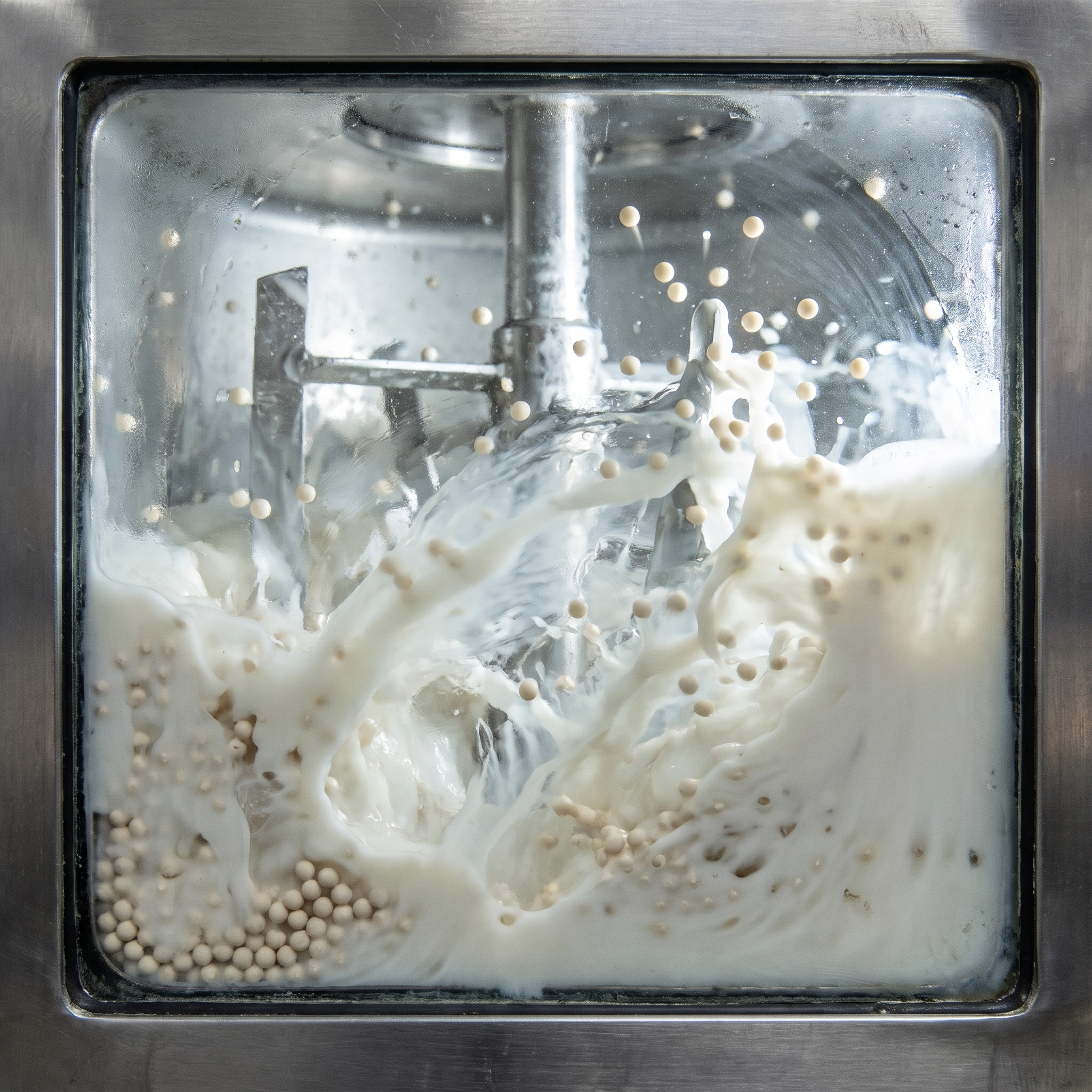
Slurry viscosity heavily impacts the motion of Zirconia Grinding Beads, making it a critical factor in determining wear rates and heat generation. If you do not adjust your media choice to match your slurry’s fluid dynamics, you risk severe hydraulic packing. Understanding this relationship helps you maintain stable production runs.
Managing Low-Viscosity Suspensions
It sounds simple, but: watery or low-viscosity slurries allow your media to move at extreme velocities. This high-speed movement causes frequent bead-on-bead collisions, which can rapidly accelerate media wear.
- Use smaller beads to distribute kinetic energy safely.
- Reduce your rotor speed to control impact forces.
- Maintain adequate slurry volume to provide a fluid cushion.
By implementing these simple adjustments, you can protect your media from self-wear. This keeps your operating costs low while preserving a high-quality finish.
What Happens in High-Viscosity Systems?
Here is the catch: thick, viscous materials—like lithium-ion battery electrode slurries—dampen bead movement. This “cushioning” effect prevents your beads from colliding with enough force to break agglomerates, leading to poor dispersion and localized heat buildup.
- Use larger, dense beads to cut through thick fluids.
- Choose high-purity YSZ to handle the high motor torque.
- Increase cooling water flow to prevent thermal damage to the product.
Using heavier, high-density media ensures your mill can maintain kinetic momentum despite the fluid’s resistance. It is the key to preventing mill overload.
Ensuring Steady Flow Behavior in the Mill
Keep this in mind: fluids often change their flow behavior under shear stress, either thinning out or thickening up during milling. Monitoring these rheological shifts is vital to keep your mill running smoothly without blockages.
- Use dispersants to stabilize fluid viscosity.
- Monitor pump pressure to catch early signs of bead packing.
- Control feed rates to keep temperature rises within limits.
A stable, well-dispersed slurry prevents media clustering and screen blockages. This ensures a consistent, trouble-free production cycle.
| Slurry Viscosity | Rheological Behavior | Recommended Bead Size | Key Operational Risk |
|---|---|---|---|
| Low (< 100 mPa·s) | Newtonian / Fluid | 0.1 – 0.6 mm | High bead-on-bead self-wear |
| Medium (100–1000 mPa·s) | Moderate Pseudoplastic | 0.6 – 1.0 mm | Standard processing baseline |
| High (> 1000 mPa·s) | Strongly Dilatant / Viscous | 1.0 – 2.0 mm | Hydraulic packing & overheating |
This data shows how slurry viscosity acts as a physical cushion, requiring larger and heavier beads as thickness increases.
Key Takeaway: Consistent mill operation depends on stabilizing slurry rheology and matching bead density to the fluid’s viscosity.
Which Mill Best Fits Zirconia Grinding Beads?
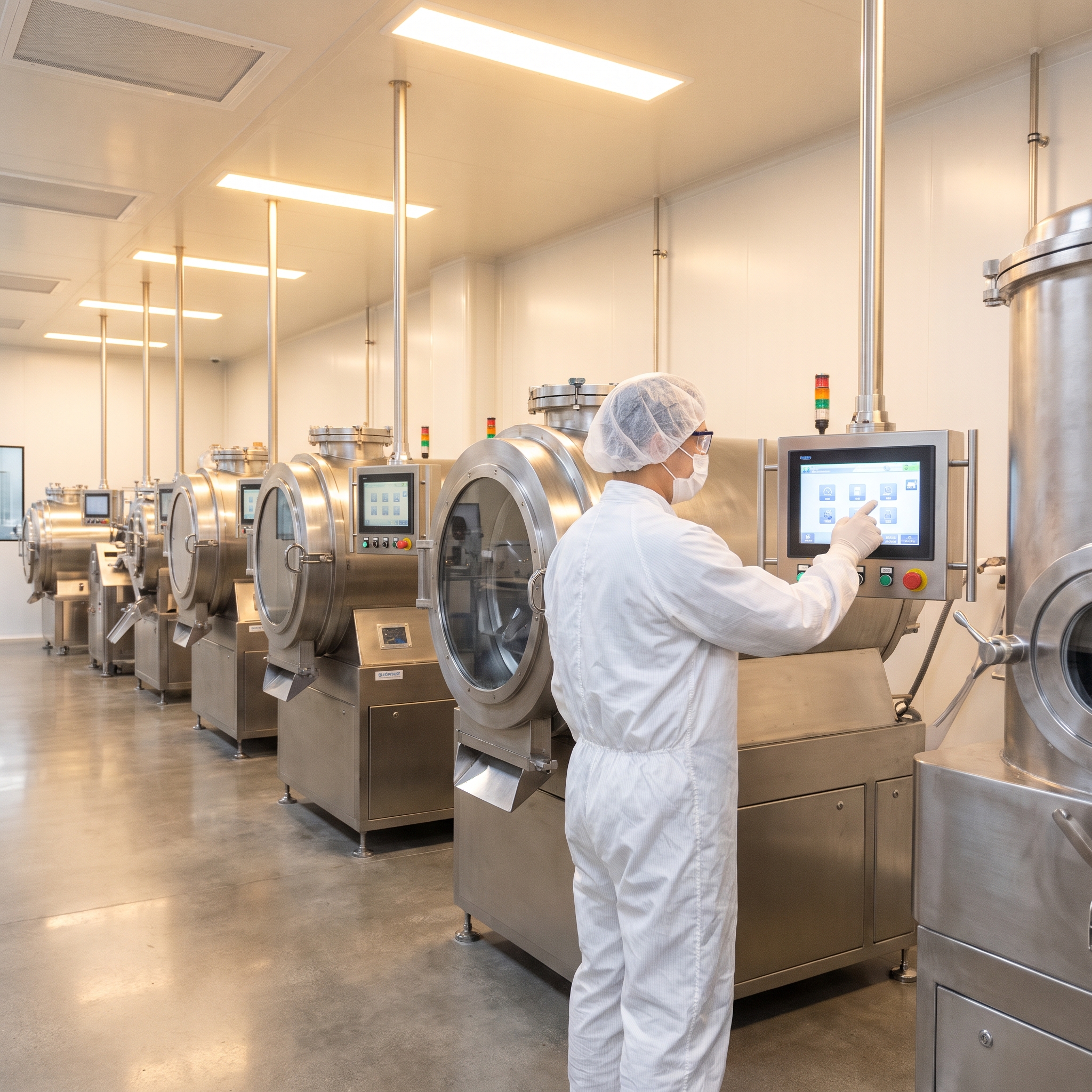
Matching your milling hardware with the mechanical limits of Zirconia Grinding Beads is essential to prevent early bead breakage and protect your mill’s internal liner. Different mill designs impose unique shear and impact stress profiles on the media. Choosing a compatible bead grade ensures stable, high-efficiency milling.
High-Energy vs. Low-Energy Mill Demands
Now, let’s look at the hardware: high-energy horizontal mills operate at extreme speeds, demanding high-strength, shock-resistant YSZ beads to survive. In contrast, low-energy vertical attritors can utilize larger, cost-effective composite media without risking fracture.
- Horizontal mills: Require premium, highly stabilized YSZ beads.
- Vertical attritors: Compatible with larger, composite zirconia media.
- Basket mills: Benefit from highly wear-resistant media.
Using lower-grade beads in high-energy horizontal mills will lead to rapid media shattering. It pays to invest in media that matches your mill’s performance profile.
Matching Agitation Speed with Bead Density
This is where the math counts: high rotor tip speeds (>10 m/s) paired with high-density beads generate massive grinding forces. However, if your beads are too heavy for high-speed runs, they can accelerate wear on your mill’s internal discs and liners.
- High tip speeds: Pair with highly durable micro-beads.
- Low tip speeds: Use dense beads to maintain sufficient impact force.
- Monitor liner wear to prevent costly parts replacements.
Tuning these parameters protects your physical assets while maintaining high grinding rates. It ensures you get the most out of your energy input.
Can Small Beads Survive in Horizontal Mills?
You might be wondering: can ultra-fine micro-beads handle the intense centrifugal forces inside modern horizontal mills? The answer is yes, provided your dynamic separator screens are precisely calibrated to prevent media leakage.
- Precise screen tolerances to contain small media.
- High fracture toughness to withstand frequent high-speed collisions.
- Consistent bead roundness to ensure smooth, uniform flow.
Premium YSZ micro-beads perform exceptionally well under these conditions, delivering clean sub-micron dispersions. They are the ideal choice for modern high-performance milling.
| Mill Configuration | Typical Agitator Tip Speed | Compatible Bead Sizes | Ideal Bead Stabilizer Type |
|---|---|---|---|
| Horizontal Bead Mill | 10 – 15 m/s | 0.1 – 0.8 mm | Yttria-Stabilized (YSZ) |
| Vertical Attritor Mill | 4 – 8 m/s | 1.0 – 3.0 mm | Cerium or Composite Zirconia |
| Basket Mill | 6 – 12 m/s | 0.8 – 2.0 mm | Yttria or Cerium-Stabilized |
This technical layout highlights how mill design and rotor tip speed directly dictate compatible bead sizes and stabilizer types.
Key Takeaway: High-energy mills require high-strength YSZ beads to handle intense stress and prevent premature media breakdown.
Why Is Purity Vital for Zirconia Grinding Beads?
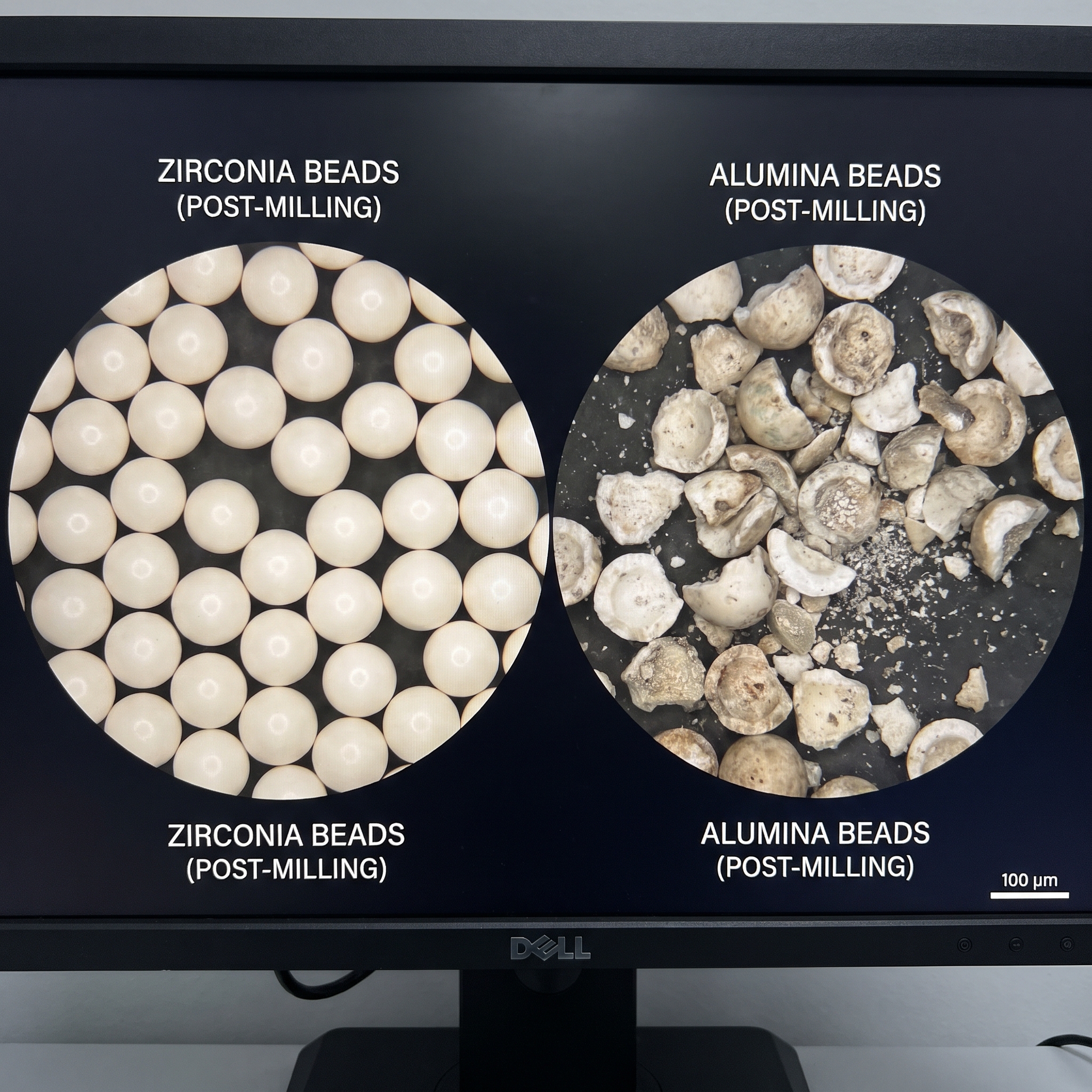
Using ultra-pure Zirconia Grinding Beads is essential in high-value industries like electronics and battery manufacturing to prevent chemical contamination. Even trace amounts of silica or alumina wear debris can ruin high-purity product batches. Opting for high-purity media protects your product’s chemical integrity.
Eliminating Foreign Ions in Battery Powders
This is a non-negotiable point: in lithium-ion battery production, metallic or silica contaminants can cause serious electrochemical failures and short-circuits. High-purity YSZ media (>95% ZrO2 + Y2O3) provides an inert grinding environment that keeps active powders completely clean.
- Zero silica contamination to safeguard battery cell life.
- Ultra-low wear rates to maintain precise chemical ratios.
- High-strength media to handle highly abrasive cathode materials.
By using high-purity media, you protect your battery chemistries and prevent costly batch failures. It is a critical step in producing reliable, high-performance battery cells.
Why Avoid Cheap Silica Alternatives?
It sounds like a bargain, but: budget-friendly composite beads often contain high percentages of silica or alumina. These additives lower the bead’s overall density and fracture toughness, leading to rapid wear and frequent media replacements.
- Fast media degradation leading to high replacement costs.
- Product contamination that can result in rejected batches.
- Frequent downtime to clean clogged discharge screens.
Investing in premium media from the start saves you money by preventing high scrap rates. High-quality media is the key to maintaining a stable, cost-effective process.
Achieving Ultra-Low Wear and Purity
So, how is this achieved? High-purity YSZ beads are manufactured with a fine, homogeneous grain structure and near-zero internal porosity. This advanced design minimizes micro-chipping, ensuring your media retains its roundness and size over hundreds of operating hours.
- Fine grain size for smooth, low-friction surfaces.
- Dense sintering to eliminate internal air pockets.
- Consistent sphericity to reduce bead-on-bead wear.
This high level of wear resistance keeps your product pure and extends the life of your mill’s internal components. It is the gold standard for high-purity grinding.
| Processing Sector | Sensitivity Level | Acceptable Contaminants | Recommended Bead Grade |
|---|---|---|---|
| EV Battery Materials | Critical | None ($SiO_2$ free) | High-Purity YSZ (>95% $ZrO_2$) |
| Pharmaceuticals | Extreme | None (Biocompatible) | Ultra-Pure Medical YSZ |
| Paints & Inks | Moderate | Trace Alumina/Silica OK | Composite / Cerium-Zirconia |
This breakdown shows that high-purity YSZ beads are the only reliable option for contamination-sensitive applications like battery manufacturing.
Key Takeaway: Investing in premium, low-porosity YSZ beads protects product purity and reduces overall equipment wear.
Are High-Quality Zirconia Grinding Beads Worth It?
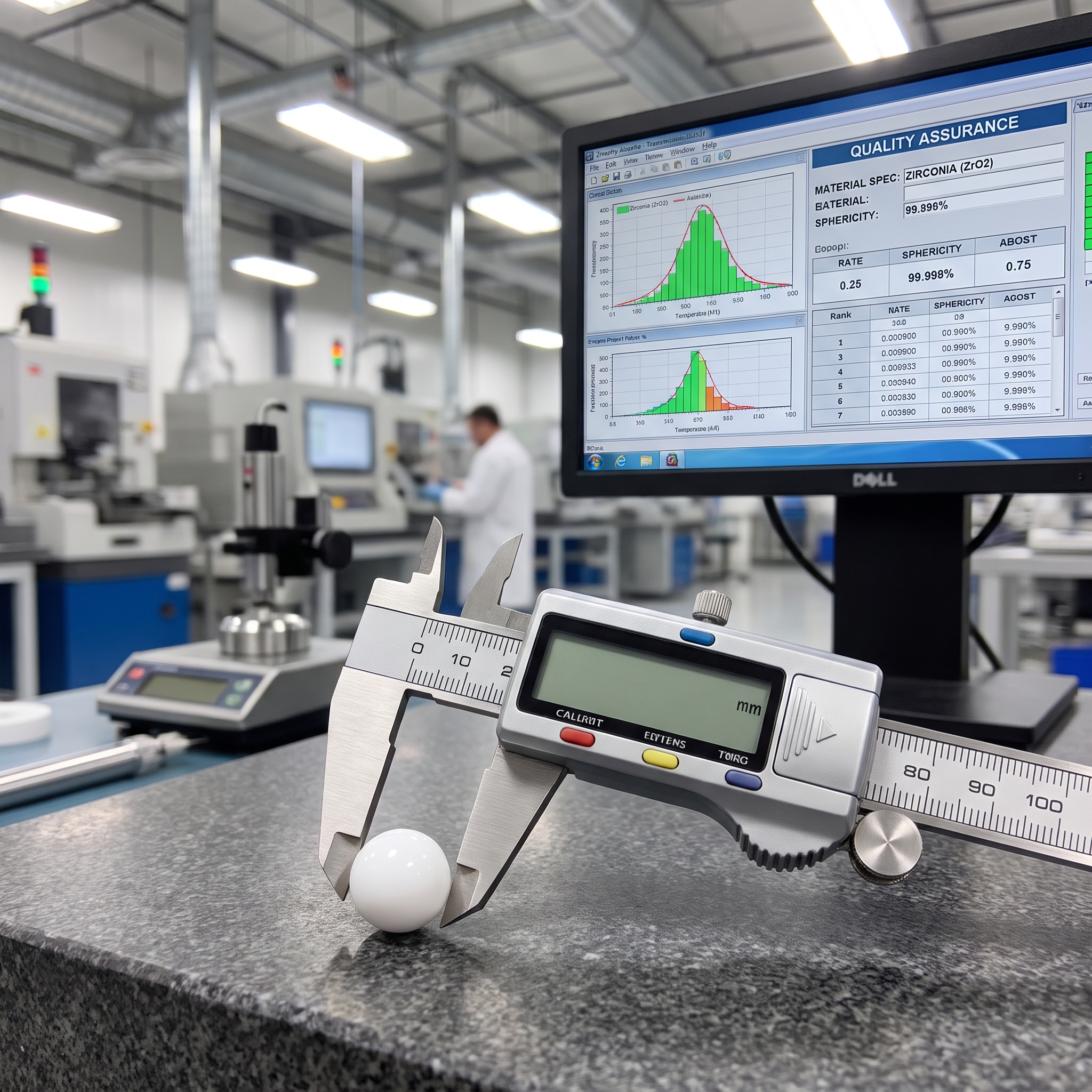
Investing in premium Zirconia Grinding Beads significantly lowers your total cost of ownership by extending media lifespan and minimizing maintenance downtime. Cheap, lower-grade beads may save money upfront, but their high wear rates lead to frequent replacements and higher operational costs. Choosing high-quality media is a smart financial decision.
Calculating the Total Cost of Ownership
Let’s run the numbers: when evaluating media costs, you must look beyond the initial price per kilogram. Total Cost of Ownership (TCO) includes initial purchase price, media wear rate, labor costs for bead changes, and the cost of rejected batches.
- Longer media life reduces annual procurement costs.
- Fewer bead change-outs reduce maintenance labor.
- Consistent particle sizing keeps processing cycles short.
High-quality YSZ media can last up to ten times longer than budget options, making it the most cost-effective choice in the long run. It is an investment that quickly pays for itself.
Can Wear Resistance Lower Long-Term Costs?
Here is the direct connection: beads with superior wear resistance maintain their size and shape over extended runtimes. This prevents tiny bead fragments from clogging your discharge screen, keeping your flow rates consistent and preventing unexpected shutdowns.
- Stable milling pressure for uniform results.
- Zero bead fragments to clog screen dynamic separators.
- Predictable cycle times for better scheduling.
By ensuring your mill runs continuously without interruption, you can maximize your plant’s weekly output. It is the simplest way to boost overall production efficiency.
Reducing Downtime with Longer Bead Lifespans
Think about the lost time: shutting down a high-capacity mill to replace worn-out media halts your production line and drains maintenance resources. Standardizing on highly durable media allows you to extend maintenance intervals and maximize equipment runtimes.
- Use long-lasting YSZ media to extend run cycles.
- Schedule preventative screening during off-peak hours.
- Keep accurate wear logs to predict replacement needs.
Minimizing these interruptions keeps your plant running smoothly and predictably. You will see a major improvement in both throughput and overall profitability.
| Cost Element | Budget Composite Beads | Premium YSZ Beads | Operational Impact |
|---|---|---|---|
| Initial Purchase Price | Low | High | Higher upfront investment |
| Media Lifespan | Short (100–300 hours) | Long (1500–3000+ hours) | Drastically fewer change-outs |
| Product Rejection Risk | High (silica/wear debris) | Low (ultra-low wear rate) | Protects high-value batches |
| Overall TCO | High (hidden costs) | Low (highly optimized) | Significant long-term savings |
This financial comparison illustrates how premium media drastically reduces operating costs over time despite its higher initial purchase price.
Key Takeaway: High-durability grinding beads minimize maintenance shutdowns, maximizing production uptime and throughput.
Why Choose Yttria in Zirconia Grinding Beads?
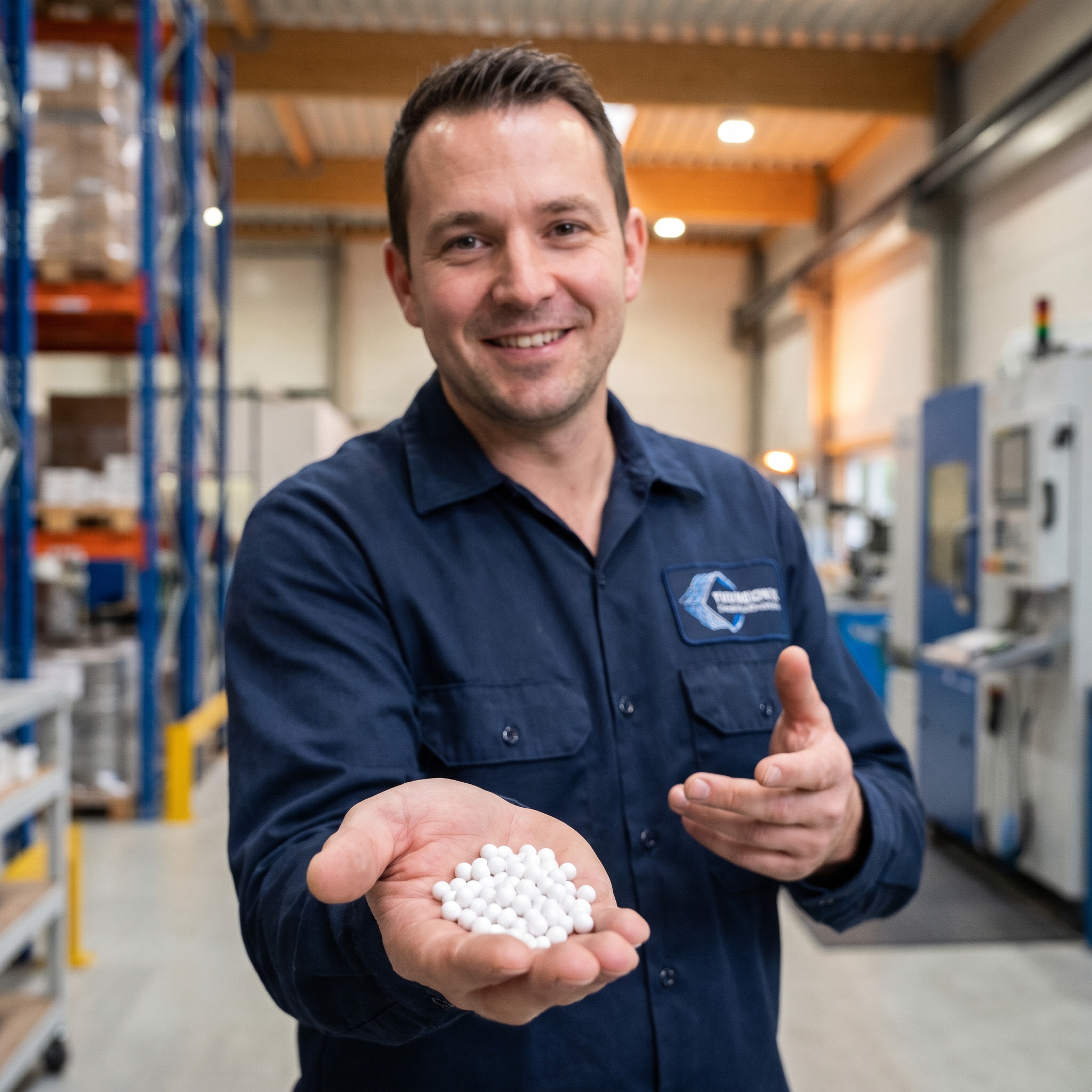
Yttria-stabilized Zirconia Grinding Beads are the industry standard for high-stress applications because they leverage a unique self-healing mechanical property. This chemical structure provides unmatched fracture resistance and durability under extreme shear forces. Choosing yttria-stabilized media ensures your mill can handle the most demanding tasks.
What Is Phase Transformation Toughening?
This is pure physics: under intense mechanical stress, the zirconia crystals in YSZ beads transition from a metastable tetragonal phase to a stable monoclinic phase. This phase change causes a slight volume expansion (approx. 3-4%) that pinches closing micro-cracks before they can spread.
- Self-healing mechanism that halts crack propagation.
- High resistance to impact under extreme mill speeds.
- Excellent wear resistance that extends media life.
This transformation toughening prevents the media from shattering during high-speed runs. It is the secret behind the incredible durability of premium YSZ beads.
The Structural Benefits of YSZ Beads
What does this mean in practice? High bending strength (1000–1200 MPa) and a fine, ultra-smooth grain structure (<0.5 µm) allow YSZ beads to absorb constant high-impact collisions without wearing down or chipping.
- Bending strength (1000-1200 MPa) to prevent shattering.
- Fine grain size (<0.5 µm) for smooth, low-wear surfaces.
- High elasticity to absorb impact energy safely.
You will notice a major difference in how these beads maintain their spherical shape over thousands of operating hours. This exceptional structural durability is key to achieving consistent milling results.
Why Yttria Beats Other Stabilizers?
Here is how they stack up: while cerium and magnesium are also used as stabilizers, yttria offers the absolute best balance of hardness, toughness, and wear resistance for high-speed mills. Cerium-stabilized beads are dense but softer, making them prone to surface wear, while magnesium-stabilized beads have a coarser grain structure that wears out faster.
- Yttria: Best for high-speed, ultra-fine nano grinding.
- Cerium: Suitable for high-viscosity formulations at lower speeds.
- Magnesium: Limited to low-energy, larger bead mills.
For modern, high-energy milling applications, yttria-stabilized beads remain the superior choice. They provide the mechanical performance you need to maximize efficiency.
| Stabilizer Type | Density (g/cm³) | Fracture Toughness ($MPa \cdot m^{1/2}$) | Best Use Case |
|---|---|---|---|
| Yttria ($Y_2O_3$) | 6.0 | 8.0 – 10.0 | High-speed, ultra-fine nano grinding |
| Cerium ($CeO_2$) | 6.2 | 6.0 – 8.0 | High-viscosity formulations |
| Magnesium ($MgO$) | 5.6 | 5.0 – 6.0 | Low-energy, larger bead mills |
This matrix demonstrates that yttria stabilization provides the optimal combination of density and fracture toughness for high-performance milling.
Key Takeaway: Phase transformation toughening gives YSZ beads exceptional fracture resistance under high-stress conditions.
How to Keep Zirconia Grinding Beads Operating Well?
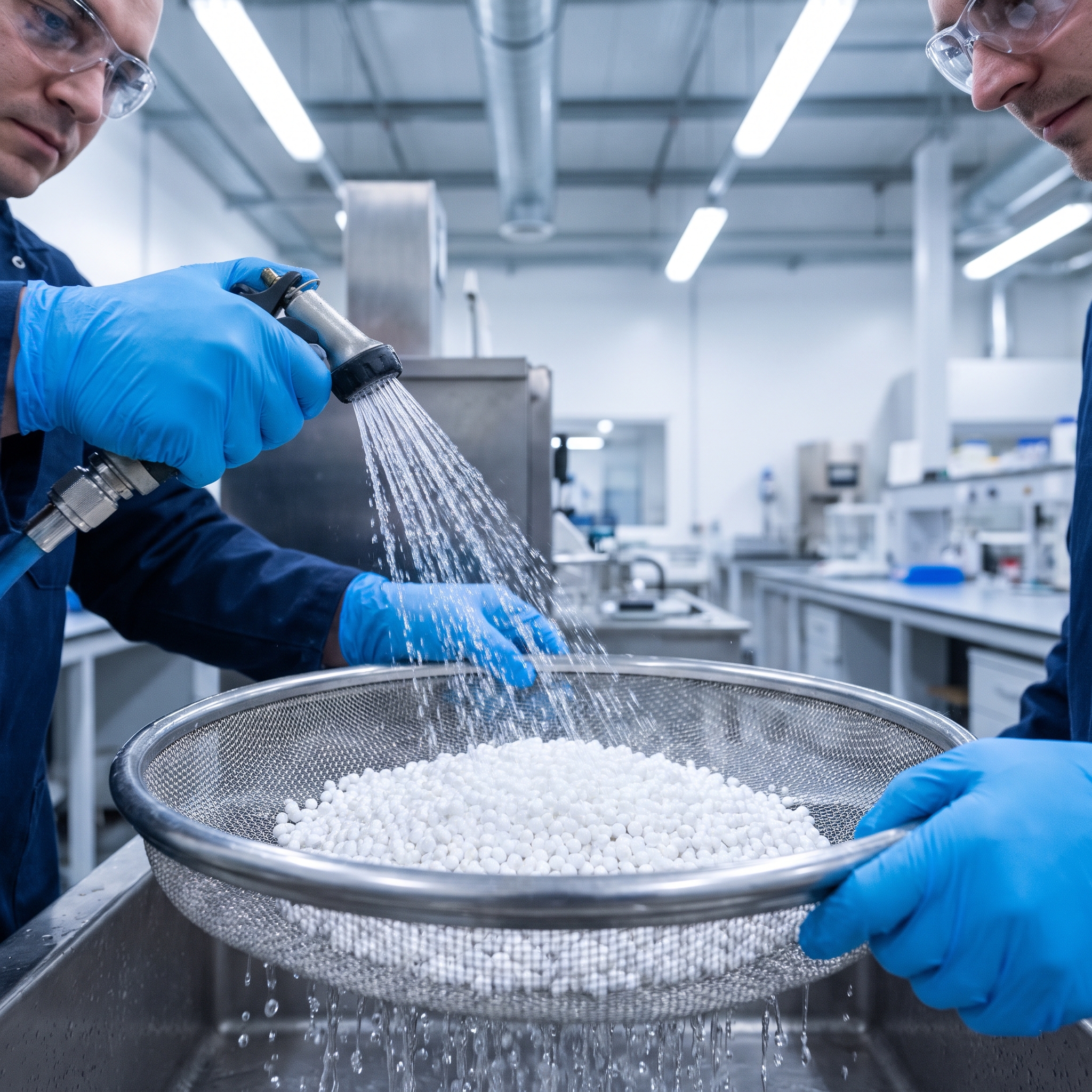
Establishing proactive maintenance protocols for your Zirconia Grinding Beads is the best way to prevent premature wear and maintain high milling efficiency. Regularly monitoring bead size and operating parameters prevents unexpected process disruptions. Proper care keeps your production lines running smoothly and predictably.
When Should You Replace Worn Beads?
Don’t wait for a failure: you should regularly screen your media charge to remove out-of-round or undersized beads. Over-worn beads lose mass, which reduces their kinetic energy and leads to longer processing times.
- Screen media charges regularly to maintain size uniformity.
- Top up the media charge when the average bead diameter drops by 10%.
- Remove broken fragments to prevent screen blockages.
By keeping your media charge uniform, you ensure your mill continues to operate at peak efficiency. This simple step saves you from dealing with sudden drops in productivity.
Monitoring Feed Rates and Mill Temperature
Watch the dashboard closely: high feed rates can cause hydraulic packing, compressing your beads against the outlet screen and causing a rapid rise in pressure. Similarly, insufficient cooling leads to temperature spikes that can thermally stress your media.
- Maintain stable pump pressure to avoid packing.
- Ensure adequate cooling water flow to manage temperatures.
- Adjust flow rates to keep temperatures within limits.
Keeping your operating parameters within recommended limits protects both your media and your mill. It is a critical part of maintaining a stable, reliable process.
Preventing Bead Shattering and Pin Jamming
Here is the solution: never start your mill’s rotor when the bead bed is dry or compacted. Always ensure your slurry is fully circulating before bringing the mill up to operating speed to prevent high-impact collisions.
- Always use a wet startup procedure to cushion the media.
- Inspect separator screens weekly for wear and tear.
- Ensure the bead bed is loose before starting the rotor.
Proper startup and screen maintenance prevent media breakage and keep your mill running smoothly. They are the easiest ways to avoid costly mechanical downtime.
| Operational Issue | Primary Root Cause | Preventive Action |
|---|---|---|
| Rapid Bead Shattering | Dry mill startup or thermal shock | Ensure wet startup; maintain cooling water flow |
| Media Leakage | Damaged or worn discharge screen | Inspect screen weekly; replace worn panels |
| Hydraulic Packing | Slurry viscosity or feed rate too high | Reduce feed pump speed; adjust slurry dilution |
This troubleshooting table highlights how simple operational adjustments can prevent common media failures and protect your equipment.
Key Takeaway: Scheduled screening and top-offs maintain uniform bead sizing and consistent milling times.
How Do You Troubleshoot Zirconia Grinding Beads?
Troubleshooting issues with Zirconia Grinding Beads requires understanding the complex relationships between rotor speeds, slurry viscosity, and media quality. When your mill’s performance drops, analyzing these variables allows you to quickly pinpoint and resolve the root cause. This systematic approach minimizes downtime and keeps your production on track.
Why Is Mixing Different Bead Sizes Discouraged?
In short: proceed with caution when considering mixing different bead sizes in a single run. While it might seem like a good way to improve packing density, larger beads can actually crush smaller ones under high speeds, leading to rapid media wear.
- Accelerated bead wear due to uneven impact forces.
- Unpredictable flow behavior inside the mill chamber.
- Localized screen clogging from broken media fragments.
Maintaining a narrow, uniform bead size range is the best way to ensure consistent energy distribution. This keeps your milling results predictable and your media lasting longer.
What Causes Excessive Bead Wear?
It usually comes down to three things: excessive rotor speeds, abrasive feedstocks, or insufficient slurry cushioning. Running your mill with a slurry that is too thin or running the rotor too fast causes intense bead-on-bead wear.
- High rotor speeds that exceed media limits.
- Inadequate slurry cushioning leading to self-wear.
- Low-density media struggling with abrasive feeds.
By matching your rotor speed to your slurry’s viscosity, you can create a protective fluid cushion around your beads. This simple adjustment drastically reduces wear rates.
How to Safely Clean Grinding Media?
Do it right every time: always use compatible solvents or water-based detergents to thoroughly clean your beads between batches. Avoid harsh acidic or basic cleaners that can attack the stabilizing matrix of your media.
- Use compatible cleaning agents to protect bead chemistry.
- Dry beads completely before putting them into storage.
- Store in dry containers to prevent moisture damage.
Proper cleaning and storage protect your media’s structural integrity and prevent cross-contamination. It is a simple habit that ensures consistent performance from every batch.
| Operational Variable | Impact of Low Value | Impact of High Value | Recommended Baseline |
|---|---|---|---|
| Rotor Tip Speed | Insufficient grinding energy | Extreme media wear & heat | 10 – 12 m/s |
| Media Charge Volume | Low throughput & high self-wear | Overheating & hydraulic packing | 70% – 85% of chamber |
| Slurry Feed Rate | Risk of overheating | Screen packing & pressure spikes | Calibrated to viscosity |
This operational matrix shows how balancing your mill’s key variables is essential to prevent excessive bead wear and maximize throughput.
Key Takeaway: Maintaining a uniform bead size and matching your rotor speed to your slurry’s viscosity ensures clean, efficient milling with minimal media wear.
Technical Synthesis & Recommendations
Selecting the right zirconia media is not just about choosing the hardest bead; it is a meticulous engineering decision that impacts your entire manufacturing line. To prevent early media breakdown and eliminate contamination, you must match media density, bead diameter, and stabilizer chemistry to your mill configuration and feedstock hardness. By moving beyond initial purchase costs and focusing on the Total Cost of Ownership (TCO), you secure a highly optimized, high-throughput milling process that consistently delivers high product quality.
If you are facing challenges with high wear rates, slurry discoloration, or frequent screen blockages, our engineering team is here to help you calculate your optimal media charge and configure your milling parameters. Please contact us today to discuss your custom manufacturing requirements, request material samples, or receive a comprehensive technical consultation designed to maximize your plant’s operational ROI. We are dedicated to providing premium, zero-contamination advanced ceramics that empower your business to achieve perfect precision and scale with confidence.
Frequently Asked Questions
Can I mix different brands of zirconia beads in my mill?
No, you should not. Mixing different brands is highly discouraged because variations in density, manufacturing tolerances, and stabilizer chemistry will lead to uneven wear rates and premature bead fracturing.
What’s the best way to prevent screen clogging when using micro-beads?
Absolutely, maintaining stable pump pressures and choosing high-density beads is key. Ensuring your dynamic separator screens are calibrated to 1.5 to 2 times the size of your beads prevents hydraulic packing.
How do I know if my slurry viscosity is too high for my current beads?
You can tell by monitoring your pump pressure and mill temperature. If you observe unexpected pressure spikes, localized heat buildup, or a sudden drop in particle sizing efficiency, your current media is likely too light to penetrate the viscous slurry.
Can I use water to clean yttria-stabilized zirconia beads between runs?
Yes, you can. Cleaning with deionized water or compatible water-based solvents is highly effective, provided you dry the beads completely before storing them to prevent moisture-induced surface degradation over time.
How do I know if it is time to perform a complete media change-out?
Absolutely, you should track the average bead diameter during scheduled screenings. Once the average diameter of your media charge drops by more than 10% to 15% of its original size, a full replacement or significant top-off is required to maintain efficient milling times.