
Your choice of dental zirconia matters because it directly dictates the mechanical durability, marginal fit, and aesthetic translucency of every restoration you produce. If you are struggling with restoration remakes, chipping issues, or complaints about dead-looking monolithic crowns in the anterior zone, you are not alone. Every failed restoration costs you valuable chairside time, harms patient trust, and eats directly into your lab’s profit margins. Choosing a premium 5Y Zirconia provides the ultimate combination of high translucency and reliable mechanical strength, transforming these daily bottlenecks into streamlined successes.
What exactly is 5Y Zirconia in dentistry?
5Y Zirconia is a highly translucent dental ceramic stabilized with approximately 5 mol% yttria, making it ideal for monolithic aesthetic restorations. This specific yttria concentration alters the crystal structure, allowing more light to pass through the material than traditional formulations. In daily practice, this means you can deliver lifelike dental prosthetics that mimic natural enamel without relying on delicate porcelain veneering. Utilizing 5Y Zirconia helps labs achieve an optimal balance of aesthetics and strength.
Modern dental laboratories prefer this material to simplify their clinical manufacturing pipelines. By shifting to monolithic designs, technicians can eliminate common mechanical complications like delamination and porcelain chipping. Consequently, clinicians enjoy more predictable seating appointments and superior patient outcomes.
How crystal phases dictate aesthetics
The presence of a cubic crystal phase is what gives this material its incredible light transmission properties. While conventional zirconia is predominantly tetragonal, adding more yttria stabilizes a high percentage of cubic crystals.
Here is the honest truth: the cubic structure is highly symmetrical and isotropic, which dramatically reduces light scattering.
- This allows up to 50% light translucency.
- It matches the refractive index of natural enamel.
- It eliminates the “opaque” look of traditional crowns.
Key Takeaway: Symmetrically structured cubic crystals in 5Y zirconia grades eliminate light scattering to produce enamel-matching light transmission.
| Cubic Phase Content | Translucency Range | Average Flexural Strength | Optimal Indications |
|---|---|---|---|
| High (~50% Cubic) | 45% – 49% | 700 – 900 MPa | Anterior crowns, thin veneers |
| Low (~15% Cubic) | 30% – 35% | 1,000 – 1,200 MPa | Posterior frameworks, long bridges |
Analytical Guiding Sentence: Transitioning to highly symmetric cubic-phase materials makes raw powder density the primary indicator of final restoration accuracy.
How does raw material affect zirconia disks?
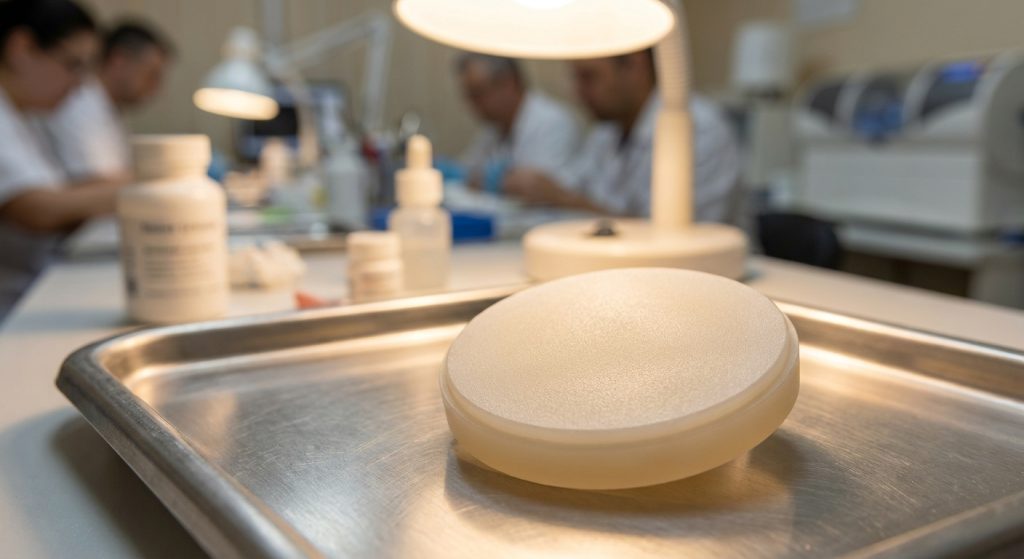
Raw material quality determines the purity, grain size distribution, and overall reliability of the finished dental disk. Sourcing high-purity powders is critical when manufacturing 5Y Zirconia because any minor contamination can cause optical inclusions or structural defects. Consistency in chemical composition ensures that the physical properties remain uniform across every batch. Ultimately, high-quality raw materials form the bedrock of clinical success.
Many manufacturers source cheap, third-party powders to reduce their production costs. However, this practice often introduces micro-voids and uneven density, which lead to unpredictable shrinkage during sintering. You need a material that guarantees consistent grain size to prevent structural failures.
The dangers of substandard processing
Inferior raw processing directly leads to compromised restoration margins and high failure rates. When powders are not milled to a sub-micron scale, the resulting ceramic block is prone to micro-fractures.
Think about it this way: micro-voids behave like ticking time bombs under cyclic occlusal loads.
- Poor grain distribution reduces flexural strength.
- Uncontrolled impurities can lead to gray discoloration.
- Uneven density causes severe margin chipping during CAD/CAM milling.
Key Takeaway: Sub-micron grain size control and chemical purity in raw powders eliminate micro-voids, securing predictable shrink rates and margin integrity.
| Raw Powder Sourcing | Density Uniformity | Edge Chipping Risk | Shrinkage Prediction |
|---|---|---|---|
| Premium Pure Sourced | Superior / Stable | Extremely Low | Exact (Batch-Validated) |
| Off-brand Blended | Variable / Inconsistent | High (Margin Crumbling) | Unpredictable Deviation |
Analytical Guiding Sentence: Securing powder consistency directly unlocks a lab’s ability to maximize complex CAD/CAM nesting and design parameters.
Why does design flexibility matter for labs?
Design flexibility allows dental laboratories to fabricate highly intricate restorations without fear of structural fractures during the milling phase when using 5Y Zirconia. When using premium blanks, technicians can confidently mill razor-sharp margins and incredibly thin profiles down to 0.4 mm. This freedom enables same-day monolithic restorations that require minimal hand-characterization. Consequently, labs can significantly increase their throughput while maintaining elite quality.
Traditional brittle ceramics limit your design options and require conservative prep designs. By switching to high-performance cubic zirconia, you open up new avenues for minimally invasive clinical preps. This saves valuable tooth structure for patients and simplifies the clinician’s job.
Optimizing the B2B laboratory workflow
A digital CAD/CAM workflow integrated with stable materials guarantees repeatable accuracy. With highly stable green-state materials, nesting density can be optimized to reduce waste.
But that’s only half the story: high edge stability prevents the fine margins from crumbling in the mill.
- Minimizes hand-finishing and post-milling corrections.
- Allows precise fit for complex multi-unit bridges.
- Enhances nesting capabilities to yield more crowns per disc.
Key Takeaway: Excellent green-state material stability allows labs to confidently design razor-sharp margins without the risk of post-milling fractures.
| Design Parameter | Minimum Thickness Limit | Margin Chipping Rate | Lab Characterization Time |
|---|---|---|---|
| Advanced 5Y Monolithic | 0.4 mm – 0.6 mm | < 1% | Minimal (Self-Shading) |
| Standard Porcelain-Fused | 1.2 mm – 1.5 mm | N/A (requires copings) | Extensive (Multi-bake) |
Analytical Guiding Sentence: Utilizing high-stability monolithic ceramic disks guarantees predictable physical strength under severe masticatory loads.
Is 5Y Zirconia strong enough for crowns?
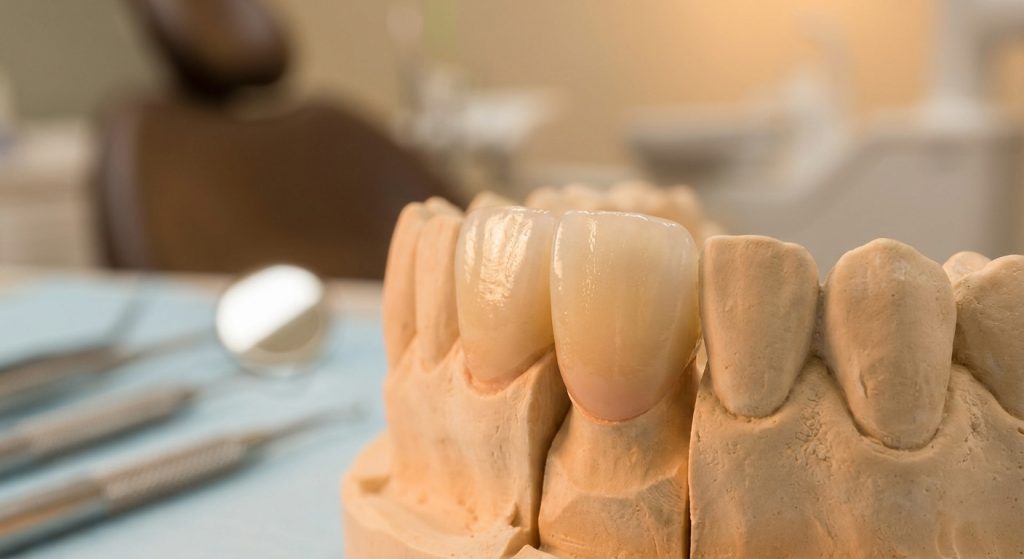
Yes, high-grade 5Y Zirconia is exceptionally strong and is fully indicated for single crowns in both the anterior and posterior regions. While older iterations of highly translucent ceramics suffered from low flexural strength, modern formulations easily achieve 700 to 900 MPa. This far exceeds the mechanical requirements of human masticatory forces, which typically peak around 400 MPa. Therefore, you can confidently prescribe these restorations for standard single-unit applications.
Many dental professionals worry that high translucency means fragile restorations. However, advanced manufacturing techniques maintain excellent fracture toughness alongside high light transmission. This blend of beauty and brawn makes it a superior alternative to lithium disilicate.
Evaluating posterior mechanical limits
While single crowns perform beautifully, posterior multi-unit bridges require careful connector design. Understanding the structural limitations of the cubic phase helps avoid clinical failures.
But wait, there’s more: you must adhere to strict minimum connector sizes to distribute occlusal stress.
- Minimum connector area of 12 mm² for posterior bridges.
- Avoid long-span bridges in high-stress bruxism patients.
- Stick to monolithic designs to prevent veneering porcelain delamination.
Key Takeaway: Modern 5Y formulations achieve a robust 700-900 MPa flexural strength, comfortably surpassing daily posterior masticatory stress limits.
| Restoration Type | Flexural Strength Range | Recommended Connectors | Bruxism Risk Profile |
|---|---|---|---|
| Single Anterior Crown | 750 – 900 MPa | N/A | Low to Moderate |
| Single Posterior Crown | 750 – 900 MPa | N/A | Low to Moderate |
Analytical Guiding Sentence: Validating mechanical thresholds is meaningless without understanding how precise thermal cycles finalize the grain structure.
How does sintering impact 5Y Zirconia?
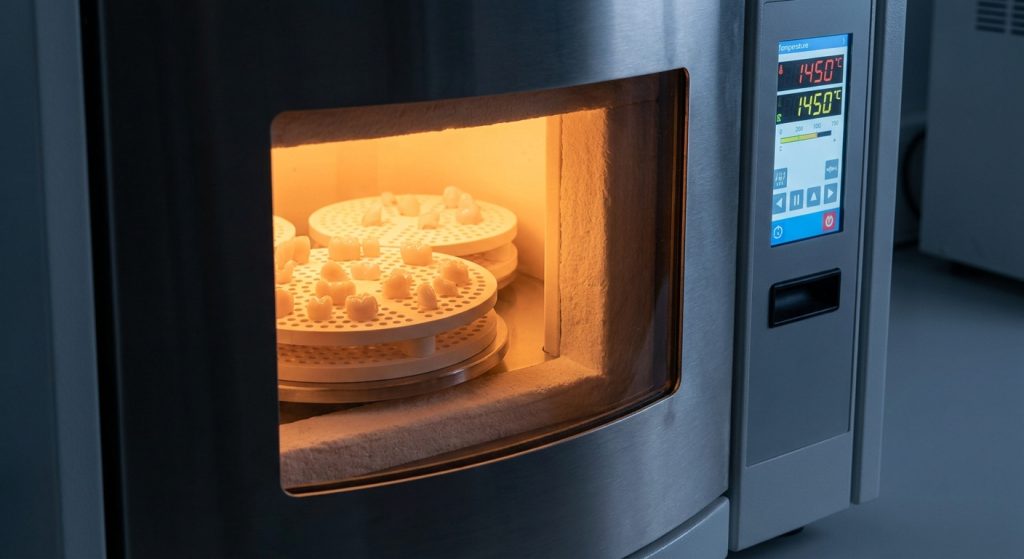
Sintering directly dictates the final density, grain size, crystal phase structure, and optical properties of 5Y Zirconia. For these highly translucent materials, maintaining the correct time-temperature profile is critical to achieving the ideal balance of cubic and tetragonal phases. Any deviation from the manufacturer’s recommended firing curve will degrade the restoration’s translucency and strength. Therefore, using a high-precision, calibrated dental furnace is non-negotiable for success.
Many laboratories try to rush the sintering process to speed up production. However, rapid heating or cooling can induce micro-cracks and thermal shock, compromising the structural integrity. Let’s look at how proper furnace parameters secure your B2B reputation.
The physics of the thermal cycle
The peak sintering temperature, usually around 1,450°C to 1,500°C, is where the ceramic reaches its full theoretical density. At this stage, stabilizing ions fully diffuse through the zirconia lattice, stabilizing the crystal structure.
Here is the kicker: even a 10-degree variance can ruin the light transmission.
- Over-sintering causes excessive grain growth, lowering strength.
- Under-sintering prevents complete densification, causing opacity.
- Controlled cooling phases prevent internal residual stress.
Key Takeaway: Precise thermal management during the sintering cycle is the key to locking in both high mechanical strength and lifelike light transmission.
| Thermal Profile | Peak Sintering Temp | Optical Translucency | Sintering Phase Yield |
|---|---|---|---|
| Optimized Slow-Cycle | 1,450°C – 1,500°C | Elite Translucency (~49%) | Highly Predictable |
| Accelerated Express-Cycle | 1,530°C+ | Reduced / Opaque | High Internal Stress |
Analytical Guiding Sentence: Ensuring a perfect thermal cycle prepares the crown for optimal clinical performance in the oral cavity.
Where should clinicians use 5Y Zirconia?
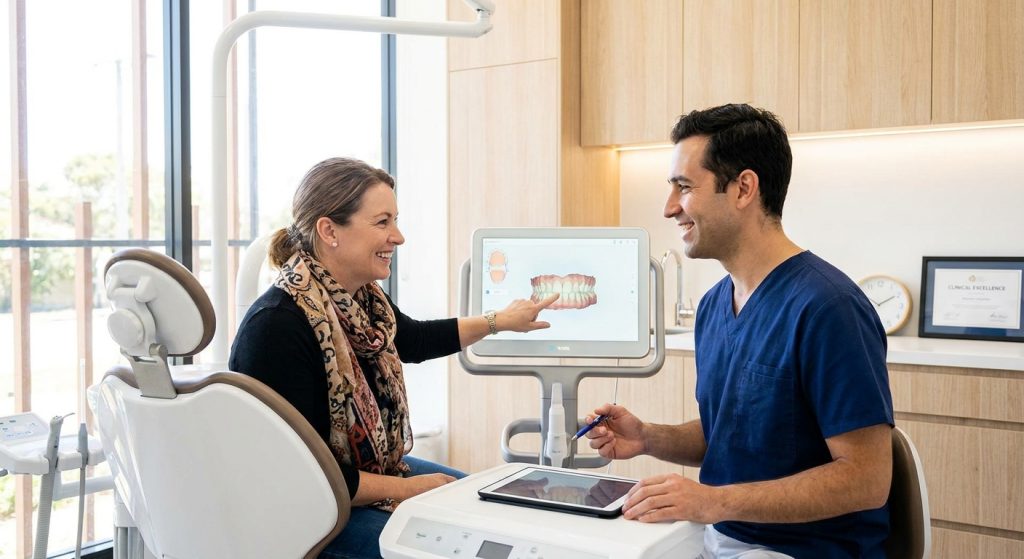
Clinicians should primarily use 5Y Zirconia in the anterior aesthetic zone for single-unit crowns, veneers, and conservative three-unit bridges. Its high translucency makes it the premier material of choice where aesthetic demands are exceptionally high. Furthermore, it is highly biocompatible, meaning it promotes healthy gingival tissue attachment and prevents recession. Utilizing this material allows you to confidently meet patient expectations in the smile zone.
Historically, dentists had to choose between the beauty of glass-ceramics and the strength of zirconia. Now, this hybrid material delivers the best of both worlds, simplifying clinical decision-making. Let’s explore why patient-centric clinics are adopting this standard.
Indications and contraindications
While highly versatile, this material is not a one-size-fits-all solution for every clinical scenario. Understanding the limits of cubic-stabilized zirconia protects your clinical reputation.
Let’s look at the evidence: clinical success depends on matching the correct material with the patient’s functional needs.
- Highly indicated for monolithic anterior crowns.
- Indicated for thin, high-translucency aesthetic veneers.
- Contraindicated for long-span posterior bridges or heavy bruxism.
Key Takeaway: Monolithic 5Y restorations excel in anterior aesthetic zones, protecting thin preps while encouraging excellent soft-tissue biocompatibility.
| Restorative Zone | Prep Demands | Gingival Attachment | Primary Clinical Advantage |
|---|---|---|---|
| Anterior (Smile Zone) | 0.5 mm reduction | Elite Soft-Tissue Response | Prevents gray marginal shadows |
| Posterior (Molar Zone) | 0.8 mm reduction | Excellent Tissue Health | Eliminates veneer delamination |
Analytical Guiding Sentence: Maximizing clinical performance over time requires analyzing the physical wear characteristics of polished surfaces on antagonist enamel.
How does 5Y Zirconia wear opposing teeth?
Polished 5Y Zirconia is exceptionally gentle on opposing natural dentition, wearing opposing teeth far less than traditional veneering porcelains or glass-ceramics. This highly polished, non-porous surface reduces friction and prevents the abrasive “sandpaper” effect associated with rougher materials. In contrast, unpolished or poorly glazed crowns can cause rapid, catastrophic wear of the antagonist enamel. Therefore, achieving a flawless, mirror-like polish is essential for long-term clinical safety.
Many dentists assume that because zirconia is incredibly hard, it must be destructive to opposing teeth. However, dental wear is governed by surface roughness rather than material hardness. Maintaining a smooth surface is your best defense against antagonist wear.
Polished vs. glazed wear characteristics
Clinical studies demonstrate that a highly polished monolithic surface maintains its smoothness much longer than a glaze. Once a superficial glaze layer wears away, it exposes a rough abrasive interface.
It sounds counterintuitive, doesn’t it? Yet, the science of biotribology proves that polished surfaces are vastly superior.
- Polished surfaces stay smooth over decades.
- Glazes can wear off within 12 to 24 months.
- Polishing requires less chairside time during adjustment.
Key Takeaway: Polished monolithic restorations are highly biocompatible and friendly to antagonist teeth, dramatically reducing clinical wear compared to glazed alternatives.
| Restoration Finish | Opposing Enamel Wear | Surface Roughness Stability | Clinical Lifetime |
|---|---|---|---|
| High-Luster Polished | Extremely Gentle | Stable over decades | Indefinite |
| Glazed Unpolished | Severely Abrasive | Degrades within 18 months | 1 – 2 Years |
Analytical Guiding Sentence: This remarkable wear profile is directly made possible by high-tech manufacturing and quality control standards.
How is B2B dental zirconia manufactured?
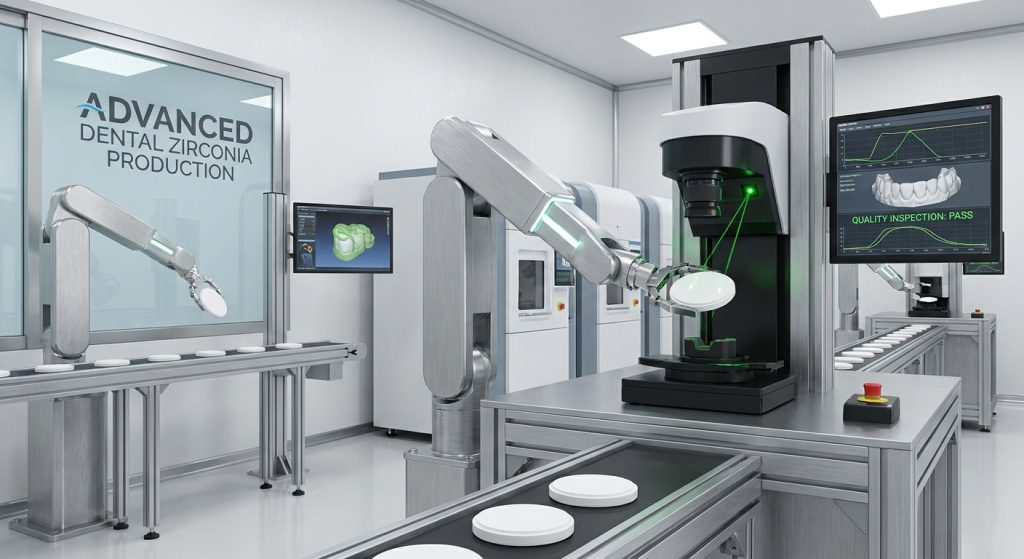
B2B dental zirconia is manufactured through a highly controlled sequence of powder formulation, isostatic pressing, pre-sintering, and rigorous quality inspection to yield premium 5Y Zirconia. To create reliable blanks, manufacturers must precisely blend pure zirconia with yttria stabilizers, binders, and coloring pigments. This powder is then compacted using advanced cold isostatic pressing (CIP) to ensure uniform density throughout the entire disk. Consequently, this prevents structural distortion or uneven shrinkage during subsequent clinical processing.
Following pressing, the green-state disks undergo pre-sintering at lower temperatures to achieve the perfect chalk-like consistency for milling. This stage provides the mechanical stability needed to withstand CAD/CAM machining without fracturing. Let’s delve deeper into how precision processing ensures consistent B2B supply.
Industrial quality control metrics
Every production batch must meet strict ISO standards for dimensional stability, density, and chemical purity. Automated laser scanners verify disk thickness and shrinkage factors to ensure sub-micron accuracy.
Think about it this way: a single batch variation can cause hundreds of failed dental restorations down the line.
- Laser checks prevent uneven disk thickness.
- X-ray diffraction verifies correct crystal phase percentages.
- Density testing ensures uniform shrinkage factor calculation.
Key Takeaway: Cold isostatic pressing and automated quality control are critical to producing uniform, stress-free blanks with predictable shrinkage.
| Industrial Process | Key Machinery Used | Quality Control Standard | B2B Output Benefit |
|---|---|---|---|
| Cold Isostatic Pressing | High-pressure liquid CIP | Uniform density checks | Zero warping during sintering |
| Green-State Machining | CNC Multi-axis mills | Automated laser profiling | Perfect diameter tolerances |
Analytical Guiding Sentence: Sourcing from an experienced industrial manufacturer is the most effective way to secure reliable materials.
How do you select the best B2B supplier?
Selecting the best B2B supplier requires verifying their raw material purity, manufacturing certifications, batch-to-batch consistency, and technical support response for 5Y Zirconia. A premier supplier should offer a comprehensive product portfolio that includes both multi-layered and high-translucent monolithic options. Furthermore, look for suppliers who provide precise shrinkage factor documentation and pre-calibrated milling templates. This support dramatically minimizes calibration errors and optimizes laboratory throughput.
In the B2B dental space, reliable delivery and responsive customer service are just as important as material specifications. Partnering with a dedicated manufacturer ensures a stable supply chain and stable pricing. Let’s examine the essential vetting checklist for lab owners.
Vetting the manufacturer’s credentials
A trustworthy supplier will openly provide chemical composition datasheets, biocompatibility certificates, and sintering guidelines. This transparency builds long-term trust and safeguards patient health.
Why does this matter? Because your laboratory’s B2B reputation rests on the reliability of the materials you process.
- Check for ISO 13485 (medical device quality management).
- Verify that yttria distributions are homogeneous in multi-layered disks.
- Confirm that technical support is handled by experienced ceramic engineers.
Key Takeaway: Partnering with certified B2B suppliers who control their manufacturing from raw powder to finished disks ensures predictable clinical outcomes.
| Supplier Metric | Lab Benchmark Requirement | Risk Level (Uncertified) | Profitability Impact |
|---|---|---|---|
| Manufacturing Control | Fully In-house CIP Pressing | High (Vapor-phased impurities) | High (Reduced remakes) |
| Technical Support | Direct engineer response | High (Long machine downtime) | High (Continuous milling) |
Analytical Guiding Sentence: Cultivating an engineered material partnership provides the ultimate foundation for delivering outstanding clinical success.
What is the final clinical verdict on 5Y?
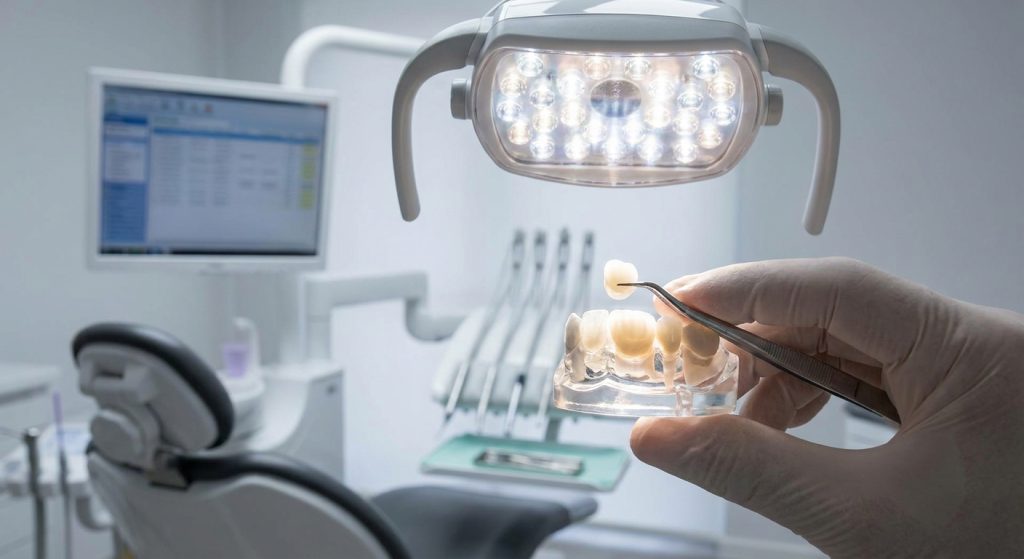
The final clinical verdict is that 5Y Zirconia represents the gold standard for monolithic anterior restorations, delivering an unbeatable combination of natural aesthetics and mechanical reliability. Long-term clinical studies report survival rates exceeding 97% for single-unit monolithic crowns over multiple years. By eliminating the risks of porcelain chipping and metal substructure shadows, this material has fundamentally shifted restorative dentistry. Thus, investing in this technology is highly recommended for any modern practice.
Transitioning to highly translucent, monolithic ceramic materials optimizes laboratory profitability while enhancing patient satisfaction. You can eliminate complex hand-layering steps and significantly reduce clinical chairside adjustment times. Let’s review the strategic advantages of standardizing your production on this material.
The future of monolithic restorations
As digital dentistry continues to expand, the demand for highly aesthetic, milled materials will only increase. Adopting advanced multilayer cubic zirconia secures your place at the forefront of the industry.
Are you ready to make the switch? Transitioning to modern materials is the easiest way to scale your B2B operations.
- Drastically cuts down on clinical remake rates.
- Provides superior marginal fit compared to hand-waxed restorations.
- Offers elite translucency without the fragility of glass-ceramics.
Key Takeaway: Monolithic cubic-stabilized zirconia has revolutionized restorative dentistry, offering high survival rates and elite beauty that satisfies both dentists and patients.
| Performance Parameter | Traditional Glass-Ceramics | Monolithic 5Y Zirconia |
|---|---|---|
| Flexural Strength | 350 – 450 MPa | 700 – 900 MPa |
| Prep Reduction Requirements | 1.5 mm – 2.0 mm | 0.4 mm – 0.8 mm |
Analytical Guiding Sentence: Standardizing on this revolutionary material requires understanding the technical processes behind its daily clinical preparation and bonding.
What are the key FAQs about 5Y Zirconia?
Can I use 5Y Zirconia for high-stress posterior multi-unit bridges?
No, 5Y Zirconia is generally not recommended for long-span posterior bridges. While it possesses excellent flexural strength (700-900 MPa) for single-unit crowns, it lacks the extreme fracture toughness of 3Y formulations (over 1,200 MPa) required to withstand massive, multi-unit occlusal shear stresses in the molar region. Utilizing it in high-risk areas can lead to catastrophic connector failure.
What’s the best way to adjust and polish 5Y Zirconia restorations chairside?
The best method is to use fine-grit diamond burs under constant water cooling followed by a dedicated high-luster polishing kit. Water cooling prevents localized heat generation, which can trigger micro-cracks or premature crystal phase transformation. Using low-pressure, high-quality silicone polishers ensures the surface becomes perfectly smooth, protecting opposing teeth from abrasive wear and preserving the lifelike aesthetic sheen of the monolithic restoration.
How do I know if my dental sintering furnace is calibrated correctly for 5Y Zirconia?
You can verify furnace calibration by using specialized electronic temp-checking rings or by analyzing the visual translucency of sintered test crowns. Thermocouples in dental furnaces degrade over time, leading to temperature shifts that cause either under-sintering (opacity and low strength) or over-sintering (grain growth and structural brittleness). Regular calibration guarantees that your 5Y materials undergo the exact thermal cycles required to lock in their mechanical and optical properties.
Conclusion
The evolution of aesthetic dental ceramics has made material quality the ultimate differentiator for dental laboratories and clinics worldwide. Transitioning to premium 5Y zirconia allows you to eliminate the risks of porcelain delamination, simplify design workflows, and consistently deliver restorations that patients love. Sourcing from a partner who maintains strict quality control over every stage of production—from raw powder synthesis to isostatic pressing—ensures that your business is built on a foundation of reliability and excellence.
To explore our complete range of premium dental zirconia materials and discover how we can elevate your laboratory’s production standards, contact us today. Our commitment is to provide dental professionals with unmatched batch-to-batch consistency, high-purity raw powders, and elite technical guidance for every single restoration.