
The fundamental relationship between 3Y, 4Y, and 5Y zirconia is defined by a direct crystalline trade-off where increasing the stabilizing yttria content progressively transforms high-strength tetragonal crystals into highly translucent cubic crystals. Imagine running a busy dental laboratory where technicians painstakingly mill and stain monolithic restorations, only to receive a devastating call from a client about a fractured posterior bridge. Selecting the incorrect zirconia formulation can result in catastrophic mechanical failure or an unnatural, chalky aesthetic that patients will instantly reject. The ultimate solution is to master the exact chemical configurations of 3Y Zirconia and its higher-yttria counterparts to perfectly align material characteristics with clinical demands.
How do 3Y Zirconia, 4Y, and 5Y grades compare directly?
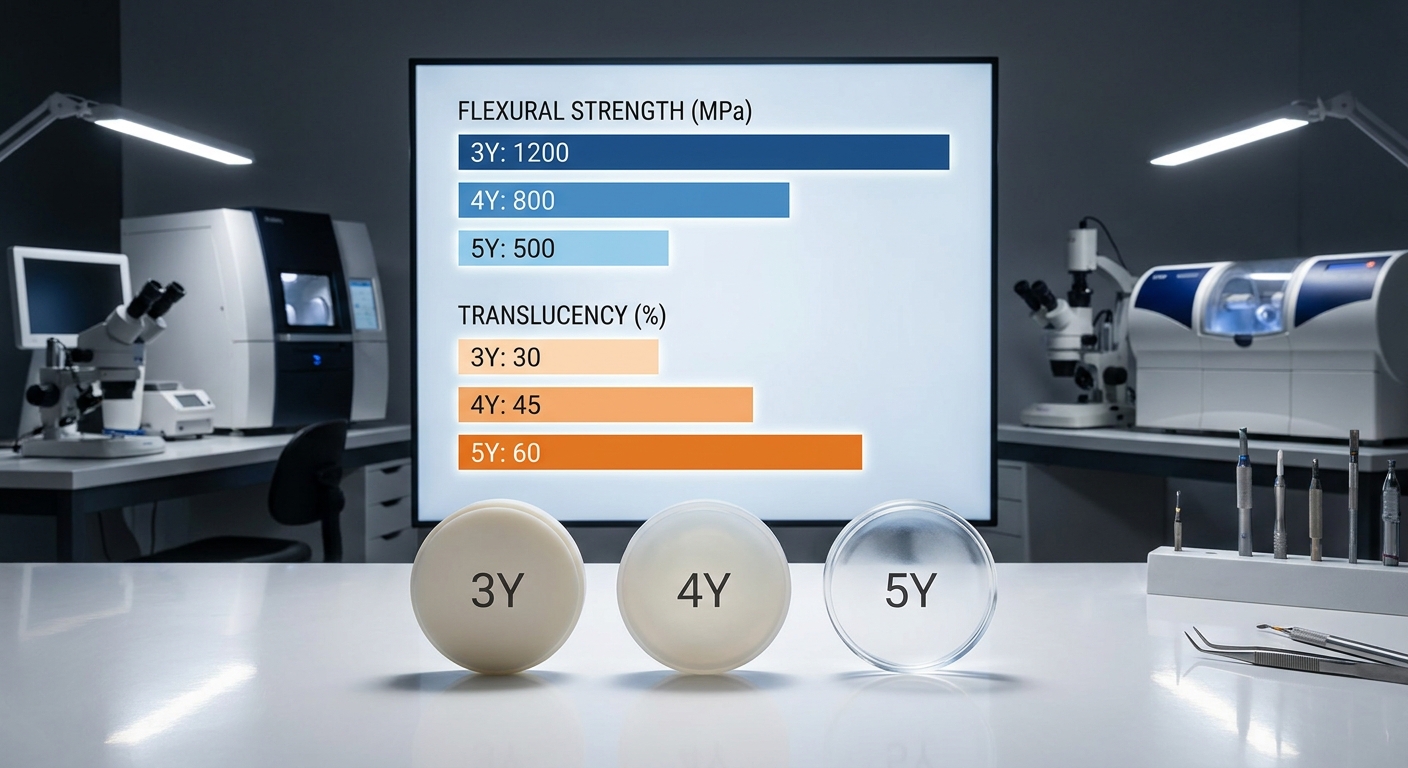
Comparing these dental ceramics directly reveals that 3Y offers the highest mechanical strength and lowest translucency, while 5Y provides maximum light transmission at the cost of significantly lower fracture resistance, with 4Y serving as a versatile middle ground. When evaluating 3Y Zirconia alongside newer formulations, you must understand that the “Y” designation refers to the molar percentage of yttria stabilizer added to the zirconium dioxide crystal structure.
What are the key chemical and physical differences?
The primary variation among these grades is the concentration of yttria, which shifts the ratio of tetragonal to cubic crystal phases within the material.
Here is the thing:
- 3Y Zirconia: Features 100% tetragonal phase crystals, making it exceptionally tough but highly opaque with around 35-40% translucency.
- 4Y Zirconia: Introduces a transitional crystalline mix, allowing moderate light transmission of 43-47%.
- 5Y Zirconia: Contains a dominant cubic phase that allows maximum light transmission of 48-50%, mimicking natural enamel.
You must realize that this crystal phase distribution directly dictates how the material behaves under chewing forces and natural lighting in the mouth. When you select a block, you are choosing between structural security and cosmetic integration.
| Zirconia Grade | Yttria Content (mol%) | Crystal Phase Dominated | Flexural Strength (MPa) | Translucency Range (%) |
|---|---|---|---|---|
| 3Y | ~3% | Tetragonal (100%) | 1,000 – 1,500 | 35% – 40% |
| 4Y | ~4% | Tetragonal & Cubic Mix | 800 – 1,000 | 43% – 47% |
| 5Y | ~5% | Cubic (~50%) & Tetragonal | 600 – 800 | 48% – 50% |
Knowing these baseline physical variations allows you to map out your laboratory’s manufacturing protocols with clinical precision.
Key Takeaway: Choose your zirconia grade based strictly on the position of the tooth in the arch, keeping high-load posterior crowns limited to high-strength formulations while reserving high-yttria materials for the aesthetic zone.
How does yttria alter the structure of 3Y Zirconia?
Yttria alters the material structure by locking the zirconia atoms into a stable, room-temperature crystalline phase, preventing the catastrophic volume expansion that occurs in pure zirconium dioxide during cooling. In standard 3Y Zirconia, the addition of 3 mol% yttria stabilizes the metastable tetragonal phase, which acts as the foundation for the material’s legendary fracture resistance.
Why does the crystal phase dictate physical behavior?
The transition from tetragonal to cubic crystal structures changes how light and stress travel through the restoration.
But that is not all:
- Tetragonal Grains: These grains remain under localized strain at room temperature and act as energy absorbers when a crack begins to form.
- Cubic Grains: These grains are isotropic and larger, meaning they have uniform physical properties in all directions.
- Light Transmission: The uniform refractive index of isotropic cubic crystals lets light travel in straight lines rather than scattering at grain boundaries.
As you design veneers or anterior crowns, you must utilize these crystal properties to achieve lifelike results. Understanding this atomic behavior helps you prevent clinical failures before they ever reach the patient.
| Crystal Phase | Molecular Structure | Impact on Optical Light Path | Role in Mechanical Stress Management |
|---|---|---|---|
| Tetragonal | Anisotropic, metastable | Highly reflective; scatters light | Drives transformation toughening to arrest cracks |
| Cubic | Isotropic, stable | Highly transparent; passes light | Brittle; prone to micro-chipping under cyclic loads |
Transitioning from molecular structures to real-world laboratory scenarios reveals why certain grades are preferred for heavy-load zones.
Key Takeaway: Tetragonal phases provide the raw mechanical protection required to stop crack propagation, whereas cubic phases are engineered purely to capture natural tooth aesthetics by maximizing light transmission.
Why is 3Y Zirconia selected for high-stress areas?
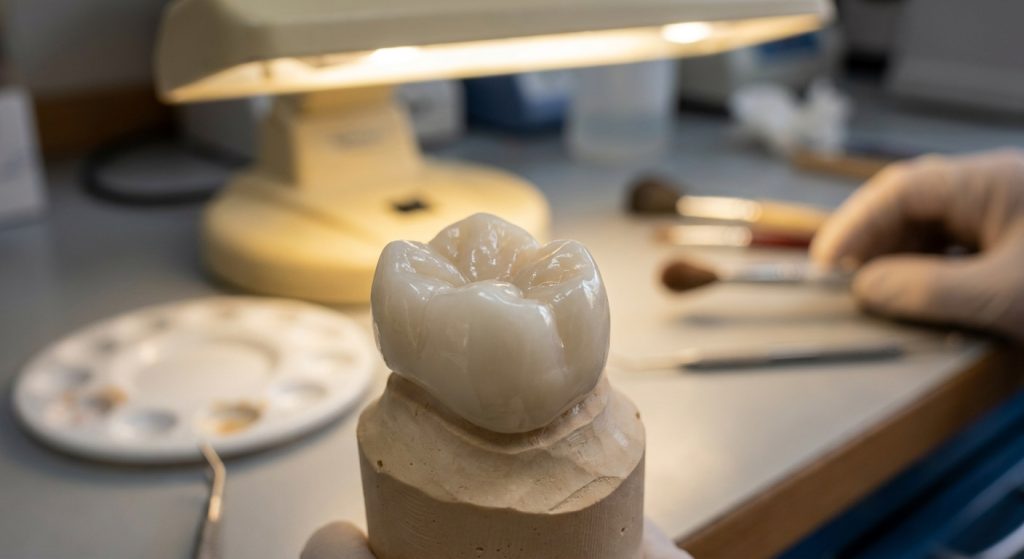
This grade is selected for high-stress posterior applications because its fully tetragonal crystal structure undergoes a dynamic process called transformation toughening to arrest micro-cracks before they propagate. When mechanical durability is the absolute priority, 3Y Zirconia provides a flexural strength exceeding 1,200 MPa, making it the most reliable choice for multi-unit posterior bridges.
What is transformation toughening?
Transformation toughening is a localized atomic shield that stops crack propagation in real time.
Think about it:
- An external stress load initiates a microscopic crack in the ceramic.
- The tensile stress field at the crack tip triggers the metastable tetragonal grains to transform into larger monoclinic grains.
- This transformation causes a 3% to 4% volume expansion in the local area.
- The expansion generates compressive stress around the crack tip, effectively pinching the crack closed.
You can rely on this self-healing mechanism to protect your restorations from cyclic fatigue in the mouth. This is the primary reason why 3Y formulations remain the global gold standard for patients with severe bruxist habits.
| Mechanical Metric | 3Y Zirconia Standard Value | Clinical Significance |
|---|---|---|
| Flexural Strength | 1,200 – 1,500 MPa | Can easily withstand posterior bite forces of over 800 N |
| Fracture Toughness | 6.0 – 8.0 $MPa \cdot m^{1/2}$ | Resists crack propagation under cyclic fatigue |
| Elastic Modulus | ~210 GPa | High rigidity prevents framework flexing on multi-unit restorations |
Applying these high-strength blocks to posterior zones ensures mechanical success, but modern patients also demand aesthetic options.
Key Takeaway: Utilize high-strength 3Y formulations for patients who exhibit severe grinding habits or require long-span posterior frameworks where biting forces are concentrated.
How does 4Y compare to high-strength 3Y Zirconia?
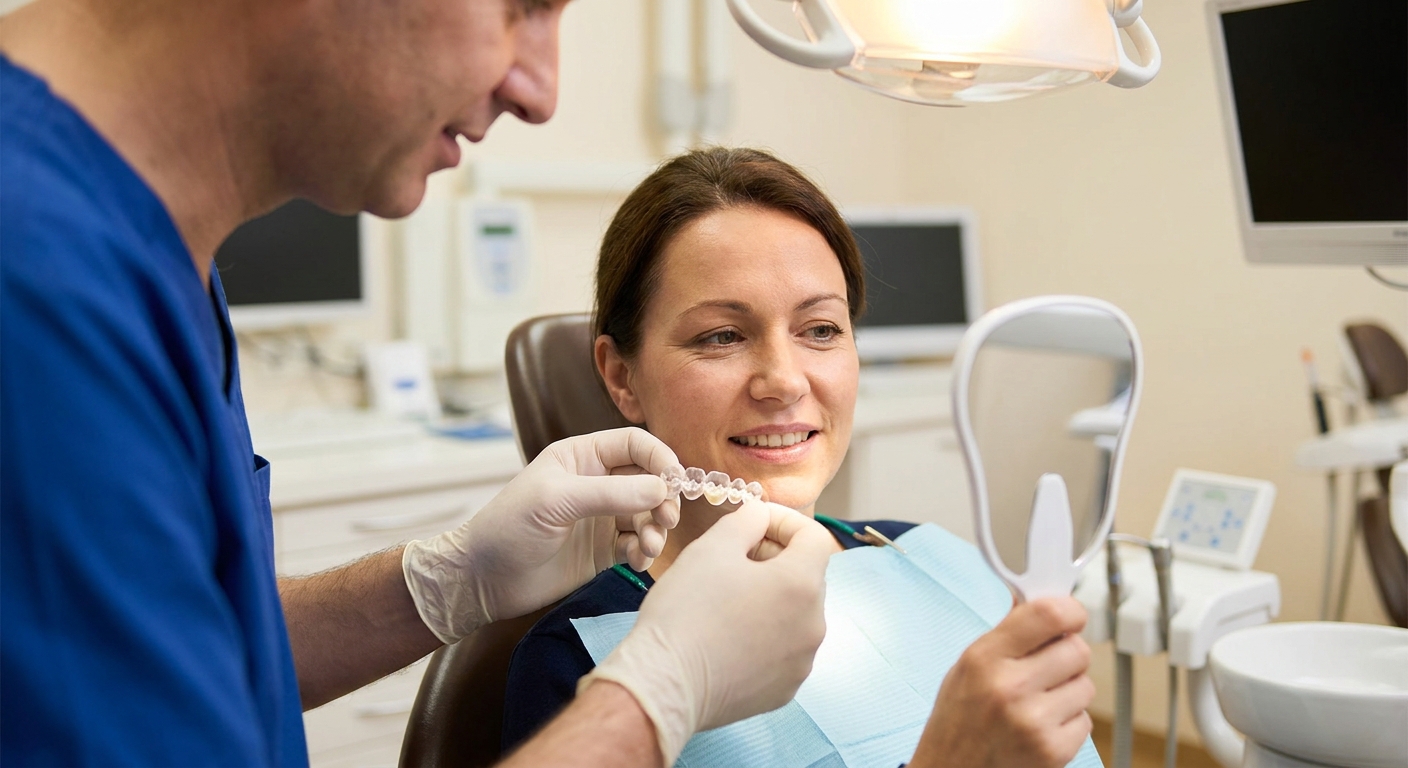
4Y zirconia bridges the gap by offering a moderate flexural strength of around 800 to 1,000 MPa coupled with enhanced light transmission, making it a highly versatile alternative to the more opaque, high-strength 3Y Zirconia. In dental laboratories, transitioning from 3Y Zirconia to a 4Y formulation allows you to achieve significantly better shade integration without completely sacrificing structural reliability.
Is 4Y the ultimate universal material?
Many labs refer to 4Y as their go-to material because it balances both mechanical and optical demands.
What does this mean for you?
- Sufficient Strength: It comfortly exceeds the ISO standard required for class 5 restorations.
- Pleasing Optics: It features a light transmission of approximately 45%, minimizing the “dead” or artificial chalky look.
- Inventory Benefits: It simplifies your inventory by replacing multiple single-use blocks with a single universal solution.
You will notice that utilizing a balanced 4Y material streamlines your daily workflow. It allows your technicians to master a single sintering schedule for a vast majority of cases.
| Parameter | 4Y Zirconia Value | Clinical/Lab Benefit |
|---|---|---|
| Flexural Strength | ~900 MPa | Safe for full-contour single restorations anywhere in the arch |
| Translucency | ~45% | Excellent color blending and natural aesthetic integration |
| Primary Lab Use | Universal monolithic restorations | Simplifies milling inventory and lowers material overhead |
Understanding where 4Y stands on the performance spectrum helps you decide when to push the aesthetic boundaries even further.
Key Takeaway: Standardize your inventory on 4Y zirconia for standard single-unit crowns where you need a reliable blend of beauty and strength without the complexity of managing two distinct materials.
When is 5Y preferred over standard 3Y Zirconia?
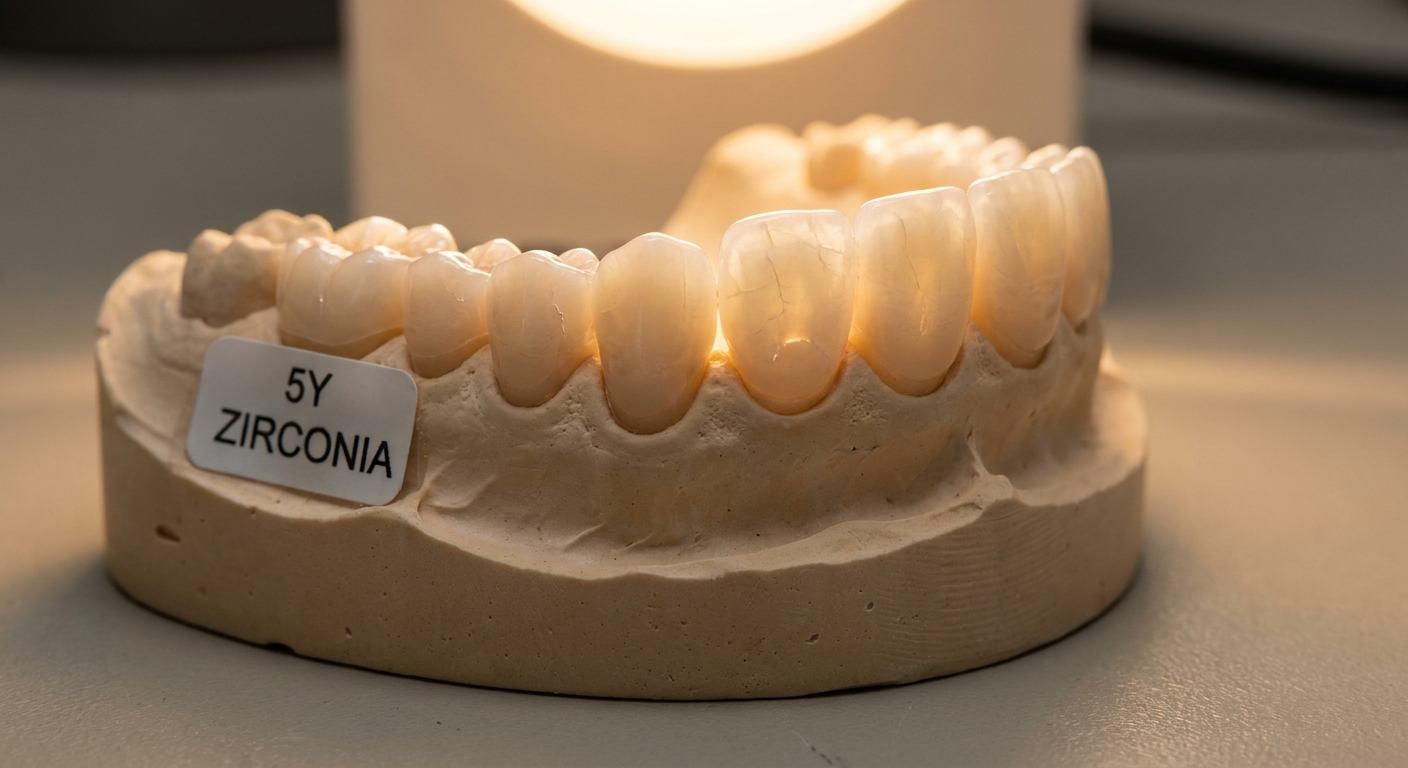
5Y zirconia is preferred for anterior restorations where maximum translucency and natural enamel mimicry are paramount, as its high cubic crystal content allows deep light transmission. While you cannot safely use this grade in high-load posterior arches where 3Y Zirconia reigns supreme, 5Y serves as an excellent, non-glass alternative for the aesthetic zone.
What are the clinical limits of 5Y?
The primary drawback of 5Y is its lower resistance to fractures and flexing stress.
Here is why:
- Low Toughness: Its flexural strength drops to 600-800 MPa, making it fragile under heavy chewing forces.
- No Self-Healing: It lacks the phase-transformation mechanism to stop microscopic cracks from propagating.
- Prep Dependency: It requires precise, non-retentive tooth preparation with rounded internal angles to prevent localized stress.
If you use 5Y for multi-unit posterior bridges, you run a high risk of catastrophic failure. However, for anterior veneers and single-unit crowns, its optical performance is unmatched.
| Indication | Recommended Status | Clinical Justification |
|---|---|---|
| Anterior Single Crowns | Ideal | High light transmission mimics natural enamel |
| Anterior Veneers | Excellent | Thin, high-translucency alternative to lithium disilicate |
| Posterior Molars | Contraindicated | Flexural strength is too low for heavy masticatory forces |
Deciding between these materials requires a structured look at how physical stress and optical aesthetics operate in opposition.
Key Takeaway: Limit 5Y zirconia exclusively to anterior single crowns and cosmetic veneers to maximize beauty while avoiding physical failures under occlusal loads.
How do strength and translucency trade off in 3Y Zirconia?

The trade-off between these two physical properties is an absolute law of dental materials science, where modifications that increase aesthetic translucency directly reduce the concentration of crack-stopping crystal phases. In standard 3Y Zirconia, the dense pack of small tetragonal grains scatters light at every grain boundary, creating a highly opaque material that cannot match the natural depth of light transmission seen in higher-yttria grades.
Why can we not have the best of both worlds?
The physical mechanics of light transmission require large, isotropic crystal lattices that do not scatter light.
Here is the thing:
- Light Scattering: Tetragonal crystals have different refractive indices in different directions, which scatters light at grain boundaries, causing opacity.
- Yttria Addition: Adding yttria stabilizes isotropic cubic crystals, which eliminates light scattering.
- The Trade-Off: Therefore, as you increase the yttria content to make the material clearer, you directly eliminate its physical ability to stop cracks.
You must design your restorations with this immutable physical law in mind. Balancing these properties requires precise communication with your clinicians regarding tooth preparation depths.
| Zirconia Grade | Minimum Occlusal Reduction | Minimum Axial Reduction | Primary Mechanical Risk of Under-Reduction |
|---|---|---|---|
| 3Y | 0.5 mm – 0.6 mm | 0.5 mm | Very low; excellent mechanical margins |
| 4Y | 0.8 mm – 1.0 mm | 0.8 mm | Moderate risk of edge-chipping during milling |
| 5Y | 1.0 mm – 1.2 mm | 1.0 mm | High risk of catastrophic fracture under load |
Navigating this physical compromise becomes much easier when you leverage advanced digital CAD/CAM processes to optimize design.
Key Takeaway: Compensate for the lower strength of aesthetic zirconia by planning deeper preparation cuts and thicker restoration margins, whilst reserving thin-prep crowns for high-strength grades.
How does CAD/CAM milling affect 3Y Zirconia blocks?
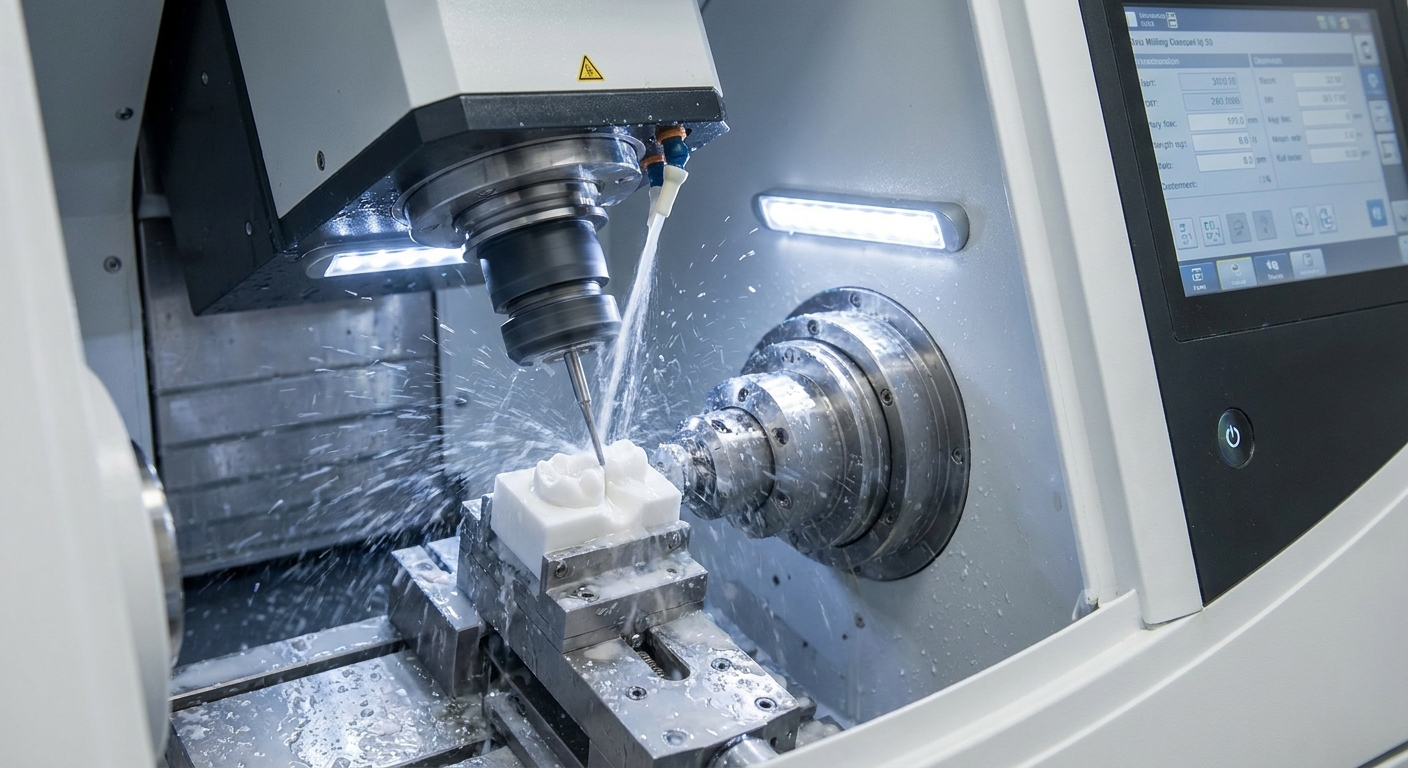
CAD/CAM milling processes these pre-sintered blocks in a soft, “green state,” allowing precise diamond burs to carve highly intricate anatomy while minimizing the risk of micro-chipping at the margins. When processing high-quality 3Y Zirconia blocks, advanced digital systems must enforce strict tool-path calculations to prevent localized stress accumulation during the high-speed milling cycle.
Why does tool-path calibration protect margins?
Milling a pre-sintered ceramic block requires a delicate balance of speed, feed rates, and diamond bur wear control.
But that is not all:
- Micro-cracks: Improper milling speeds can introduce microscopic surface cracks that grow during sintering.
- Tool Movements: Well-calibrated 5-axis milling machines ensure smooth, continuous tool movements across complex grooves.
- Marginal Seal: Precise marginal tool paths prevent edge-chipping, ensuring a perfect marginal seal at fit-up.
You will find that investing in high-end milling software directly correlates with reduced post-sintering remakes. Maintaining your burs in optimal condition is the easiest way to safeguard your material’s engineered strength.
| Milling Parameter | Target Value / Status | Consequence of Calibration Error |
|---|---|---|
| Bur Speed | 15,000 – 20,000 RPM | Excessive tool wear and marginal micro-cracking |
| Feed Rate | Optimized by material density | Margin chipping or internal structural stress |
| Coolant Flow | Consistent wet/dry paths | Overheating of the green-state block, leading to micro-voids |
Once the milling phase is perfectly completed, the next critical step is the highly controlled thermal transformation of the material.
Key Takeaway: Keep your milling software updated with accurate material density factors and bur tracking to ensure perfect fit-up and zero marginal chipping.
How does sintering optimize the strength of 3Y Zirconia?
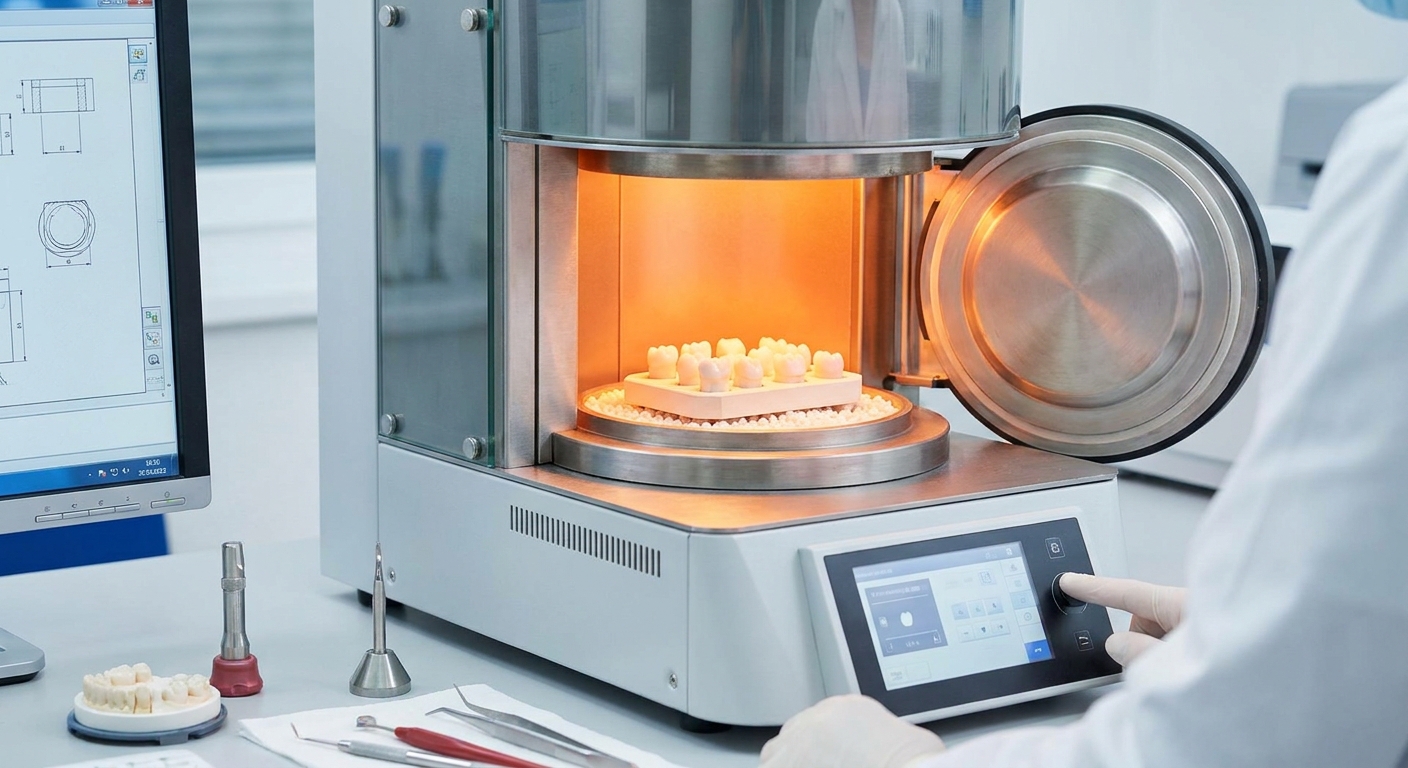
Sintering optimizes physical strength by heating the milled green-state restoration to temperatures up to 1,550°C, causing the microscopic particles to fuse together, eliminate voids, and achieve maximum material density. During this critical heating process, the 3Y Zirconia undergoes a controlled volumetric shrinkage of approximately 20%, which must be precisely calculated by your CAD software to guarantee a precise final clinical fit.
What happens during the thermal cycle?
The sintering furnace drives out temporary organic binders and triggers solid-state diffusion between the oxide grains.
What does this mean for you?
- Ramp-up: Slow ramp-up rates prevent thermal gradients that cause internal warping or fractures.
- Peak Temp: Maintaining the correct peak temperature ensures that grain growth remains uniform and dense.
- Cooling: Controlled cooling stages protect the newly stabilized tetragonal and cubic crystal phases from shock.
If you try to rush the thermal cycle with uncertified fast-sintering profiles, you risk degrading the physical toughness and optical clarity of the ceramic. Patience in the furnace pays off in clinical durability.
| Sintering Phase | Typical Temperature Range | Target Physical Phenomenon | Consequence of Poor Calibration |
|---|---|---|---|
| Pre-heating & Burnout | 20°C – 900°C | Removes temporary organic binders cleanly | Micro-porosities and internal structural voids |
| High-Temp Sintering | 1,450°C – 1,550°C | Densification; grains grow to target size | Under-sintering (weakness) or over-sintering (opacity) |
| Controlled Cooling | 1,550°C – 200°C | Stable phase transition back to room temp | Thermal shock fractures or altered crystal ratios |
After achieving maximum density through firing, the physical crown must be prepared for long-term clinical bonding.
Key Takeaway: Always adhere strictly to the manufacturer’s recommended sintering temperatures and ramp rates to prevent structural voids and ensure predictable shrinkage.
Which cements perform best with processed 3Y Zirconia?
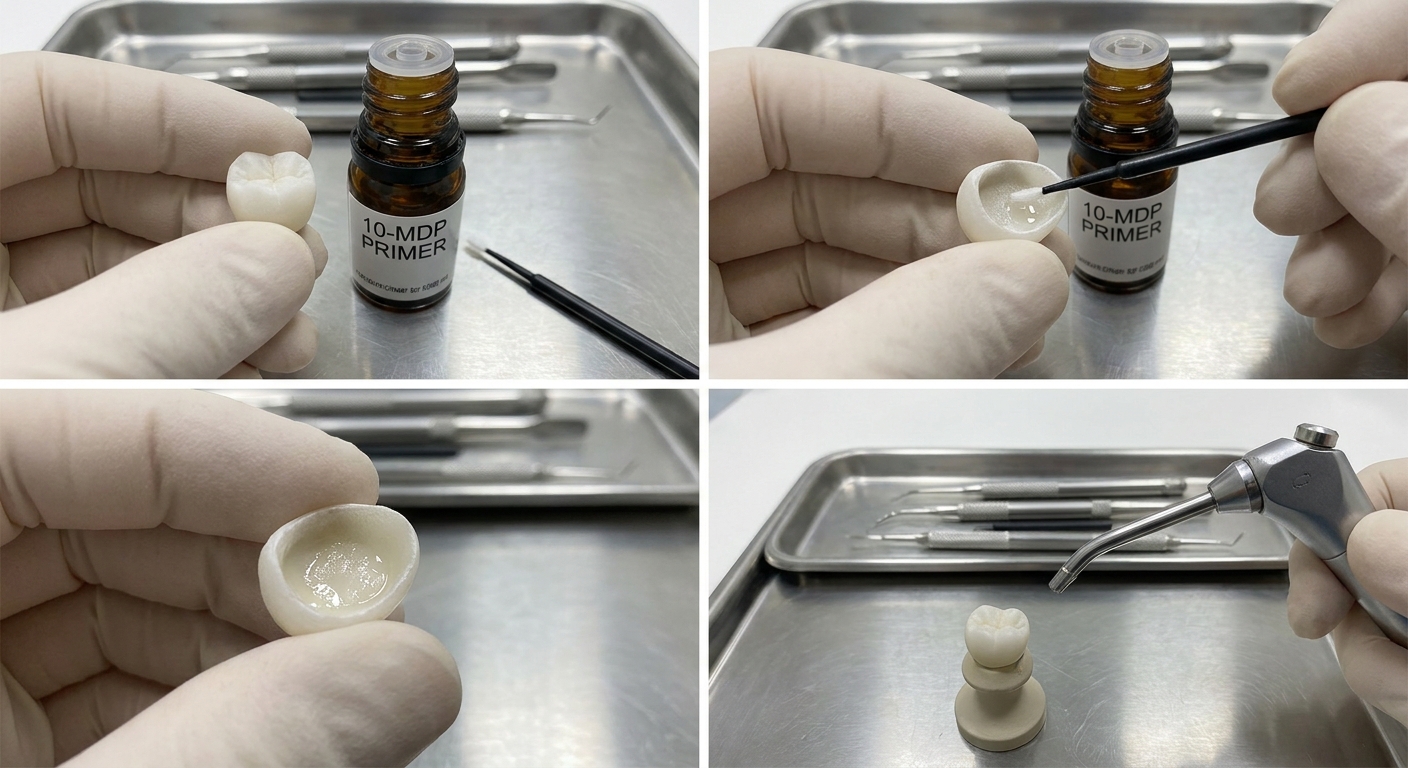
Cements containing active 10-MDP monomers perform best with these restorations because they establish a highly stable chemical bond with the metal oxide surface. When cementing high-strength 3Y Zirconia crowns, combining mechanical sandblasting with a specialized primer creates a durable, moisture-resistant bond that prevents clinical de-bonding over time.
Why is the 10-MDP monomer so effective?
The 10-MDP monomer features a unique chemical structure that bonds directly with both the zirconium oxide and the tooth structure.
Here is why:
- Phosphate Bond: The phosphate group of the monomer forms a strong chemical bond with the zirconium metal ions.
- Resin Integration: The methacrylate group copolymerizes with the resin cement matrix for mechanical integration.
- Saliva Resistance: This dual-bonding mechanism resists chemical degradation by saliva and oral fluids.
You must instruct your clinicians to sandblast the internal surface of the restoration prior to bonding. This simple step increases the surface energy and surface area, maximizing the primer’s adhesive capacity.
| Cementation Protocol Step | Action Required | Clinical Justification |
|---|---|---|
| 1. Sandblasting | $50\ \mu\text{m}\ \text{Al}_2\text{O}_3$ at 2 bar | Cleans the surface and increases micromechanical surface area |
| 2. Primer Application | Apply 10-MDP containing primer | Establishes a highly stable chemical bond with metal oxides |
| 3. Resin Cement | Use dual-cure adhesive resin | Ensures complete polymerization and margin sealing under light |
A perfect adhesive bond protects the restoration, but long-term success also depends on how the material resists aging in the oral environment.
Key Takeaway: Ensure the dental practice sandblasts and applies a 10-MDP primer to guarantee a highly stable, long-lasting clinical bond that resists intraoral moisture degradation.
How does aging affect the stability of 3Y Zirconia?
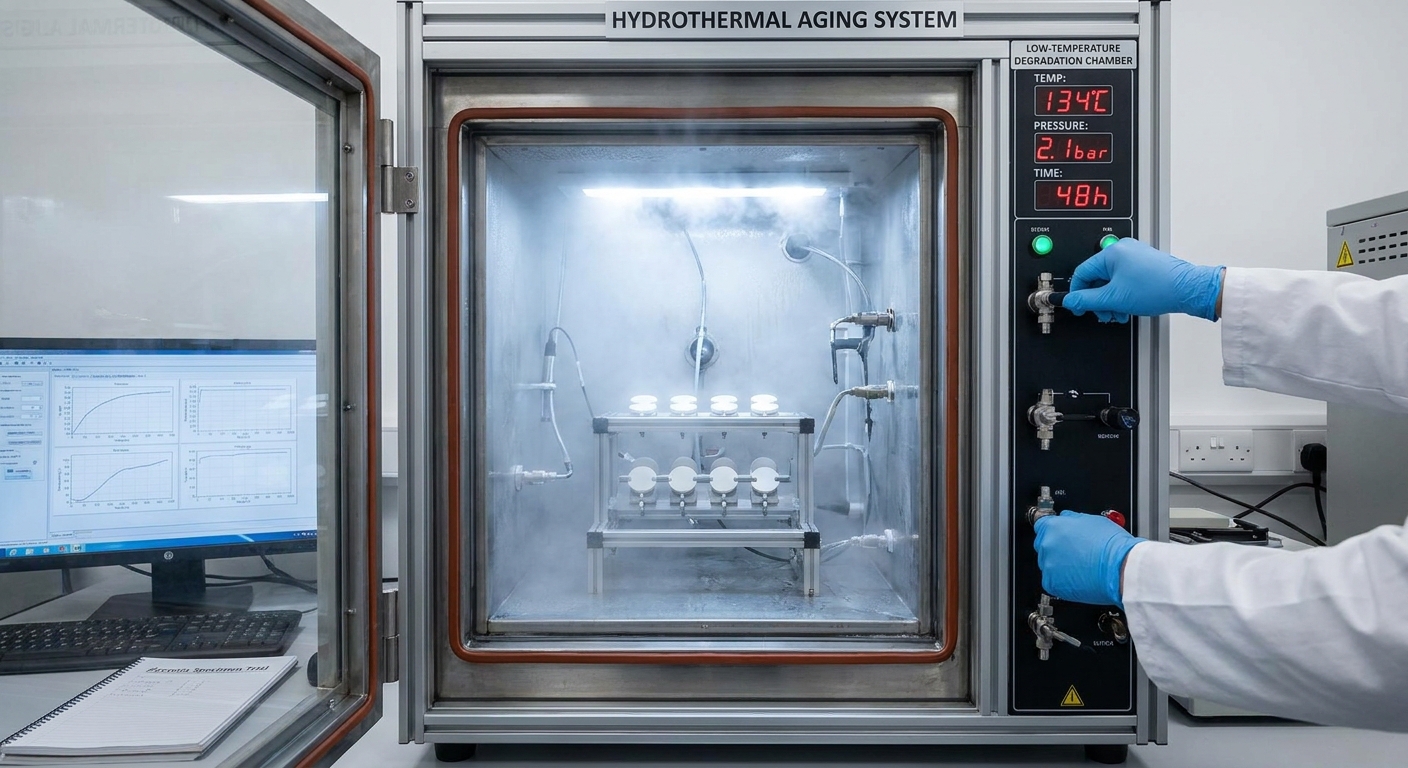
Aging affects long-term stability through a slow degradation process where moisture triggers a spontaneous tetragonal-to-monoclinic phase transformation on the ceramic’s surface. While high-quality 3Y Zirconia is engineered to resist low-temperature degradation, choosing materials with poor chemical purity can accelerate surface roughening and micro-cracking over years of clinical service.
How do we measure hydrothermal stability?
Manufacturers utilize advanced autoclaves to simulate decades of intraoral exposure to heat and moisture.
Think about it:
- Accelerated Testing: Restorations are placed in high-pressure steam environments at temperatures exceeding 134°C.
- Phase Stability: This accelerated testing reveals whether the tetragonal phase will remain stable under clinical conditions.
- Low-Quality Warning: Low-quality powders exhibit rapid monoclinic conversion, leading to surface degradation and early wear on opposing teeth.
By sourcing materials that utilize ultra-pure raw powders, you ensure your restorations withstand the warm, moist environment of the human mouth. High chemical purity is your best defense against hydrothermal aging.
| QC Parameter | Target Standard Limit | Physical Impact on Restorations |
|---|---|---|
| D50 Particle Size | ±5% Variance limit | Drives uniform sintering and prevents internal void formation |
| Whiteness Variance | ±1 Unit max deviation | Ensures absolute shade predictability under dental operatory lights |
| Radioactivity Limits | < 0.2 Bq/g | Guarantees complete biocompatibility for intraoral placement |
Protecting your lab’s reputation from aging-induced failures requires selecting raw materials that exceed international standards.
Key Takeaway: Always purchase dental blanks manufactured from certified, high-purity powders to ensure long-term clinical stability and avoid spontaneous surface degradation.
Conclusion
Understanding the structural differences between 3Y, 4Y, and 5Y zirconia is essential for delivering long-lasting, natural-looking dental restorations. By matching the mechanical properties of high-strength 3Y zirconia to posterior sites and the exceptional aesthetics of 5Y zirconia to the anterior zone, clinicians and dental laboratories can achieve predictable success. To maintain these high standards of strength, translucency, and biocompatibility, dental laboratories and manufacturers must rely on raw materials of the highest purity.
If you are looking for an industrial-scale manufacturing partner that offers vertically integrated production, strict quality control, and certified advanced ceramics, contact us today to explore our high-purity zirconia powders and customized solutions tailored to your production needs.
Empowering modern dental restorations through uncompromising purity, precision-engineered stability, and world-class materials science.
What are the top FAQs on dental zirconia?
Can I use 5Y zirconia for a 3-unit bridge?
No, 5Y zirconia is too brittle and has insufficient fracture toughness to handle the flexural stresses concentrated on a multi-unit connector. For any multi-unit bridge, a balanced 4Y or high-strength 3Y framework is always recommended to ensure clinical survival.
What is the best cement for 3Y zirconia?
Resin-modified glass ionomer (RMGI) cements or adhesive resin cements containing active 10-MDP monomer provide the most reliable long-term bond. The 10-MDP monomer chemically bonds with the metal oxide surface of the sandblasted zirconia, ensuring superior moisture resistance.
Can 3Y zirconia damage opposing dentition?
No, when highly polished, 3Y zirconia is extremely smooth and causes less wear on opposing natural enamel than traditional feldspathic porcelain. Glazes can wear off quickly, leaving a rough surface, so a high mechanical polish on the functional occlusal surfaces is critical.
Does 4Y zirconia look natural in light?
Yes, 4Y zirconia has excellent optical properties that mimic natural dentin and enamel well enough for premolars and some anterior cases. It utilizes a custom crystalline blend to transmit up to 45% of light, providing a natural blend with surrounding teeth.