
Zirconia Beads, Partially Stabilized with Yttria, Sintered are high-density ceramic grinding media engineered from zirconium dioxide stabilized with yttrium oxide to deliver exceptional mechanical strength and wear resistance during high-energy wet milling. Are excessive media degradation, batch contamination, and constant equipment downtime disrupting your ultra-fine wet milling operations? When processing high-value slurries like battery cathode active materials or active pharmaceutical ingredients, low-grade media fracture under high shear forces, ruining batch purity and driving up operational costs. High-density, sintered yttria-partially stabilized Zirconia Beads solve these challenges by delivering extreme resistance to impact spalling and phase transformation. By choosing premium Y-TZP media, you protect your product quality, maintain narrow particle size distributions, and optimize grinding efficiency.
What Are Yttria-Stabilized Zirconia Beads?
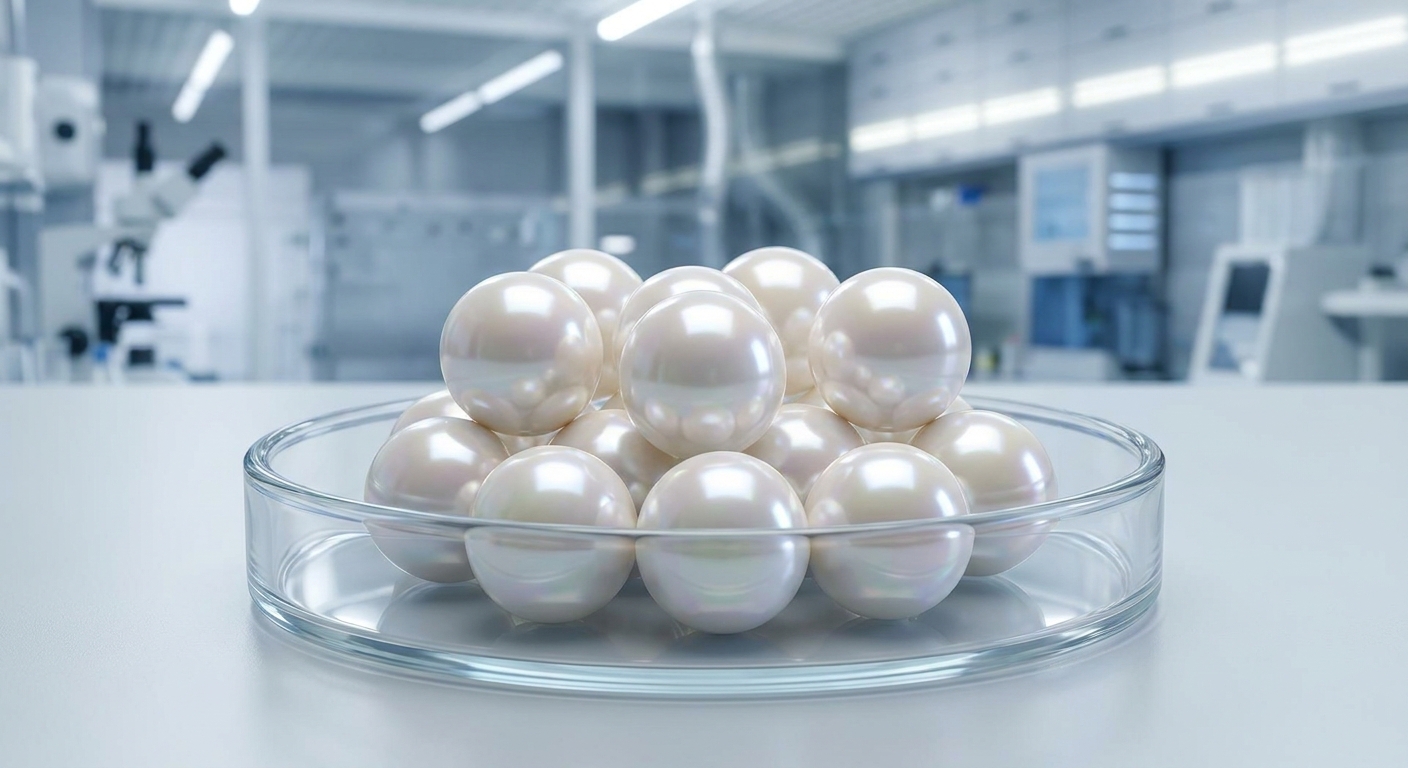
Yttria-stabilized zirconia beads are dense ceramic grinding spheres produced by stabilizing zirconium dioxide with yttrium oxide and sintering them at elevated temperatures. These Zirconia Beads feature a tetragonal zirconia polycrystal (Y-TZP) microstructure that provides unmatched fracture toughness and mechanical endurance during aggressive bead mill agitation.
What Is Yttria Partial Stabilization?
Pure zirconium dioxide undergoes a destructive phase transition from tetragonal to monoclinic geometry during cooling, causing volume expansion and catastrophic structural cracking. Adding approximately 3 mol% (5.2 wt%) yttrium oxide locks the high-strength tetragonal crystal phase at room temperature.
Think about this:
- Stabilizer addition prevents spontaneous phase transformation during thermal cycles.
- Tetragonal structure provides stress-induced transformation toughening.
- Uniform stabilizer distribution ensures batch-to-batch physical stability.
How Does Sintering Enhance Microstructure?
High-temperature sintering at controlled thermal schedules densifies the green precursor beads into a non-porous ceramic compact. This heat treatment eliminates internal void networks and fuses sub-micron grains into a dense, wear-resistant matrix.
Here’s the deal:
- Densification yields a specific gravity reaching 6.0 g/cm³.
- Sintered smooth surfaces minimize physical friction against agitator discs.
- Microstructural integrity drastically reduces spalling under high kinetic impact.
| Property Component | Technical Specification | Functional Benefit |
|---|---|---|
| Crystal Structure | Yttria-stabilized Tetragonal (Y-TZP) | High fracture toughness via phase transformation |
| Sintered Density | 6.0 g/cm³ (±0.05) | Maximum kinetic energy transfer in mills |
| Grain Size | Sub-micron (<0.5 μm) | Exceptional surface finish & low wear |
Analytical Guidance: Select Y-TZP media when processing materials that require zero metallic contamination and maximum kinetic energy transfer.
Key Takeaway: Yttria partial stabilization coupled with precise high-temperature sintering transforms raw zirconium oxide into ultra-dense, crack-resistant media capable of enduring severe industrial milling environments.
Why Choose Sintered Zirconia Beads for Milling?
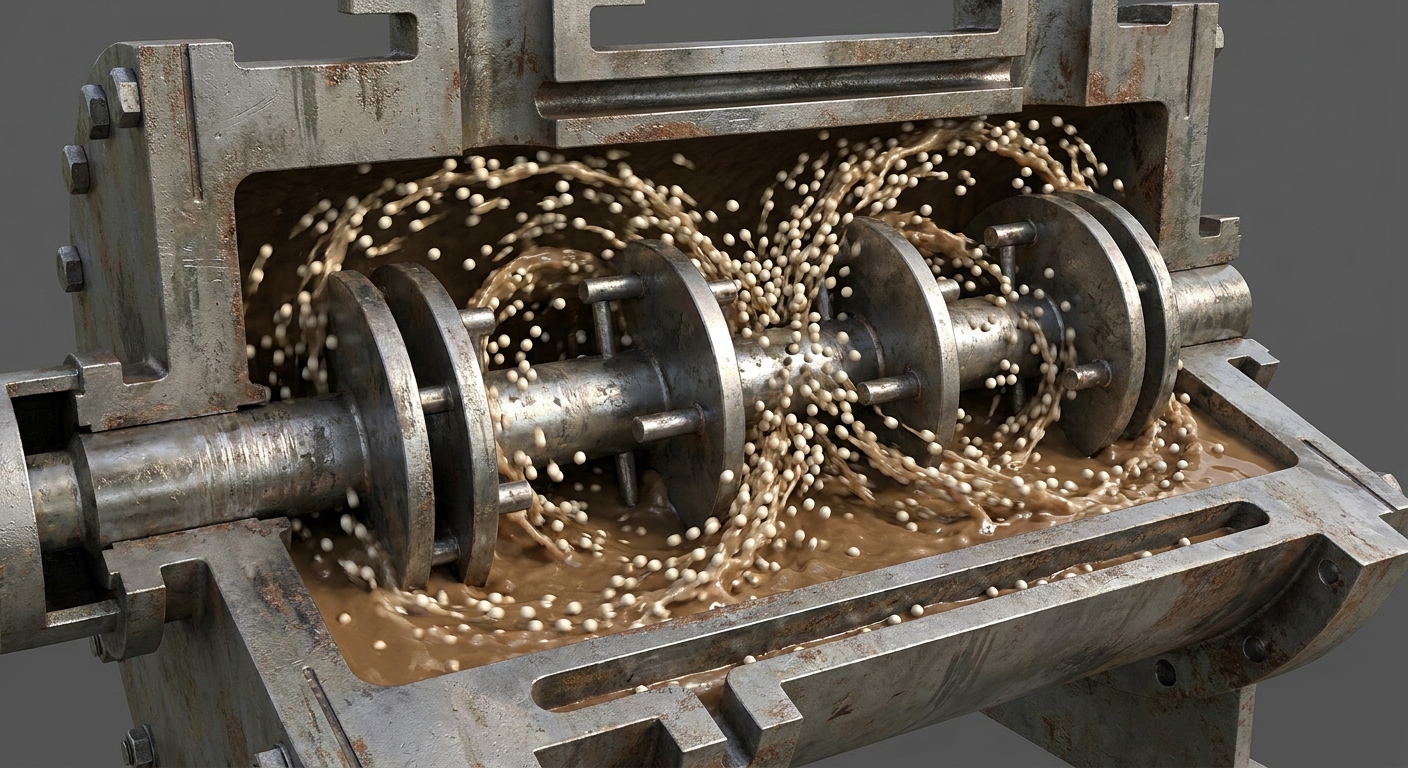
Sintered zirconia beads offer the highest kinetic energy transfer and lowest wear rate among commercial ceramic media, making them the preferred choice for modern high-efficiency agitator mills. Utilizing premium Zirconia Beads enables operators to process high-viscosity slurries down to sub-micron or nanoscale particle distributions in significantly shorter residence times.
Why Is High Density Essential for Wet Milling?
Density directly determines the kinetic impact energy generated by grinding media inside an agitated milling chamber. A higher media density allows mills to grind tough particles faster without increasing shaft rotational speeds.
Look at the facts:
- Media density of 6.0 g/cm³ handles high-viscosity dispersions effortlessly.
- Kinetic force shortens total pass requirements for target particle size distribution (PSD).
- Higher mass permits effective use of smaller bead diameters in fine grinding.
How Does High Fracture Toughness Prevent Cracks?
Y-TZP media exhibit a unique mechanism called stress-induced phase transformation, where localized stress converts tetragonal crystals into monoclinic form to absorb crack energy. This self-healing characteristic prevents media shattering under intense centrifugal forces.
Here’s why that matters:
- Fracture toughness (>8 MPa·m¹/²) prevents bead fragmentation.
- Intact beads eliminate equipment blockages and separator screen damage.
- Low attrition rates prevent contamination of ultra-pure slurry formulations.
| Performance Characteristic | High-Density Sintered Beads | Standard Glass / Silicate Media |
|---|---|---|
| Specific Density | 6.0 g/cm³ | 2.5–4.0 g/cm³ |
| Mohs Hardness | 9.0 | 6.0–7.5 |
| Operational Lifespan | Up to 10x longer | Frequent media replacement required |
Analytical Guidance: Transitioning from lower-density media to sintered Y-TZP reduces grinding cycle duration by up to 50% while improving particle size uniformity.
Key Takeaway: High density combined with phase-transformation toughening makes Y-TZP media unmatched for high-speed, high-energy wet milling applications.
How Do Zirconia Beads Outperform Other Media?
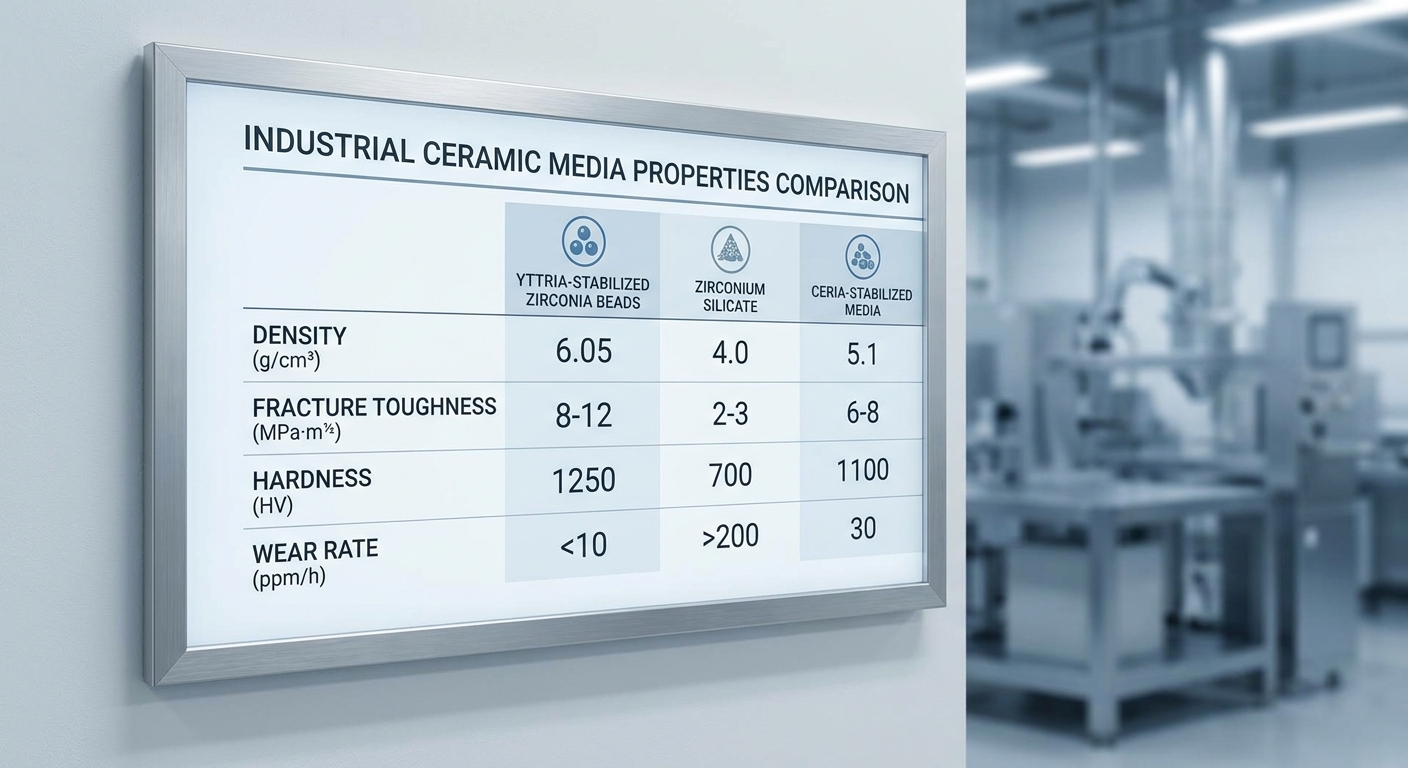
Zirconia beads surpass alternative ceramic and metallic media by offering superior wear resistance, higher density, and chemically inert behavior across aggressive acidic and alkaline environments. Modern Zirconia Beads maintain structural roundness and surface polish far longer than fused glass or zirconium silicate alternatives.
How Do They Compare to Zirconium Silicate?
Zirconium silicate media contain silica phases that lower density (4.0 g/cm³) and decrease wear resistance compared to pure yttria-stabilized ceramic options. Sintered Y-TZP media feature higher hardness and eliminate silica leaching risks.
Here’s the deal:
- Pure zirconia provides 50% higher density than zirconium silicate.
- Absence of free silica eliminates product contamination in sensitive applications.
- Wear rates are up to 5 times lower than silicate-bonded variants.
Why Superiority Over Ceria Stabilized Media?
While ceria-stabilized zirconia media offer high density (6.2 g/cm³), their lower fracture toughness and softer matrix make them prone to surface peeling. High-energy impact tests prove Y-TZP beads demonstrate at least 15% lower wear rates than ceria-stabilized options.
Think about this:
- Y-TZP hardness (1300 HV₅) provides superior scratch resistance.
- Lower spalling rates protect sensitive pigment and electronic slurries.
- Superior mechanical integrity withstands intense mill tip speeds (>14 m/s).
| Media Type | Density (g/cm³) | Hardness (HV₅) | Relative Wear Rate |
|---|---|---|---|
| Yttria-Stabilized Zirconia (Y-TZP) | 6.0 | 1300 | Lowest (Baseline 1.0) |
| Ceria-Stabilized Zirconia (CSZ) | 6.2 | 1150 | Moderate (+15% to 20%) |
| Zirconium Silicate (SZS) | 4.0 | 1000 | High (+300% to 500%) |
Analytical Guidance: Evaluate total operating costs—including media consumption and batch yield—rather than initial unit price when selecting grinding media.
Key Takeaway: Yttria-stabilized zirconia provides an optimal balance of hardness, fracture toughness, and chemical resistance that clearly outperforms silicate and ceria media.
Which Industries Rely Most on Zirconia Beads?
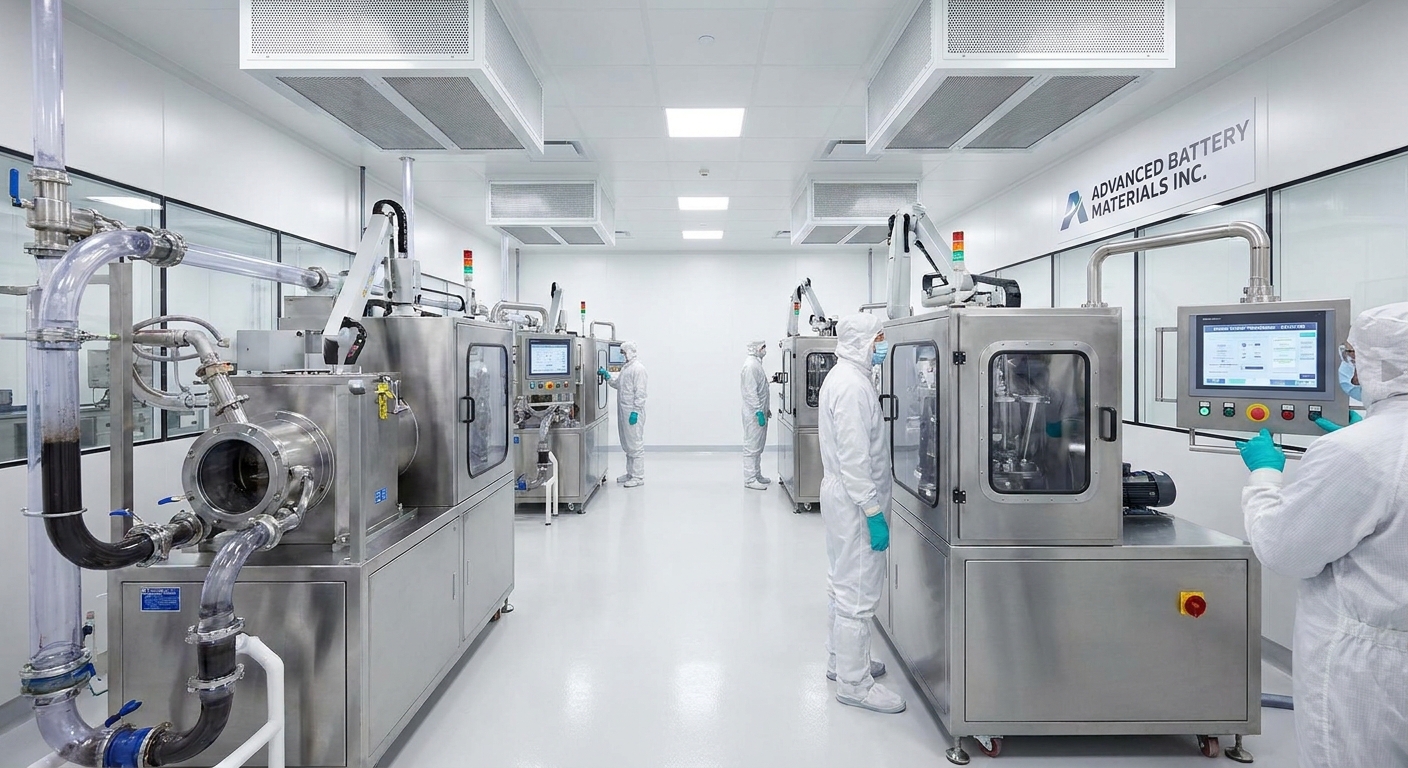
Industries requiring sub-micron particle sizing, strict color purity, and high throughput depend heavily on yttria-stabilized zirconia media. Sintered Zirconia Beads are critical components across advanced energy storage, pharmaceutical manufacturing, specialized coatings, and agrochemicals.
How Are They Used in Battery Material Grinding?
Production of lithium iron phosphate (LFP) and cathode active materials requires uniform nanoscale particle sizes without iron or metallic contamination. Y-TZP media deliver the kinetic impact required for nanoscale energy storage material preparation.
Look at these benefits:
- Nanometer-scale milling enhances battery energy density and charge rates.
- Inert ceramic composition prevents internal short-circuiting contamination risks.
- Narrow particle distributions ensure uniform electrode slurry coating.
Why Are They Crucial for Pharmaceuticals?
Pharmaceutical formulations require precise bioavailability, which is achieved through nanometer particle size reduction. Fully sintered, non-porous media comply with stringent hygiene and extraction standards.
The result is clear:
- Non-porous surfaces prevent cross-contamination between batch runs.
- High wear resistance guarantees compliance with heavy metal limits.
- Media structure is ideal for cell disruption and drug nanoparticle synthesis.
| Industry Sector | Primary Application | Key Operational Requirement |
|---|---|---|
| Energy & Electronics | LFP Battery Cathode Slurry, CMP Slurry | Zero metallic contamination, nanoscale PSD |
| Life Sciences | Pharma Active Ingredients, Biotech Isolation | Sterility compliance, FDA/European Food approval |
| Paints & Coatings | Inkjet Inks, Automotive OEM Finishes | Maximum color strength, gloss, scratch resistance |
Analytical Guidance: Confirm regulatory compliance certifications when sourcing media for food, cosmetic, or pharmaceutical formulation processes.
Key Takeaway: From energy storage to life sciences, Y-TZP beads provide the ultra-clean, high-energy milling required for high-tech manufacturing.
How Are Sintered Zirconia Beads Manufactured?
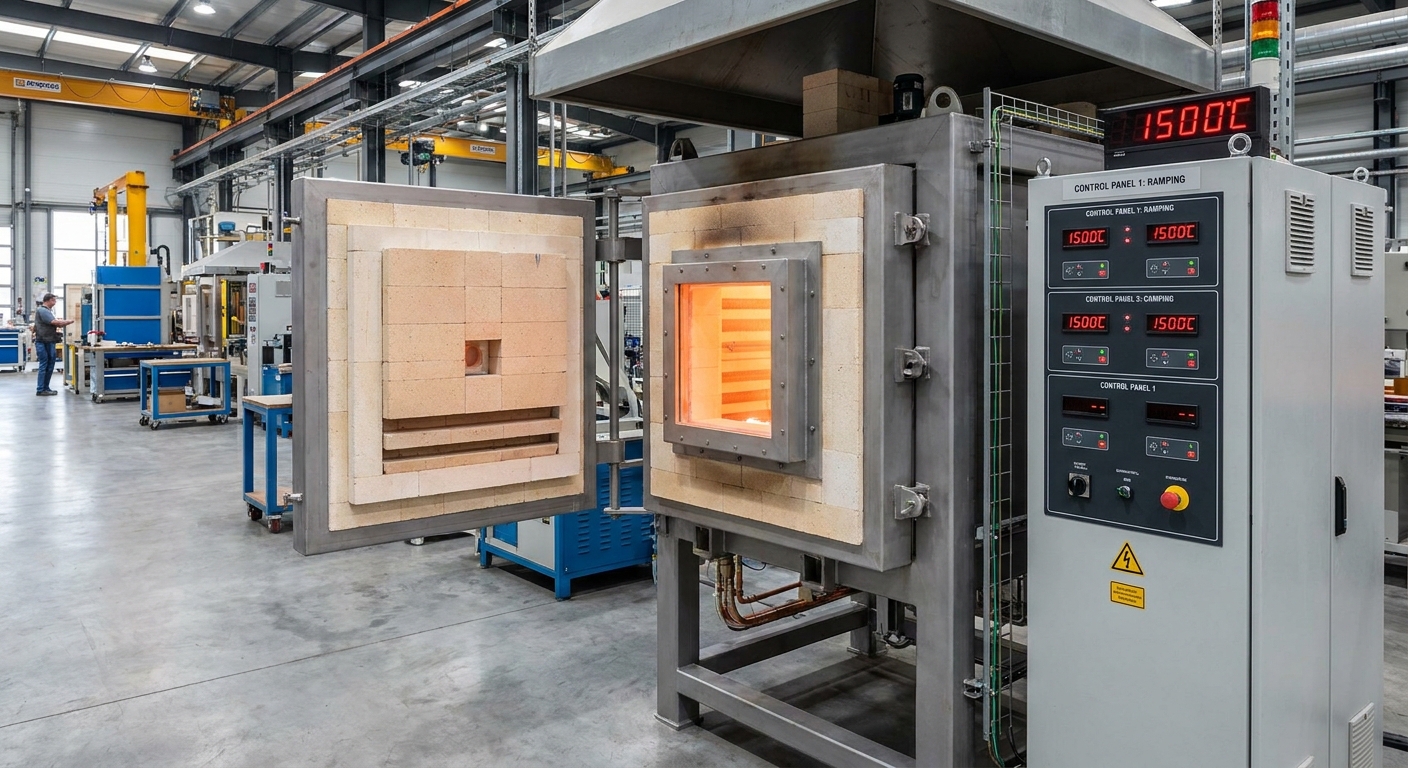
Sintered zirconia beads are manufactured through a multi-stage process involving nanometer powder synthesis, precision droplet forming, and high-temperature sintering. Quality control throughout this process guarantees sphericity, uniform density, and phase consistency across every production lot of Zirconia Beads.
How Is Homogenous Nanometer Powder Prepared?
The process begins with ultra-fine precursor powders featuring high chemical purity (>94.5% ZrO₂) and precise yttrium stabilizer distribution. Homogenous raw batches ensure consistent sintering behavior and structural uniformity.
Here’s the deal:
- Chemical precipitation methods yield sub-micron precursor powders.
- Homogeneous yttria blending prevents localized phase instability.
- Slurry titration maintains tightly controlled particle size distributions.
What High-Temperature Sintering Methods Work?
Formed green beads undergo controlled drying before entering high-temperature sintering kilns operating above 1450°C. This thermal cycle triggers solid-state diffusion, removing internalporosity and shrinking green spheres into dense ceramic beads.
Think about this:
- Sintering curves are tuned to prevent grain growth and micro-cracking.
- Automated sizing and tumbling remove off-round or surface-imperfect beads.
- Final surface polishing yields a brilliant pearl sheen finish.
| Manufacturing Stage | Critical Process Parameter | Quality Impact |
|---|---|---|
| Powder Preparation | Yttria distribution, sub-micron particle size | Phase stability, transformation toughening |
| Dripping / Forming | Surface tension, droplet sphericity control | High sphericity, uniform bead mass |
| Sintering | Thermal profile (>1450°C) | Full densification (6.0 g/cm³), zero porosity |
Analytical Guidance: Inquire about full batch traceability from powder synthesis to final packaging to safeguard against raw material variations.
Key Takeaway: End-to-end process control from chemical precursor synthesis to high-temperature sintering ensures batch-to-batch physical stability and predictable milling performance.
What Technical Parameters Define Zirconia Beads?
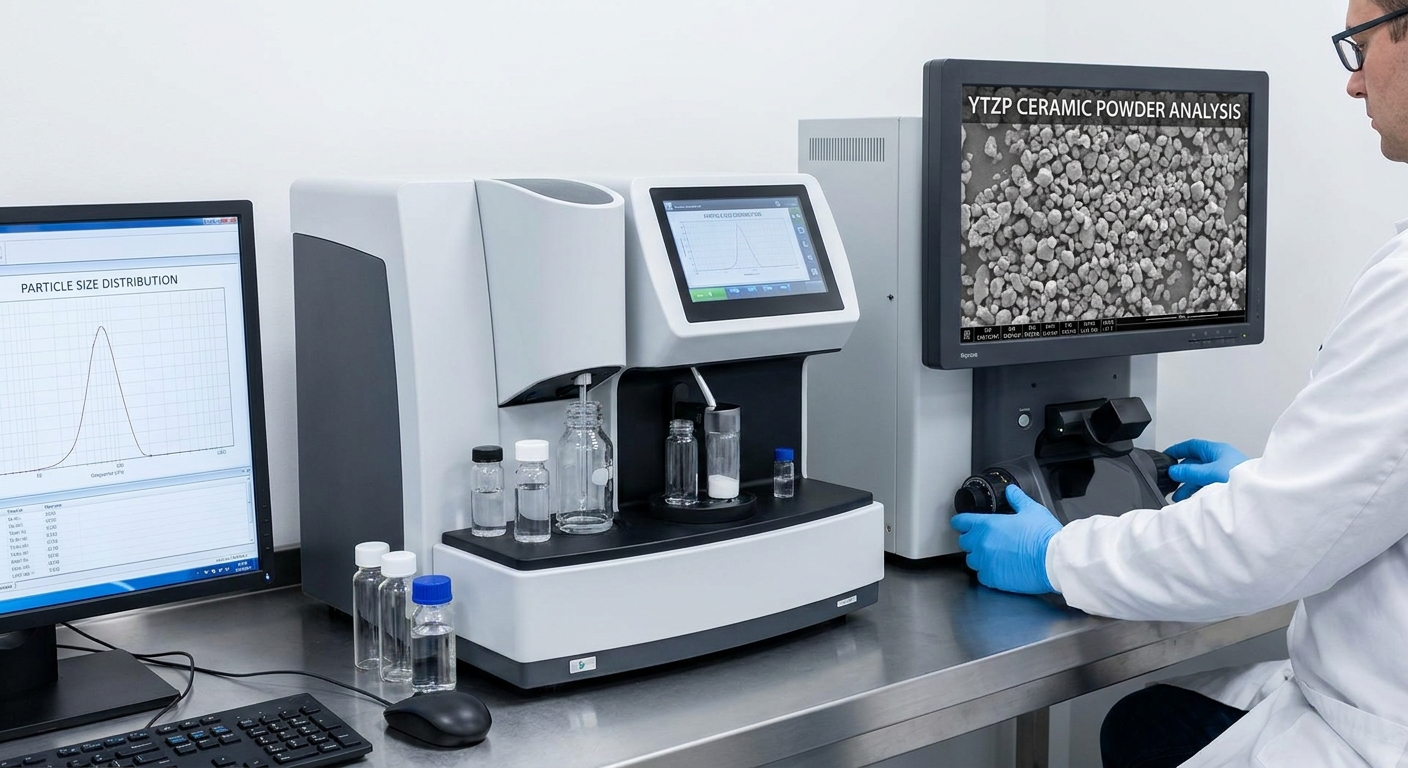
Technical parameters defining high-performance Y-TZP beads include chemical composition, specific density, Vickers hardness, breaking load, and bulk density. Rigorous specifications for high-purity Zirconia Beads ensure optimal matching between media properties and mill dynamics.
What Chemical Composition Defines YTZP Quality?
Top-tier Y-TZP media consist of approximately 94.6% zirconium oxide (ZrO₂ + HfO₂) stabilized by 5.2% yttrium oxide (Y₂O₃). Trace impurities like silica or iron are kept strictly below 0.2% to preserve structural toughness.
Look at the specifications:
- Y₂O₃ content at 5.2% ± 0.2% maintains optimal tetragonal phase stability.
- Ultra-low Fe₂O₃ prevents chemical contamination of sensitive slurries.
- High ZrO₂ purity guarantees maximum density and structural integrity.
Which Physical Metrics Indicate Durability?
Key physical properties include a minimum density of 6.0 g/cm³, Vickers hardness (HV₅) exceeding 1300, and high crushing loads across all bead sizes.
The takeaway?
- Bulk density around 3.7 kg/L dictates mill charge volume calculations.
- Hardness rating of Mohs 9 protects against abrasive slurry wear.
- Bright white pearl luster reflects flawless surface polishing.
| Physical / Chemical Metric | Standard Specification | Testing Standard Reference |
|---|---|---|
| ZrO₂ + HfO₂ Content | 94.6% ± 0.2% | XRF Analysis |
| Y₂O₃ Content | 5.2% ± 0.2% | ICP-OES |
| Specific Density | 6.0 ± 0.05 g/cm³ | Pycnometer Method |
| Hardness (HV₅) | ≥1300 kg/mm² | Vickers Indentation |
Analytical Guidance: Always request a full Certificate of Analysis (COA) containing verified density, hardness, and chemical assays for every shipment batch.
Key Takeaway: Checking verified chemical and physical metrics ensures selected media withstand high shear forces without breaking or contaminating products.
How Do You Select the Right Size Zirconia Beads?
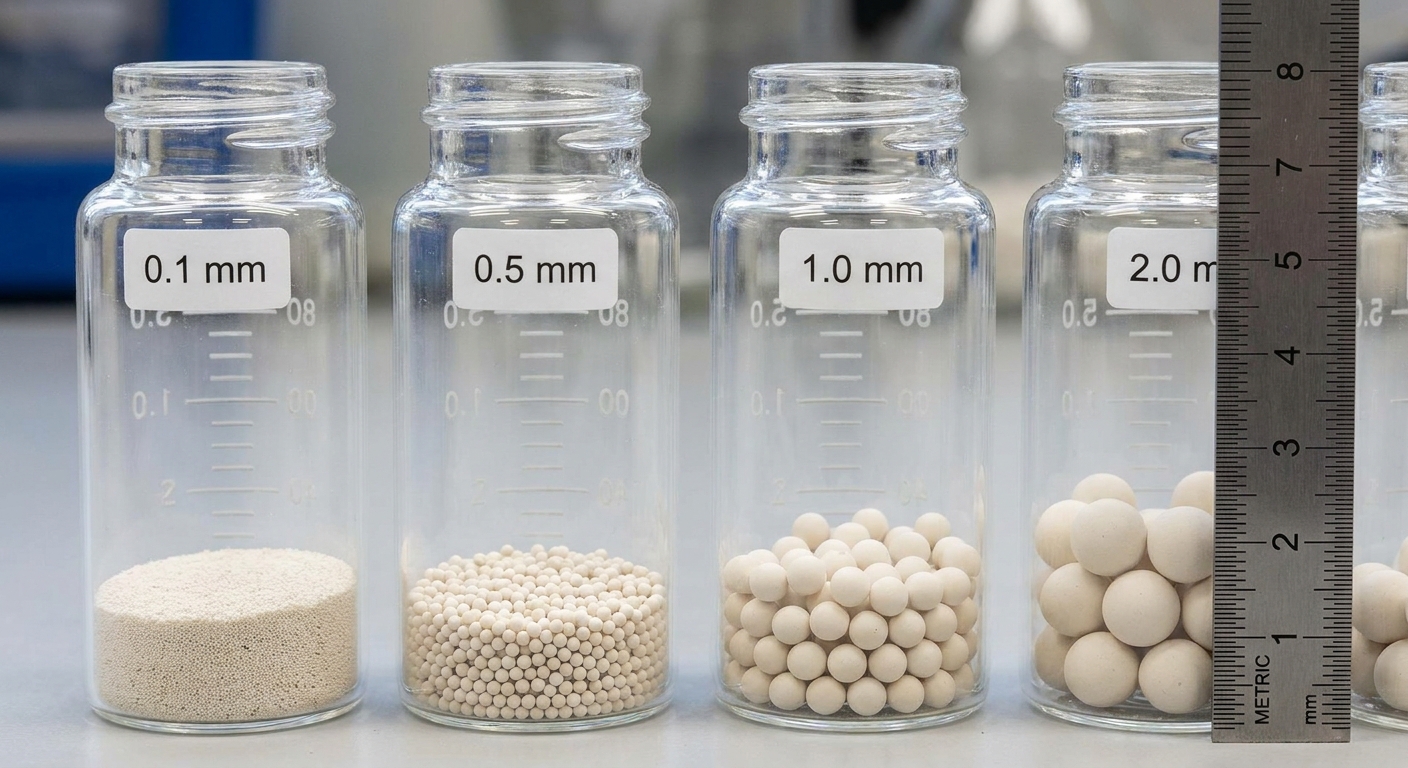
Selecting the correct media size requires matching bead diameter to target feed particle sizes, final product fineness requirements, and mill separator gap dimensions. Choosing oversized Zirconia Beads slows grinding speed, while undersized media lack the kinetic force needed to break coarse feed aggregates.
How Does Bead Size Impact Mill Energy Input?
Smaller media provide exponentially more contact points per unit volume, accelerating fine grinding when feed particles are already sub-micron. However, larger beads are necessary when grinding coarse raw materials that require higher impact energy.
Here’s the deal:
- Reducing bead diameter by half increases contact frequency by eight times.
- Micro-beads (0.03 mm–0.3 mm) excel at sub-micron and nano milling.
- Standard beads (0.4 mm–2.5 mm) handle general industrial wet dispersion.
Which Size Fractions Fit Nanometer Milling?
Ultra-fine applications like CMP slurries or technical ceramic glazes require micro-media fractions like 0.05 mm or 0.1 mm. Ensure bead diameter is at least 1.5 to 2.0 times larger than your mill separator screen gap to prevent screen blinding.
Think about this:
- Feed particle size should generally not exceed 1/10th of the bead diameter.
- Screen gap size determines the smallest usable bead size without media loss.
- Custom narrow-fraction sizing narrows final product particle distributions.
| Target Product Fineness | Recommended Bead Size Range | Typical Mill Separator Gap |
|---|---|---|
| Nanometer (<100 nm) | 0.03 mm–0.2 mm | 0.01 mm–0.05 mm |
| Sub-micron (0.2 μm–1.0 μm) | 0.3 mm–0.8 mm | 0.10 mm–0.20 mm |
| Fine Dispersion (1.0 μm–10 μm) | 1.0 mm–2.5 mm | 0.30 mm–0.50 mm |
Analytical Guidance: When converting to smaller micro-beads, verify mill separator screen condition and shaft seal pressure ratings to avoid media leakage.
Key Takeaway: Proper media sizing balances necessary kinetic impact force with maximum contact frequency, directly optimizing grinding throughput.
How Can You Minimize Wear with Zirconia Beads?
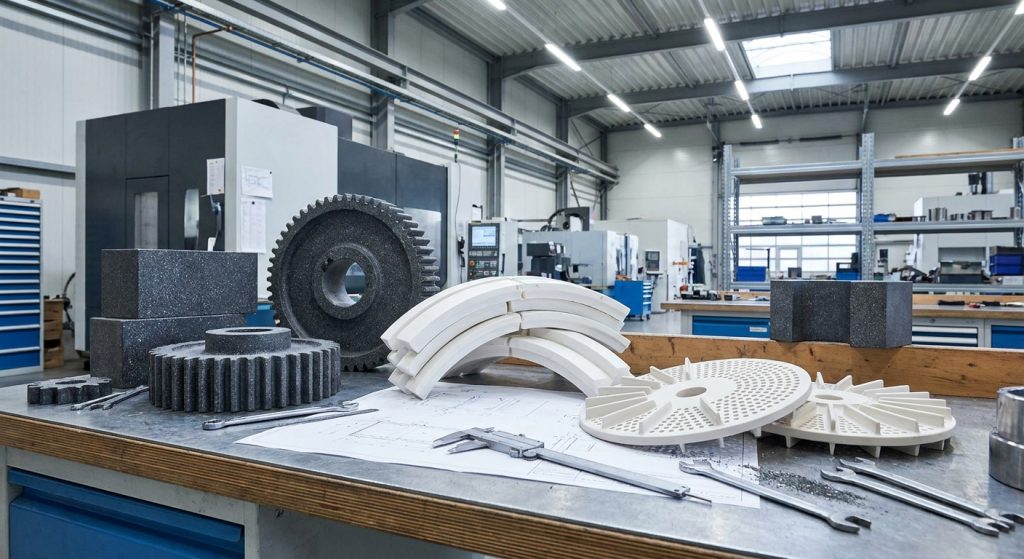
Minimizing wear when running zirconia beads involves balancing mill tip speeds, controlling slurry viscosity, maintaining optimal bead charge volumes, and cooling grinding chambers properly. Implementing best practices with Zirconia Beads extends media service life and protects milling hardware from premature abrasion.
How Can Agitator Mill Parameters Be Optimized?
Excessive agitator tip speeds (>14 m/s) increase bead collision energy beyond what is required, causing bead surface micro-fractures. Operating mills at optimal energy densities yields effective dispersion with minimal media degradation.
Look at these operating tips:
- Adjust tip speeds between 10–12 m/s for an ideal energy-to-wear ratio.
- Maintain bead loading volume between 75%–85% of grinding chamber capacity.
- Avoid running agitator shafts without slurry present to prevent dry impact destruction.
Why Does Slurry Rheology Affect Wear Rates?
Slurry viscosity that is too low permits aggressive bead-to-bead collisions without fluid damping, increasing attrition. Conversely, excessively high viscosity slows bead velocity, reducing grinding efficiency.
Here’s why that matters:
- Maintain fluid viscosity between 100–1000 mPa·s during milling.
- Control cooling jacket temperatures to prevent thermal shock to ceramic beads.
- Monitor slurry pH to prevent chemical corrosion of mill linings and media.
| Operational Factor | Sub-Optimal Setting | Recommended Target | Risk of Incorrect Setting |
|---|---|---|---|
| Mill Tip Speed | >14 m/s | 9–12 m/s | Bead micro-cracking & rapid wear |
| Slurry Viscosity | <50 mPa·s | 200–600 mPa·s | Severe bead-on-bead impact abrasion |
| Chamber Filling Degree | <70% or >90% | 80%–85% | Hydraulic packing or excessive kinetic wear |
Analytical Guidance: Track monthly media top-up weights against production output volumes to establish accurate operational wear rate baselines.
Key Takeaway: Operating mills within optimized speed, viscosity, and temperature ranges dramatically reduces bead wear and media consumption costs.
What Cost Savings Do Zirconia Beads Deliver?
Although yttria-stabilized zirconia beads require a higher initial investment than low-tier alternatives, their extreme durability and grinding efficiency significantly lower total cost of ownership (TCO). Utilizing premium Zirconia Beads reduces downtime, lowers energy consumption, and eliminates batch rejection costs.
How Does Bead Longevity Reduce OPEX?
Because Y-TZP media wear at a fraction of the rate of lower-grade media, plants consume significantly fewer tons of grinding media annually. This directly reduces procurement frequency, freight charges, and material handling labor.
Here’s the deal:
- Extended service life cuts media top-up demands by up to $80%$.
- Less frequent media changeouts mean more operational uptime.
- Lower wear keeps separator screens clear, avoiding emergency shutdowns.
Why Does Yield Improvement Lower Overhead?
Faster particle size reduction decreases required mill residence times, allowing plants to increase daily production volume without adding capital equipment. Reduced grinding times also save substantial electricity across large mill drives.
Think about this:
- Higher energy transfer reduces specific energy consumption (kWh/ton).
- Elimination of media fracturing prevents costly final product quality rejections.
- Consistent batch yields improve overall factory operational efficiency.
| Cost Category | Impact of Standard Media | Impact of Sintered Y-TZP | Direct Financial Benefit |
|---|---|---|---|
| Media Consumption | High replacement rate | Extremely low wear rate | Up to 70% reduction in media supply spend |
| Energy Consumption | Long mill residence times | Faster fineness achievement | 15%–30% savings in electricity costs |
| Quality Control | Risk of batch contamination | Zero contamination risk | Prevents rejected batches and product rework |
Analytical Guidance: Conduct a comprehensive TCO evaluation incorporating power draw, maintenance hours, and product pass rates to justify premium media procurement.
Key Takeaway: Lower media wear, reduced power consumption, and increased mill throughput combine to make Y-TZP media the most cost-effective long-term choice.
What Are Key FAQs Regarding Zirconia Beads?

Questions regarding the application, cleaning, and replacement of yttria-stabilized ceramic media often arise during plant optimization. High-performance Zirconia Beads deliver reliable results when properly integrated into standard operating procedures.
Can I Mix Different Batches of Zirconia Beads?
No, mixing different media sizes or batches within the same mill chamber is not recommended. Discrepancies in bead mass cause larger beads to crush smaller ones under high kinetic impact, accelerating media breakage and screen clogging.
- Mass variance creates uneven kinetic energy distribution.
- Small beads experience accelerated impact breakage.
- Unfiltered fragments damage mechanical shaft seals.
What Is the Best Method to Clean Zirconia Beads?
The best approach is circulating a compatible washing liquid with matched viscosity at low shaft speeds (3–5 m/s). Running wash fluids at full operational speeds causes bead-on-bead impact wear due to lack of slurry damping.
- Low tip speed prevents unbuffered media collisions.
- Solvent compatibility prevents polymer binder buildup.
- Gradual rinsing preserves ceramic surface polish.
How Do I Know When Zirconia Beads Need Replacement?
Inspect your media charge when you notice increased mill working pressure, extended grinding cycles, or visible bead fragments in pump strainers. Regularly screen your media over a mesh size equal to 80% of the original bead diameter to remove worn media.
- Monitor pump pressure spikes indicative of screen blinding.
- Check product particle size curves for unexpected distribution tails.
- Screen media periodically to remove under-sized fractions.
| FAQ Focus Area | Key Recommendation | Operational Risk Avoided |
|---|---|---|
| Charge Management | Do not mix different sizes or worn batches | Media fracture & screen blockage |
| Chamber Cleaning | Wash at reduced shaft speeds (3–5 m/s) | Bead spalling from unbuffered impact |
| Maintenance Screening | Screen charge at 80% of nominal bead size | Production throughput slowdown |
Analytical Guidance: Establish standard operating protocols for cleaning, charge measurement, and periodic screening to maximize media lifespan.
Key Takeaway: Following proper charge management and cleaning practices extends Y-TZP bead longevity and prevents unexpected downtime.
Conclusion & Strategic Action Plan
Sintered yttria-partially stabilized zirconia beads provide the high density, high fracture toughness, and superior wear resistance necessary to solve challenging wet milling issues. By replacing inferior grinding media with high-purity Y-TZP media, you protect product purity, accelerate throughput, and lower overall operational expenses. As a direct manufacturer with end-to-end vertical integration—from raw zircon powder processing to final high-temperature sintered ceramic media—we eliminate supply chain variation and provide complete technical support tailored to your production demands.
Ready to eliminate process instability, reduce wear rates, and optimize your milling throughput? contact us today to speak directly with an application engineer, request custom specification samples, or review comprehensive batch test data packages.