
Dental labs face constant clinical complaints about fractured posterior bridges or opaque, chalky-looking anterior restorations. Choosing between ultra-strong but aesthetically poor 3Y materials and highly translucent but brittle 5Y ceramics often leaves you with high remake rates and frustrated dentists. Fortunately, 4Y Zirconia and 5Y-PSZ materials solve this compromise by balancing structural resilience with lifelike, natural aesthetics. By understanding their distinct material characteristics, you can streamline your CAD/CAM production and select the absolute best restorative ceramic for every single clinical indication.
How Do 4Y Zirconia and 5Y Zirconia Materials Compare?
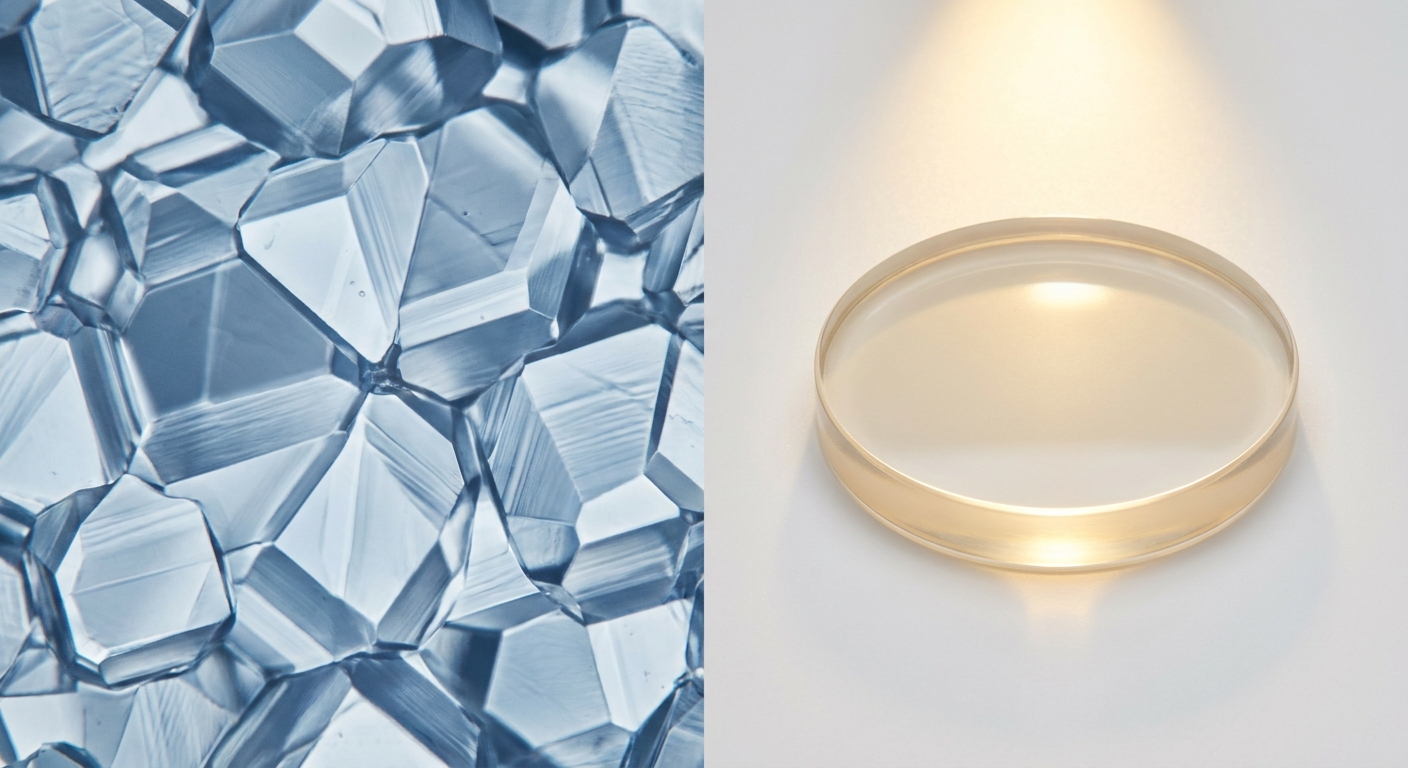
The core difference between 4Y Zirconia and 5Y zirconia materials lies in their yttria stabilizer content, which directly controls their mechanical strength and optical properties. While the former is a multi-use ceramic optimized for both anterior and posterior restorations, the latter is a highly translucent glass-like material reserved primarily for anterior crowns and veneers. Making the wrong choice in your milling center can lead to catastrophic intraoral fractures or unacceptable aesthetics.
How Did Modern Dental Zirconia Materials Evolve?
The clinical history of dental ceramics features a constant struggle to balance high flexural strength with natural, tooth-like aesthetics. Early dental restorations relied on 3Y-TZP, which offered extreme mechanical resilience but looked unnaturally white and chalky. Manufacturers solved this clinical dilemma by increasing the stabilizer content to create modern partially stabilized zirconia (PSZ).
Here’s the truth:
- 3Y-TZP: 3 mol% yttria, dominant tetragonal phase, ultra-high strength (900-1200+ MPa), low translucency.
- 4Y-PSZ: 4 mol% yttria, balanced tetragonal and cubic phases, medium-high strength (750-900 MPa), intermediate translucency.
- 5Y-PSZ: 5 mol% yttria, dominant cubic phase, moderate strength (600-700 MPa), exceptional translucency.
What Defines 4Y-PSZ and 5Y-PSZ Categories?
Partially stabilized zirconia uses different molar percentages of yttria to alter the mineral phases within the ceramic lattice. This structural alteration shifts clinical purchasing patterns because B2B laboratories need versatile blanks that minimize stock inventory.
Think about it.
- Yttria Content: 4 mol% vs. 5 mol% changes the ratio of stabilizing elements.
- Target Indications: Structural frameworks and bridges vs. delicate anterior veneers.
- Material Stability: Phase-shifting behaviors directly affect long-term intraoral survivability.
| Category | Yttria Content | Translucency | Mechanical Strength | Primary Clinical Indications |
|---|---|---|---|---|
| 4Y-PSZ | 4 mol% | Medium-High (42%) | High (750-900 MPa) | Universal (Anterior & Posterior Crowns/Bridges) |
| 5Y-PSZ | 5 mol% | Exceptional (45-49%) | Moderate (600-700 MPa) | Esthetic Zone (Single Crowns, Veneers) |
Let’s evaluate the primary chemical compositions that drive these structural differences.
Key Takeaway: Sourcing 4Y-PSZ blocks provides dental laboratories with a versatile “universal” ceramic that bridges the performance gap between mechanical toughness and natural aesthetics, effectively reducing raw material inventory costs.
What Key Elements Define 4Y Zirconia Formulations?
The chemical and physical performance of 4Y Zirconia is dictated by its precise chemical composition and the highly controlled distribution of yttria stabilizer throughout the raw ceramic powder. This chemical blueprint determines how well the material resists phase changes during high-temperature sintering. Achieving this chemical purity is essential for B2B manufacturers to guarantee consistent shrinkage rates and defect-free blanks.
What Is the Precise Mol% Yttria Formulation?
The chemical makeup of advanced dental ceramics relies on yttria acting as a stabilizing dopant to lock the tetragonal phase at room temperature. Without this stabilizer, the heated zirconia would suffer spontaneous monoclinic shifts during cooling, fracturing the material before it even leaves the furnace. Premium-grade powders use precise dopant balances to ensure exceptional optical clarity and mechanical resilience.
Let’s look closer.
- Yttria (Y₂O₃) Concentration: Exactly 4 mol% (~7.15 wt%) for 4Y-PSZ, and 5 mol% (~8.78 wt%) for 5Y-PSZ.
- Zirconia Base (ZrO₂): High-purity base combined with trace amounts of Hafnia (HfO₂)) to prevent lattice instability.
- Alumina Additives (Al₂O₃): Typically less than 0.05 wt% to enhance aging resistance without blocking optical transmission.
Why Does Stabilizer Content Uniformity Matter?
Localized fluctuations in stabilizer content can cause microscopic defects and unpredictable sintering behavior. Advanced spray-dried granulation and uniform mixing prevent localized stress concentrations from developing during the CAD/CAM milling process.
But that is not all.
- Lattice Homogeneity: Uniform yttria distribution prevents weak, unstabilized monoclinic clusters from forming.
- Consistent Shrinkage: High-quality raw powders guarantee a predictable 20% sintering shrinkage factor.
- Sintering Curve Reliability: Eliminates unexpected structural warping or fit errors in the dental lab furnace.
| Chemical Property | 3Y-TZP | 4Y-PSZ | 5Y-PSZ |
|---|---|---|---|
| Yttria (Y₂O₃) Mol% | 3.0 mol% | 4.0 mol% | 5.0 mol% |
| Yttria (Y₂O₃) Wt% | ~5.3 wt% | ~7.1 wt% | ~8.8 wt% |
| Alumina (Al₂O₃) Content | ~0.25 wt% | < 0.05 wt% | < 0.05 wt% |
We must look at how these chemical balances directly control the underlying crystal phases.
Key Takeaway: Sourcing dental zirconia with highly homogeneous stabilizer distributions ensures predictable CAD/CAM margin precision and prevents unexpected structural warping in dental lab ovens.
How Does Crystal Phase Shape 4Y Zirconia Performance?
The ratio of cubic and tetragonal crystal phases inside 4Y Zirconia determines how the material balances structural strength with aesthetic light transmission. Because different phases react differently to stress and light, controlling this crystallographic balance is critical for dental CAD/CAM materials. An improper phase balance can leave your restorations highly prone to micro-fractures under heavy occlusion.
What Is the Cubic Versus Tetragonal Phase Ratio?
Sintered zirconia exists in multiple crystallographic phases that directly govern how it interacts with light and physical forces. The addition of yttria stabilizes the high-temperature tetragonal and cubic phases, allowing them to remain stable at body temperature. This crystallographic control is the secret to manufacturing high-performance monolithic restorations.
Think about it.
- Tetragonal Phase: Highly anisotropic, mechanically resilient, and capable of structural self-healing.
- Cubic Phase: Isotropic crystal structure, larger grain sizes, and completely transparent to visible light.
- The Phase Balance: 4Y-PSZ’s 50:50 ratio achieves a masterclass compromise in physical and optical performance.
How Does Phase Stability Prevent Micro-Cracking?
Stress-induced phase transformation is the primary defense mechanism of tetragonal grains against propagating crack tips. When a crack begins, nearby tetragonal grains transform into the monoclinic phase, expanding in volume to halt the defect.
Here is the kicker:
- T-to-M Phase Change: Stress triggers tetragonal grains to switch to monoclinic grains, inducing a 3-4% localized volume expansion.
- Compressive Stress Field: This expansion squeezes the micro-crack shut, preventing further propagation through the restoration.
- Phase Depletion Risk: Overheating or poor sintering protocols can exhaust this transformation capacity, leaving the material brittle.
| Crystallographic Metric | 3Y-TZP | 4Y-PSZ | 5Y-PSZ |
|---|---|---|---|
| Tetragonal Phase % | ~95% | ~50% – 60% | ~25% – 30% |
| Cubic Phase % | ~5% | ~40% – 50% | ~70% – 75% |
| Self-Healing Ability | Extreme | Moderate | Very Low |
This unique phase balance is what allows the ceramic to reach impressive mechanical strength levels.
Key Takeaway: By balancing tetragonal and cubic phases equally, 4Y-PSZ retains vital self-healing transformation toughening, ensuring posterior restorations do not fail under intense biting forces.
Why Does 4Y Zirconia Deliver Such High Strength?
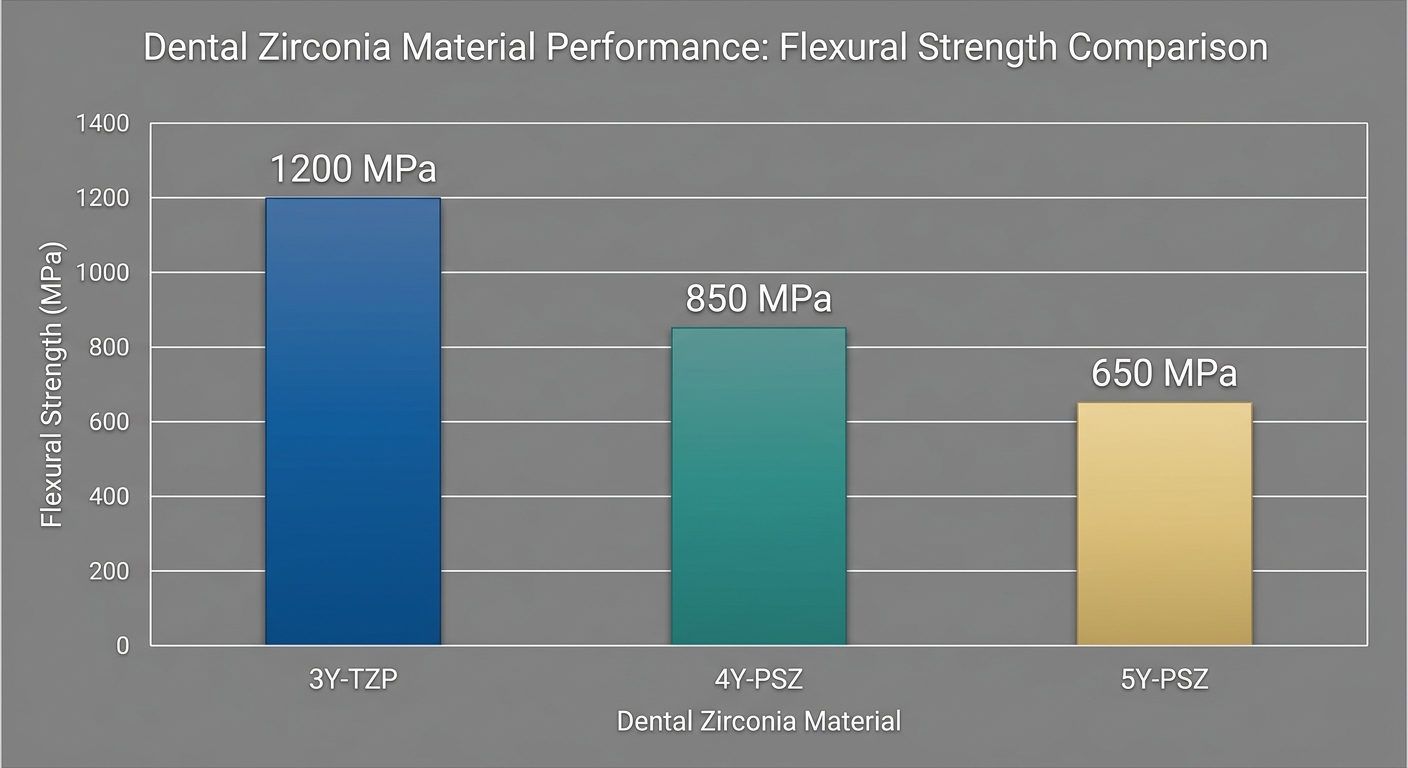
The exceptional mechanical performance of 4Y Zirconia stems from its high flexural strength of 750 to 900 MPa, allowing it to easily support high-load posterior restorations. Unlike weaker aesthetic ceramics, this high-strength class resists the intensive biting forces found in the molar region. For B2B labs, using high-purity blocks means offering dental clients reliable restorations with minimal risk of breakage.
How Do Flexural Strength Ratings Compare?
Flexural strength is the standard metric used to evaluate how well a dental ceramic can withstand bending and masticatory forces without fracturing. Standard three-point and four-point bending tests reveal a significant strength drop as yttria content increases. Sourcing high-purity blocks ensures that your laboratory consistently hits the upper limits of these mechanical strength ratings.
By the way,
- 3Y-TZP Flexural Strength: 900 – 1200+ MPa (ideal for long-span implant-supported hybrid prostheses).
- 4Y-PSZ Flexural Strength: 750 – 900 MPa (ideal for posterior single crowns and 3-unit bridges).
- 5Y-PSZ Flexural Strength: 600 – 700 MPa (restricted to single-unit restorations and anterior veneers).
Can High-Strength Zirconia Support Posterior Bridges?
The human posterior dental arch regularly experiences masticatory forces that exceed 700 N, making structural integrity a non-negotiable requirement. The size of the connector is the most critical design factor determining whether a posterior bridge will survive or fracture.
It gets better:
- Posterior Connector Dimension: Minimum 9 mm² required for 4Y-PSZ vs. 12+ mm² (clinically impractical) for 5Y-PSZ.
- Occlusal Force Tolerance: 4Y-PSZ comfortably withstands average human mastication loads with an integrated margin of safety.
- Edge Stability: 4Y-PSZ preserves sharp margins during CAD/CAM wet or dry milling without chipping.
| Mechanical Strength Metric | 3Y-TZP | 4Y-PSZ | 5Y-PSZ |
|---|---|---|---|
| Flexural Strength (MPa) | 900 – 1200+ MPa | 750 – 900 MPa | 600 – 700 MPa |
| Posterior Bridge Suitability | Excellent | Highly Recommended | Contraindicated |
| Milling Margin Chipping | Ultra-Low | Low-Moderate | Moderate-High |
Let’s analyze the structural toughness mechanisms that prevent these high-strength materials from cracking.
Key Takeaway: Utilizing 4Y-PSZ allows laboratories to fabricate thin-walled posterior restorations and three-unit bridges with smaller, highly aesthetic connector dimensions without sacrificing structural safety.
How Tough Is 4Y Zirconia Under Clinical Stress?
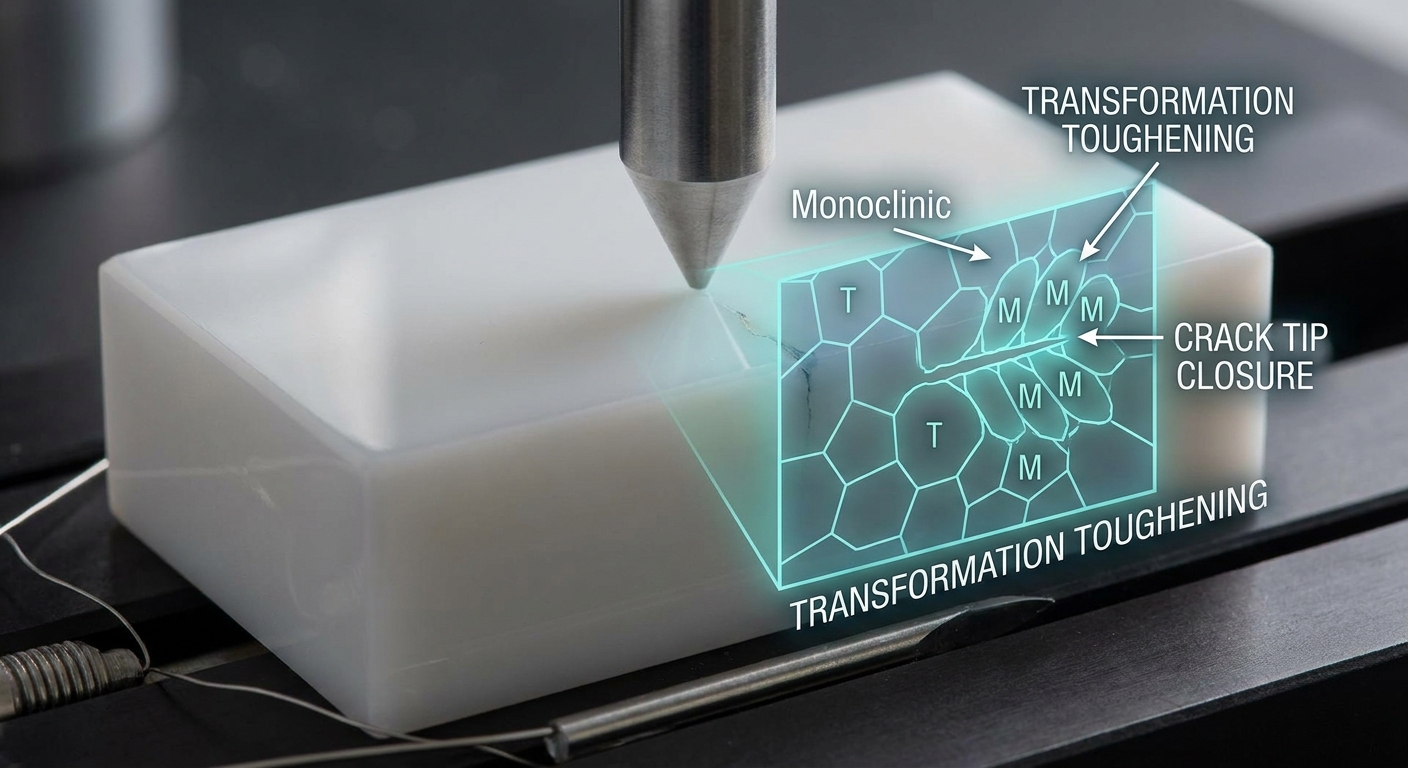
The superior fracture toughness of 4Y Zirconia under intensive clinical stress is what prevents micro-cracks from propagating into catastrophic failures. This structural resilience is crucial when a clinician performs intraoral adjustments with high-speed diamond burs. Sourcing blocks with low defect rates ensures your dental restorations maintain their structural integrity throughout years of clinical service.
What Is Stress-Induced Transformation Toughening?
Fracture toughness is measured by a material’s resistance to crack propagation, represented by the critical stress intensity factor. While highly translucent ceramics are brittle, the tetragonal grains in partially stabilized zirconia act as a built-in shock-absorber system. This mechanical shielding is why high-performance ceramics can withstand intense chewing forces.
Do you want to know the best part?
- Crack Tip Energy Absorption: Tetragonal crystals expand at the fracture tip, creating a localized compression field that halts crack growth.
- Toughness Ratios: 4Y-PSZ retains over 80% of the fracture toughness seen in 3Y-TZP, preserving long-term structural integrity.
- Microstructural Shielding: The mechanism that allows thin-walled zirconia crowns to survive without catastrophic cohesive failure.
How Do Material Defects Impact Clinical Fractures?
The purity of the raw zirconia powder directly influences how many microstructural defects are locked inside the sintered restoration. Tightly controlled particle size distributions ensure that the material presses evenly and contains no micro-voids.
That is why:
- Narrow Particle Size Distribution: Eliminates internal void formations during dry-pressing of CAD/CAM blanks.
- Purity Factors: Reducing iron oxides and silica impurities ensures no foreign inclusions initiate stress-focusing micro-cracks.
- Milling Defect Mitigation: Reduces surface rough-spots and microscopic edge tears during high-speed laboratory milling.
| Toughness Property | 3Y-TZP | 4Y-PSZ | 5Y-PSZ |
|---|---|---|---|
| Fracture Toughness (K₁c) | 5.5–8.0 MPa·m¹/² | 4.5–5.5 MPa·m¹/² | 3.0–4.0 MPa·m¹/² |
| Adjustability Safety | Excellent | Good | Limited (Needs Water Cooling) |
This mechanical safety is complemented by the material’s impressive light-transmission properties.
Key Takeaway: High fracture toughness makes 4Y-PSZ highly forgiving during clinical adjustments, significantly lowering the risk of post-cementation failures compared to fragile 5Y materials.
Why Is 4Y Zirconia Highly Translucent and Aesthetic?
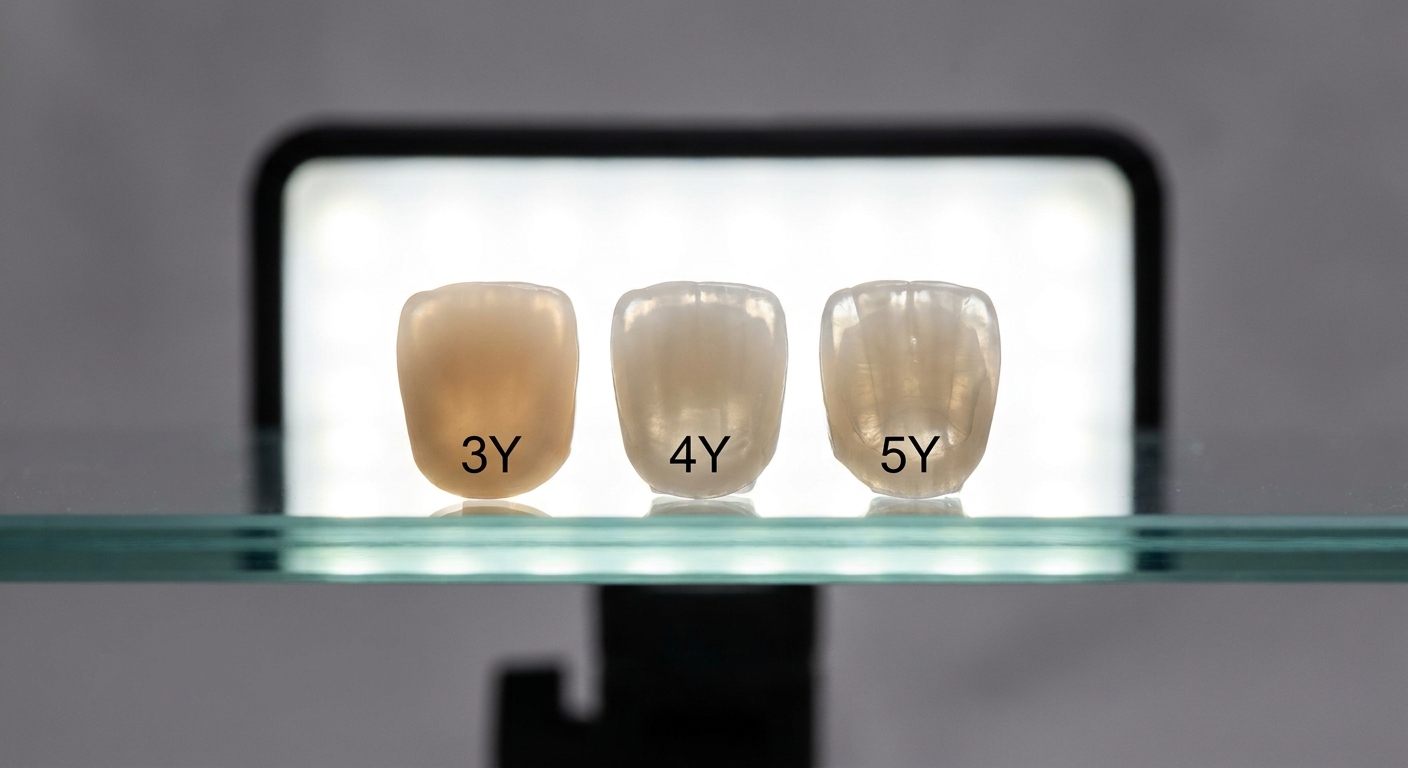
The impressive light transmission of 4Y Zirconia is achieved by its high cubic crystal content, which reduces light scattering at the grain boundaries of the ceramic. This optical design allows light to pass deep into the restoration, mimicking the natural translucency of human dentin and enamel. For modern B2B dental labs, this aesthetic leap means you can produce monolithic restorations without tedious porcelain layering.
How Does Cubic Phase Content Reduce Light Scattering?
The physics of light transmission through polycrystalline ceramics reveals that grain boundaries are the primary source of opacity. Tetragonal crystals are optically anisotropic, causing light to bend and scatter in different directions as it passes through the lattice. In contrast, cubic crystals are isotropic, allowing light to travel in a straight line without scattering.
Think about it.
- Anisotropic vs. Isotropic: Tetragonal structures scatter light at grain boundaries; cubic structures allow straight-line transmission.
- Yttria-Induced Optical Clarity: Elevating yttria content from 3% to 4% dramatically lowers light-scattering coefficients.
- Grain Boundary Purity: Restricting trace elements prevents the formation of dark intergranular phases that dull the material.
Can Translucent Zirconia Match Natural Enamel?
Natural human teeth exhibit a gradient of translucency, starting from the opaque cervical dentin up to the highly translucent incisal enamel. Modern multi-layered discs utilize varying yttria concentrations to mimic this natural light transition perfectly.
Here is the kicker:
- Natural Enamel Translucency: Typically registers between 45% and 50% translucency.
- 5Y-PSZ Translucency: Achieves ~45% light transmission, ideal for highly aesthetic regions.
- 4Y-PSZ Translucency: Reaches ~40% – 42% light transmission, providing excellent optical properties while masking dark metal implant abutments.
| Optical Metric | 3Y-TZP | 4Y-PSZ | 5Y-PSZ |
|---|---|---|---|
| Light Transmission % | ~30% – 35% | ~40% – 42% | ~45% – 49% |
| Esthetic Zone Match | Poor (Monolithic) | Good (Universal) | Excellent (Anterior) |
| Implant Post Masking | Excellent | Good | Poor (Post Shows Through) |
This balance of strength and optical clarity determines where these materials can be applied clinically.
Key Takeaway: Integrating 4Y-PSZ into your digital workflow provides the optical clarity needed to match natural dentition, while retaining the physical properties required to mask dark tooth preparations.
Where Should We Clinically Apply 4Y Zirconia?
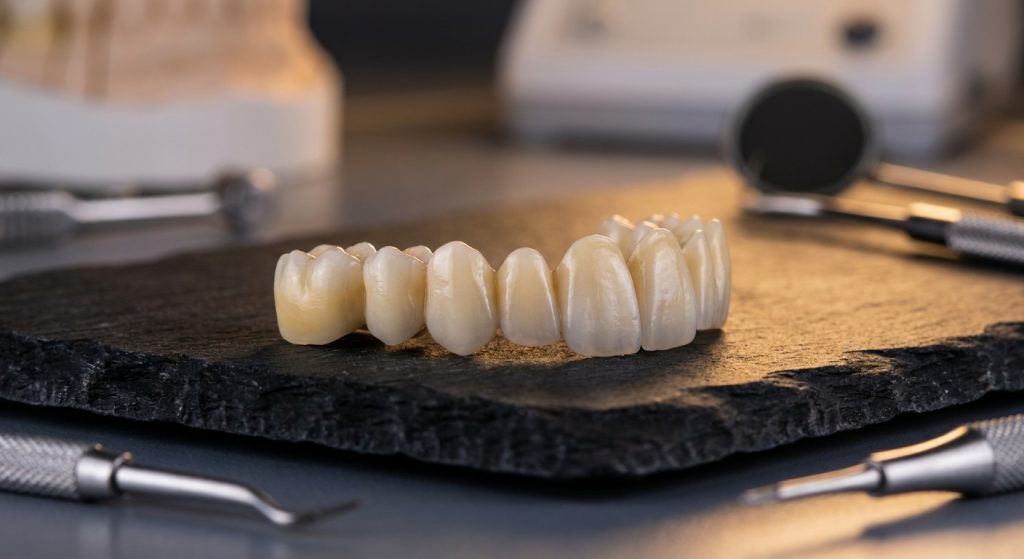
The optimal clinical application of 4Y Zirconia spans across both the anterior and posterior regions, making it a highly versatile material for modern dental laboratories. Because it successfully balances structural integrity with lifelike translucency, you can safely utilize it for multi-unit bridges and high-load single crowns. Understanding these clinical boundaries is essential for avoiding catastrophic structural failures.
When Should We Select 4Y for Multi-Unit Bridges?
Multi-unit posterior restorations represent one of the most demanding challenges in digital restorative dentistry. The material must withstand heavy masticatory stresses while maintaining a natural, lifelike appearance. Clinical performance data shows that restorations fabricated with high-quality universal blanks exhibit exceptional long-term survival rates.
Here’s why:
- Posterior 3-Unit FDPs: The primary clinical indication where high strength (850 MPa) and lifelike aesthetics are both required.
- Monolithic Posterior Crowns: Eliminates the risk of cosmetic porcelain chipping by avoiding the need for a glass veneer overlay.
- Full-Contour Restoration: Delivers beautiful anatomy and natural aesthetics straight out of the milling machine with minimal staining.
Why Is 5Y Restricted Mainly to Anterior Zones?
The higher yttria content in 5Y zirconia increases its translucency but severely reduces its fracture toughness and flexural strength. Sintered 5Y materials lack the self-healing transformation mechanism needed to withstand posterior bite forces.
Don’t overlook this.
- Anterior Crowns & Veneers: The perfect indication for 5Y-PSZ, where cosmetic appearance is paramount and loads are minimal.
- Molar Restorations Risk: High risk of catastrophic failure under heavy occlusion if occlusal thickness drops below 1.5 mm.
- Bruxism Contraindication: Patients with teeth-grinding habits should never receive 5Y-PSZ posterior restorations.
| Clinical Indication | 3Y-TZP | 4Y-PSZ | 5Y-PSZ |
|---|---|---|---|
| Single Posterior Crown | Recommended | Best Choice | Contraindicated |
| Posterior 3-Unit Bridge | Best Choice | Recommended | Contraindicated |
| Ultra-Thin Veneers | Contraindicated | Recommended | Best Choice |
Let’s evaluate how these materials behave over time when exposed to the moist intraoral environment.
Key Takeaway: Standardizing your laboratory production on 4Y-PSZ ensures you have a reliable, high-strength material for multi-unit posterior bridges, while limiting 5Y-PSZ to low-load cosmetic anterior cases.
How Does Hydrothermal Aging Affect 4Y Zirconia?
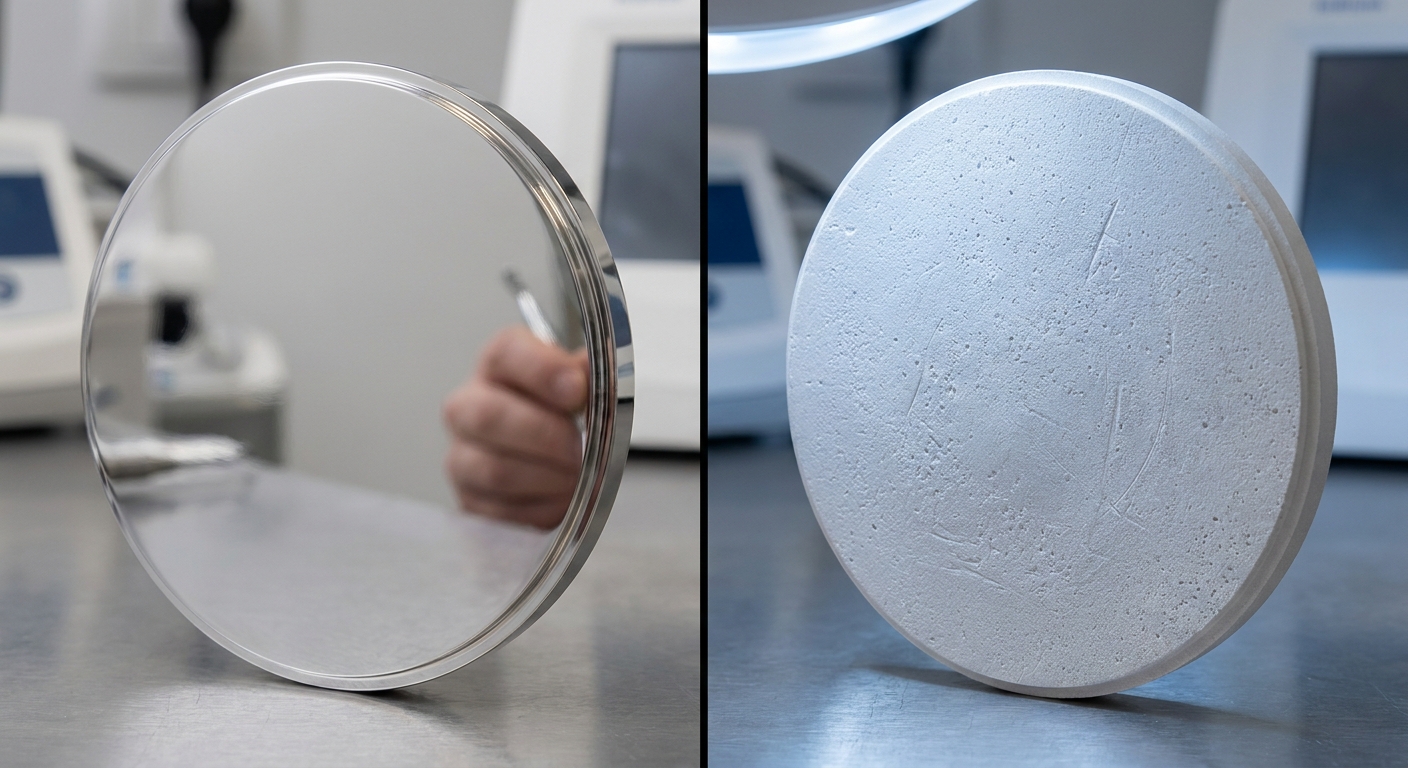
Hydrothermal aging affects 4Y Zirconia by slowly triggering a spontaneous phase transformation at the restoration’s surface when exposed to intraoral moisture. This slow transformation can compromise the surface polish and gradually weaken the mechanical properties over several years of clinical service. Implementing proper finishing and polishing protocols is key to preventing this aging process from damaging opposing natural dentition.
What Is Low-Temperature Degradation in PSZ?
Low-temperature degradation occurs when water molecules diffuse into the zirconia crystal lattice over time. This moisture infiltration causes metastable tetragonal grains to spontaneously shift into the monoclinic phase without any physical load. Sourcing raw materials from advanced manufacturers with high-purity chemical processes is the best way to safeguard your restorations against aging-related surface degradation.
That is why:
- Hydrothermal Vulnerability: High-cubic formulations can experience localized phase instabilities at the surface when exposed to saliva.
- Microstructural Surface Spalling: Individual grains can lift off the surface, leading to food debris accumulation and increased wear on opposing natural teeth.
- Impurity-Driven Degradation: Trace silica and iron oxide impurities accelerate the rate of hydrothermal aging.
How Do Finish and Glaze Protocols Protect Surface?
The method used to finish the sintered restoration directly influences its long-term resistance to hydrothermal aging. While oven-glazing is a popular laboratory technique, mechanical hand-polishing creates a much more durable, wear-resistant surface.
Think about it.
- Mechanical Polishing: Fine-grit diamond polishers create a dense, highly compressed surface layer that blocks water molecule penetration.
- Over-Glazing Risks: Glaze layers can wear away within 1–2 years, exposing a rough, unpolished zirconia surface that acts like sandpaper on opposing teeth.
- Finishing Protocol: A mandatory sequence of fine grinding followed by diamond paste polishing to achieve a mirror-like finish.
| Aging & Finishing Indicator | 3Y-TZP | 4Y-PSZ | 5Y-PSZ |
|---|---|---|---|
| Susceptibility to LTD | Low-Moderate | Moderate | Moderate-High |
| Recommended Finishing | Polish & Glaze | High Diamond Polish | High Diamond Polish |
| Micro-Crack Infiltration Risk | Low | Moderate | Moderate-High |
Let’s detail the exact CAD/CAM preparation and handling protocols required to optimize these materials.
Key Takeaway: Emphasizing high-performance mechanical diamond polishing over simple oven-glazing creates a dense compressive surface layer, protecting the 4Y-PSZ restoration against long-term hydrothermal aging.
What Are Best CAD/CAM Protocols for 4Y Zirconia?
Optimizing your digital CAD/CAM design parameters and chemical bonding methods for 4Y Zirconia is critical to ensuring the long-term clinical success of your restorations. Failing to maintain minimum material thickness during digital design can lead to localized stress concentrations and unexpected mechanical failures. Applying proper adhesive cementation protocols is equally important to maximize crown retention and strengthen the ceramic structure.
What Thickness Requirements Guarantee Longevity?
The digital design phase of a dental restoration must strictly adhere to the physical limitations of the selected ceramic material. Reducing the thickness of a crown below manufacturer guidelines to save tooth structure often leads to premature fracture under chewing forces.
Keep in mind:
- 4Y-PSZ Minimum Occlusal Thickness: 1.0 mm (allowing for conservative tooth preparation).
- 5Y-PSZ Minimum Occlusal Thickness: 1.5 mm (necessary to compensate for its lower mechanical strength).
- Margin Design Guidelines: A smooth chamfer or rounded shoulder preparation with a minimum thickness of 0.8 mm.
How Should We Handle Adhesive Cementation Protocols?
Achieving a strong, long-lasting bond to zirconia requires a combination of mechanical micro-roughness and chemical coordination. Sourcing premium blocks with uniform microstructures ensures the ceramic can withstand clinical sandblasting without developing subsurface micro-cracks.
Here is the exact sequence:
- Alumina Sandblasting: Low pressure (50 μm Al₂O₃ at 1.5–2.0 bar) to clean and micro-roughen the bonding surface without causing phase damage.
- 10-MDP Chemical Primer: Essential for creating a strong chemical bond with the metal oxides on the zirconia surface.
- Dual-Cure Adhesive Resin: Recommended for all 5Y restorations to distribute chewing forces evenly and prevent fracture initiation.
| Design & Cementation Parameter | 4Y-PSZ Protocol | 5Y-PSZ Protocol |
|---|---|---|
| Min. Occlusal Thickness | 1.0 mm | 1.5 mm |
| Preferred Cementation | Resin Modified Glass Ionomer (RMGI) or Adhesive | Dual-Cured Resin Cement (Adhesive Required) |
| Surface Pre-treatment | Air abrasion with 50 μm alumina at 1.5 bar + MDP | Air abrasion with 50 μm alumina at 1.0 bar + MDP |
This brings us to the most common quality assurance and technical procurement questions facing modern laboratories.
Key Takeaway: Enforcing a strict 1.0 mm minimum occlusal thickness in your CAD software and recommending a 10-MDP adhesive primer protocol prevents clinical failures and dramatically reduces dental crown remakes.
What Are Top Technical Questions on 4Y Zirconia?
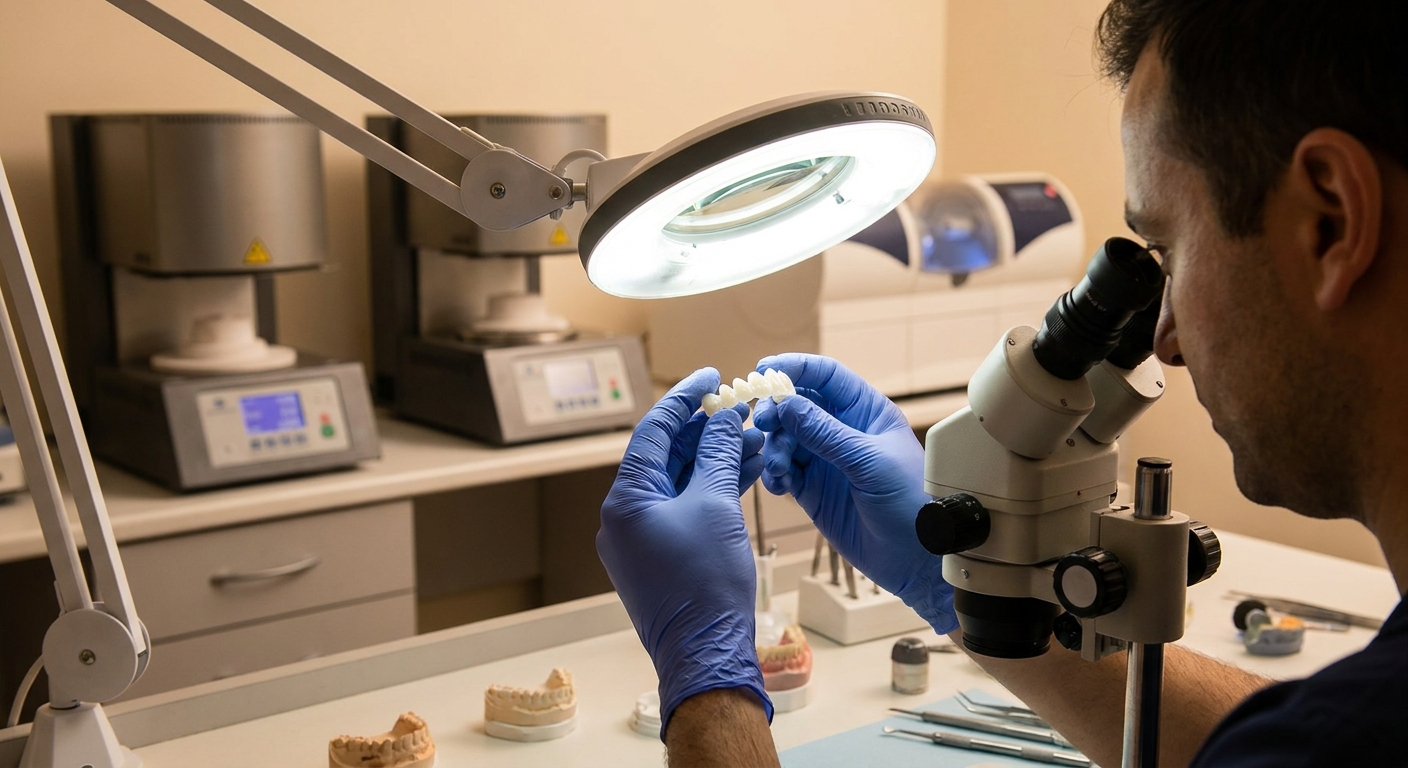
Understanding the top technical and quality control questions surrounding 4Y Zirconia is essential for B2B procurement teams who want to optimize their material sourcing and milling performance. Because sintering variables can alter both the strength and optical properties of the finished restoration, choosing the right material partner is critical. Let’s explore how leading digital laboratories address these common fabrication challenges.
What Are Crucial Dental Lab Sourcing Decisions?
Sourcing high-quality raw materials is the foundation of a highly profitable digital dental laboratory. When evaluating zirconia suppliers, procurement teams must look past low prices and focus on batch-to-batch chemical consistency and predictable shrinkage rates.
Let’s clear the air.
- Sintering Quality: Understanding how sintering temperature changes affect both translucency and mechanical strength.
- Material Swaps: Guidelines on when to safely swap 3Y, 4Y, and 5Y materials based on the clinical indication.
- Raw Powder Sourcing: Sourcing high-purity, ISO-certified raw powders is essential to avoid fit issues and restorations cracking during firing.
How Do Technicians Solve Sintering Variations?
Sintering is the most critical step in the dental ceramic workflow, directly controlling the final grain size and phase distribution of the material. Technicians must calibrate their laboratory furnaces regularly to ensure they hit the exact temperature profiles recommended by the manufacturer.
Think about it.
- Temperature Calibration: Minor heating discrepancies can lead to under-sintering (low strength) or over-sintering (loss of translucency).
- Cooling Rate Management: Rapid cooling can introduce high thermal residual stresses, leading to micro-cracks inside the restoration.
- Furnace Contamination: Clean heating elements prevent discoloration and preserve the pristine, translucent appearance of the zirconia.
| Sintering & QC Parameter | Under-Sintered State | Optimized Sintering Profile | Over-Sintered State |
|---|---|---|---|
| Target Temperature | < 1450°C | 1500°C – 1550°C | > 1600°C |
| Sintering Result | Unfinished density, opaque, low strength | Ideal density, high strength, balanced translucency | Grain growth, low aging resistance, loss of strength |
Let’s summarize how solving these material and processing challenges can elevate your business.
Key Takeaway: Regular calibration of your lab’s sintering furnaces and standardizing your CAD/CAM workflows with high-purity zirconia blocks eliminates processing defects and ensures predictable, high-strength restorations.
Conclusion & CTA
Modern B2B dental laboratories and CAD/CAM milling centers no longer have to struggle with the compromise between high mechanical strength and natural, tooth-like aesthetics. By mastering the material differences between 4Y-PSZ and 5Y-PSZ zirconia, you can eliminate clinical remake rates, streamline your digital lab inventory, and deliver restorations that clinicians trust for long-term clinical success. Our advanced, high-purity manufacturing processes are engineered to solve these precise clinical challenges, delivering predictable shrinkage rates and exceptional edge stability in every single blank. Let our expert technical team support your production goals with our industry-leading zirconia solutions. Contact us today to receive customized material specifications and elevate your dental laboratory’s restoration quality to a global standard of excellence.
Frequently Asked Questions
1. Can I use 5Y-PSZ zirconia for posterior multi-unit bridges?
No, you should not. It is highly recommended to avoid using 5Y-PSZ for posterior multi-unit bridges because its high cubic phase content limits its flexural strength to 600–700 MPa and reduces its fracture toughness. Under heavy biting forces in the posterior region, these restorations are highly vulnerable to catastrophic cohesive fractures, especially at the connectors. Instead, utilize 4Y-PSZ (which offers 850+ MPa strength) to ensure a safe margin of structural resilience.
2. What’s the best cementation method for high-translucency 4Y zirconia?
Adhesive resin cementation with a 10-MDP primer is the absolute best method. While 4Y-PSZ crowns with good mechanical retention can be successfully cemented using standard self-adhesive resin cements or resin-modified glass ionomers (RMGI), the use of a 10-MDP chemical primer creates a highly durable, water-resistant bond with the metal oxides on the zirconia surface, reinforcing the restoration against biting forces.
You can verify this by checking for consistent batch-to-batch shrinkage factors and ISO/FDA certifications. Premium raw material suppliers provide comprehensive batch traceability, tightly controlled particle size distributions, and a certified chemical analysis showing high phase purity, ensuring that restorations do not warp, develop micro-voids, or change shades during sintering.
4. Can I perform sandblasting on a 5Y zirconia crown without risking micro-cracking?
Yes, but you must keep the sandblasting pressure capped at 1.0 to 1.5 bar. Because 5Y-PSZ lacks the transformation-toughening self-healing mechanism of 3Y and 4Y zirconia, high-pressure air abrasion can easily introduce deep micro-cracks that severely compromise its strength. Use fine 50-micrometer aluminum oxide particles and hold the nozzle at least 10 mm away from the internal surface.
5. How do I know if 4Y zirconia or lithium disilicate is better for a dental restoration?
The choice comes down to a trade-off between the absolute highest aesthetic demands and structural force requirements. Choose lithium disilicate for ultra-thin veneers and anterior cases requiring maximum translucency where biting forces are low, and the restorations can be fully bonded to sound enamel. Choose 4Y zirconia when you need a balanced, high-strength restoration that can mask discolored prep posts, support posterior bridge spans, or require a more conservative prep design with thinner margins.