Choosing the right dental implant involves balancing mechanical strength with long-term biological compatibility to ensure a successful restoration. Missing a tooth affects more than just your smile; it disrupts your speech, diet, and self-confidence while potentially leading to bone loss. You may fear a metallic “gray line” at the gum or a hidden allergy, but modern material science offers clear paths to a perfect solution. Evaluating zirconium vs titanium dental implants allows you to select a material that fits your specific health profile and aesthetic goals.
What is the main difference in zirconium vs titanium?
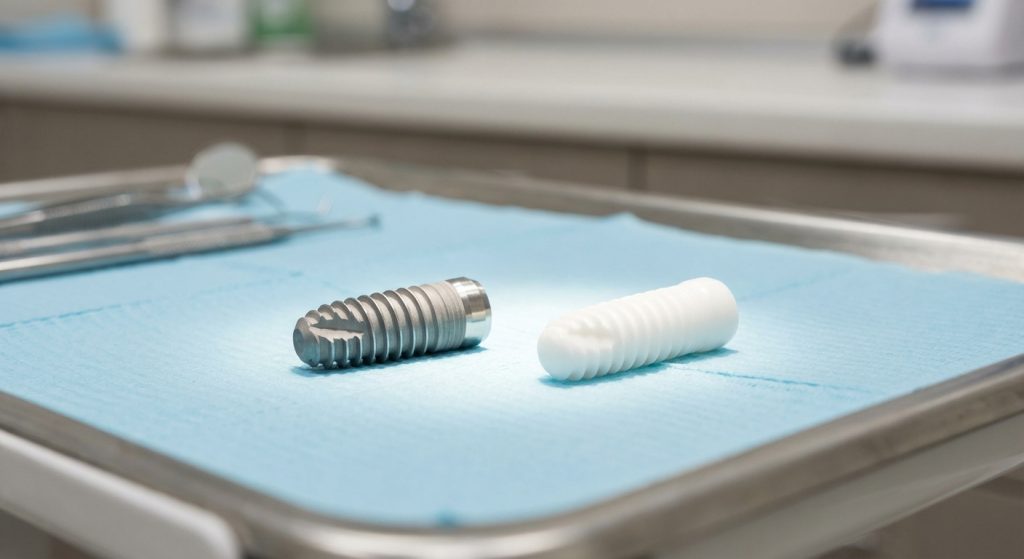
The primary difference lies in their material classification: titanium is a metal alloy, while zirconia is a high-performance ceramic. When comparing zirconium vs titanium, you are choosing between a traditional metallic post and a metal-free alternative. Both serve as a foundation for crowns, but they interact with the oral environment in distinct ways.
Composition and Structural Integrity
You need to understand the molecular makeup to appreciate how these implants function daily. Titanium has been used in surgery for decades because of its ability to create a passive oxide layer. Zirconia is derived from zirconium dioxide and is prized for its crystalline structure.
Here is the deal:
- Titanium: A lightweight metal that resists corrosion and high-impact forces.
- Zirconia: A non-metallic ceramic known for its extreme hardness and thermal stability.
- Hybrid Options: Some modern designs combine these elements for specialized dental needs.
Key Takeaway: Selecting the right material ensures your implant behaves like a natural tooth root while maintaining structural integrity over time.
| Feature | Titanium Implants | Zirconia Implants | |
|---|---|---|---|
| Material Class | Metal Alloy | Technical Ceramic | |
| Primary Benefit | Proven Durability | Metal-free Aesthetics | |
| Common Application | General Restorations | Front Teeth / Smile Zone |
Standardized material testing confirms that both options provide the necessary support for high-load dental restorations.
Is zirconium vs titanium better for biocompatibility?
Both materials are considered highly biocompatible, meaning they are non-toxic and integrate seamlessly with human tissue. Research on zirconium vs titanium shows that the body accepts both as stable components for osseointegration. Titanium is famous for its history of safety, while zirconia is often preferred by those seeking a completely bio-inert, non-metallic option.
Biological Response and Tissue Health
Biocompatibility is the foundation of a long-lasting implant that won’t cause systemic inflammation. Titanium’s oxide layer prevents it from reacting with body fluids, making it safe for the vast majority of patients. Zirconia takes this a step further by being a ceramic, which naturally discourages bacterial plaque accumulation at the gum line.
But wait, there is more:
- Tissue Attachment: Zirconia promotes healthy soft tissue attachment for a tight seal.
- Corrosion Resistance: Both materials are resistant to the chemical environment of the mouth.
- Systemic Impact: Non-metallic options appeal to patients focusing on holistic health protocols.
Key Takeaway: High biocompatibility reduces the risk of implant rejection and ensures the surrounding gums stay healthy and vibrant.
| Biological Factor | Titanium Profile | Zirconia Profile | |
|---|---|---|---|
| Plaque Affinity | Low | Very Low | |
| Soft Tissue Reaction | Good | Excellent | |
| Metal-Free Status | No | Yes |
Analysis indicates that while titanium is the historical gold standard, zirconia offers superior soft-tissue response for sensitive patients.
Which is stronger when comparing zirconium vs titanium?
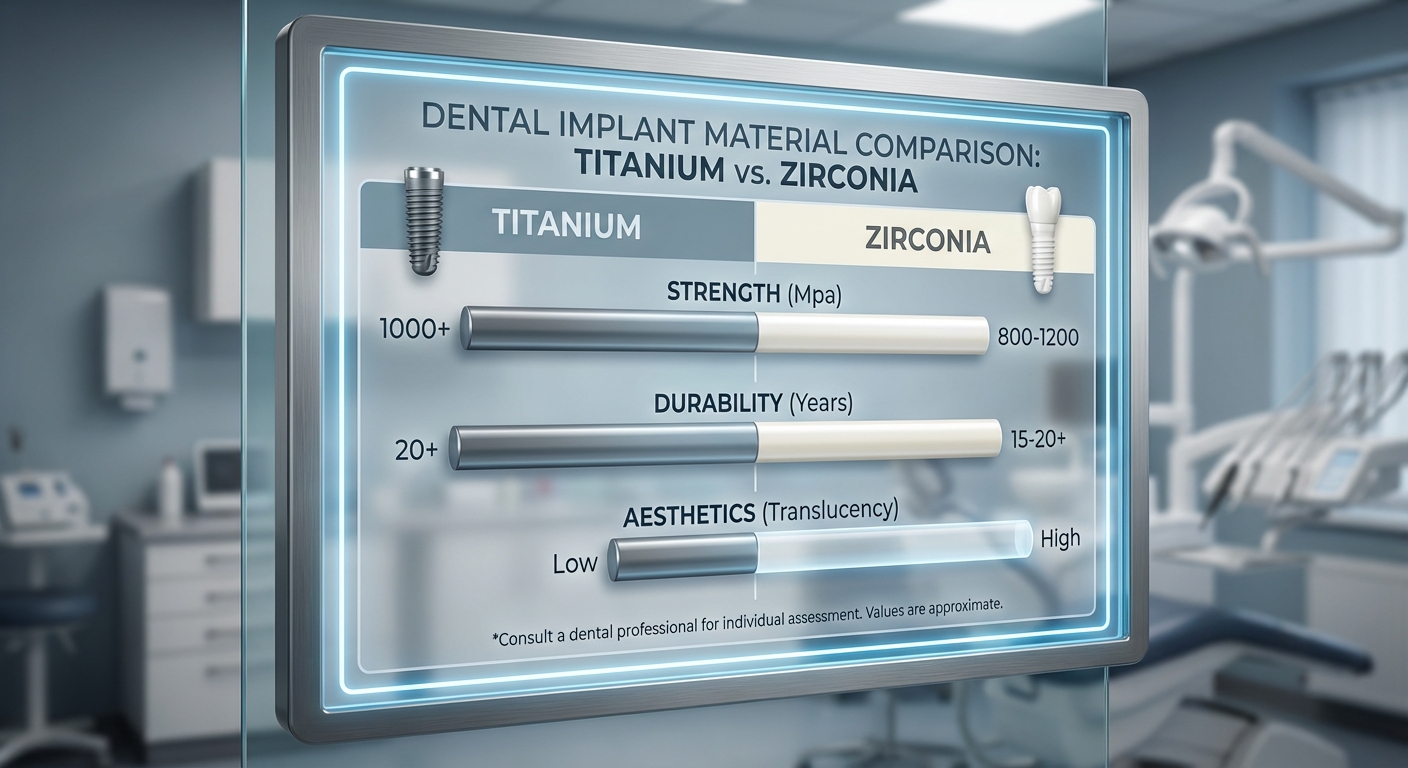
Titanium generally offers higher tensile strength and flexibility compared to the more rigid and brittle nature of zirconia. When you look at zirconium vs titanium in terms of mechanical stress, titanium’s ability to withstand high-impact forces makes it incredibly reliable. Zirconia is extremely hard, but its ceramic nature means it has lower fracture toughness under certain extreme pressures.
Fracture Resistance and Biting Forces
You must consider how much pressure your back teeth endure during a typical meal. Titanium implants can flex slightly under load, which helps distribute the force into the jawbone safely. Zirconia is highly resistant to wear but requires careful placement to avoid potential micro-cracks over many years of heavy use.
Let’s look at the facts:
- Tensile Strength: Titanium exceeds most ceramics in its ability to resist snapping under tension.
- Compressive Strength: Zirconia is world-class in resisting crushing forces.
- Elastic Modulus: Titanium’s flexibility is closer to natural bone than most other materials.
Key Takeaway: Choosing titanium provides a safety margin for heavy biters, while zirconia offers high resistance to surface wear.
| Mechanical Property | Titanium | Zirconia (3Y-TZP) | |
|---|---|---|---|
| Fracture Toughness | Very High | Moderate to High | |
| Elasticity | Slightly Flexible | Rigid | |
| Wear Resistance | High | Exceptional |
The data shows that titanium remains the mechanical leader for high-load molar replacements where flexibility is an asset.
How do zirconium vs titanium implants look aesthetically?
Zirconia is the clear winner for aesthetics because its natural white color mimics the look of a natural tooth root. In the debate of zirconium vs titanium , patients with thin gums often prefer zirconia to avoid the “gray shadow” effect. Titanium is a dark metal that can sometimes be visible through the gum tissue, particularly in the “smile zone” at the front of the mouth.
Managing the Appearance of the Gum Line
Achieving a natural smile requires the implant to be invisible even if your gums recede slightly over time. Zirconia’s opacity and color are designed to blend perfectly with ceramic crowns and your natural teeth. Titanium can be masked with ceramic abutments, but the underlying metal post still carries a risk of visual detection.
But here is the kicker:
- Color Match: Zirconia provides a tooth-colored foundation from the bone up.
- Gum Shadowing: Eliminates the dark gray line often associated with older metal implants.
- Translucency: Mimics the way light passes through natural tooth structure.
Key Takeaway: Zirconia is the premier choice for front-row teeth where visual perfection is the primary goal of the procedure.
| Aesthetic Factor | Titanium Implants | Zirconia Implants | |
|---|---|---|---|
| Visual Profile | Metallic Gray | Tooth-Colored White | |
| Gum Compatibility | Risk of Shadowing | Highly Aesthetic | |
| Crown Integration | Requires Abutment | Integrated Appearance |
Visual analysis suggests that zirconia provides the most lifelike results for patients concerned about the visibility of dental work.
Are there allergy risks with zirconium vs titanium?

Titanium allergies are exceptionally rare, but zirconia provides a 100% metal-free, hypoallergenic alternative for peace of mind. While most people have no reaction to zirconium vs titanium, those with sensitivities to nickel or other metals may feel safer with ceramic. Zirconia is biologically inert and does not trigger the immune responses sometimes seen in patients with hypersensitivity to metals.
Identifying and Mitigating Sensitivities
You should discuss any history of skin rashes from jewelry or other metal contacts with your dentist before choosing an implant. Although titanium is purified for medical use, micro-impurities can occasionally cause local irritation in susceptible individuals. Zirconia removes this variable entirely, offering a solution that is as close to natural bone chemistry as possible.
Think about this for a second:
- Metal-Free: Zirconia is a ceramic, not a metal, which eliminates galvanic corrosion.
- Immune System: Ceramic implants are less likely to cause a systemic immune response.
- Testing: Patients can undergo MELISA testing to check for specific metal allergies.
Key Takeaway: Opting for zirconia provides a guaranteed hypoallergenic path for patients who are cautious about introducing metals into their bodies.
| Allergy Profile | Titanium | Zirconia | |
|---|---|---|---|
| Hypoallergenic | High | Absolute | |
| Metal-Free | No | Yes | |
| Reactivity Risk | Trace | Zero |
Strategic material selection for allergic patients involves prioritizing ceramic options to eliminate potential long-term inflammatory triggers.
How does bone integration differ in zirconium vs titanium?
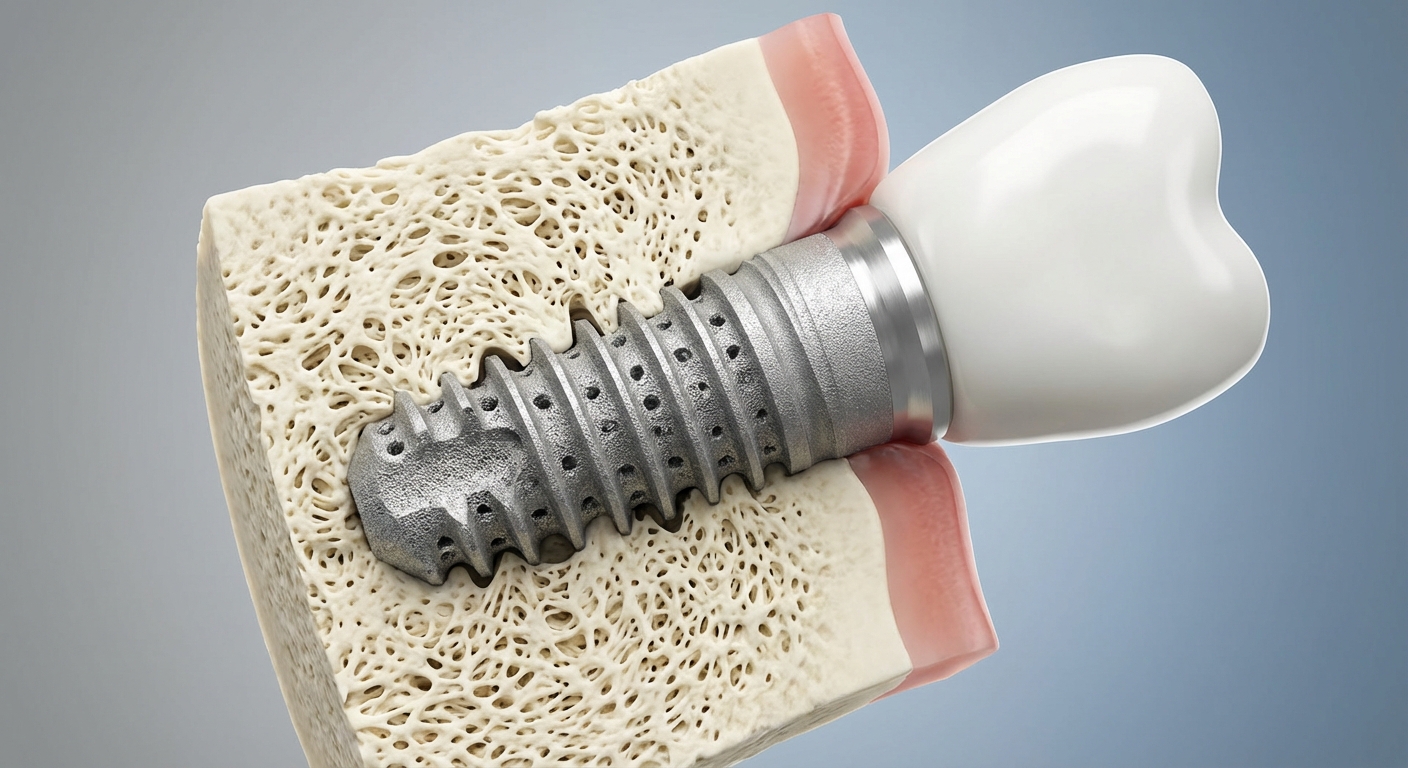
Both materials achieve excellent osseointegration, but titanium has a longer track record of successful bone bonding in diverse clinical cases. When studying zirconium vs titanium , researchers find that bone cells (osteoblasts) readily attach to both surfaces. Titanium relies on its specialized surface roughing, while zirconia uses its bio-inert ceramic surface to facilitate a strong mechanical bond with the jawbone.
The Science of Osseointegration
The success of your implant depends on the jawbone growing around the post to lock it firmly in place. Titanium has been the subject of thousands of studies proving its ability to form a permanent bond with human bone over 3 to 6 months. Zirconia is showing comparable success rates in modern trials, offering a reliable alternative for those who prefer ceramic.
Here is the deal:
- Surface Engineering: Manufacturers use acid-etching or sandblasting to increase bonding area.
- Bone Density: Both materials require adequate bone volume to achieve primary stability.
- Healing Time: Generally similar for both, though titanium is the benchmark for predictability.
Key Takeaway: You can trust both materials to become a permanent part of your jaw, provided the surgical site is healthy.
| Integration Metric | Titanium | Zirconia | |
|---|---|---|---|
| Clinical History | 50+ Years | 20+ Years | |
| Cell Attachment | Excellent | Excellent | |
| Stability Type | Bio-Mechanical | Bio-Mechanical |
Success in bone integration is highly dependent on the precision of the material’s surface texture and the patient’s overall health.
Which costs more between zirconium vs titanium?
Zirconia implants typically cost more than titanium due to higher manufacturing complexity and material processing requirements. When comparing the investment of zirconium vs titanium, you must consider the specialized laboratory fees associated with milling high-purity ceramic components. Titanium is a more established material with a streamlined supply chain, often making it the more budget-friendly choice for full-mouth restorations.
Understanding the Financial Investment
You are paying for the advanced engineering required to create a ceramic post that can withstand years of biting forces. Zirconia requires precision CAD/CAM milling and high-temperature sintering, which adds to the final price tag. Titanium implants benefit from massive economies of scale and standardized surgical kits used by almost every dental practice.
But wait, there is more:
- Component Costs: Zirconia abutments and posts are priced as premium items.
- Laboratory Fees: Technical ceramics require specialized equipment to shape and finish.
- Long-term Value: Both options prevent bone loss, saving you from more expensive future procedures.
Key Takeaway: While zirconia requires a higher initial investment, its aesthetic and hypoallergenic benefits provide significant long-term value for many patients.
| Cost Component | Titanium | Zirconia | |
|---|---|---|---|
| Material Price | Moderate | High | |
| Manufacturing | Standard | Specialized | |
| Market Availability | Universal | Premium/Niche |
Evaluating the total cost of ownership reveals that both materials offer high ROI by preserving oral health and bone structure.
Is zirconium vs titanium better for molar durability?
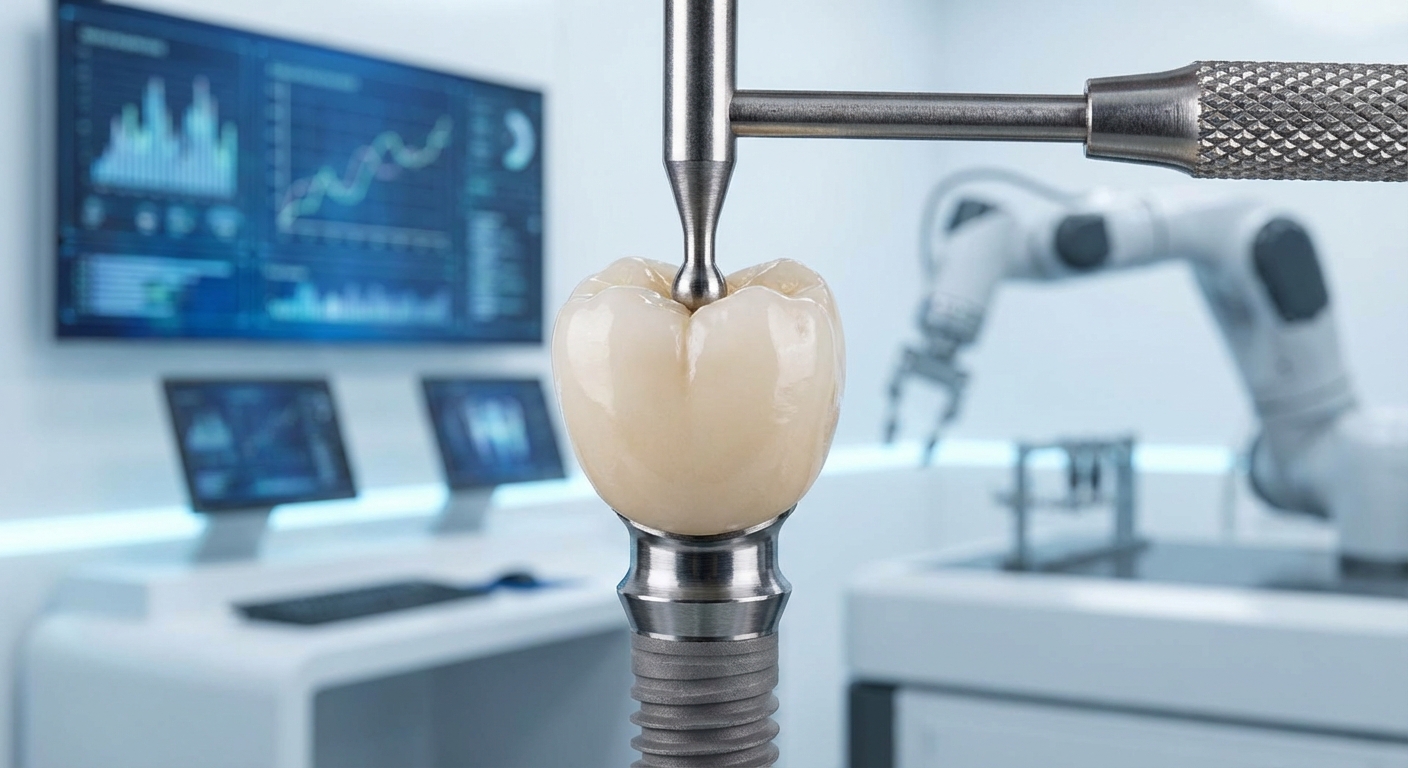
Titanium is generally considered better for molar durability because it can better withstand the extreme chewing pressures found at the back of the mouth. In the comparison of zirconium vs titanium , the metal’s higher fracture toughness makes it less likely to break under a heavy bite. Zirconia is incredibly strong, but its rigid nature makes it slightly more susceptible to fracturing if the biting forces are not perfectly distributed.
Withstanding High Biting Forces
Your back teeth act as the “workhorses” of your mouth, crushing tough foods and stabilizing your jaw. Titanium’s slight flexibility allows it to act like a shock absorber, protecting both the implant and the surrounding bone. Zirconia is a fantastic option for molars if you have a controlled bite, but many surgeons still lean toward titanium for patients who grind their teeth (bruxism).
Let’s look at the facts:
- Mechanical Load: Molars handle up to 200 pounds of pressure during heavy chewing.
- Failure Modes: Titanium fails by bending (rare), while zirconia fails by cracking (rare but possible).
- Structural Design: Titanium’s two-piece design is optimized for high-load distribution.
Key Takeaway: For the highest level of mechanical security in the molar region, titanium remains the industry-preferred solution.
| Durability Metric | Titanium | Zirconia | |
|---|---|---|---|
| Molar Suitability | Ideal | Good | |
| Fracture Risk | Very Low | Low | |
| Stress Distribution | Dynamic | Rigid |
Clinical data suggests that titanium’s mechanical properties provide a more forgiving environment for high-stress posterior restorations.
What is the lifespan of zirconium vs titanium?
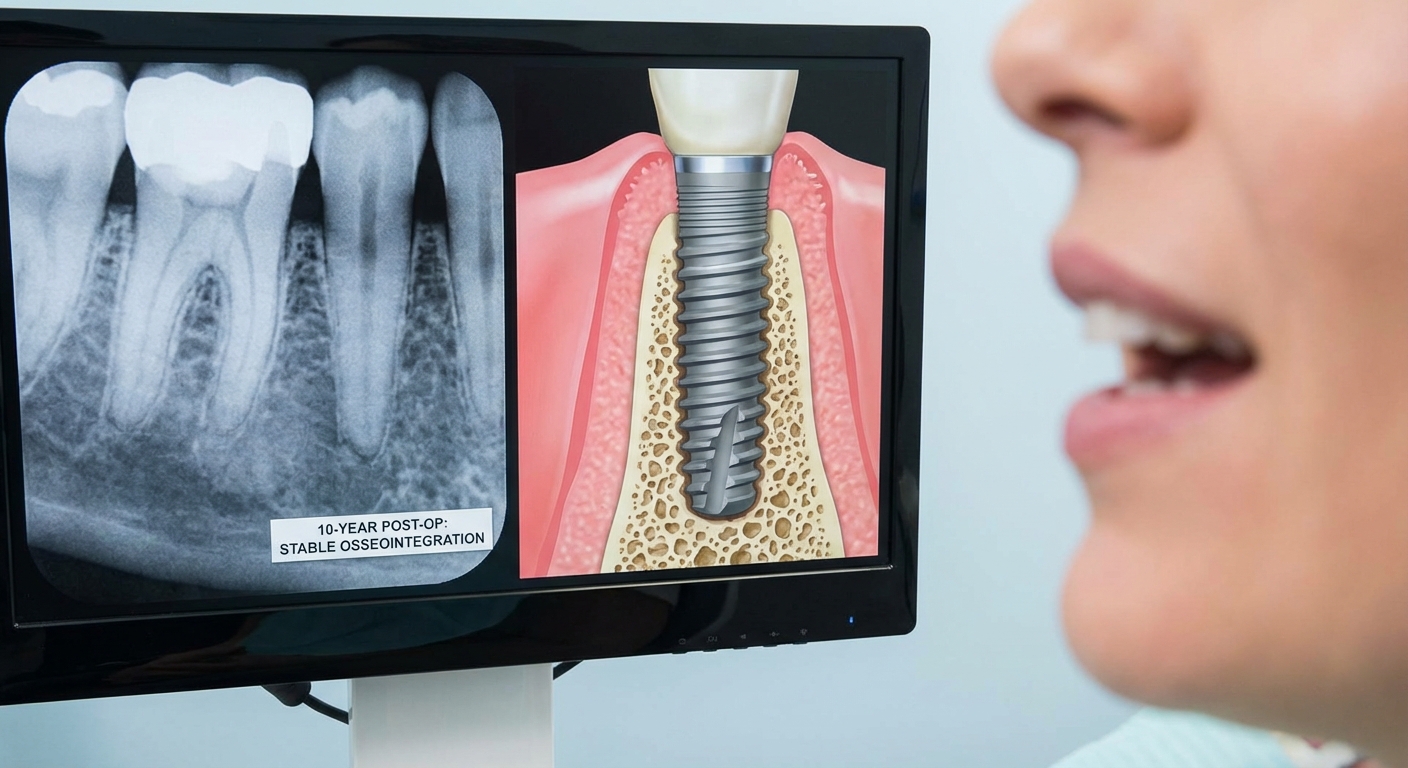
Both titanium and zirconia implants are designed to last over 20 years, and often a lifetime, with proper oral hygiene. When evaluating the longevity of zirconium vs titanium, titanium has the advantage of decades more clinical data proving its 95-98% success rate. Zirconia is a newer technology, but current studies show that it is highly durable and capable of providing a permanent tooth replacement solution.
Maintenance and Long-Term Success
You must commit to regular dental check-ups and excellent brushing habits to ensure your implant survives. The most common cause of implant failure is not the material itself, but “peri-implantitis”—an infection of the gums surrounding the post. Zirconia may have a slight advantage here, as its surface is naturally more resistant to the bacteria that cause these infections.
But here is the kicker:
- Proven History: Titanium has been tracked in patients for over 40 years.
- Modern Innovation: New zirconia formulations are tougher and more stable than those from 10 years ago.
- Hygiene Factor: Both materials require daily flossing and professional cleanings.
Key Takeaway: Regardless of your choice, the longevity of your implant depends largely on your commitment to oral health.
| Longevity Factor | Titanium | Zirconia | |
|---|---|---|---|
| Success Rate | 95-98% | 95-97% (Short-term data) | |
| Predicted Lifespan | 25+ Years | 20+ Years | |
| Failure Cause | Infection / Load | Infection / Fracture |
Analytical review confirms that material choice is secondary to surgical precision and patient maintenance for long-term survival.
How to choose between zirconium vs titanium?
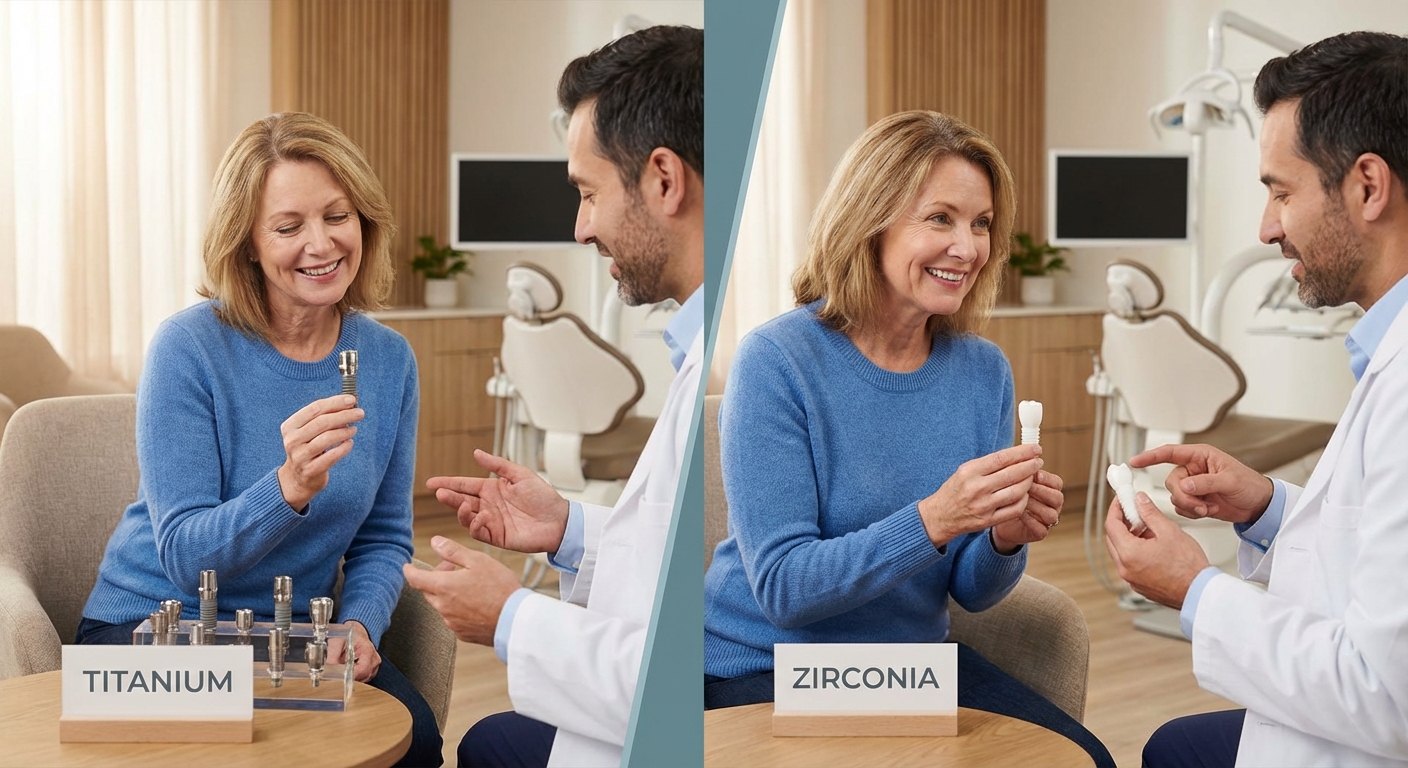
The best choice between zirconium vs titanium depends on your aesthetic priorities, bone health, and history of metal sensitivities. If you are replacing a front tooth and have thin gums, zirconia is likely the superior choice for a natural look. However, if you need a durable molar and have a limited budget, titanium offers a proven, cost-effective solution with a massive track record of success.
Personalized Factors for Your Decision
Your dentist will perform a 3D scan of your jaw to determine your bone density and the exact space available. You should weigh the desire for a “metal-free” lifestyle against the decades of mechanical evidence supporting titanium alloys. Ultimately, the decision should be a collaborative effort between you and your surgical team based on your unique oral anatomy.
Here is the deal:
- Choose Titanium: For back teeth, high-load areas, or if cost is a primary concern.
- Choose Zirconia: For front teeth, metal allergies, or a desire for the most natural aesthetics.
- Consult the Experts: Always get a professional assessment of your specific jawbone health.
Key Takeaway: Balancing functional needs with aesthetic desires will lead you to the implant material that best suits your lifestyle.
| Decision Matrix | Choose Titanium | Choose Zirconia | |
|---|---|---|---|
| Priority | Strength & Budget | Beauty & Bio-inertness | |
| Location | Molars | Front Teeth | |
| Health History | No Metal Allergies | Sensitive / Holistic |
Final analysis shows that the “perfect” material is the one that aligns with your clinical needs and personal health philosophy.
Conclusion
The decision between titanium and zirconia dental implants is a pivotal step in restoring your quality of life and oral health. This guide has solved the confusion surrounding material strength, biocompatibility, and aesthetic outcomes to help you move forward with confidence. We provide the high-purity materials that make these advanced dental solutions possible, ensuring that every patient has access to safe, durable restorations.
If you are ready to explore how high-performance ceramic and metal components can transform your dental practice or patient outcomes, please contact us today . We are dedicated to providing the technical expertise and material stability required to push the boundaries of modern dentistry. Our vision is a world where every dental restoration is a perfect blend of science and beauty, and we invite you to join us in making that a reality.
FAQ
Can I get a zirconia implant if I have a titanium allergy?Yes, zirconia is a 100% metal-free ceramic material, making it the perfect hypoallergenic alternative for patients with confirmed metal sensitivities.
Is zirconia more likely to crack than titanium?Directly answered, yes; zirconia is a ceramic and is more brittle than metal, meaning it has a slightly higher risk of fracture under extreme biting forces compared to the flexibility of titanium.
What is the best material for replacing a single front tooth?Zirconia is widely considered the best choice for front teeth because its white color prevents the metallic gray shadow that can sometimes show through the gums with titanium.
Are titanium implants still the “Gold Standard” in 2026?Titanium remains the industry benchmark due to its 50-year history of clinical success and superior mechanical properties for high-load areas like molars.
How do I know which material is right for my jawbone?You should consult with a dental professional who can perform 3D imaging to assess your bone density and recommend the material that offers the best osseointegration for your anatomy.