Zirconium silicate is the primary opacifying agent used to achieve high whiteness, thermal stability, and surface hardness in modern ceramic glazes. You likely face the daily challenge of inconsistent glaze results where tiles emerge from the kiln with visible pinholes or a disappointing yellowish tint. This production hurdle doesn’t just frustrate your quality control team; it actively erodes your profit margins through high rejection rates and wasted energy. By integrating high-purity zirconium silicate into your formulations, you resolve these aesthetic and structural issues, ensuring a “first-pass” success rate that keeps your production line moving efficiently.
What exactly is zirconium silicate?
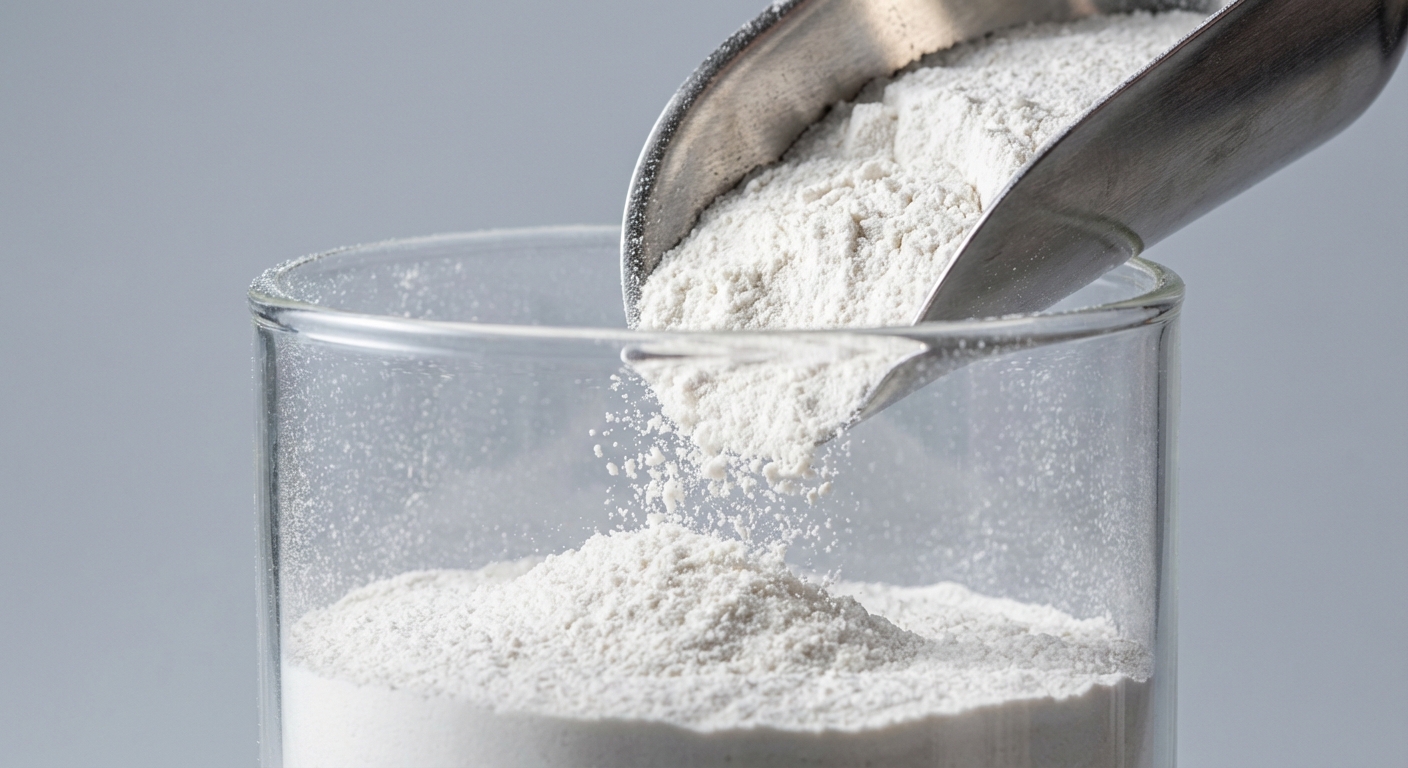
High-performance zirconium silicate is a non-toxic, odorless white powder synthesized from natural zircon sand through intensive ultra-fine grinding. It serves as a vital component in ceramic manufacturing due to its exceptional chemical inertness and high melting point.
What is its chemical composition?
You might be wondering: what makes this material so stable for high-temperature firing? The chemical formula ZrSiO4 represents a lattice that remains incredibly resilient even when exposed to the aggressive environment of a ceramic kiln.
- High refractive index (1.93-2.01).
- Thermal expansion coefficient stability.
- Excellent chemical resistance to acids and alkalis.
- Non-hazardous and environmentally safe.
How is the powder produced?
Here is the kicker: the quality of your glaze depends entirely on the processing steps the powder undergoes before reaching your factory. Manufacturers use specialized iron removal and surface modification to ensure the final product doesn’t introduce unwanted contaminants.
- Ultra-fine ball milling.
- Electromagnetic iron separation.
- Surface modification for better dispersion.
- Precision air classification.
Key Takeaway: Zirconium silicate provides the fundamental chemical stability needed to survive extreme kiln temperatures without losing its optical properties.
| Property | Value/Description | |
|---|---|---|
| Chemical Formula | ZrSiO4 | |
| Melting Point | Above 2,500°C | |
| Appearance | Fine White Powder | |
| Hardness | 7.5 (Mohs Scale) |
This chemical foundation is what allows the material to act as a permanent fixture in the glaze matrix without dissolving or reacting.
Why use zirconium silicate in ceramic glazes?
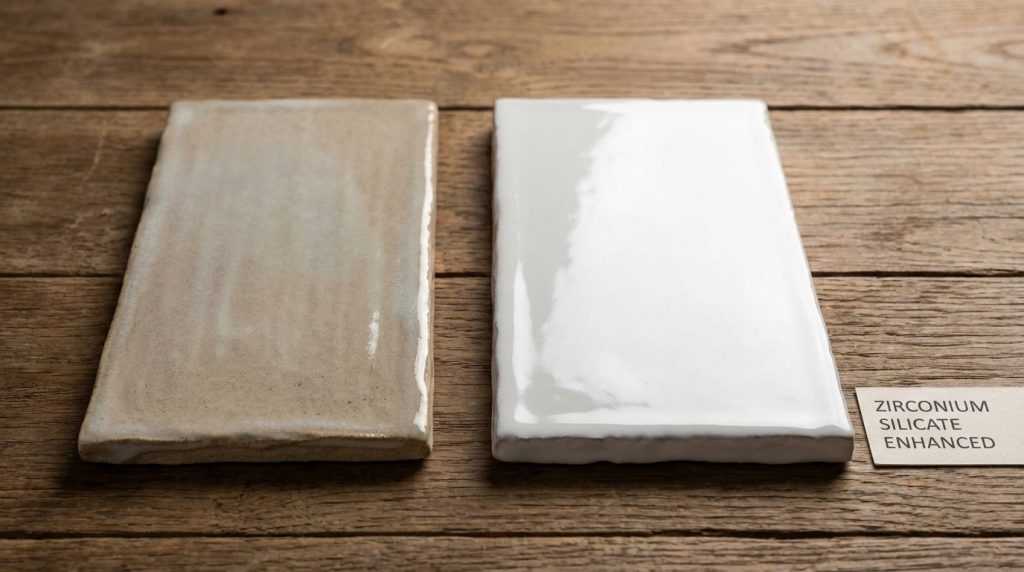
Zirconium silicate is primarily utilized in ceramic glazes to provide a dense, opaque white finish that hides the darker clay body underneath. It creates a professional aesthetic that is essential for both architectural tiles and household dinnerware.
Does it enhance optical brilliance?
Believe it or not, the secret to a “snow-white” tile is how the particles interact with incoming light. Because the refractive index of this material differs so much from the base glass, it scatters light effectively to create maximum brightness.
- Diffuses light across the surface.
- Eliminates the “transparency” of thin glazes.
- Ensures color consistency across batches.
- Reduces the need for expensive pigments.
How does it stabilize the glaze?
But wait, there’s more to it than just looks. This material prevents the molten glaze from reacting with the ceramic body during the peak of the firing cycle, which stops defects before they form.
- Increases the viscosity of the melt.
- Prevents “running” on vertical surfaces.
- Bridges the gap between body and glaze.
- Reduces thermal shock sensitivity.
Key Takeaway: Utilizing this opacifier is the most cost-effective way to achieve professional whiteness while simultaneously improving the physical integrity of the glaze.
| Benefit Category | Impact on Production | |
|---|---|---|
| Optical | High Opacity and Whiteness | |
| Processing | Improved Melt Viscosity | |
| Quality | Reduced Surface Defects | |
| Economics | Lower Pigment Consumption |
Maintaining a stable glaze formulation requires an opacifier that can perform these dual roles of aesthetic enhancement and structural stabilization.
Does zirconium silicate improve surface hardness?
Incorporating zirconium silicate into your glaze recipe significantly boosts the mechanical strength and wear resistance of the finished ceramic surface. This is particularly vital for floor tiles that must withstand heavy foot traffic over many years.
How does it resist wear?
Think about it: a floor tile that scratches easily is a liability for your brand’s reputation. The high Mohs hardness of the zircon particles creates a reinforced surface that protects the gloss from abrasive debris.
- Increases PEI rating for floor tiles.
- Reduces micro-scratching from grit.
- Maintains long-term gloss retention.
- Protects the integrity of printed patterns.
Can it prevent chipping?
The truth is, many ceramic failures happen during transportation or installation when edges are vulnerable to impact. By strengthening the interface between the glaze and the body, the material makes the entire product more “tough.”
- Improves impact resistance.
- Reduces edge chipping during handling.
- Enhances the “bond” with the ceramic body.
- Supports larger format tile stability.
Key Takeaway: Strengthening your ceramics with zircon-based materials ensures they survive the rigors of real-world use without losing their premium finish.
| Parameter | Improvement with ZrSiO4 | |
|---|---|---|
| Mohs Hardness | Increases significantly | |
| Abrasion Resistance | Higher PEI Class achievement | |
| Surface Lifespan | Extended by 30-50% | |
| Maintenance | Easier to clean due to smoothness |
Boosting the hardness of your products translates directly into fewer consumer complaints and a stronger market position for durability.
How does zirconium silicate act as an opacifier?
Zirconium silicate functions as an opacifier by remaining as undissolved crystalline particles within the glass matrix, which reflect and refract light. This light-scattering effect is what transforms a translucent glass coating into a solid, opaque ceramic finish.
Why is the refractive index important?
You may find this interesting: the “whitening” you see is actually an optical illusion created by millions of tiny mirrors. Since the material has a much higher refractive index than the surrounding glass, light cannot pass through.
- Light bounces off the particle surfaces.
- Total internal reflection is maximized.
- Shadows from the clay body are masked.
- A vibrant “clean” white is achieved.
Is it better than tin oxide?
But here is the kicker: while tin oxide was once the standard, zirconium silicate has replaced it because it offers similar performance at a fraction of the cost. It provides a more stable supply chain for mass-produced ceramics.
- More cost-effective for high volumes.
- Better stability in varied kiln atmospheres.
- Lower risk of “volatilization” during firing.
- Consistent availability from global sources.
Key Takeaway: The efficiency of your opacifier depends on its ability to remain suspended in the glaze without dissolving into the glass melt.
| Feature | Zirconium Silicate | Tin Oxide | |
|---|---|---|---|
| Opacifying Power | Excellent | Exceptional | |
| Cost | Low | Very High | |
| Stability | High | Medium | |
| Availability | Abundant | Limited |
Choosing the right opacifier is a balance between optical performance and the economic reality of your production budget.
Why is zirconium silicate for sanitary ware?
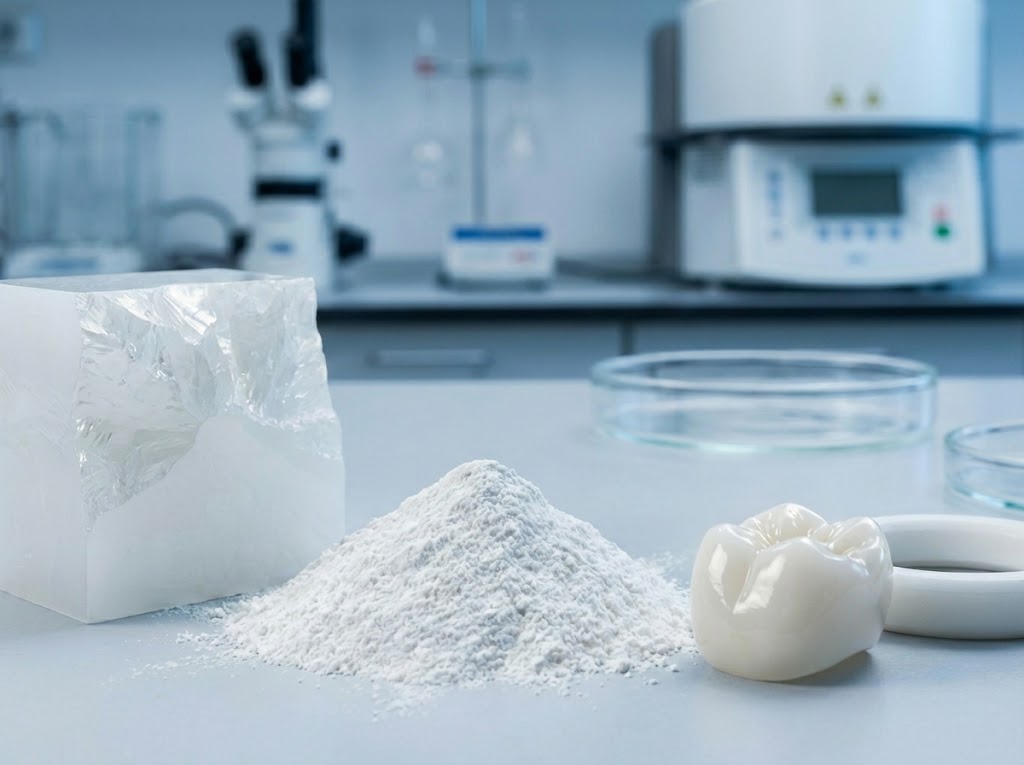
Standardizing your production with zirconium silicate is essential for sanitary ware manufacturers who require absolute color matching across different product lines. When a consumer buys a toilet and a sink from the same brand, they expect the whites to match perfectly.
How does it ensure color consistency?
You know the struggle: matching the white of a toilet to a washbasin across different production batches can be a nightmare. Using a controlled opacifier ensures that the “L” value of your whiteness stays within a tight tolerance.
- Uniform whiteness across batches.
- Prevents “yellowing” from impurities.
- Supports “cool” white aesthetic trends.
- Reduces the need for manual sorting.
Can it prevent water seepage?
It sounds simple, but the density of your glaze is your first line of defense against bacteria and odors. The material helps create a non-porous, “glass-like” seal that prevents water from soaking into the porcelain body.
- Closes micro-pores in the glaze.
- Creates an ultra-smooth, hygienic surface.
- Resists staining from hard water.
- Facilitates easy-clean functionality.
Key Takeaway: In the sanitary industry, consistency in whiteness and surface density is the hallmark of a premium, high-quality brand.
| Quality Standard | Role of Zirconium Silicate | |
|---|---|---|
| Visual Match | Ensures ΔE < 1.0 between parts | |
| Hygiene | Creates pore-free surface | |
| Durability | Resists aggressive cleaning agents | |
| Aesthetics | Provides deep, rich gloss |
Investing in high-grade materials for sanitary ware reduces the risk of “batch mismatch” and improves the overall perceived value of your fixtures.
What is zirconium silicate engobe use?
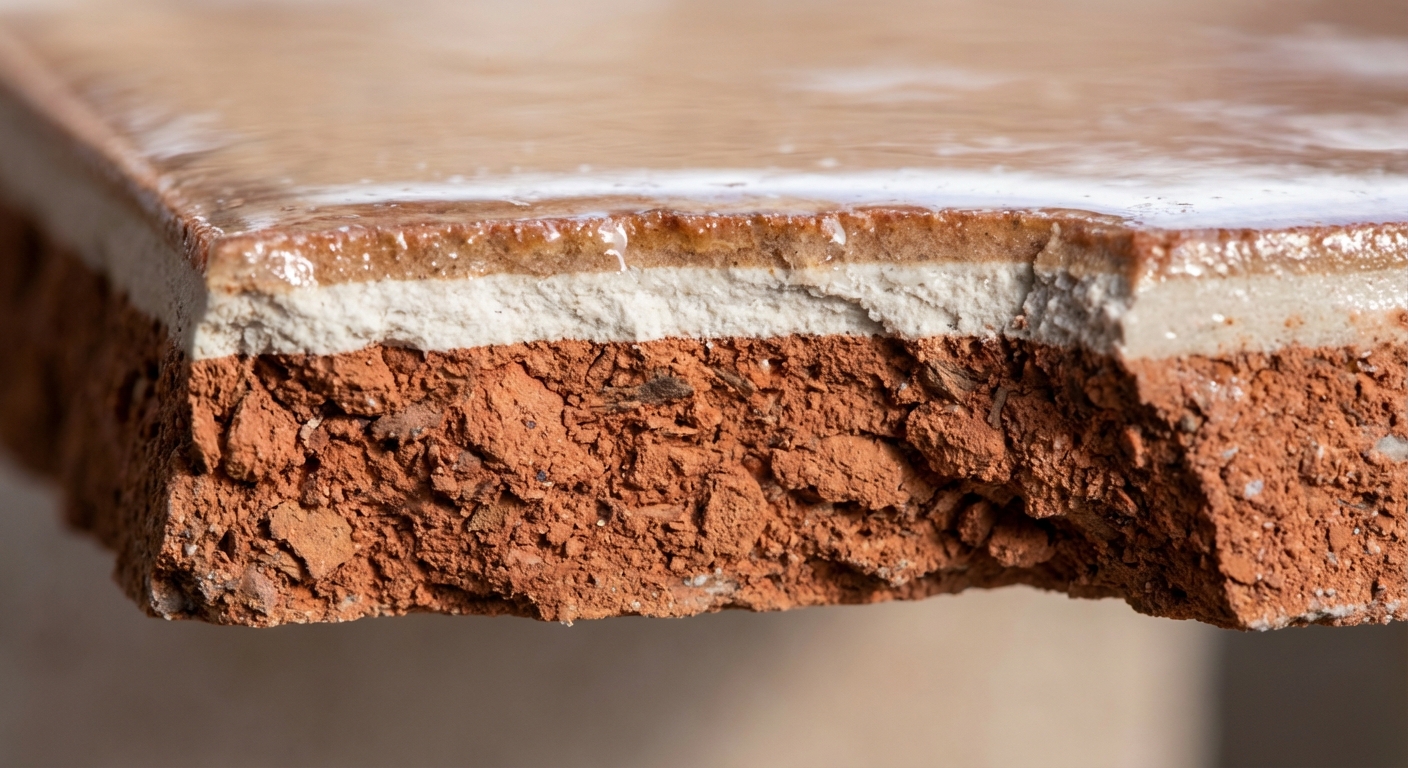
The application of zirconium silicate in engobes allows you to use lower-quality, darker clays for the tile body without compromising the final appearance. It acts as a high-opacity primer that creates a clean slate for your decorative glazes or digital printing.
How does it act as a primer?
You might be wondering: how can I reduce my raw material costs for the tile body? By applying a zircon-rich engobe layer, you can effectively “mask” the impurities of cheaper red or grey clays.
- High masking power for dark bodies.
- Provides a smooth base for inkjet printing.
- Ensures vibrant color development.
- Prevents body defects from showing through.
Does it solve cracking issues?
Here is the secret: engobes are the “stress-absorbers” of the ceramic world. Adding zircon helps you tune the expansion coefficient of this layer so the glaze doesn’t crack as the tile cools.
- Matches thermal expansion of body and glaze.
- Prevents “crazing” or surface cracking.
- Increases the bond strength of the layers.
- Reduces tile bowing and warping.
Key Takeaway: Engobe application is a strategic way to maintain high-end aesthetics while optimizing your internal material costs.
| Engobe Function | Contribution of ZrSiO4 | |
|---|---|---|
| Opacity | 100% masking of red clay bodies | |
| Surface | Smooth, flat base for decoration | |
| Compatibility | Balanced thermal expansion | |
| Yield | Lower defect rates in cooling |
Mastering the engobe layer is the key to producing high-quality tiles on a budget without sacrificing the “premium” look.
Does zirconium silicate stabilize tiles?
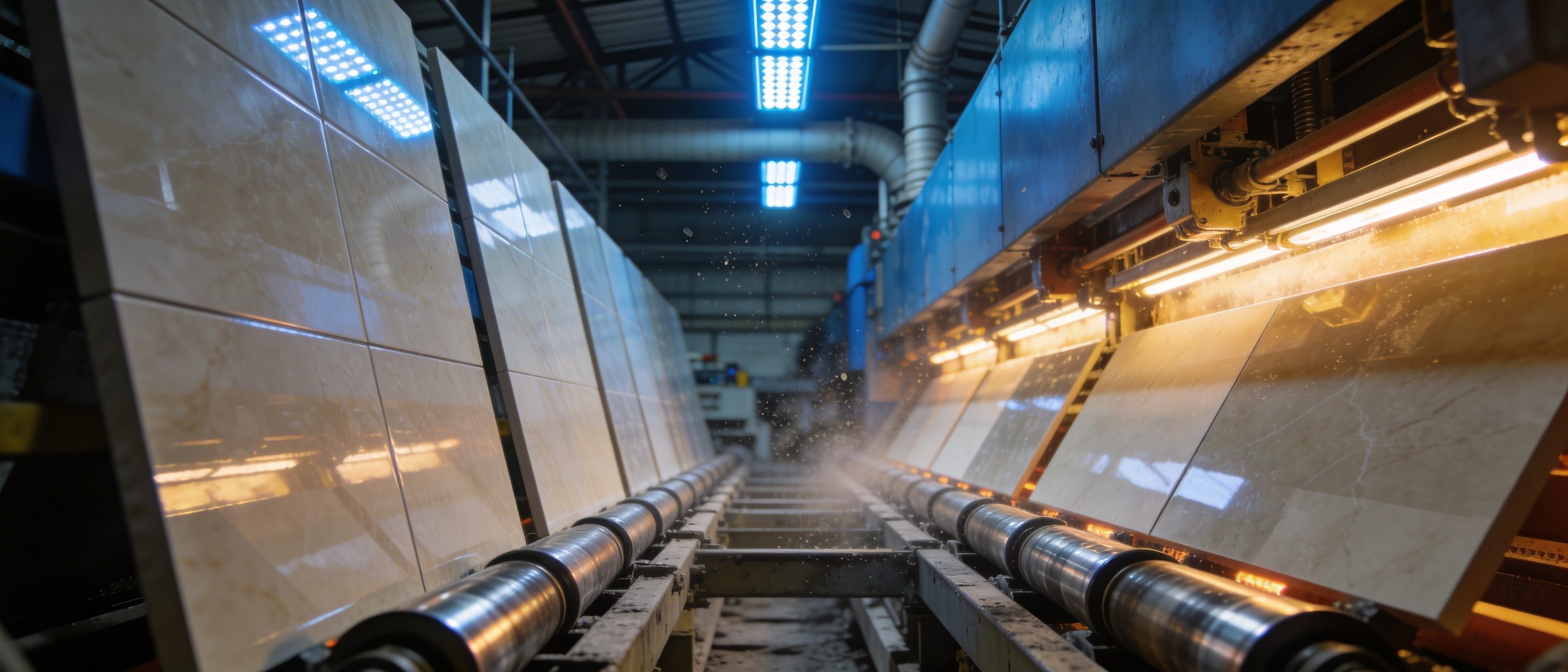
Adding zirconium silicate to polished tiles is a common industry practice to increase their thermal shock resistance during the fast-firing cycles. This stabilization is crucial for large-format porcelain slabs that are prone to cracking under uneven heat.
Can it handle high heat?
The fact is, modern kilns move fast, and your tiles need to survive rapid temperature swings. The refractory nature of the material ensures that the tile remains dimensionally stable even at the peak of the firing curve.
- High-temperature stability (Refractory).
- Prevents over-firing and softening.
- Maintains crisp edges on large tiles.
- Reduces shrinkage variance.
Is it useful for polished surfaces?
You might find this interesting: when you grind the surface of a tile to make it “polished,” you expose the internal structure. Zircon helps keep the internal matrix dense so the polished finish remains mirror-like and stain-resistant.
- Fills micro-voids in the porcelain.
- Ensures a uniform polish depth.
- Reduces the “orange peel” effect.
- Increases the shine of the finished slab.
Key Takeaway: Thermal stability provided by zircon materials is what enables the production of massive, flawless porcelain slabs.
| Stability Factor | Effect of Zircon Addition | |
|---|---|---|
| Thermal Shock | Improved resistance to fast cooling | |
| Shrinkage | Controlled and predictable | |
| Surface Finish | Dense, high-gloss polish | |
| Sizing | Better dimensional accuracy |
Stability in the kiln translates directly into flatter tiles and more accurate sizing, which are the top requirements for high-end installers.
Is zirconium silicate used in glass?
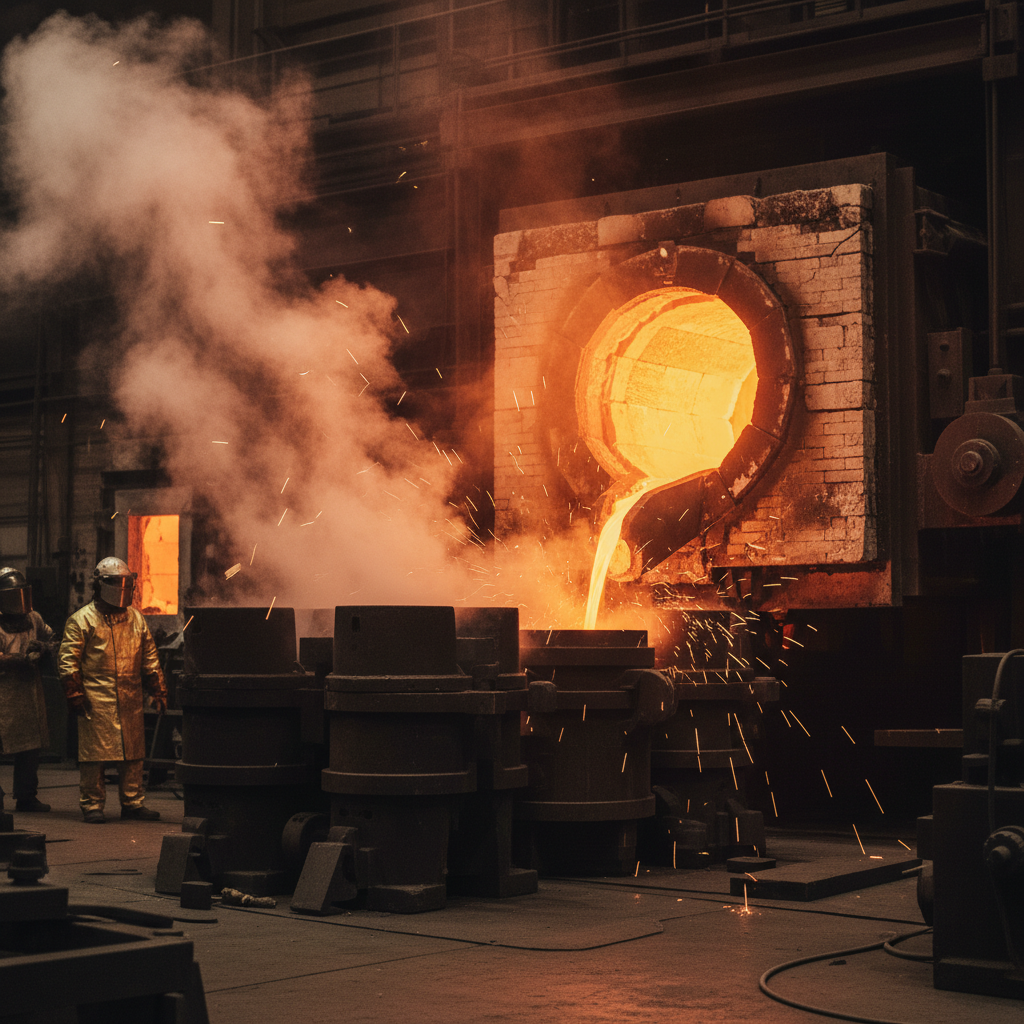
Beyond traditional ceramics, zirconium silicate is used in the glass industry to create opalescent effects and high-temperature refractory linings. It is a versatile material that solves heat-related problems in some of the world’s most demanding industrial environments.
How does it work in emulsified glass?
Believe it or not, the “milky” look of certain types of decorative glass is achieved using the same light-scattering principles found in ceramic glazes. It creates an elegant, diffused appearance that is highly sought after in lighting and architecture.
- Creates a translucent, opal-like effect.
- Diffuses harsh light from bulbs.
- Provides a durable, non-fading color.
- Resists scratching better than surface coatings.
Is it used in furnace linings?
But wait, the most critical use might be one you never see. Because it can withstand incredible heat, it is used to build the “ramming materials” that line the furnaces where glass is melted.
- Extreme melting point resistance.
- Low reactivity with molten glass.
- Extends the life of industrial furnaces.
- Prevents contamination of the glass melt.
Key Takeaway: The refractory properties of this material make it indispensable for any industry dealing with molten minerals or glass.
| Industry Sector | Primary Application | |
|---|---|---|
| Decorative Glass | Emulsification and Opacity | |
| Glass Furnaces | Refractory Ramming Materials | |
| Foundry | Mold Coatings and Sand | |
| Specialty Glass | High Refractive Index Lenses |
Exploring applications outside of ceramics reveals just how robust and reliable this material is under extreme conditions.
How to grade zirconium silicate quality?
Selecting high-quality material requires you to look beyond just the price and focus on the Particle Size Distribution (PSD) and chemical purity. You can find more detailed guides on these technical specifications on our technical blog .
Why does particle size matter?
Think about it: if the particles are too big, your glaze will look “grainy”; if they are too small, they will dissolve and lose their opacity. The ideal D50 for ceramic glazes is typically between 1.0 and 1.5 microns.
- Narrow PSD ensures uniform opacity.
- D50 control prevents “dissolving.”
- Better flow characteristics in the slurry.
- Reduced sedimentation in the storage tank.
What about chemical impurities?
The truth is, even a tiny amount of iron or titanium can ruin your white glaze by turning it a sickly yellow. Premium grades ensure these impurities are kept below 0.02% to maintain a “cool” professional white.
- Fe2O3 < 0.02% to prevent browning.
- TiO2 < 0.15% to stop yellowing.
- Consistent ZrO2 content for opacity.
- Low radioactivity for safety compliance.
Key Takeaway: Quality control starts with a laboratory-verified Certificate of Analysis (COA) for every batch you receive.
| Quality Metric | Premium Target | Why it Matters | |
|---|---|---|---|
| D50 (Median Size) | 1.0 – 1.5 μm | Optimal light scattering | |
| Iron Content | < 0.02% | Prevents color defects | |
| Whiteness (L)* | > 95 | Maximum brightness | |
| PSD Width | Narrow | Batch-to-batch stability |
By demanding strict specifications, you eliminate the variables that cause expensive production failures in your factory.
Where to source zirconium silicate today?
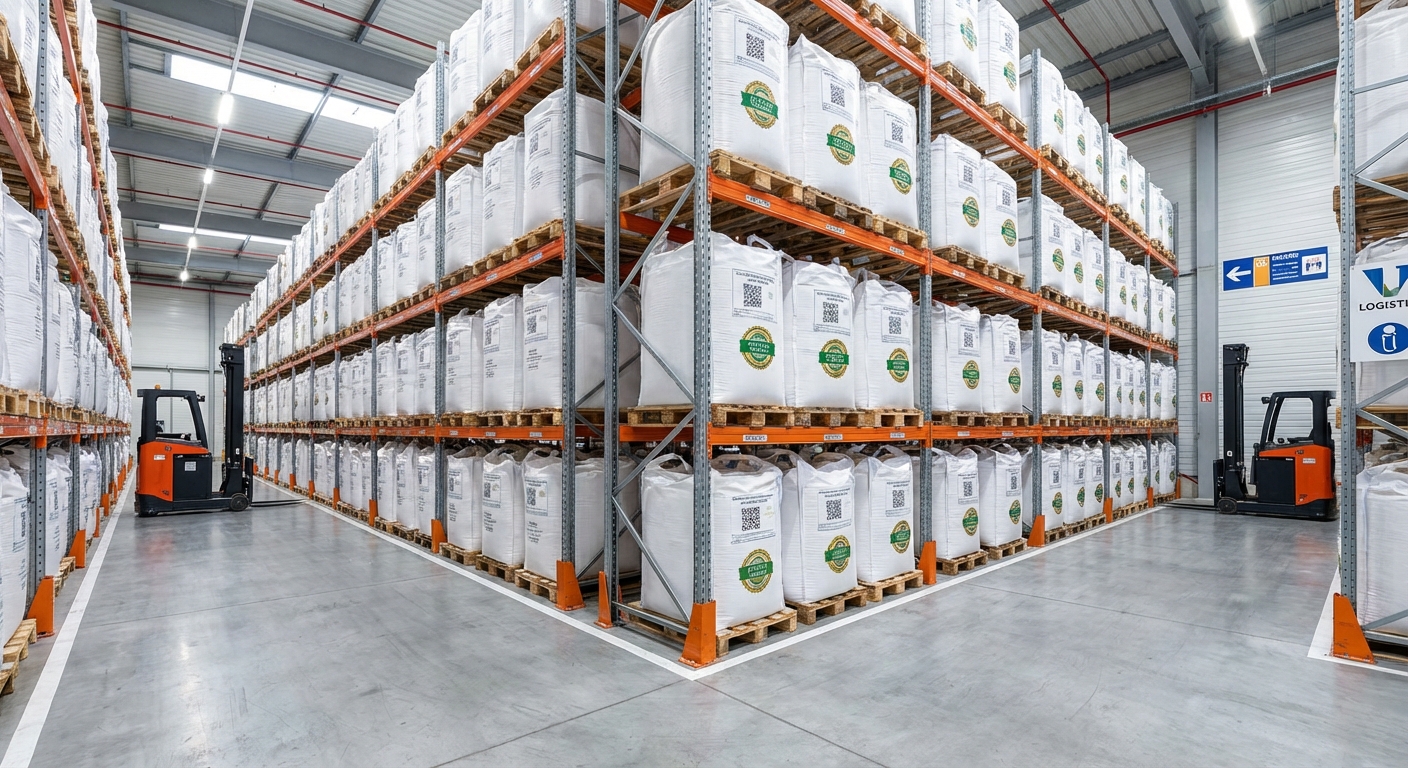
Finding a reliable partner for your raw material supply is the final step in securing your production stability and reducing quality risks. You need a supplier who offers not just a product, but a verified chain of quality and technical support.
Is batch consistency a priority?
You know the headache: a new shipment arrives, but your glaze suddenly looks different, forcing you to recalibrate all your machines. Partnering with a manufacturer that guarantees batch-to-batch stability saves you hours of downtime.
- Standardized production parameters.
- Full batch traceability.
- Regular quality audits.
- Stable long-term supply agreements.
Can they provide technical support?
But here is the kicker: sometimes the problem isn’t the material, but how it’s being used in your specific formula. A good supplier has engineers who can look at your glaze recipe and help you optimize it.
- On-site technical consultations.
- Customized PSD options.
- Formulation troubleshooting.
- Sample testing in your environment.
Key Takeaway: Your raw material supplier should be an extension of your own engineering team, helping you solve problems before they reach the kiln.
| Supplier Criteria | ZrBrontec Advantage | |
|---|---|---|
| Manufacturing | Direct factory control | |
| Consistency | Verified PSD and Whiteness | |
| Support | Engineering-led consultation | |
| Logistics | Global reach with safety stock |
Choosing a manufacturer with vertical integration ensures you get the highest purity material without the middleman markups.
Conclusion
This article has explored how zirconium silicate serves as the backbone of high-quality ceramic production, from ensuring brilliant whiteness to enhancing surface durability. By understanding the critical role of particle size and chemical purity, you can solve the common production hurdles of glaze defects and inconsistent color. We invite you to contact us today to discuss your specific application needs and see how our engineered solutions can improve your factory’s first-pass yield. Our vision at ZrBrontec is to eliminate process variation through material science, empowering ceramic manufacturers to reach new heights of quality and efficiency.
Frequently Asked Questions
1. Can I use zirconium silicate in matt glazes?Yes, it is highly effective. Zirconium silicate provides the necessary body and opacity for matt finishes in sanitary ware and floor tiles without accidentally increasing the gloss level.
2. What’s the best way to prevent glaze pinholes?Use a micronized grade with a narrow PSD. Pinholes are often caused by oversized particles or gas trapped in the glaze; a more uniform and finer zirconium silicate promotes a smoother melt and better degassing.
3. How do I know if my supplier’s quality is dropping?Monitor your whiteness “L” values. If you notice a gradual yellowing or a need to increase the percentage of opacifier to get the same result, it’s a clear sign the purity or PSD of your zirconium silicate is fluctuating.
4. Can I completely replace tin oxide with this material?In almost all cases, yes. While you may need to slightly adjust your percentage to match the exact opacity, the massive cost savings and improved stability make zirconium silicate the superior choice for modern industrial ceramics.
5. How do I know if the material is safe for food-contact surfaces?It is perfectly safe. Zirconium silicate is chemically inert and, once fired into the ceramic glaze, is permanently encapsulated in a glass matrix that is non-toxic and acid-resistant.