Zircon is a naturally occurring mineral (ZrSiO₄) found in beach sands, while zirconium silicate typically refers to the industrially processed, purified, and micronized version of this mineral used in technical manufacturing. You are likely facing a common industrial dilemma: your ceramic yields are dropping because of inconsistent material whiteness. Batch variation in your current supply causes surface defects that force expensive rework and delay your shipments. We provide high-performance zirconium powder solutions with controlled particle size distributions to eliminate these production risks and stabilize your quality.
Why is zirconium powder essential in modern ceramics?
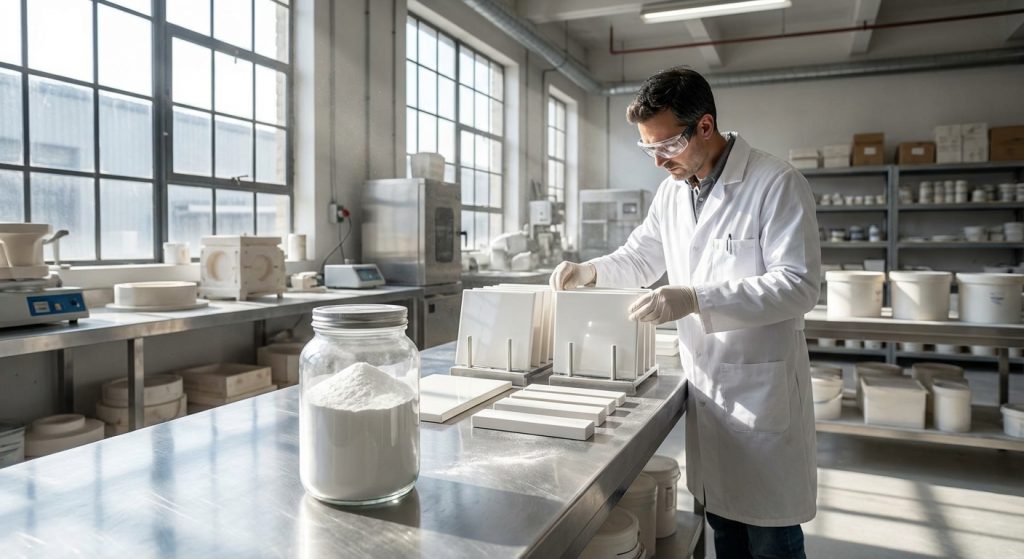
Zirconium powder acts as a primary opacifier and whitening agent that ensures a high-quality finish for sanitary ware and tiles. This material is highly valued because it possesses extreme thermal shock resistance and chemical inertness, allowing it to survive high-temperature kiln firing without degrading.
Maximizing Opacity in Ceramic Glazes
Here is the deal: When you add this mineral to your glaze, it scatters light effectively due to its high refractive index. This creates the brilliant white, opaque finish that consumers expect in premium bathroom fixtures and floor tiles.
Improving Mechanical Stability
- Enhances surface hardness of the finished product.
- Increases resistance to chemical corrosion from household cleaners.
- Reduces thermal expansion to prevent glaze crazing.
- Improves the overall abrasion resistance of the ceramic body.
| Feature | Industrial Impact | |
|---|---|---|
| High Refractive Index | Superior whiteness and opacity | |
| Thermal Stability | No deformation during firing | |
| Chemical Inertness | Long-lasting surface protection |
Reliable mineral additives are the backbone of high-yield ceramic manufacturing processes.
Key Takeaway: You should use this powder to achieve a professional-grade white finish while simultaneously strengthening your product against daily wear and chemical exposure.
How does zircon differ from silicate zirconium powder?
Zircon is the raw mineral crystal extracted from the earth, whereas zirconium powder is the refined, ground, and purified chemical compound tailored for specific industrial performance. While they share the same base chemistry, the processed version removes radioactive impurities like uranium and thorium to ensure safety and stability.
Natural Mineral Characteristics
Think about this: Natural crystals are often used in the gemstone market because of their brilliance and fire, rivaling diamonds. However, in an industrial context, raw ore contains too many impurities and irregular sizes to be used directly in precision manufacturing.
Processed Powder Advantages
- Controlled Particle Size Distribution (PSD) for uniform melting.
- Higher purity levels with reduced iron and titanium content.
- Consistent whiteness across different production batches.
- Removal of radioactive elements for regulatory compliance.
| Property | Natural Zircon | Zirconium Powder (Processed) | |
|---|---|---|---|
| Appearance | Brown/Blue Crystals | Fine White/Off-White Powder | |
| Purity | Variable | High (>65% ZrO₂) | |
| Main Use | Jewelry/Foundry Sand | Ceramic Glazes/Refractories |
Refining the mineral allows for predictable behavior in complex chemical formulations.
Key Takeaway: You must distinguish between the raw mineral and the processed powder to ensure your production line receives a material that is chemically stable and safe for high-volume use.
Can zirconium powder improve glaze surface smoothness?
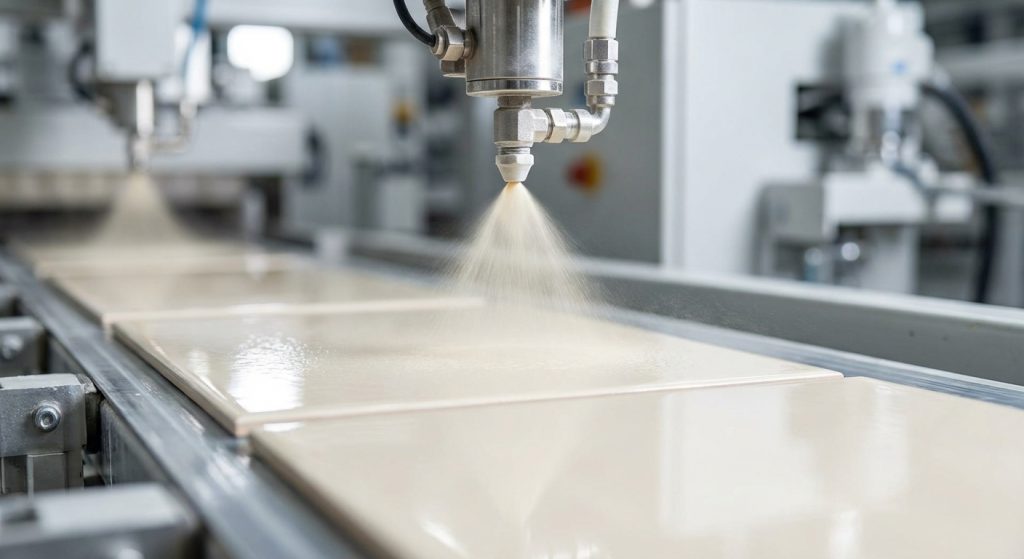
Zirconium powder significantly improves surface smoothness by optimizing the rheology of the glaze slurry and ensuring a uniform distribution of particles. By utilizing micronized grades, you can eliminate common surface defects that occur during the cooling phase of ceramic production.
Eliminating Surface Pinholes
But wait: The presence of oversized particles in a low-grade supply often leads to gas entrapment or uneven melting. When you switch to a narrow-distribution powder, the glaze flows more evenly, sealing the surface before pinholes can form.
Optimizing Slurry Rheology
- Reduces sedimentation in the glaze tanks.
- Ensures consistent spray application by robotic arms.
- Improves the “leveling” effect of the liquid glaze.
- Lowers the viscosity of high-solids formulations.
| Smoothness Factor | Zirconium Powder Contribution | |
|---|---|---|
| Particle Uniformity | Prevents clumps and surface bumps | |
| Improved Dispersion | Ensures even color and opacity | |
| Reduced Impurities | Minimizes chemical bubbling during firing |
A smooth surface is not just aesthetic; it prevents bacteria buildup in sanitary applications.
Key Takeaway: You can drastically reduce your defect rate by selecting a powder with a controlled D50 particle size that promotes a flawless, glass-like finish.
What properties define high-purity zirconium powder?
High-purity zirconium powder is defined by its low iron content and a high concentration of zirconium dioxide (ZrO₂) combined with hafnium dioxide (HfO₂). Typical industrial standards require a ZrO₂ + HfO₂ content of at least 65% to ensure the material performs reliably under extreme thermal stress.
Critical Chemical Markers
It gets better: Low Fe₂O₃ (iron) and TiO₂ (titanium) levels are crucial because even trace amounts of these metals can cause unwanted yellowing or spotting in your final product. Premium grades keep these impurities below 0.05% to maintain maximum whiteness.
Structural Uniformity
- Consistent Phase Composition (Monoclinic/Tetragonal).
- Low Loss on Ignition (LOI) to prevent shrinkage.
- High specific surface area for better reactivity.
- Minimal moisture content for accurate batch weighing.
| Impurity | Impact on Quality | Target Level | |
|---|---|---|---|
| Iron (Fe₂O₃) | Yellowing/Discoloration | < 0.02% | |
| Titanium (TiO₂) | Surface Matte Effect | < 0.15% | |
| Moisture | Inconsistent Slurry Solids | < 0.5% |
Purity is the most important metric for manufacturers who cannot afford batch-to-batch variation.
Key Takeaway: You should always verify the COA (Certificate of Analysis) to ensure the iron and titanium levels are low enough to protect your brand’s reputation for whiteness.
Is zirconium powder the key to better refractories?
Zirconium powder is the preferred additive for high-end refractories due to its incredible melting point of approximately 2550°C and its ability to withstand aggressive chemical environments. It forms a dense, protective structure in refractory bricks that prevents molten metal or glass from penetrating and corroding the furnace lining.
Enhancing Thermal Shock Resistance
The bottom line is this: Furnaces undergo intense heating and cooling cycles that cause standard bricks to crack. Adding this mineral allows the refractory to expand and contract more uniformly, significantly extending the service life of your industrial equipment.
Superior Chemical Resistance
- Resists corrosion from acidic slags in steelmaking.
- Maintains integrity in alkali-rich glass melting environments.
- Prevents erosion from high-velocity gas flows in burners.
- Does not react with most molten non-ferrous metals.
| Application | Benefit of Zirconium Addition | |
|---|---|---|
| Glass Furnaces | Prevents “glass rot” and contamination | |
| Steel Ladles | Increases cycles before relining | |
| Incinerators | Withstands corrosive waste gases |
Refractory life is directly linked to the uptime and profitability of your smelting operations.
Key Takeaway: You will save on maintenance costs and downtime by integrating zircon-based materials into your most demanding high-temperature environments.
How is zirconium powder processed for industrial use?
Industrial processing of zirconium powder involves high-energy ball milling, calcination, and advanced classification to reach specific micron levels required for different applications. This multi-stage process ensures that the raw sand is transformed into a highly reactive and uniform engineering material.
Milling and Particle Control
Here is the secret: Standard milling is not enough for precision ceramics. We utilize specialized classification systems to ensure a “narrow distribution,” meaning all particles are nearly the same size, which prevents large grains from causing surface defects.
The Role of Calcination
- Removes organic impurities through high-temperature heating.
- Stabilizes the crystalline phase for predictable sintering.
- Reduces moisture content to near-zero levels.
- Increases the whiteness of the final powder.
| Process Step | Goal | |
|---|---|---|
| Magnetic Separation | Removes iron contaminants | |
| Ball Milling | Achieves sub-micron particle sizes | |
| Air Classification | Guarantees consistent D50 values |
Sophisticated processing turns a simple mineral into a high-tech manufacturing solution.
Key Takeaway: You should partner with manufacturers who control the entire milling and classification process to ensure the material you buy behaves exactly the same way every time.
Why select ZrBrontec for your zirconium powder needs?

Selecting ZrBrontec ensures you receive zirconium powder from a direct manufacturer that prioritizes batch stability and engineering support over simple trading. We provide a full technical data package with every shipment, allowing your engineers to adjust process parameters with total confidence.
Engineering-First Approach
Make no mistake: We don’t just sell bags of powder; we solve production problems. Our team analyzes your specific kiln curves and slurry formulas to recommend the exact grade that will maximize your first-pass yield.
Stability and Reliability
- Vertical integration from raw ore to finished micronized powder.
- Proprietary milling techniques for ±5% D50 consistency.
- Full batch traceability and historical data logging.
- On-site technical audits to optimize your glaze application.
| Service | Impact on Your Business | |
|---|---|---|
| Custom Specs | Tailored PSD for your specific machinery | |
| Sample Trials | Proven performance before bulk purchase | |
| Long-term Supply | Safety stock management to prevent shortages |
A manufacturing partner is more valuable than a vendor when technical performance is non-negotiable.
Key Takeaway: You can eliminate procurement risks by working with a partner that offers both the material and the technical expertise to optimize your manufacturing results.
Does zirconium powder enhance investment casting?
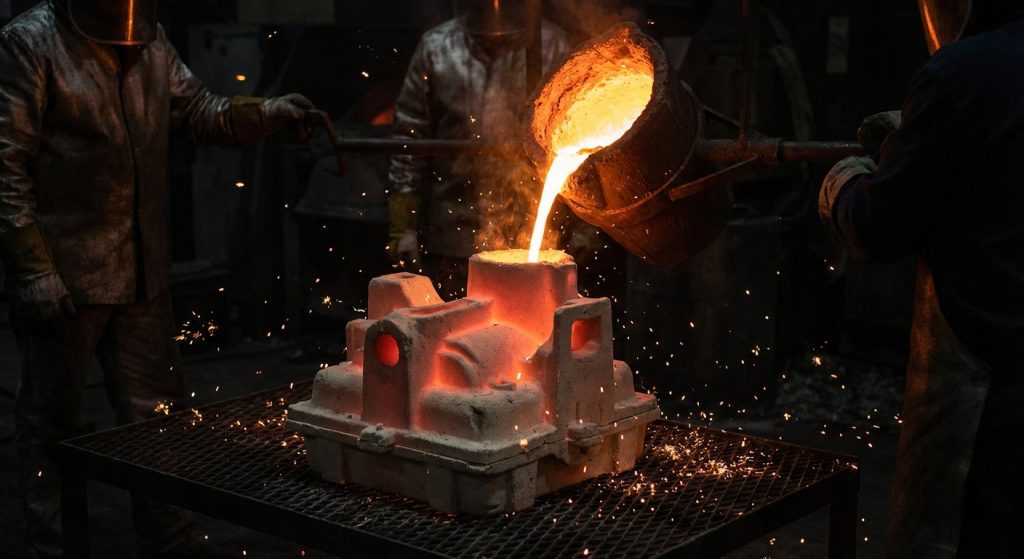
Zirconium powder enhances investment casting by providing a high-strength, non-reactive primary slurry layer that produces superior surface finishes on metal parts. Because zirconium powder is not wetted by most molten metals, it prevents the metal from “burning” into the ceramic shell, making de-shelling much easier.
Achieving Dimensional Accuracy
Now consider this: Precision aerospace and medical parts require tolerances measured in microns. The thermal stability of this mineral ensures the mold does not expand or warp when the white-hot metal is poured, maintaining the exact dimensions of your design.
Slurry Performance Benefits
- Excellent rheological stability for uniform dipping.
- High green strength to prevent shell cracking during drying.
- Low reactivity with super-alloys and stainless steels.
- Improved slurry life due to chemical inertness.
| Casting Goal | Zirconium Powder Role | |
|---|---|---|
| Smooth Surface | Prevents metal-to-mold reactions | |
| Precision | Zero thermal deformation | |
| Easy Cleaning | Clean separation of shell and casting |
In the foundry, the quality of the ceramic shell determines the quality of the final metal part.
Key Takeaway: You should use zircon-based slurries for your primary coat to ensure your precision castings require minimal post-processing and finishing.
Can custom zirconium powder solve production defects?
Custom zirconium powder can solve production defects like shrinkage variance and pinholing by tailoring the particle size and chemical purity to your specific manufacturing environment. If your current material is causing inconsistent results in dental blocks or technical parts, adjusting the milling profile can provide the necessary stability.
Solving Shrinkage Inconsistency
The reality is simple: If your powder has a wide particle distribution, it will sinter unevenly, leading to warped parts or incorrect dimensions. A custom, narrow-cut powder ensures that every part of the component shrinks at the same rate during the firing process.
Targeted Solutions for Complex Parts
- Fine-tuning D90 values to eliminate oversized “seed” particles.
- Adjusting surface treatment for better dispersion in polymers.
- Controlling phase purity for high-toughness structural parts.
- Blending grades to achieve specific thermal expansion targets.
| Common Defect | Custom Powder Solution | |
|---|---|---|
| Warpage | Uniform sintering via controlled PSD | |
| Surface Pits | Removal of large agglomerates | |
| Brittleness | Enhanced phase stabilization (3Y/5Y) |
Customization is the ultimate tool for engineers who need to push the limits of material science.
Key Takeaway: You don’t have to settle for “standard” grades; we can modify the material properties to solve your specific yield challenges.
What is the future of zirconium powder in industry?
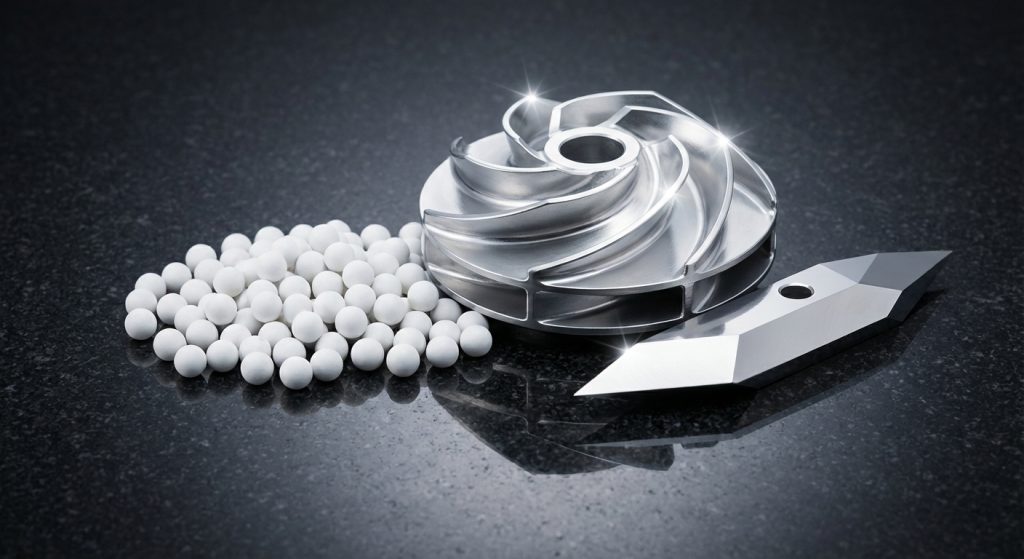
The future of zirconium powder lies in the rapid growth of advanced structural ceramics and 3D printing applications where high toughness and wear resistance are paramount. As industries move toward more sustainable and high-performance materials, the demand for refined zircon products continues to expand into renewable energy and high-tech electronics.
Advanced Structural Parts
Look at this: We are seeing a massive shift toward zirconia-based components in pump impellers, cutting tools, and engine parts. These materials offer diamond-like hardness but with a fracture toughness that traditional ceramics simply cannot match.
Innovation in Manufacturing
- Development of spray-dried granules for 3D printing.
- Creation of ultra-fine sub-micron powders for transparent ceramics.
- Enhanced recycling methods for industrial zircon waste.
- Integration into solid oxide fuel cells (SOFCs) for clean energy.
| Industry | Emerging Use Case | |
|---|---|---|
| Aerospace | Thermal barrier coatings for turbine blades | |
| Medical | Bio-compatible orthopedic implants | |
| Electronics | High-dielectric substrates for 5G components |
Staying ahead of material trends is essential for maintaining a competitive edge in global manufacturing.
Key Takeaway: You should prepare for an increased reliance on high-performance zirconium materials as your products become more complex and demanding.
Conclusion
This article has clarified the fundamental differences between raw zircon and industrially processed zirconium silicate, highlighting how refined powders eliminate the production risks of discoloration and surface defects. At ZrBrontec, we do more than supply minerals; we provide the engineering foundation for your most critical ceramic and refractory products. Our vision is to eliminate manufacturing variance through absolute batch consistency and transparent technical support. We invite you to experience a supply chain built on precision and data-driven quality. To optimize your production yields and discuss custom grade specifications, contact us today to speak with a technical engineer.
FAQ
Can I use raw zircon sand in my ceramic glaze?No, raw sand is generally too coarse and contains impurities that will cause spotting and uneven melting. You should use micronized zirconium silicate powder to ensure a smooth, opaque, and white finish.
What is the best way to prevent yellowing in white tiles?It depends on the iron content of your raw materials. You should select a zirconium powder with Fe₂O₃ levels below 0.05% to ensure maximum whiteness and prevent atmospheric discoloration during firing.
Is zirconium powder safe for healthcare applications?Yes, but only if it has been properly processed. Industrial refining removes natural radioactive elements, making high-purity zirconia safe for dental implants and orthopedic components.
How do I determine the right particle size for my application?It depends on your required opacity and surface finish. Finer powders (D50 < 1.5μm) provide higher opacity and smoother surfaces, while coarser grades are more cost-effective for refractory applications.
Does zirconium powder expire or degrade over time?No, it is a chemically inert mineral that does not degrade. However, you must keep it in a dry environment because moisture absorption can lead to clumps and inaccurate batch weighing.