Titanium and zirconium rings represent the pinnacle of modern alternative jewelry, offering superior durability and style compared to traditional precious metals. You might be struggling to find a wedding band that can survive your daily grind without breaking the bank or losing its luster. Precious metals like gold and silver are easily scratched and often prohibitively expensive for those seeking a contemporary look. By choosing between zirconium vs titanium , you solve the problem of fragility and high cost while securing a ring that matches your active lifestyle.
What is the difference between zirconium vs titanium?
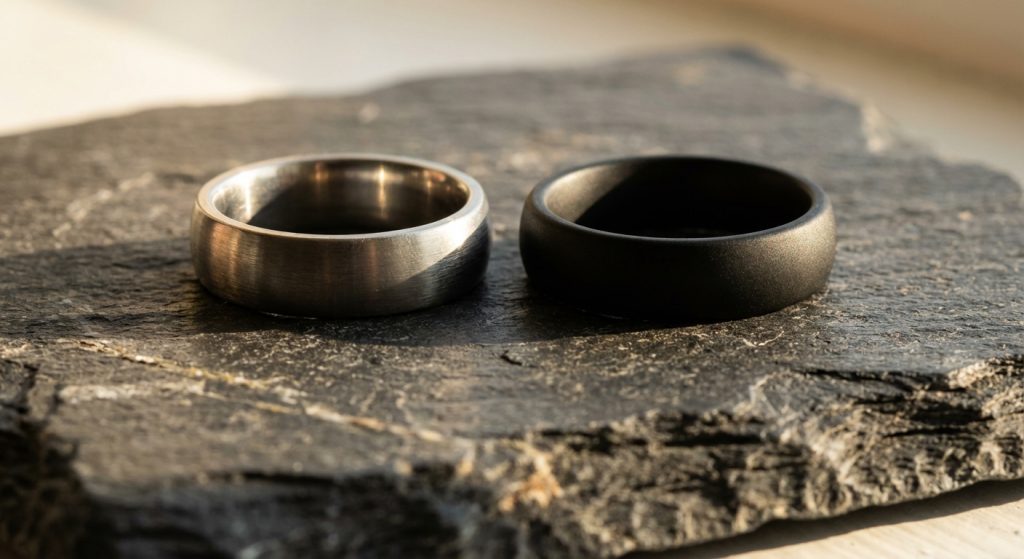
Titanium and zirconium are both high-performance alternative metals, but they differ primarily in their natural color and the processes used to achieve their final jewelry finish. When evaluating zirconium vs titanium , you will notice that titanium is naturally a silver-grey metal used heavily in aerospace. Zirconium starts as a grey-white element but is most famous for its ability to transform into a permanent, sleek black through a specialized heating process.
Both metals are found naturally and are celebrated for their incredible strength-to-weight ratios in industrial applications. While titanium is an established classic in the jewelry world, zirconium is the high-tech newcomer offering unique aesthetic possibilities.
Is there a difference in atomic structure?
Titanium is a transition metal that is exceptionally strong yet incredibly light, making it a favorite for medical implants. Zirconium is its chemical cousin, often used in nuclear reactors because it does not absorb neutrons and remains stable under extreme heat.
How are they manufactured into rings?
Here is the kicker: Jewelers machine these rings from solid blocks of metal rather than casting them like gold. This process ensures there are no air bubbles or weak points in your band.
- Titanium is cold-worked for precision.
- Zirconium is often heated to 900°C to create its oxide layer.
Key Takeaway: Titanium offers a classic metallic look, whereas zirconium provides a technological edge through its unique oxidation process.
| Feature | Titanium | Zirconium | |
|---|---|---|---|
| Natural Color | Silver-Grey | Grey-White | |
| Common Industry | Aerospace | Nuclear/Chemical | |
| Jewelry Finish | Brushed/Polished | Black Oxide/Satin |
This comparison highlights why both materials are favored in high-stakes engineering before ever reaching a jeweler’s bench.
Which is more durable: zirconium vs titanium?
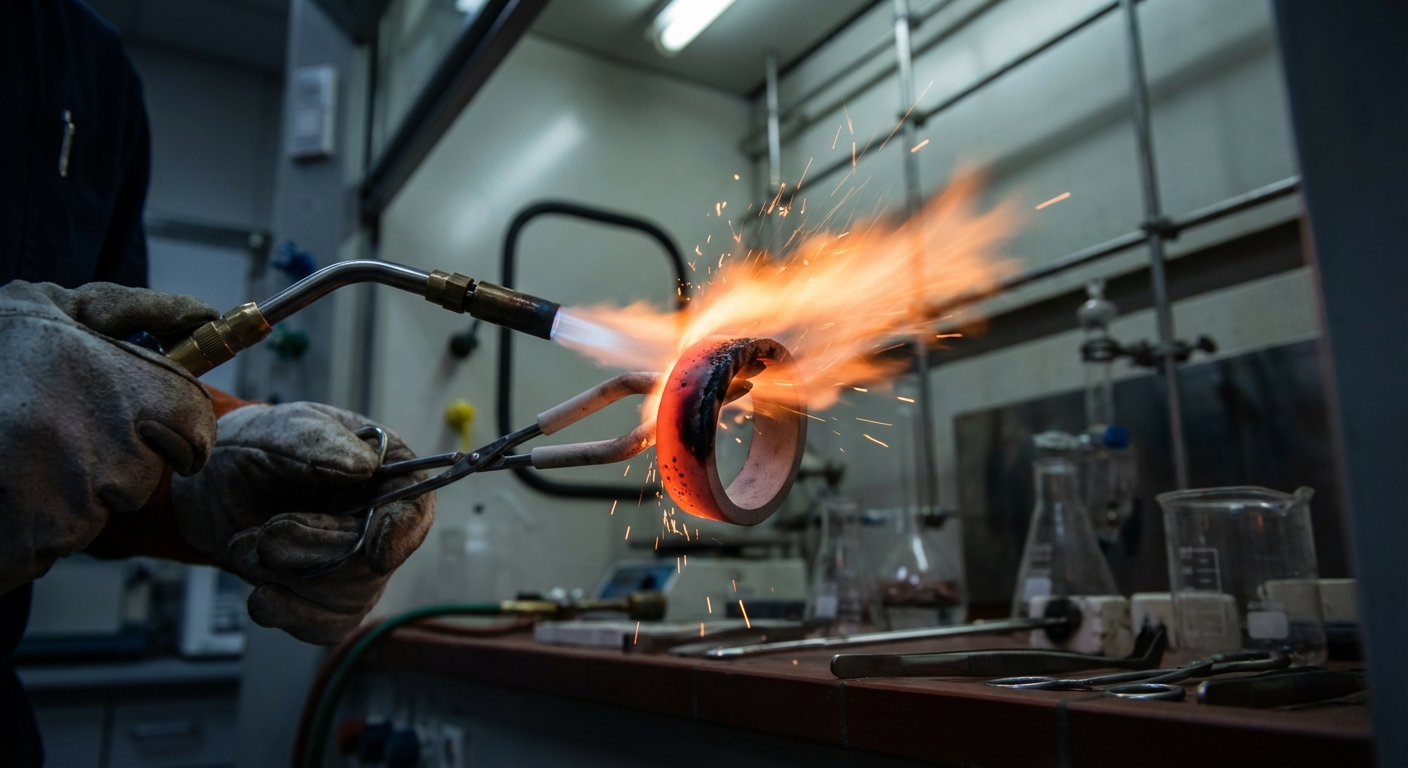
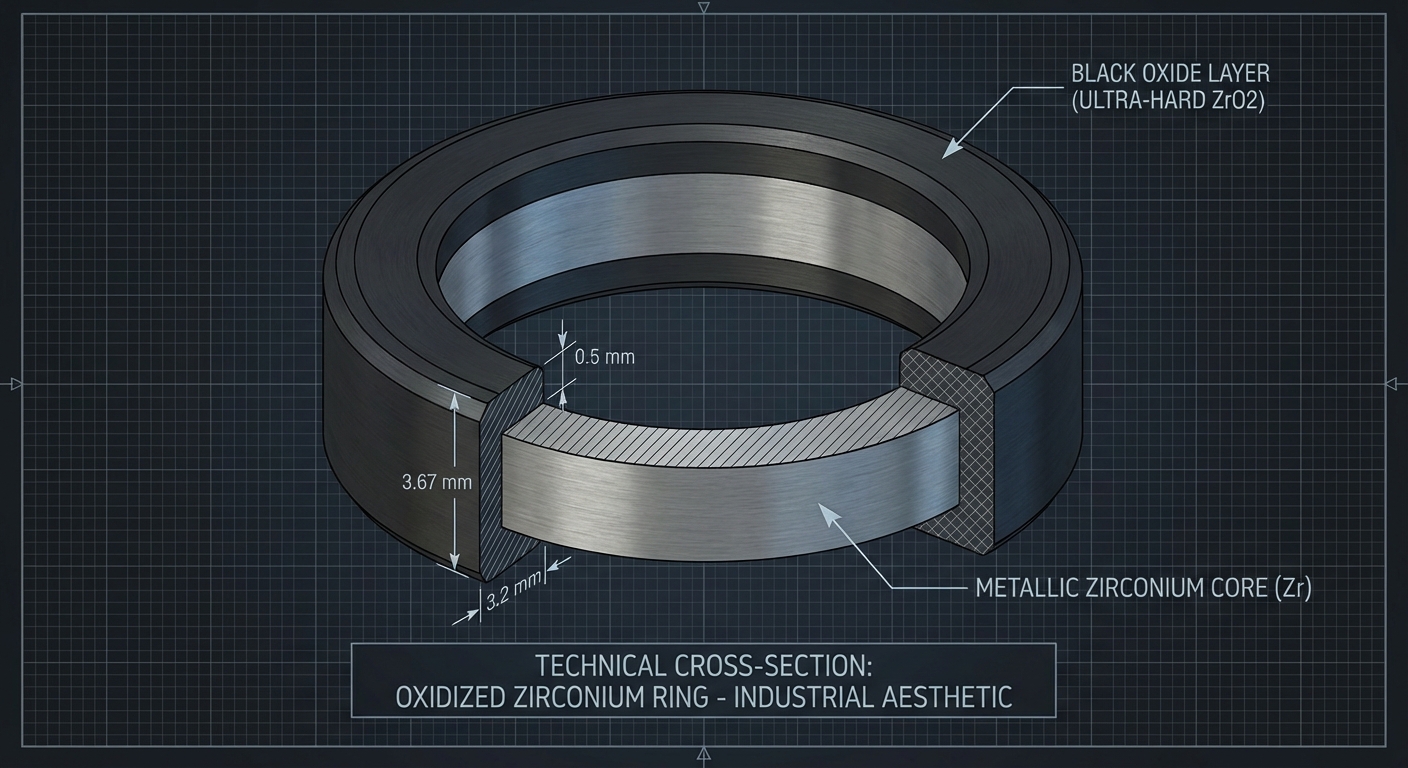
Zirconium, once oxidized into black zirconium, actually possesses a harder surface layer than titanium, although both are far more durable than traditional precious metals. The debate over zirconium vs titanium durability usually favors the “black shield” created during zirconium’s oxidation process. This ceramic-like surface is integrated into the metal, offering a level of toughness that protects the core of the ring from heavy impact.
Titanium remains a powerhouse in its own right, boasting a higher tensile strength than most steels. You won’t have to worry about either of these rings bending or warping under the pressure of manual labor.
Does the black finish wear off?
Look: The black layer on zirconium is not a coating or a plating that will chip away over time. It is a chemical transformation of the surface itself, meaning it is bonded at a molecular level to the underlying metal.
- Resists chipping.
- Maintains deep color.
- Hard as sapphire.
Can titanium withstand heavy impact?
Titanium is famously shatterproof, unlike tungsten or ceramic rings which can crack if dropped on a hard surface. It absorbs energy without breaking, making it one of the safest choices for people who work with their hands.
Key Takeaway: For the absolute hardest surface finish available in modern jewelry, black zirconium is the clear winner over standard titanium.
| Durability Metric | Titanium | Zirconium (Oxidized) | |
|---|---|---|---|
| Surface Hardness | Moderate-High | Extremely High | |
| Shatter Resistance | Excellent | Excellent | |
| Tensile Strength | Very High | High |
The mechanical properties of these metals ensure that your ring will survive environments that would destroy traditional gold bands.
Is weight a factor for zirconium vs titanium?
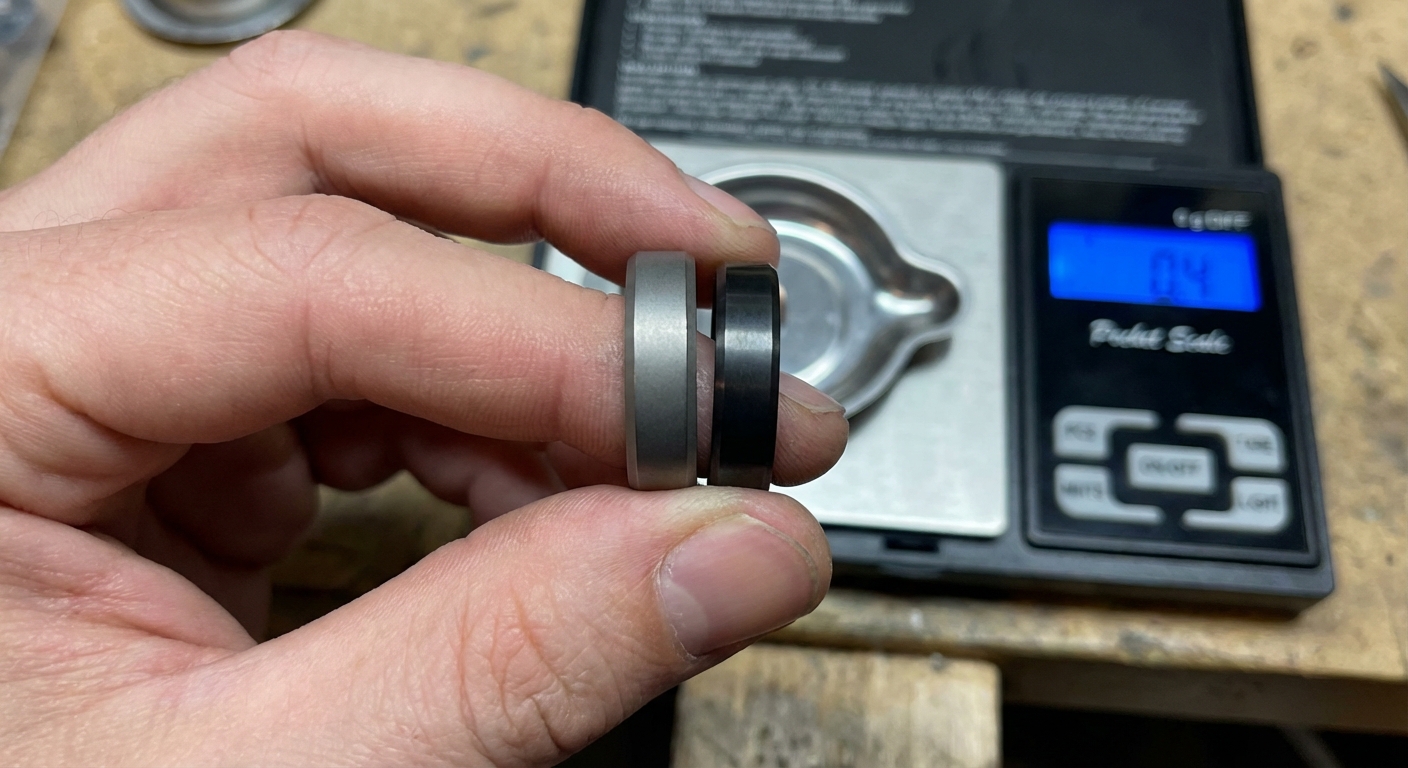
Titanium is the lighter of the two metals, offering a featherweight feel that is nearly half the weight of steel. When comparing zirconium vs titanium , you will find that titanium is the go-to choice for those who want to forget they are even wearing a ring. Zirconium has a slightly higher density, giving it a more substantial, “luxury” weight that many men prefer.
Weight is often a matter of personal preference rather than a performance metric. Some people enjoy the solid presence of zirconium, while others prioritize the total freedom provided by titanium’s low mass.
Why is titanium so light?
But wait: Titanium has the highest strength-to-density ratio of any metallic element, which is why it is used in high-performance racing cars. You get all the strength of a heavy metal without the physical burden.
Does zirconium feel like gold?
Zirconium feels closer to the weight of a traditional gold ring, though it is still lighter than tungsten. It provides a “quality” feel that some users equate with premium jewelry.
- Substantial hand-feel.
- Comfortable for daily wear.
- Not overly heavy like lead.
Key Takeaway: Choose titanium if you want the lightest ring possible, but opt for zirconium if you prefer a solid, noticeable weight.
| Weight Property | Titanium | Zirconium | |
|---|---|---|---|
| Subjective Feel | Featherweight | Medium Weight | |
| Density (g/cm³) | ~4.5 | ~6.5 | |
| Comparison | Feels like aluminum | Feels like silver |
Understanding the density differences helps you select a ring that complements your tactile comfort levels throughout the day.
Are zirconium vs titanium rings hypoallergenic?
Both titanium and zirconium are 100% hypoallergenic and completely safe for individuals with sensitive skin or metal allergies. In the medical world of zirconium vs titanium, both materials are used for bone screws and dental implants because the human body does not reject them. Unlike cheaper alloys that contain nickel or cobalt, these metals will never cause a rash or turn your finger green.
This biocompatibility is a primary reason why these alternative metals have surged in popularity for wedding bands. You are investing in a material that is literally “life-safe” and chemically inert.
What makes them skin-safe?
The reality is: Neither metal contains nickel, which is the most common allergen found in traditional jewelry. Even if you have a history of reacting to silver or gold alloys, you can wear these metals with absolute confidence.
Is zirconium used in medical devices?
Zirconium is highly valued in the dental industry for its ability to integrate with biological tissue without causing inflammation.
- Non-toxic composition.
- Zero nickel content.
- High chemical stability.
Key Takeaway: If you have a history of metal allergies, both titanium and zirconium offer the highest level of skin safety available today.
| Safety Factor | Titanium | Zirconium | |
|---|---|---|---|
| Nickel Content | 0% | 0% | |
| Biocompatible | Yes | Yes | |
| Skin Reaction | None | None |
Choosing a biocompatible metal ensures that your jewelry remains a source of pride rather than physical discomfort.
How do costs compare for zirconium vs titanium?
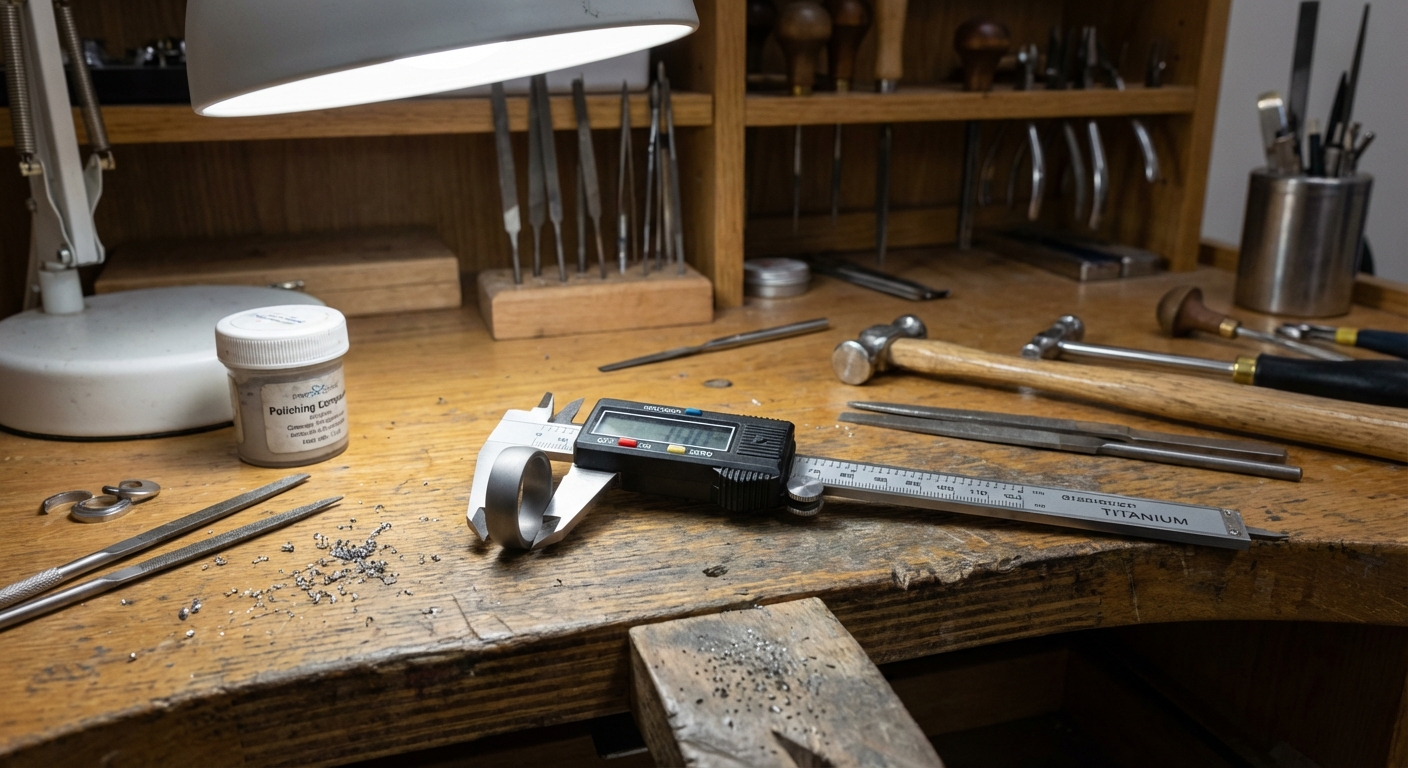
Titanium is generally the more budget-friendly option, while zirconium is a mid-tier investment due to the more complex manufacturing processes involved. When looking at the price of zirconium vs titanium , you are paying for the specialized oxidation equipment required to turn zirconium black. Titanium is more abundant and has a more established supply chain, which keeps its price point accessible for everyone.
Both materials represent a significant cost saving compared to platinum or 18k gold. You can often get a custom-engineered titanium ring for a fraction of the price of a standard precious metal band.
Why does zirconium cost more?
Think about it: The heating process that creates the black zirconium oxide layer requires extreme precision and high-tech kilns. This extra step in the workshop adds labor and energy costs that are reflected in the final retail price.
Is titanium the best value?
Titanium offers arguably the best “bang for your buck” in the entire jewelry industry. You receive a ring that is virtually indestructible and aesthetically pleasing without the high-end markup.
- Lower raw material cost.
- Simplified machining.
- High availability.
Key Takeaway: Titanium is the king of affordability, while zirconium is a slightly higher investment for its unique black finish and surface hardness.
| Cost Factor | Titanium | Zirconium | |
|---|---|---|---|
| Price Level | Low to Moderate | Moderate | |
| Processing Cost | Standard | High (Oxidation) | |
| Value for Money | Exceptional | High |
Evaluating the cost against the long-term durability proves that both metals are smarter financial choices than traditional gold.
Can you resize zirconium vs titanium rings?
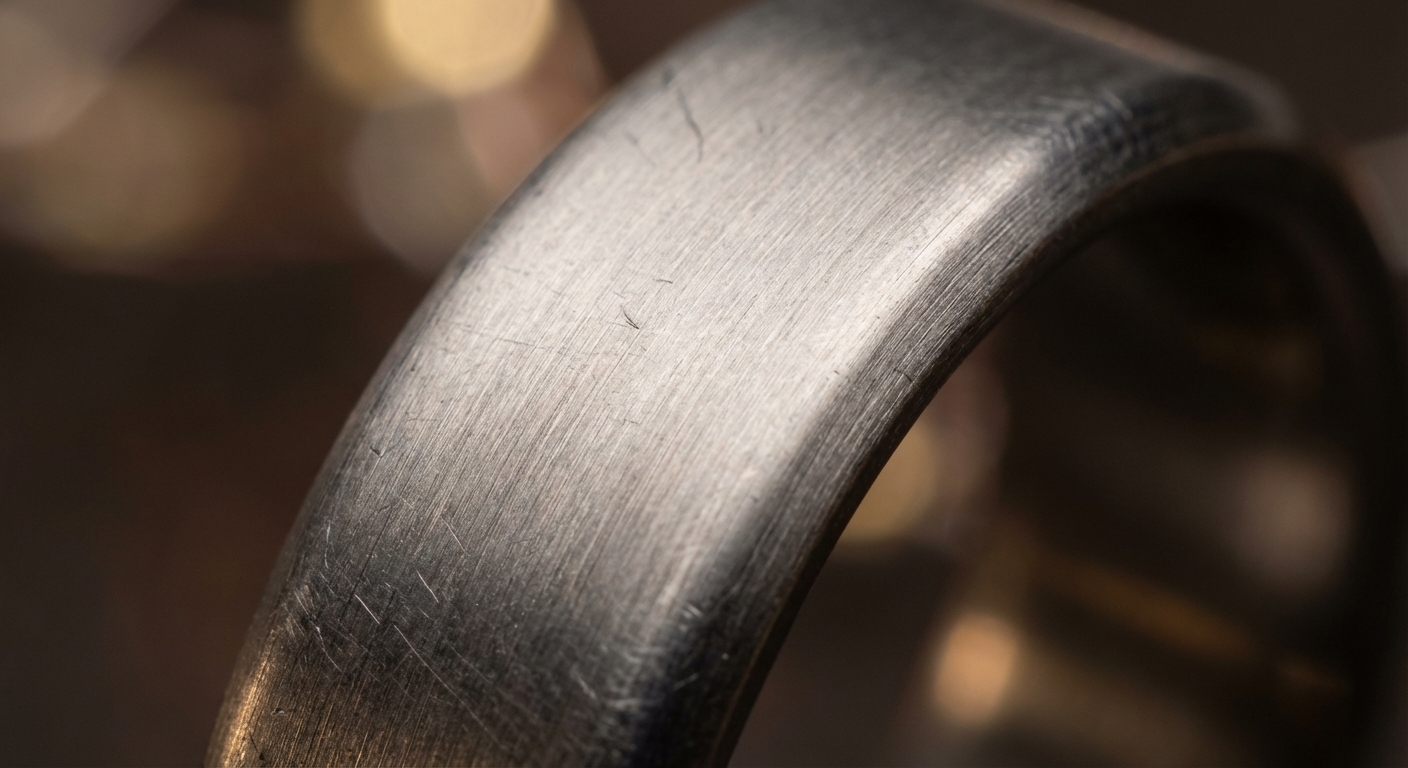
Neither titanium nor zirconium rings can be easily resized using traditional jeweler methods like soldering or melting. The main struggle with zirconium vs titanium is their incredible strength; you cannot simply cut them open and add more metal. While a professional might be able to shave a small amount from the interior to make the ring slightly larger, significant changes are impossible.
This makes getting the correct size at the time of purchase absolutely critical. You should always use a professional sizing tool before committing to your order.
Why is resizing so difficult?
Now: Traditional jewelers work with soft metals like gold that melt at manageable temperatures. Titanium and zirconium have much higher melting points and require industrial equipment to manipulate, which most local jewelry shops do not possess.
What if my finger size changes?
Most reputable vendors offer replacement programs or size exchanges rather than attempting to resize the original band.
- Measure twice, buy once.
- Consider comfort-fit bands.
- Ask about exchange policies.
Key Takeaway: You must be certain of your ring size before ordering, as these high-strength metals do not allow for easy adjustments later.
| Resizing Ability | Titanium | Zirconium | |
|---|---|---|---|
| Stretching | No | No | |
| Shaving (Inside) | Minor (~0.5 size) | Minor (~0.5 size) | |
| Soldering | Impossible | Impossible |
Precise measurement is the only way to ensure a lifelong fit for these non-malleable engineered materials.
Which has better scratch resistance, zirconium vs titanium?
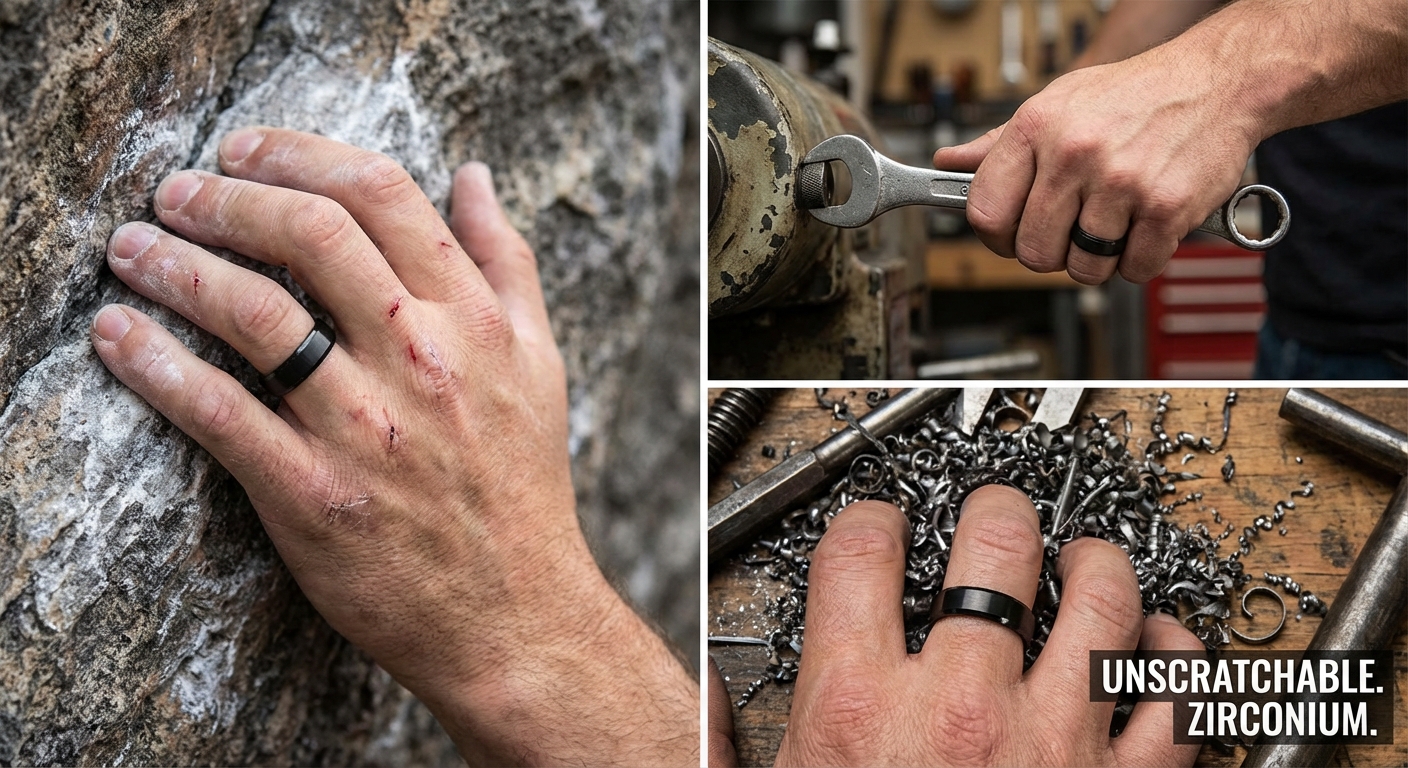
Black zirconium is significantly more scratch-resistant than titanium because its oxidized surface layer is as hard as ceramic. In the daily battle of zirconium vs titanium , titanium will eventually develop a “patina” of fine scratches from contact with steel or stone. Zirconium’s outer shell acts as a shield, making it incredibly difficult to mar during normal daily activities.
While titanium is tough, it is still a metal and will show wear over the years. Zirconium rings often look brand new for decades because the surface is literally too hard for most common objects to scratch.
Will titanium get scratched?
Believe it or not: Titanium will scratch if it comes into contact with harder materials like diamonds or hardened steel tools. However, these scratches can often be buffed out with a simple scouring pad or professional polishing.
Is zirconium immune to damage?
No ring is truly indestructible, but zirconium comes very close. If you manage to scratch through the black oxide layer, the silver zirconium underneath will show, but this requires an extreme level of force.
- Ceramic-hard surface.
- Superior abrasion resistance.
- Long-lasting luster.
Key Takeaway: If your priority is a ring that stays looking brand new despite a rough lifestyle, black zirconium is the superior choice.
| Wear Metric | Titanium | Zirconium | |
|---|---|---|---|
| Initial Scratching | Possible | Very Difficult | |
| Long-term Finish | Patina develops | Stays pristine | |
| Repairability | Easy buffing | Hard to recoat |
Zirconium’s surface hardness provides a “set and forget” durability that traditional metals simply cannot match.
How do colors differ for zirconium vs titanium?
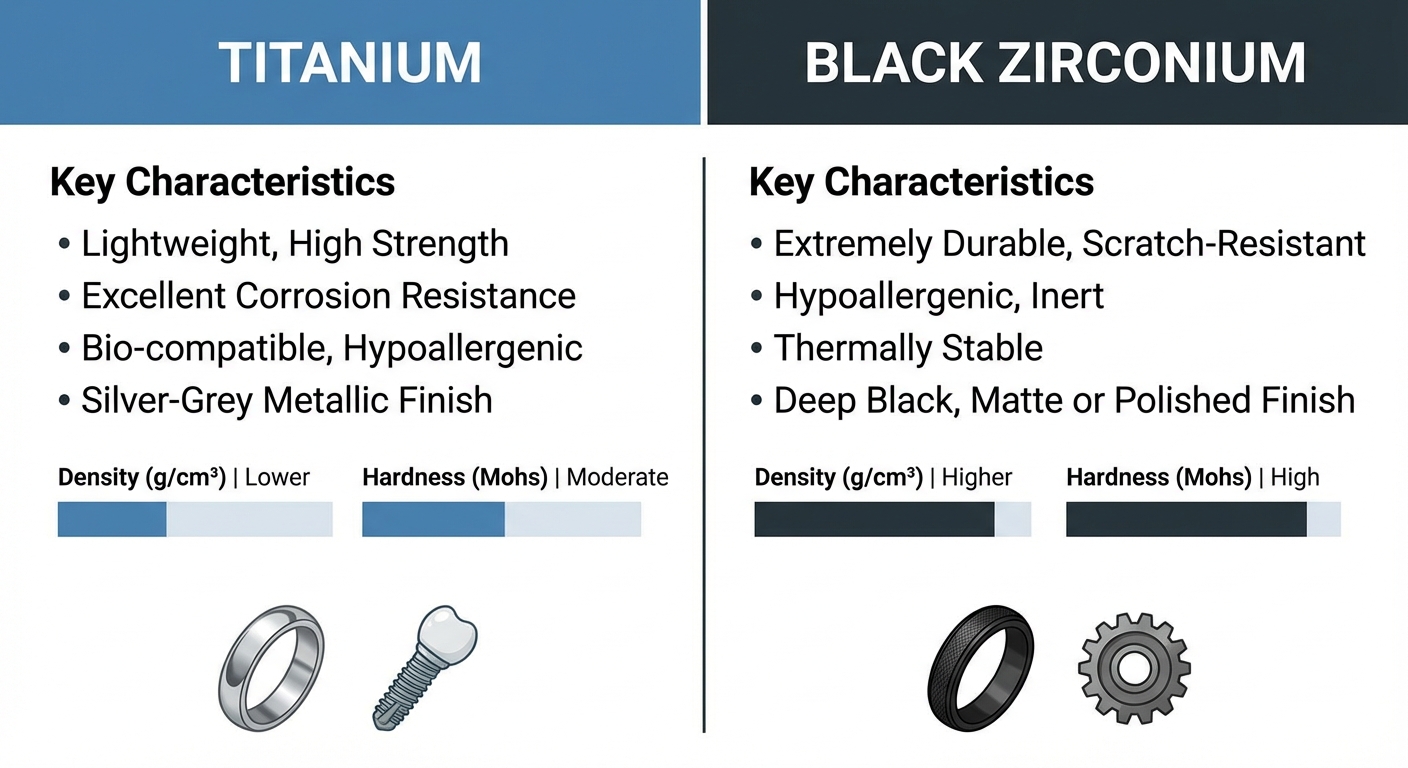
The primary color difference is that titanium is naturally silver-grey, while zirconium’s most popular form is a deep, permanent black. When choosing zirconium vs titanium, your decision often comes down to this aesthetic preference. Titanium offers various grey tones and can be anodized into vibrant colors, but those colors are a thin layer that can wear off.
Zirconium’s black is a deep, rich hue that goes beyond the surface. It offers a modern, masculine look that contrasts beautifully with traditional wedding attire.
Can you get a silver zirconium ring?
Bottom line: Natural zirconium is actually a very light grey, almost white, but it is rarely sold in this state. Almost all zirconium jewelry is oxidized because that beautiful black finish is the material’s main selling point.
Does titanium color fade?
Anodized titanium colors (like blue or gold) are created through an electrical process and will fade as the ring is scratched. The natural silver-grey color of titanium, however, is solid and will never change.
- Titanium: Industrial Grey.
- Zirconium: Midnight Black.
- Anodized: Temporary colors.
Key Takeaway: Titanium is for those who love the classic metallic look, while zirconium is for those who want a permanent, bold black ring.
| Color Options | Titanium | Zirconium | |
|---|---|---|---|
| Primary Look | Silver-Grey | Black | |
| Fade Resistance | Permanent Grey | Permanent Black | |
| Custom Colors | Anodizing possible | Laser engraving |
Visual appeal is the most subjective part of the selection process, but zirconium offers the only permanent black option.
Are zirconium vs titanium rings corrosion resistant?
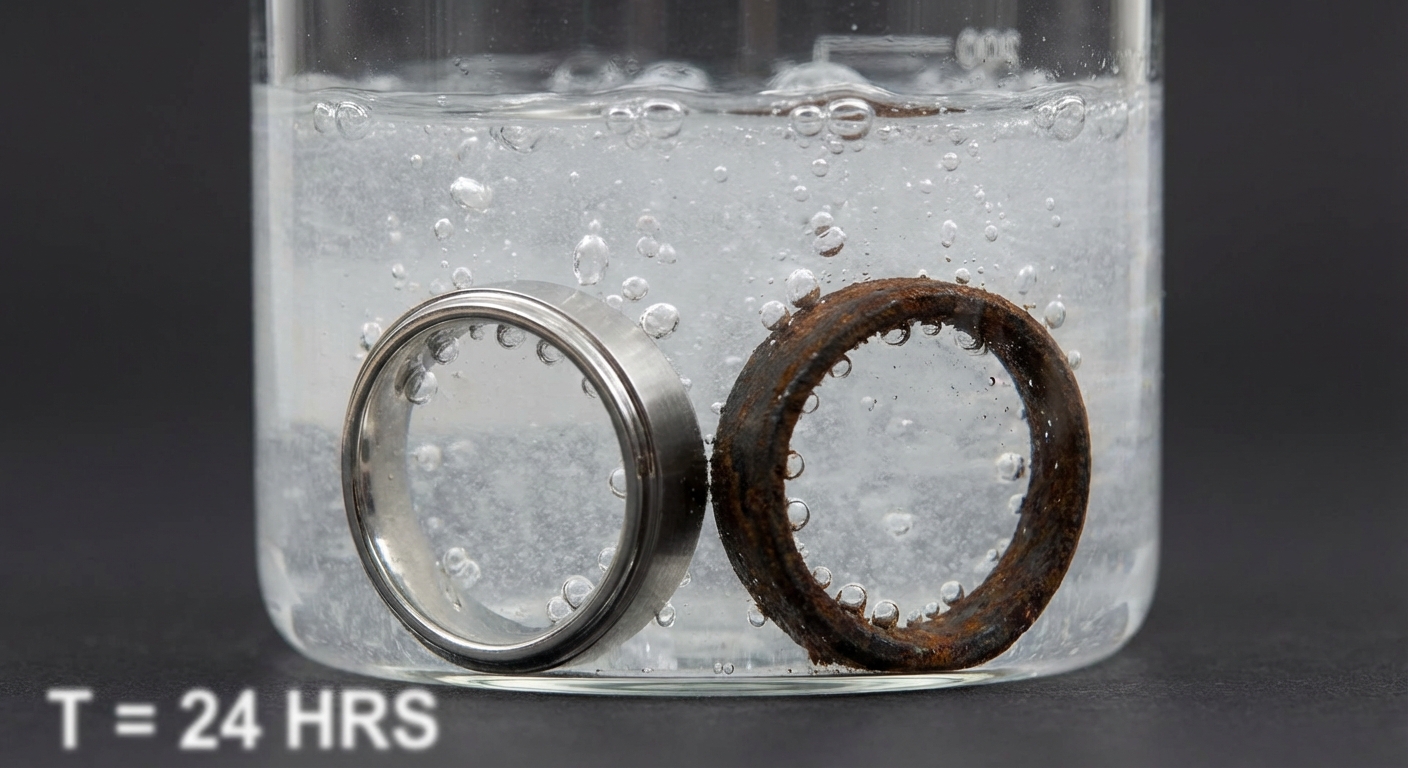
Both titanium and zirconium are essentially immune to corrosion from salt water, chlorine, and household chemicals. In the comparison of zirconium vs titanium , both metals are considered “sea-safe” and will not rust or tarnish. You can wear them while swimming in the ocean, working in a pool, or cleaning with harsh detergents without any fear of degradation.
This chemical stability is why these metals are used in the most aggressive industrial environments on Earth. They are designed to withstand conditions that would cause gold or silver to tarnish or dissolve.
Can I wear my ring in the ocean?
Essentially: Yes, salt water has no effect on these materials. They are used in offshore oil rigs and submarine components precisely because they do not corrode in marine environments.
What about household cleaners?
Zirconium is even more resistant to acids and alkalis than titanium, which is why it is used in chemical processing plants. You can wear your ring while doing any household chore without a second thought.
- No tarnish.
- No rust.
- No chemical reaction.
Key Takeaway: Both metals are completely “life-proof” when it comes to chemical exposure and water damage.
| Corrosion Resistance | Titanium | Zirconium | |
|---|---|---|---|
| Salt Water | Immune | Immune | |
| Chlorine | Immune | Immune | |
| Strong Acids | High Resistance | Extremely High |
The environmental resilience of these rings makes them the ultimate choice for active explorers and outdoor enthusiasts.
Which is best for you: zirconium vs titanium?

The best choice for you depends on whether you value the ultra-lightweight, affordable nature of titanium or the scratch-resistant, bold black aesthetic of zirconium. When weighing zirconium vs titanium, consider your daily routine. If you work in a high-impact environment where scratches are likely, zirconium’s harder surface will serve you better.
If you are a runner or athlete who dislikes the feeling of heavy jewelry, the featherweight profile of titanium is hard to beat. Both are exceptional choices that outperform traditional precious metals in every durability test.
Who should choose titanium?
To be honest: Titanium is for the pragmatist. If you want a classic silver-toned ring that is virtually indestructible, light enough to never notice, and fits any budget, titanium is your best friend.
Who should choose zirconium?
Zirconium is for the style-conscious adventurer. If you want a ring that makes a statement with its deep black finish and stays scratch-free through years of hard work, zirconium is worth the extra investment.
- Budget vs. Style.
- Weight vs. Hardness.
- Grey vs. Black.
Key Takeaway: Match the metal to your personality: titanium for the low-profile classic, zirconium for the high-durability modern statement.
| Selection Criteria | Choose Titanium | Choose Zirconium | |
|---|---|---|---|
| Preferred Color | Silver-Grey | Black | |
| Priority | Comfort/Price | Durability/Aesthetic | |
| Weight Feeling | “Barely there” | Solid/Substantial |
By identifying your top priorities—color, weight, or cost—the right choice between these two modern metals becomes clear.
Conclusion
Choosing between titanium and zirconium solves the long-standing problem of jewelry that is either too expensive or too fragile for real-world use. Whether you opt for the industrial strength and light weight of titanium or the high-tech, scratch-resistant black finish of zirconium, you are securing a piece of modern engineering designed to last a lifetime. At our core, we believe that your jewelry should be as resilient and innovative as the technology that surrounds us. If you are ready to find a ring that truly stands up to your lifestyle, contact us today for expert guidance on selecting the perfect high-performance metal for your needs.
Frequently Asked Questions
Can I wear a titanium or zirconium ring if I work with electricity?No, both metals are conductive. While they are not as conductive as copper, they still pose a risk of electrical arcing if they come into contact with live circuits, so you should remove them before performing electrical work.
What’s the best way to clean my titanium or zirconium ring?Use warm water and mild dish soap. Because both metals are highly resistant to chemicals, a simple soak and a wipe with a soft cloth will remove any oils or dirt without damaging the finish.
How do I know if my ring is genuine titanium or zirconium?Check the weight and the color. Titanium should feel incredibly light (like aluminum), while zirconium will feel slightly heavier and, if it is the black variety, should have a surface that feels more like ceramic than cold metal.
Can these rings be engraved?Yes, both can be laser-engraved. Laser engraving is highly effective on these hard metals, allowing for incredibly precise text or designs that will not wear off easily over time.
Will a zirconium ring turn my finger black?Absolutely not. The black color of a zirconium ring is an oxidized layer of the metal itself and is not a dye or pigment; it is chemically stable and will not transfer to your skin.